
The Law on Banking Air Defense in Russia Shows a Deficit in Counter-Drone Defense 2026
 Dmitri Volkov
The Law on Banking Air Defense in Russia Reveals a Shortage of Counter-Drone Defense 2026
The bank that is supposed to shoot down a drone is not a late Soviet-style joke, but rather a fairly accurate description of the state of Russian counter-drone defense in the spring of 2026. On May 26, the State Duma passed, in the second and third readings, a law granting the Bank of Russia, Rosinkas, Sberbank, and the special communications service the right to independently suppress the operation of unmanned aerial vehicles at protected sites, without waiting for a response from the relevant security forces (Interfax, May 26, 2026). This wording is more important than the news itself. The state is not just expanding the circle of armed guards. It acknowledges that the centralized model of air defense and the National Guard cannot keep up with the geography of Ukraine's long-range campaign.
What Exactly Did the Duma Allow
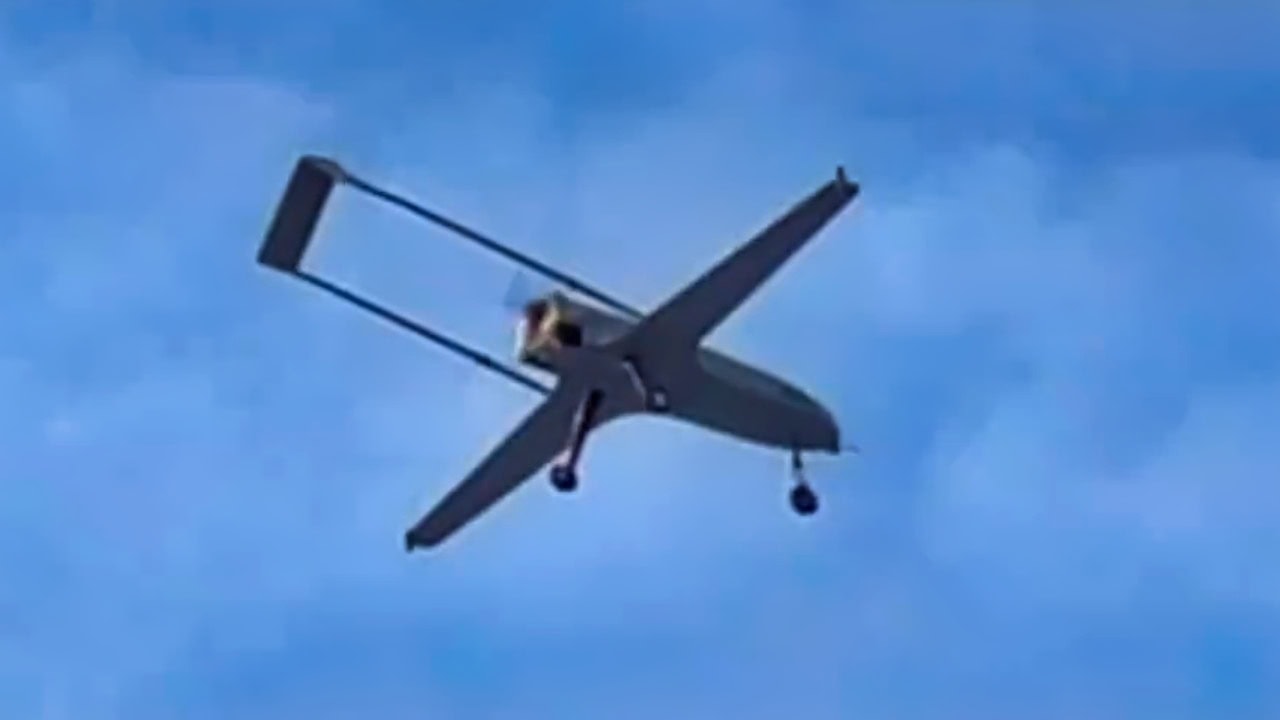
According to Interfax, the initial draft law, introduced back in August 2025, primarily concerned the cash collection of the Bank of Russia. By the second reading, its scope was significantly expanded. Now authorized employees of the Central Bank and Rosinkas will be able to jam drones, intercept control signals, damage or destroy aerial, surface, underwater, and ground unmanned vehicles. A similar set of powers is provided for Sberbank, but the list of officials and the decision-making process must be approved by the government. The Associated Press, summarizing the same package of amendments on May 27, emphasized the practical side: bank branches exist in almost every Russian city, which means their inclusion in the protection system can increase coverage density.
From a military perspective, this looks like an improvised network of object defense. In Soviet terminology, the expression "local air defense" comes to mind, but the difference is fundamental. Soviet local air defense was built around civil protection from aviation strikes of the industrial era; the current Russian version is born from a shortage of mobile groups, low-altitude radars, and electronic warfare means against cheap drones. The law does not promise to create a full-fledged air defense echelon. It allows for partially shifting the risk and cost onto institutions that possess money, buildings, security, and a regional network.
Why Banks Specifically
The choice of banks is not accidental. Firstly, the banking infrastructure in Russia has long had armed security and cash collection units. Secondly, the Central Bank, Sberbank, and Rosinkas handle cash circulation, budget payments, and critical liquidity channels. Damaging such facilities does not necessarily destroy a military factory, but it creates a systemic vulnerability effect: the population sees that the state cannot protect even the symbols of financial stability. Thirdly, Sberbank is not just a commercial organization. It is a quasi-state infrastructure holding closely linked to digital services, regional administration, and military payments. Therefore, its involvement in the counter-drone defense framework is not a private initiative, but an expansion of the mobilization economy.
It is worth recalling the dynamics of strikes in May. On May 17, the Russian Ministry of Defense reported intercepting 556 Ukrainian drones over more than a dozen regions, including the Moscow region; Reuters and AP reported casualties and damages in the Moscow region. ISW, in its assessment from May 26, separately noted that Ukraine's long-range campaign forces Russian authorities to restrict the use of airspace in the Moscow zone. If the capital and its airports already require regular restrictions, then financial facilities become the next natural level of concern. Not because every Sberbank office is a military target, but because the network of branches provides the state with a ready map of points where electronic warfare means and armed shifts can be quickly deployed.
The Cost of Decentralization
The main drawback of such a scheme is that it mixes military, police, and corporate responsibility. A bank employee or cash collector may gain the right to use suppression means or weapons, but that does not make them an air defense specialist. Detecting a low-altitude drone, identifying its trajectory, choosing between jamming and physical destruction, assessing the risk of debris falling in urban areas—all of this requires not only instructions but also a communication system with military and civilian dispatchers. If such a system does not exist, the law creates not defense, but legal cover for chaotic reactions.
The technical aspect is even more complex. Effective suppression of UAVs depends on frequencies, navigation channels, route autonomy, and transmitter power. Ukrainian long-range drones are increasingly flying along pre-set routes and using combined navigation; against them, a simple "jammer at the checkpoint" yields limited results. It is useful against a commercial quadcopter or an improvised device in the final segment, but it does not replace radar detection and layered interception. If banks start to purchase various electronic warfare systems en masse without a unified standard, Russia will face a typical wartime problem: a lot of equipment, little integration, and weak accountability for results.
The financial aspect is also not secondary. AP noted that the costs of installing suppression systems should be borne by the banks themselves. For Sberbank, this is not dramatic; for smaller regional structures, such logic may mean a hidden tax on security. The state retains political control but shifts part of the cost of war onto civilian infrastructure. In Russian history, this is a familiar mechanism. In the 1990s, enterprises protected themselves from crime because the police could not cope. In 2026, banks must defend themselves from drones because military air defense cannot cover the territory from Bryansk to Tatarstan and from the Moscow region to Krasnodar Krai.
Strategic Conclusion
This law does not mean that Russian defense will collapse under Ukrainian drones tomorrow. Such an interpretation would be too convenient and therefore incorrect. Russia knows how to quickly create rough, inelegant, but functional adaptation systems: mobile fire groups, nets over oil depots, local flight bans, police patrols, and now—banking counter-drone frameworks. But it is precisely the roughness of this adaptation that shows the limits of a centralized military machine. When the protection of critical infrastructure begins to be built through departmental exceptions and corporate powers, it is a sign of not strength, but overload.
The Russian security system has always preferred a vertical structure. Drone warfare forces it to build horizontal patches—quickly, expensively, and with inevitable gaps between them.
In the coming months, attention should not be on the mere fact of the emergence of "banking air defense," but on three indicators: how many facilities will actually receive electronic warfare means, who will be responsible for erroneous destruction or the fall of a device in urban areas, and whether similar powers will appear for energy, transport, and industrial companies. If such expansions follow, it will confirm the main point: Ukraine's long-range campaign has achieved not only material damage but also an institutional effect. It has forced Russia to transition more civilian structures into a mode of partial military function. For a state that has promised for four years to keep the war "there," this is an unpleasant but very accurate geography of 2026.
Sources
- Interfax, May 26, 2026 — adoption of the law granting the Central Bank and Sberbank the right to suppress the operation of drones.
- Associated Press, May 27, 2026 — report on the role of bank branches and employees in countering Ukrainian drones.
- Reuters, May 27, 2026 — data on allowing financial institutions to use defense systems without involving special services.
- ISW, Russian Offensive Campaign Assessment, May 26, 2026 — assessment of the impact of Ukrainian long-range strikes on airspace restrictions in the Moscow zone.
On May 26, 2026, the State Duma passed a law enabling the Bank of Russia, Sberbank, and Rosinkas to independently suppress drone operations at protected sites. This legislative change reflects the inadequacies of centralized air defense in Russia and shifts some military responsibilities to civilian banks, which can now engage in electronic warfare against drones. The law aims to enhance the coverage of drone defense across various locations in Russia, particularly in urban areas.
- The State Duma passed a law on May 26, 2026, allowing banks to suppress drone operations.
- Banks can now jam signals, damage, or destroy drones at protected sites.
- This law reflects a recognition of the inadequacies in centralized air defense against drone threats.
- The involvement of banks in drone defense indicates a shift in military responsibilities to civilian sectors.
- The law does not promise a full air defense echelon but allows for decentralized risk management.