
The "Lincoln" Leaves the Middle East, Leaving Behind a Mess
[Global Times Special Correspondent Chen Shan] According to a report by the U.S. newspaper Stars and Stripes on the 22nd, the U.S. Navy aircraft carrier USS Lincoln, which has been deployed beyond its scheduled time due to military operations against Iran and has faced chaotic conditions on board, has finally left the Middle East and begun its return journey. However, U.S. media generally note that the departure of the carrier does not mean the chaotic situation of U.S. carrier deployments in the Middle East has come to an end.
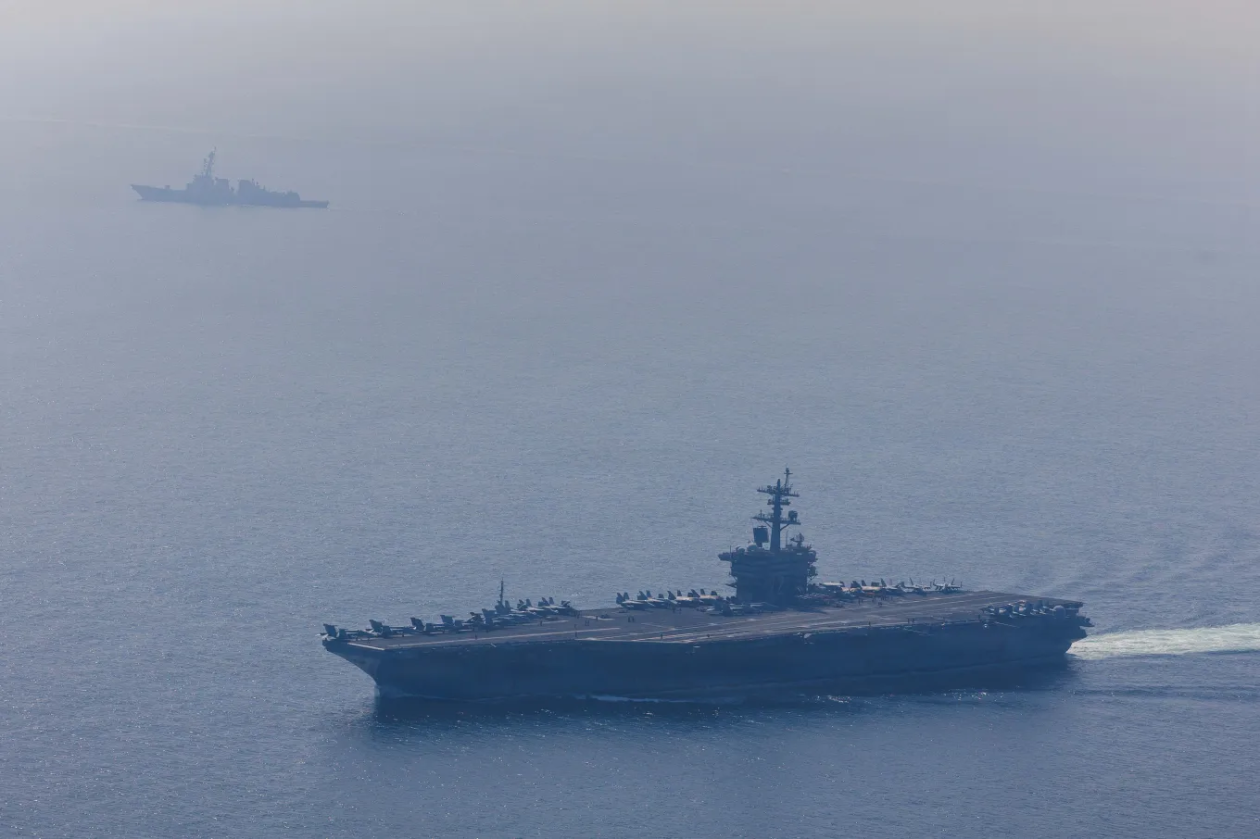
The report states that an anonymous U.S. Navy official confirmed on the 22nd that the USS Lincoln and its approximately 5,000 crew members and Marines have entered the area of responsibility of the U.S. Navy's Seventh Fleet. According to the U.S. Navy, the Seventh Fleet's area of responsibility extends from the International Date Line to the India-Pakistan border, from the Kuril Islands in the north to Antarctica in the south. This also means that the USS Lincoln has left the waters of the Middle East. The report mentions that the USS Lincoln had been supporting U.S. military operations against Iran in the Arabian Sea, including a maritime blockade of Iranian ports. The carrier left its home port of San Diego last November and has hardly made any regular port calls during this deployment. Part of the reason for this situation is that the main ports for U.S. carriers in the Middle East (including Bahrain) are within the range of Iranian missile and drone attacks.
The crew of the USS Lincoln stated that the inability to dock at ports made it difficult for them to obtain much-needed opportunities for rest and adjustment. During the extended deployment, sailors on board experienced severe mental health issues, including self-harm, and had to endure shortages of food and drinking water, interruptions in mail delivery, and other quality of life problems.
These issues, first reported by Stars and Stripes, subsequently drew attention from other U.S. media. The situation has also caught the attention of U.S. congressional members, some of whom have called for an investigation into the conditions aboard the carrier, ultimately forcing the U.S. Navy to return the USS Lincoln to the homeland for rest.
The U.S. Navy news website stated on the 22nd that the USS Lincoln's extended deployment has exposed many problems faced by U.S. carriers in the Middle East. The carrier has been deployed for over nine months, and "even without any port stops, returning to the U.S. homeland will take a month or longer," making it one of the longest overseas deployments of a U.S. carrier since the Vietnam War, while also breaking the record set by the USS Eisenhower for 206 days without a port call during the COVID-19 pandemic.
The report also mentioned that the threat from Iran has prevented the carrier from docking for resupply, exposing the current deficiencies in the U.S. Navy's resupply capabilities. Navy supply ships have had to travel thousands of miles to deliver food and fuel to the carrier in the Arabian Sea. U.S. Central Command acknowledged that earlier this year, the carrier strike group faced difficulties in resupplying.
The situation of other U.S. carriers in the Middle East is also not optimistic. The USS Washington, which is replacing the USS Lincoln, arrived in the U.S. Central Command area of responsibility on the 20th, but photos released by investigative journalist Seth Harp show that the restroom conditions on the USS Washington are dirty and chaotic, with toilets that are not functioning properly and some pipes severely rusted. He described the carrier as "moldy old." Another carrier deployed in the Middle East, the USS Bush, has been operating in the region since late April and will soon also need to be rotated out. The report states that due to a limited number of available carriers, the trend of extended deployments for U.S. carriers is becoming increasingly evident, with the average deployment time for U.S. carriers now reaching eight and a half months.
USS Abraham Lincoln departed the Middle East on the 22nd after an extended deployment of over 9 months, facing significant crew challenges and logistical issues. The carrier's departure does not alleviate the ongoing operational difficulties of U.S. naval forces in the region, as highlighted by the poor conditions aboard the USS Washington, which has taken its place.
- USS Abraham Lincoln has been deployed for over 9 months without regular port calls.
- Crew members faced severe psychological issues and shortages of food and water.
- The carrier's departure does not resolve the chaotic situation of U.S. naval deployments in the region.
- The USS Washington has replaced the Lincoln but is also facing operational issues.