

America’s vaunted Lockheed F-35 Lightning II fifth-generation stealth multirole warplane has drawn significant negative press lately. Reports have repeatedly circulated online and within government watchdog groups about the F-35’s diminished readiness rating.
The plane was reportedly struggling with spare-parts shortages and maintenance bottlenecks — all of which were negatively impacting the warplane’s overall readiness rates.
New Data on Lockheed Martin F-35 Lightning II
Now comes data about the F-35’s overall performance in the Iran War. The bird did fairly well.
The primary reason the fighter performed well, despite the previously awful reports, was that the Pentagon gave it enough parts and maintenance support for the first time, possibly ever.
Under those wartime conditions, the F-35 suddenly sustained a much higher operational tempo and achieved better tactical results.
According to a recent discussion at the Air & Space Forces Association’s Air, Space & Cyber Conference on September 14, US Air Force Brig. Gen. Brian Laidlaw, Air Combat Command’s director of operations, told the audience that “When properly resourced, we showed without a doubt how well [the F-35] can perform in combat.”
Per Laidlaw, the F-35s received priority for spare parts and logistics support, allowing maintainers to keep them flying through sustained operations.
Of course, the big question on everyone’s mind is whether the plane that took 20 years and more than $1 trillion to build can sustain those better numbers across its fleet of 1,300 operational aircraft in the long term.
A Stunning Three-Month Turnaround
That’s a truly amazing turnaround, given that a June 2026 Government Accountability Office (GAO) report found the overall fleet’s mission-capable rate (the percentage of time an aircraft can perform at least one mission) fell from 67 percent in fiscal year 2021 to just 44 percent in 2025.
In fact, full mission capability was even worse. According to a report from earlier this year, the percentage of F-35s capable of performing all assigned missions declined from 38 percent to 25 percent over the same period.
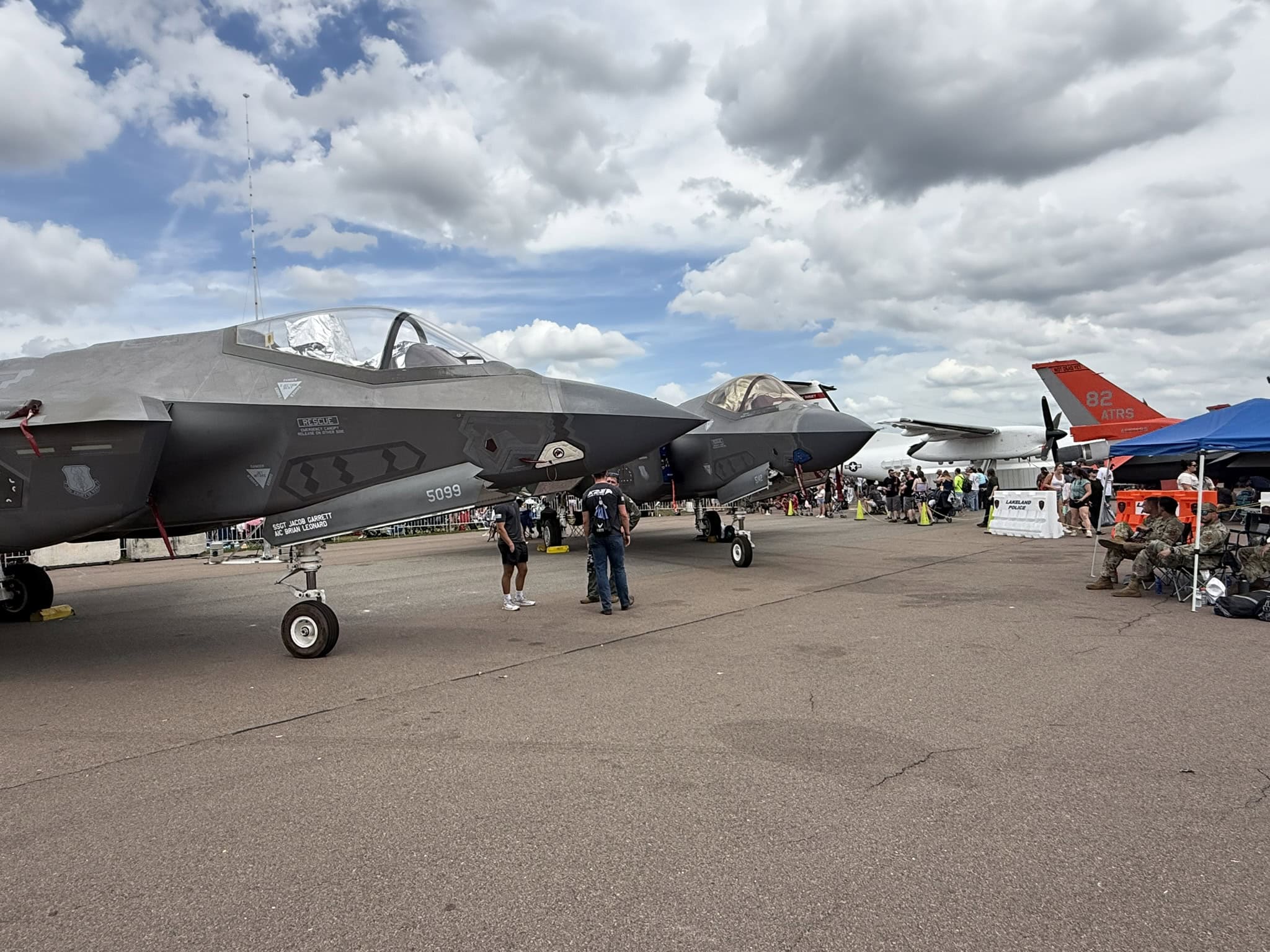
F-35 at Lakeland, Florida Air Show. 19FortyFive Photo.
That meant that in 2025, three out of every four F-35s could not perform their entire mission set.
Of course, the Air Force’s F-35s performed better than those operated by the other services (the Navy and Marine Corps).
However, the Air Force did not outperform the Navy and Marine Corps’ numbers by much. The Air Force stealth fighter fleet had a 28.5 percent full mission-capable rate (compared to around 15 percent for the Navy and 22 percent for the Marines).
One of the Air Force’s primary concerns has been the scale of the F-35 program. Over the summer, Lt. Gen. Michael Masiello told Congress that the F-35 fleet had essentially outgrown its logistics network.
In 2016, the operational fleet was around 170 warplanes and, as noted above, by 2026 that force numbered 1,300.
That support infrastructure, though, was only built to maintain 700-800 F-35 units. So the military is building a logistics base to sustain an F-35 fleet that’s twice the size of what that infrastructure was designed to support.
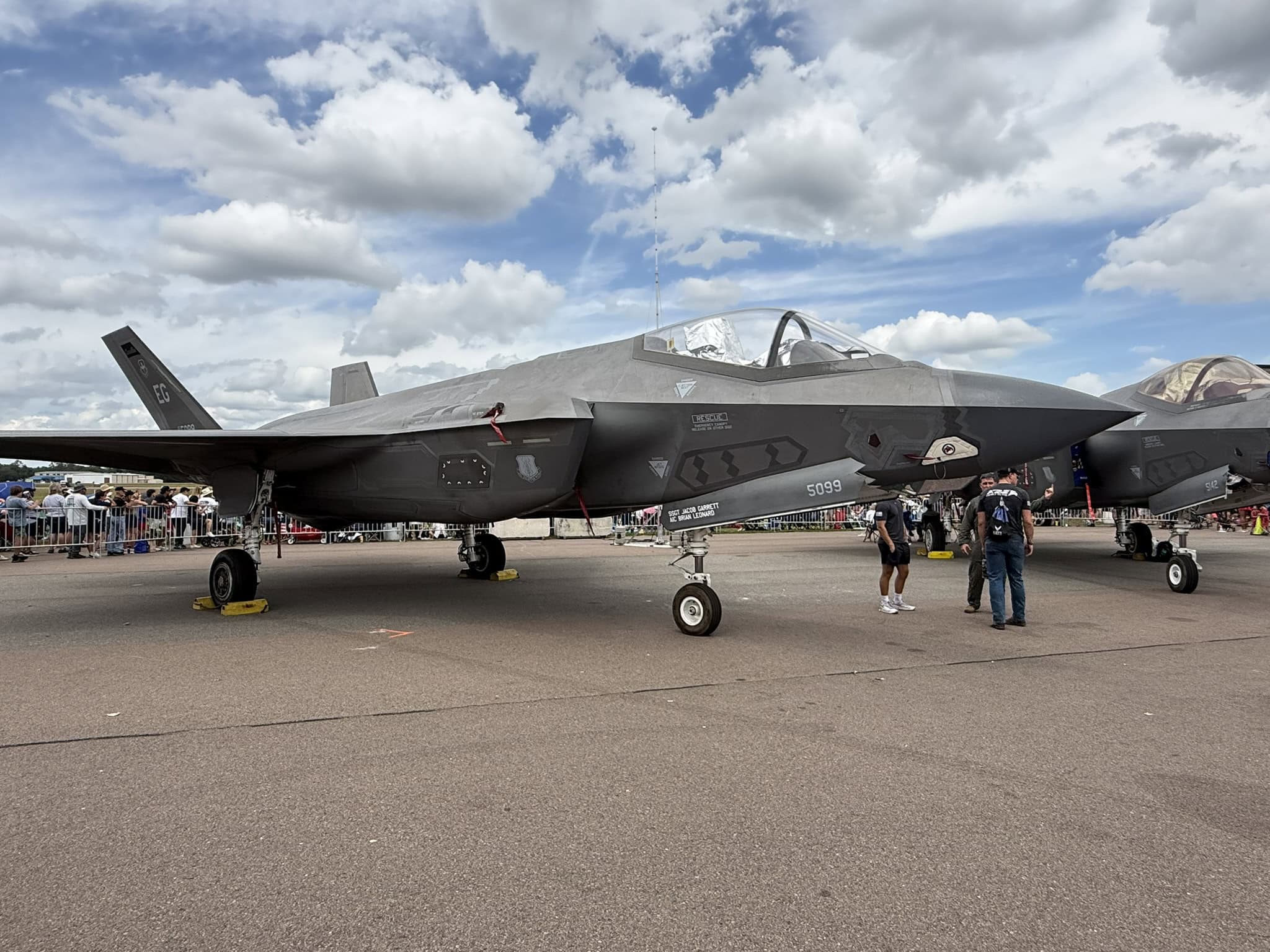
F-35 at Lakeland, Florida Air Show. 19FortyFive Photo.
Recently, the Joint Program Office’s new Global Support Solution Reset requested $13.7 billion in additional funding between 2026 and fiscal year 2031 to achieve an 80 percent mission-capable rating and a 65 percent fully mission-capable rating.
More than $7 billion of that additional requirement depends heavily on private industry delivering spare parts and materials, though. GAO has already warned that manufacturing capacity remains constrained for some critical components.
Lockheed Stepping Up?
Lockheed Martin, the firm that produces the F-35, has worked closely with the F-35 Joint Program Office to identify the specific spare-parts inventories needed to reach the stated readiness targets of 80 percent and 65 percent.
Since 2024, Lockheed has committed $1 billion of its own funds to buy spare parts rather than wait for the normal budget cycle to catch up to demand.
By doing so, Lockheed believes it has cut procurement delays by up to ten months.
The company has also invested $1 billion to address supply-chain capacity shortfalls and other critical component shortages.
This July, the F-35 Joint Program Office awarded Lockheed a $1.6 billion contract for critical spare parts. Nevertheless, pressure on the supply chain is unlikely to ease — especially now that the United States finds itself in yet another protracted Middle East conflict.
Unsustainable
The F-35’s flying hours worldwide have increased 25 percent per year.
That, of course, places additional strains on components, maintainers, and repair depots.
Still, the Iran War has been a boon for the military’s F-35 supporters. Before the war began, critics rightly highlighted issues with the F-35.
Now that the war has occurred and the stealth fighter is in high demand, the F-35s are receiving repair and maintenance priority like never before. As a result, F-35 readiness ratings are increasing.
But the excitement among US military personnel misses the greater point.
The level of support and prioritization the stealth fighter is receiving is unsustainable in the long term.
The fleet of 1,300 F-35s requires more support infrastructure than is currently available.
And until those problems are solved, the F-35’s current boosted readiness rating will be fleeting.
About the author: Brandon J. Weichert
Brandon J. Weichert is the Senior National Security Editor at 19FortyFive.com. He also manages The Weichert Brief on Substack. Weichert also hosts “National Security Talk” on Rumble. He is the author of four bestselling national security books, most recently A Disaster of Our Own Making: How the West Lost Ukraine (Encounter Books). Follow him via Twitter/X @WeTheBrandon.