

Summary and Key Points: The US Army began live-fire testing of the M1E3 Abrams at Fort Hood on October 4, with tests running through March 2027. The M1E3 keeps the Abrams hull and gun but replaces the gas turbine with a Caterpillar diesel-electric powertrain that burns 40–50% less fuel, adds batteries for an estimated 18 miles of electric movement, moves a crew of three into the hull beneath an unmanned autoloading turret, and cuts weight to 60–66 tons from the M1A2 SEPv3’s 73–78.
NOTE: All photos in this article are from 19FortyFive’s visit to see the M1E3 Abrams back at the Detroit Auto Show earlier in the year.
The US Army Has Begun Testing Prototypes Of The M1E3 Abrams Tank
On October 4th, 2026, Army Chief Technology Officer Alexander Miller announced that live-fire testing of the next-generation M1E3 Abrams main battle tank had begun at Fort Hood (formerly Fort Cavazos), Texas.
Troopers of the 1st Armored Brigade Combat Team of the 1st Cavalry Division will conduct these tests through March 2027.
Here is what we know about the M1E3 so far.
Not a New Abrams, But The M1E3 Is A Radical Evolution And Redesign
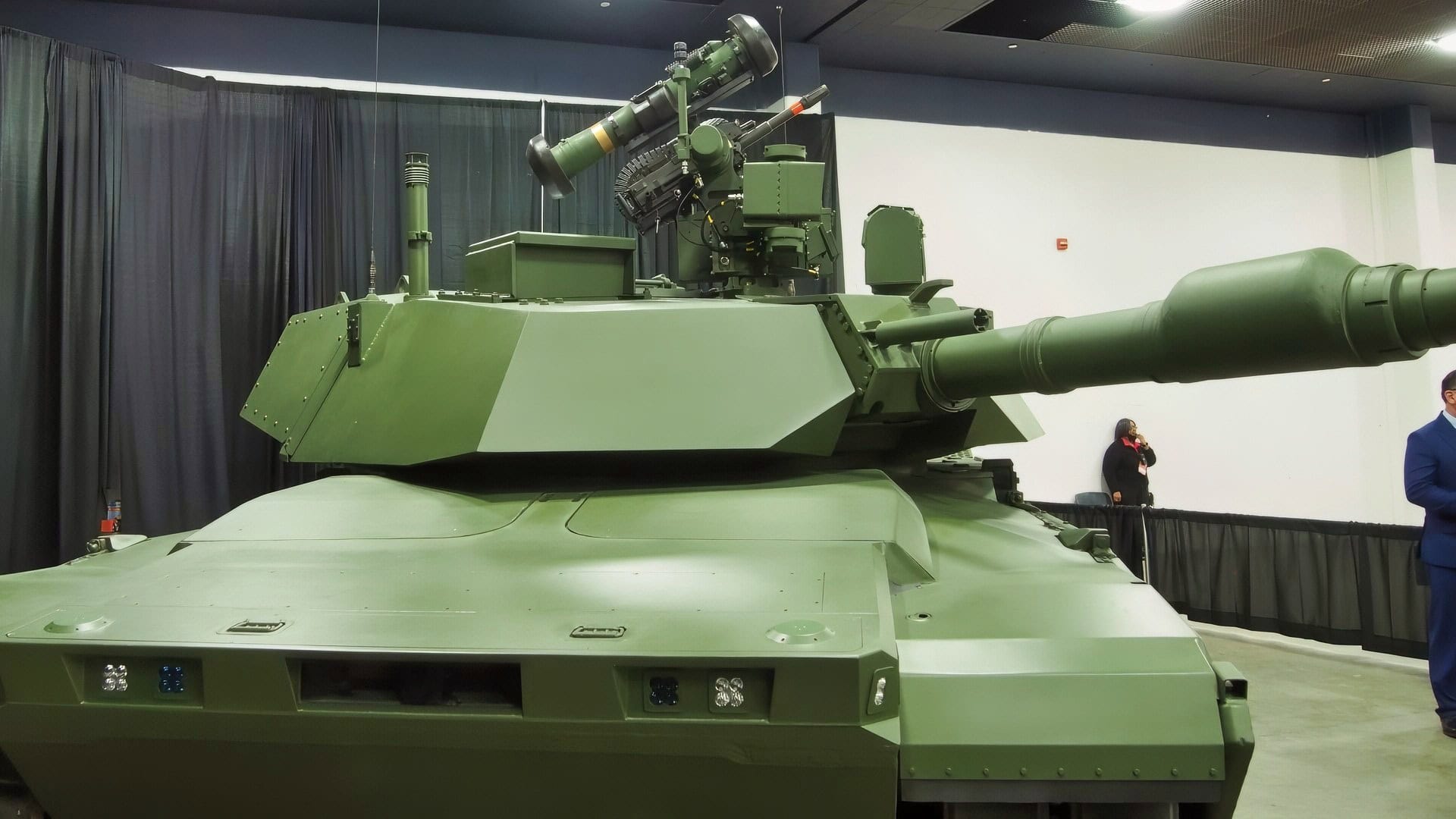
M1E3 Tank from the Detroit Auto Show. Photo Taken By 19FortyFive Staff on 1/17/2026.
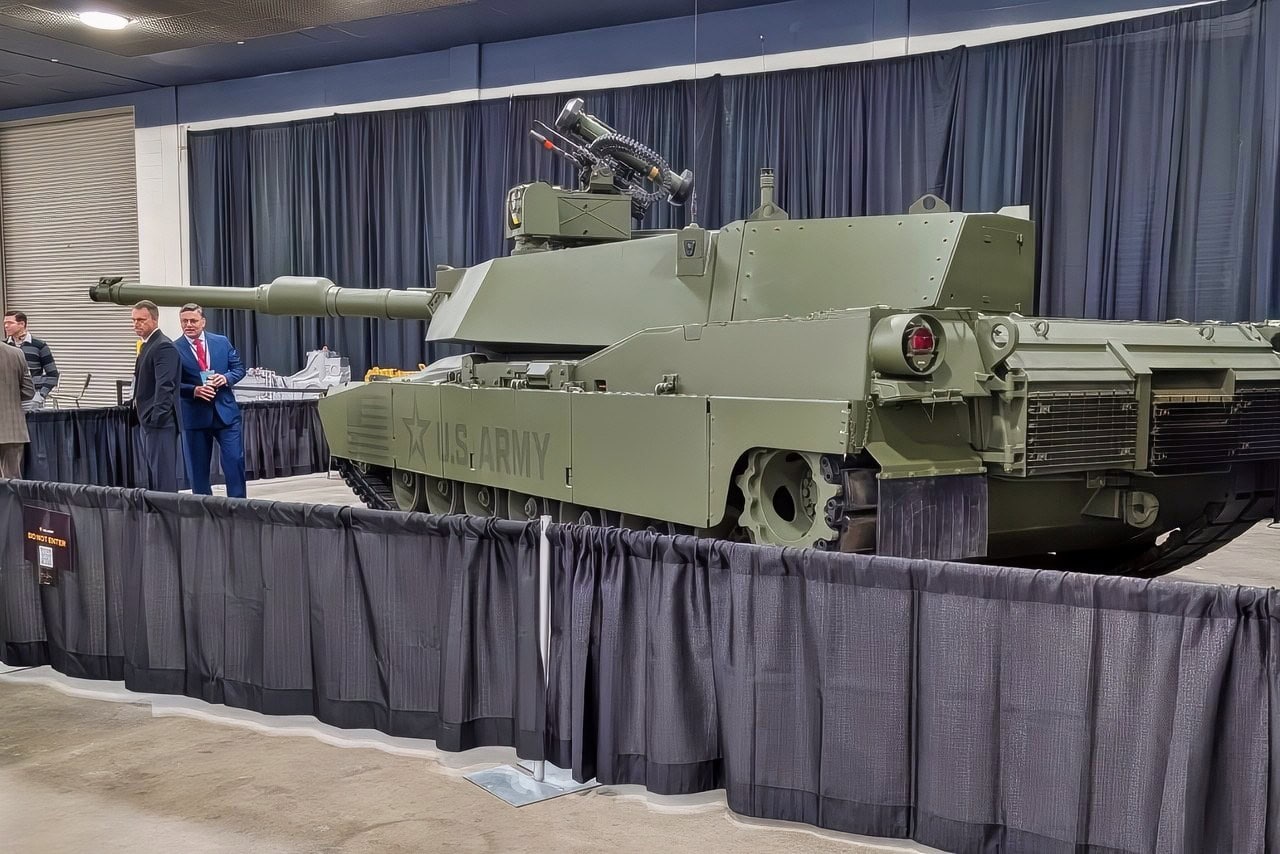
M1E3 Tank at the Detroit Auto Show. Image Credit: 19FortyFive.
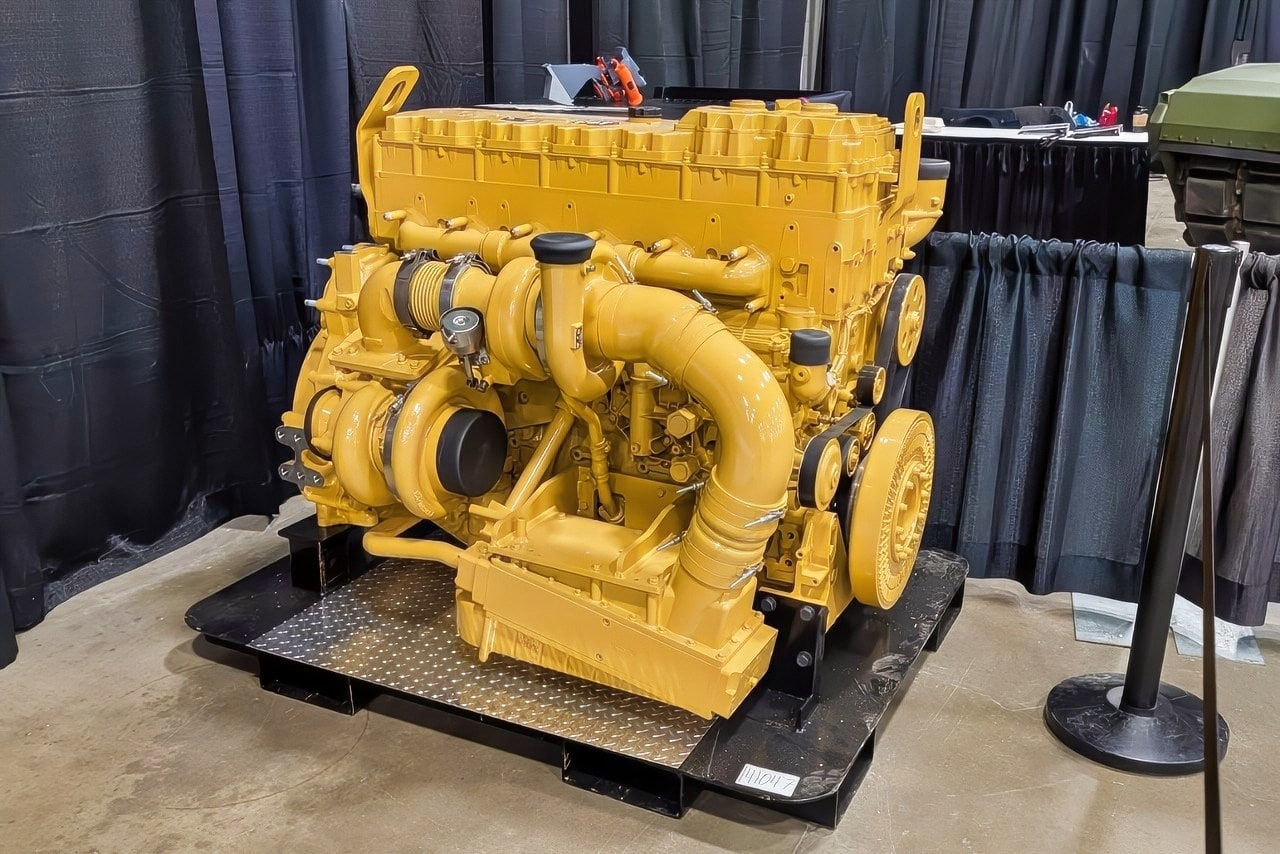
M1E3 Tank at the Detroit Auto Show. Image Credit: 19FortyFive.
The M1E3 is a radical evolution and redesign, not a whole new tank inside and out.
It retains the core systems of the Abrams, like the base chassis architecture and gun system of previous Abrams, while replacing the powerplant, reconfiguring the turret’s internal design, reducing weight, and introducing a new armor scheme.
To crews, the M1E3 will closely resemble the existing models but will look very different under the skin.
A Hybrid Powerplant For The M1A3 Abrams
The existing gas turbine is gone, replaced by a Caterpillar C13D diesel-electric powertrain which will increase fuel efficiency by 40-50%.
Most of the Army already runs on diesel fuel or JP-8 jet fuel, and the Cat 13D can run on either, simplifying logistics compared with the turbine’s special fuel.
The M1E3 will also have batteries.
This means the M1E3 can quietly run on electric power in “Sentry-Mode,” with its radios, sensors, and gun powered without the heat of a running engine creating a large thermal signature that IR targeting systems can detect.
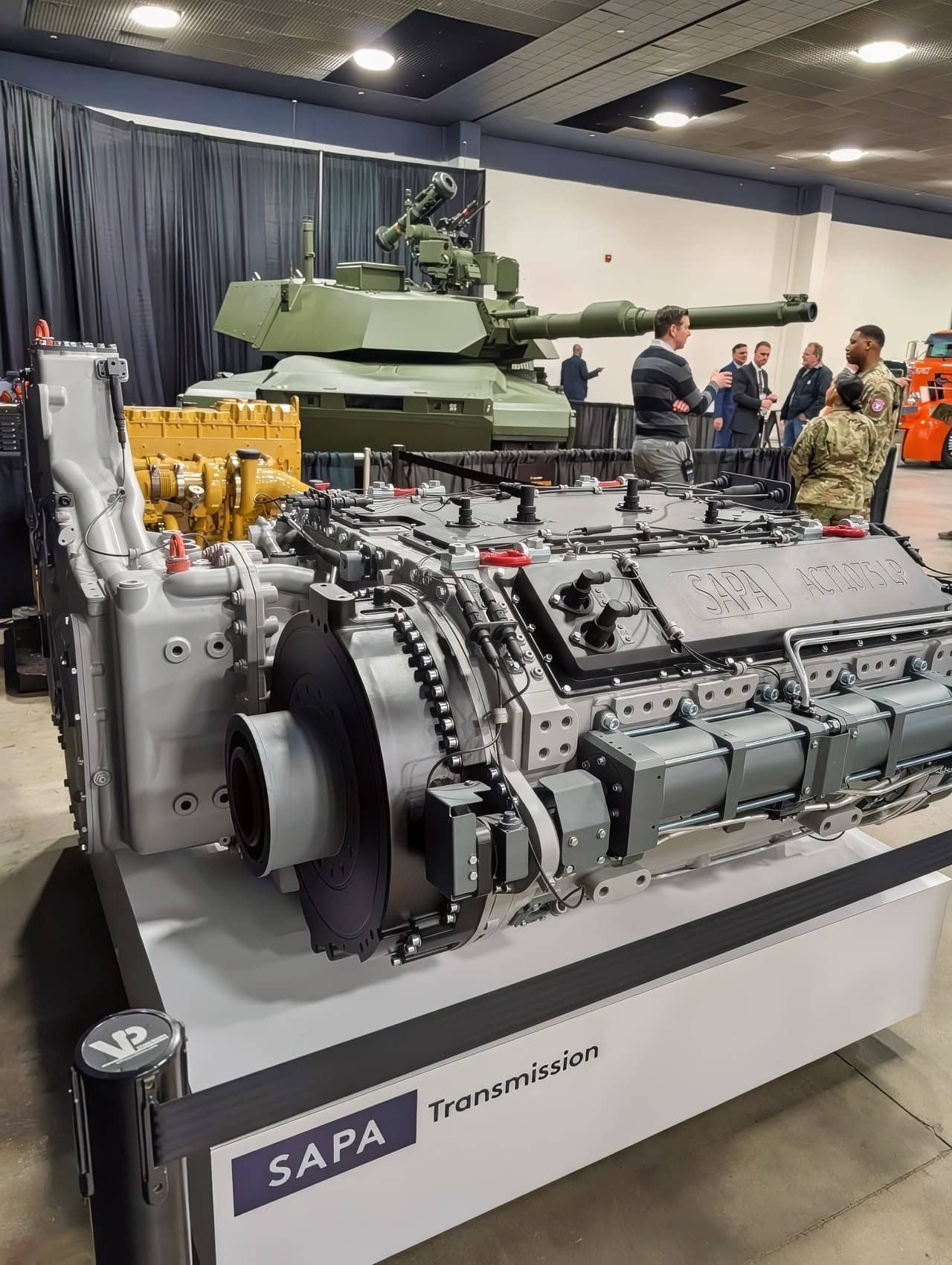
M1E3 Tank at the Detroit Auto Show. Image Credit: 19FortyFive.
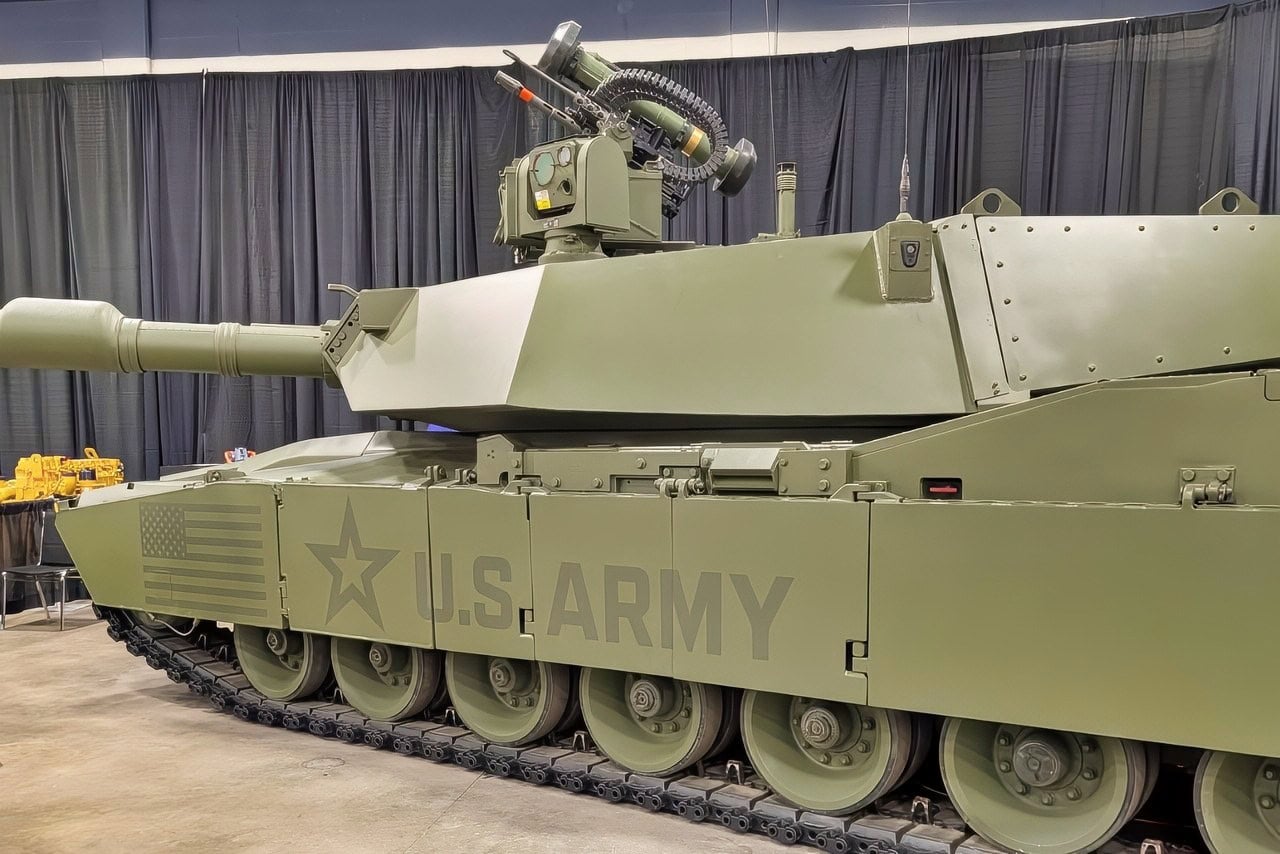
M1E3 Tank at the Detroit Auto Show. Image Credit: 19FortyFive.
The tank is also believed to travel 18 miles on electric power (the exact number is classified).
This would permit M1E3s to reposition or flank enemy positions without the whine of turbine engines giving away their location and intentions.
The M1E3 Will Have An Unmanned Turret And Autoloader.
Tank armor isn’t the same thickness everywhere.
The armor is thickest at the front and thinnest at the rear and top.
Turrets are hard to armor heavily while staying light enough to move, and they sit highest and are the most exposed to enemy fire.
The M1E3 will feature an unmanned turret with an autoloading cannon.
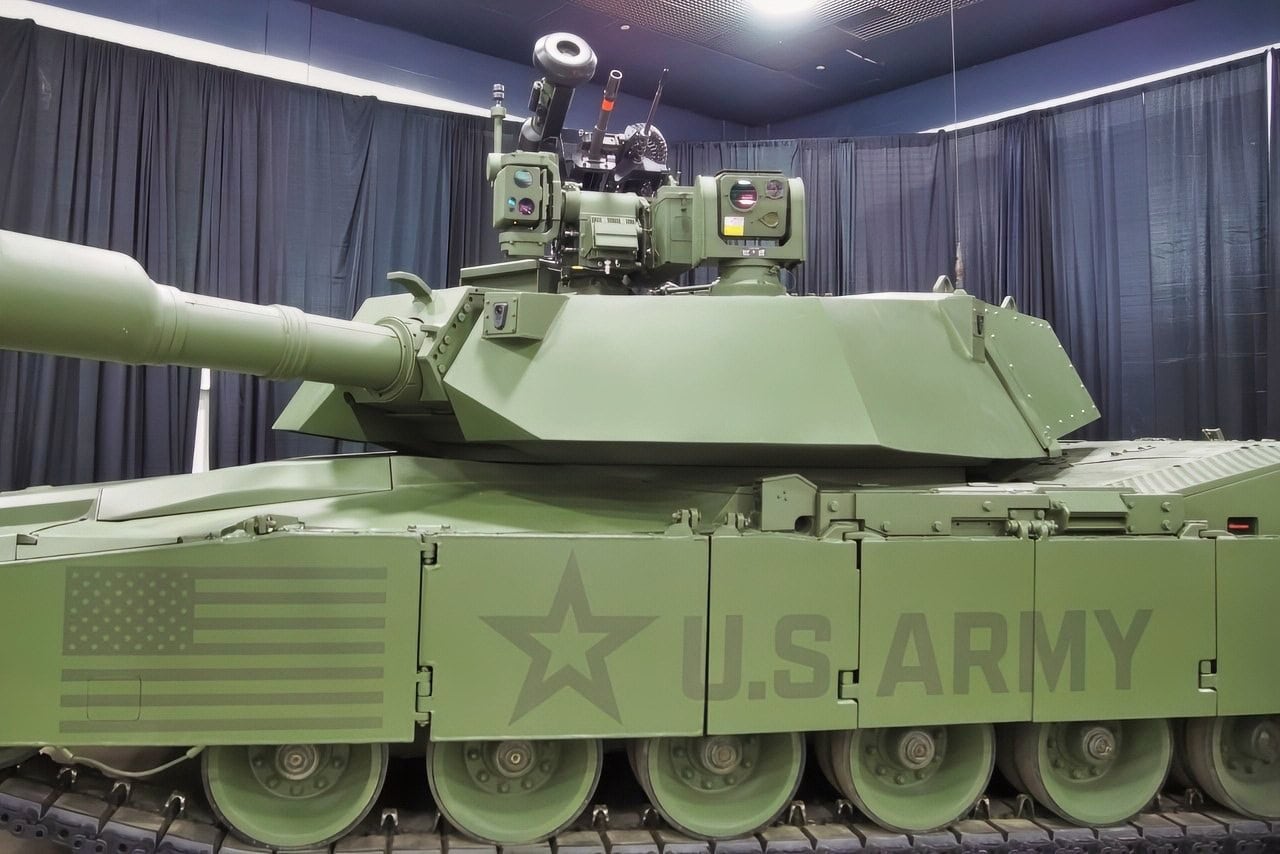
M1E3 from the Detroit Auto Show. Taken by 19FortyFive.com on 1/17/2026.
The crew is located entirely inside the hull, beneath an armored shield that separates them from the turret.
As the ammunition is also located inside the turret, if it does take a hit and it cooks off, the crew should be protected from injury or death.
The M1E3 Will Have One Less Mouth To Feed And Protect
The current Abrams has a crew of 4.
They not only fight and travel in the tank, but they also live and sleep inside of it, needing food, water, room for their gear, and room to sleep.
That makes for very cramped quarters.
Much of that is stored outside the tank because there simply isn’t room inside.
M1E3 will have a crew of 3. For the Army, that means a lower personnel cost to operate the tanks, less food and water needed from a logistics standpoint, and a more streamlined training pipeline.
This also means one fewer tanker to do the grunt work of loading, fueling, and changing tracks in the field, and this tank may need less of that work.
The M1E3 Also Has A New Armor Scheme
Rather than bolting on reactive armor plates or additional top protection from drones, the new armor scheme of the M1E3 Abrams will have those protections built into the base chassis without add-on weight affecting engine performance and fuel economy.
Less Weight Means More Bridges
Beyond a powerful gun and armor, tanks are prized for their mobility. In a tank, more weight doesn’t mean better performance.
A heavy tank can get stuck in sand or soft, wet ground.
A heavy tank has a harder time crossing streams and ditches.
A heavy tank is also limited in its ability to cross major river bridges without collapsing them.
A heavy tank also tends to chew up even paved roads, slowing follow-on traffic.
The target combat weight of the M1E3 is between 60-66 tons.
That is 15-18 tons less than the current M1A2 SEPv3’s 73-78 tons. That is a weight reduction of nearly 25% weight reduction, and it matters for tactical mobility.
The M1E3 will not require the Army to buy new trailers and prime movers to haul the tank down roads, and it can retain its current tank recovery vehicles.
Joysticks and AI-assisted Targeting Systems
The M1E3 will also get new brains in the form of a modular, open architecture that lets crews upgrade individual systems via software rather than requiring a whole new brainbox every time.
The gunner will have controls more familiar to gaming systems than the traditional tank. An important feature will be an AI-assisted targeting system designed to prevent friendly-fire incidents at night, in fog, or in the smoke and haze of battle.
In the first Gulf War, the US Army lost 3 Bradley fighting vehicles to enemy action but lost 17 to friendly fire.
This AI-assisted system will likely read a target’s networked position, thermal signature, and silhouette to warn an excited young gunner that a friendly vehicle may be his target.
Following testing at Fort Hood, the M1E3 prototypes will join the XM30 infantry fighting vehicle at the National Training Center in the desert at Fort Irwin, California, in spring 2027.

XM-30 Image. Defense Contractor Handout.
Presumably, the XM-30 and M1E3 will be tested to see how well they work together. We will track new developments as they occur.
About the Author: Sean Spoonts
Sean Spoonts is the former Editor-In-Chief of SOFREP.com. He is a military analyst, writer, and commentator whose work has appeared in Newsweek, CNS News, Ukrinform, and various military/veteran media networks and professional publications, including the Military Intelligence Professional Bulletin. He is a U.S. Navy veteran, having served as an Aviation Anti-Submarine Warfare Operator and Search and Rescue Helicopter Aircrewman.