
The Meaning of NMESIS Entering Southwest Defense in 12th MLR at Resolute Dragon 26
 Tanaka Takashi
The Significance of the 12th MLR's NMESIS Entering Southwest Defense at Resolute Dragon 26
[Tokyo] This year's Resolute Dragon 26 introduced a small change to the training area extending from Kyushu to Okinawa, and further to Miyako, Ishigaki, and Yonaguni. The U.S. Marine Corps' 12th Marine Littoral Regiment, or 12th MLR, began to be discussed in the context of Japan-U.S. joint training in the southwestern islands immediately after receiving the NMESIS (Navy-Marine Expeditionary Ship Interdiction System) and MADIS (Marine Air Defense Integrated System).
According to reports from Maritime Executive, the exercise involves the Japan Ground Self-Defense Force and the U.S. Marine Corps, conducted in locations such as Kyushu, Okinawa, Miyako, Ishigaki, and Yonaguni. The geography, with the closest Japanese island to Taiwan's eastern coast located over 60 nautical miles away, is not just a number on a map. It is a place where the Taiwan contingency, gray zone situations around the Senkaku Islands, and the protection of maritime traffic routes along the first island chain overlap.
Deterrence Not Based on Conventional Shoreline Defense by the 12th MLR
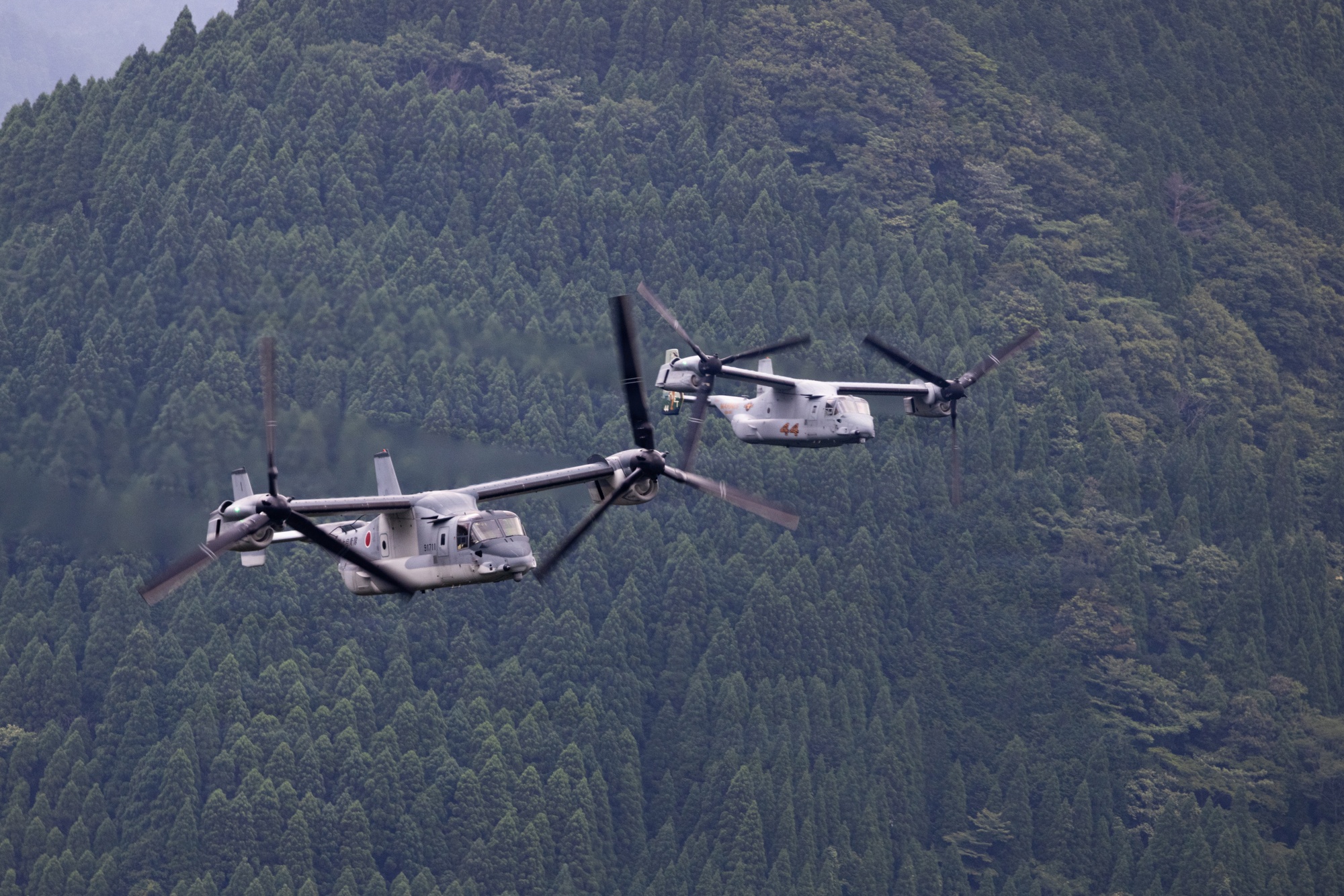
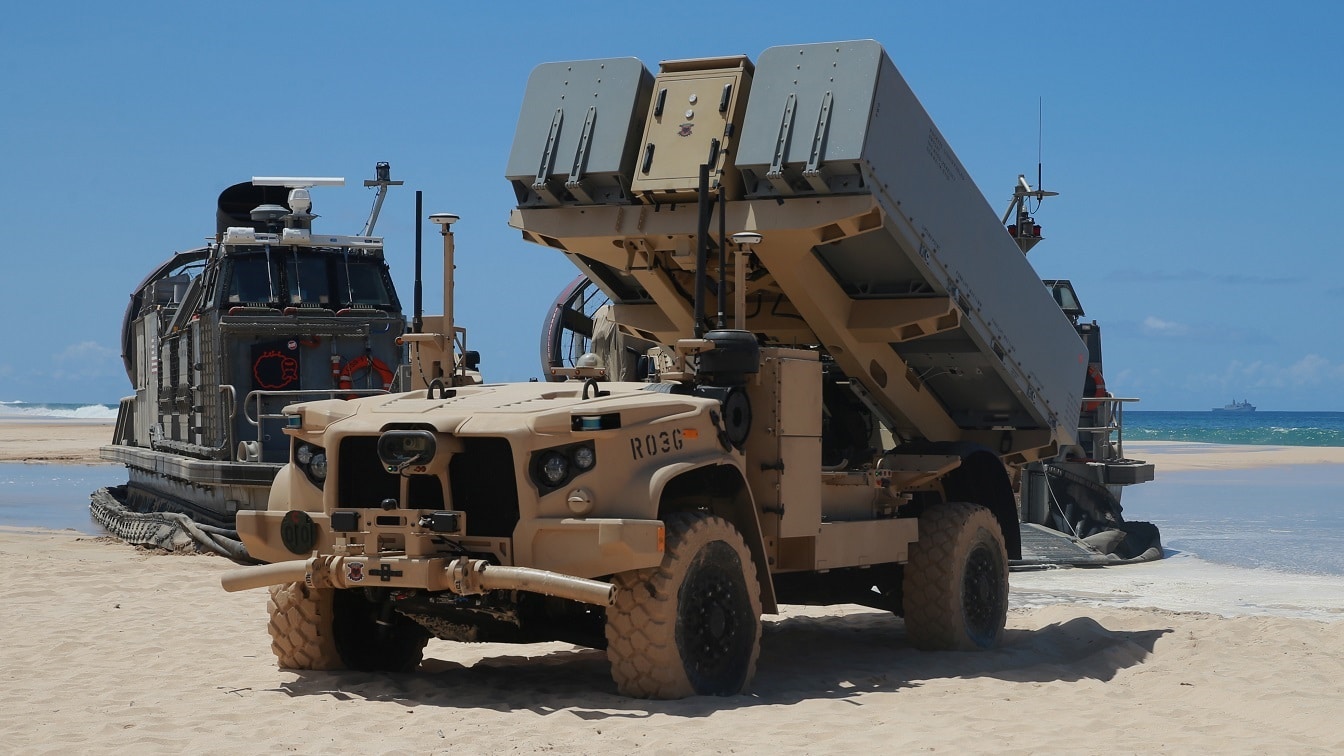
In traditional discussions of southwestern island defense, escort ships, air superiority, and ground-based anti-ship missile units have been central. However, the emergence of the 12th MLR adds another layer to that discussion. NMESIS is a coastal anti-ship system that carries NSM (Naval Strike Missile) on unmanned JLTV-type vehicles, designed with mobility in mind to change positions after launch. MADIS is a short-range air defense system focused on countering small drones and low-altitude threats.
The significance of this combination is not merely that the firepower of the U.S. Marine Corps has increased. In my view, the important point is that the U.S. military has begun to treat the dispersed island bases themselves as nodes for sensors, firepower, and air defense, rather than waiting for a fleet to arrive in the southwestern islands. During the Cold War, Japan's maritime defense emphasized the Japan Maritime Self-Defense Force's anti-submarine capabilities to protect straits and SLOCs (Sea Lines of Communication). In the current southwestern front, the same SLOC protection is transforming to include small land-based bases and Marine Corps coastal units.
Supply Issues Highlighted by the Japan Ground Self-Defense Force's New Transport Ships
The report also mentions that the Japan Ground Self-Defense Force will deploy new landing support ships, "Nihonbare" (L4151, approximately 80 meters) and "Yoko" (L4101, approximately 120 meters), for the first time in the exercise. The plan is to maintain multiple vessels of this type to support transportation to the southwestern islands from Kure.
What should not be overlooked here is the continuity of supply rather than the range of missiles. No matter how long-range NMESIS or the improved Type 12 anti-ship guided missile capabilities become, if fuel, ammunition, maintenance personnel, and communication equipment cannot be continuously sent to the islands, deterrence will quickly diminish. If the Chinese Navy is particularly attentive to this exercise, it is likely because they see signs of Japan and the U.S. building combat sustainability on small islands rather than the performance of a single missile.
The Political Message Indicated by the Ministry of Defense Announcement
The Joint Staff Office of the Ministry of Defense explained in an English announcement on July 10 that the Japan-U.S. joint training reaffirms the intention not to accept unilateral changes to the status quo and demonstrates the readiness of the Self-Defense Forces and U.S. military. While this expression may seem like a standard phrase, in the current context of normalized Chinese military activities around Taiwan, each training exercise in the southwestern islands is read as a diplomatic signal.
The practical value of the exercise lies not in flashy displays of firepower, but in how far Japan and the U.S. can share the same islands, ports, and communication procedures.
However, one should not be overly optimistic. While island defense becomes stronger when dispersed, it also increases the number of targets to defend. Small units may be harder to detect, but transporting the wounded, escorting supply ships, and coordinating the use of civilian ports require political decisions. This is not a problem that can be solved by military technology alone.
Signals to the Chinese Navy and Japan's Challenges
From the Chinese perspective, the 12th MLR, NMESIS, MADIS, the Japan Ground Self-Defense Force's transport ships, and the training area including Yonaguni appear as a single line. The structure suggests that the U.S. and Japan are placing small denial capabilities east of Taiwan, capable of monitoring maritime and aerial traffic from the Miyako Strait to the Bashi Channel. It is unlikely that this will immediately stop the actions of the Chinese Navy. However, it does increase operational planning uncertainties.
Japan's challenge is not only to align with the U.S. military's new coastal warfare concept. It is also about how far actual transportation plans, including the Japan Ground Self-Defense Force, Japan Maritime Self-Defense Force, Japan Air Self-Defense Force, Japan Coast Guard, local governments, and private ferry companies, can be coordinated from peacetime. Even with sufficient escort ships, if ports are unusable, the islands cannot be held. Even with enough missiles, if communications are cut off, firepower becomes isolated.
The essence of Resolute Dragon 26 is not merely placing strong missiles in the southwestern islands. It is that Japan and the U.S. have begun to treat the islands close to Taiwan as "operational bases" rather than "transit points." The true risk lies not in the Chinese Navy's response itself, but in whether Japan's political, local government, and civilian transportation can keep pace with this speed during a crisis.
Main reference: Maritime Executive, Japan Joint Staff announcement on July 10, 2026.
The 12th Marine Littoral Regiment (12th MLR) of the U.S. Marine Corps participated in joint training exercises with the Japan Self-Defense Forces in southwestern Japan, receiving NMESIS and MADIS systems. The training, conducted in July 2026 across multiple islands, aims to enhance deterrence capabilities against potential threats from China. New transport ships were also introduced to support logistics in the region, emphasizing the importance of sustained supply lines.
- 12th MLR received NMESIS and MADIS systems for joint training in southwestern Japan.
- The training area extends from Kyushu to Okinawa and includes Miyako, Ishigaki, and Yonaguni islands.
- The exercise aims to enhance deterrence capabilities against potential threats from China.
- New transport ships were introduced to support logistics in the region.
- The Japanese Defense Ministry reaffirmed the commitment to counter unilateral changes in the status quo.