
The PLA's 2026 Fighter Jet Group Forward Deployment: 94 Emergency Scrambles Expose New Issues in Air Force Readiness
 Li Minghui
PLA's 2026 Fighter Jet Cluster Forward Deployment: 94 Emergency Scrambles Expose New Air Force Readiness Issues
From Single Aircraft Patrols to Systematic Deployments
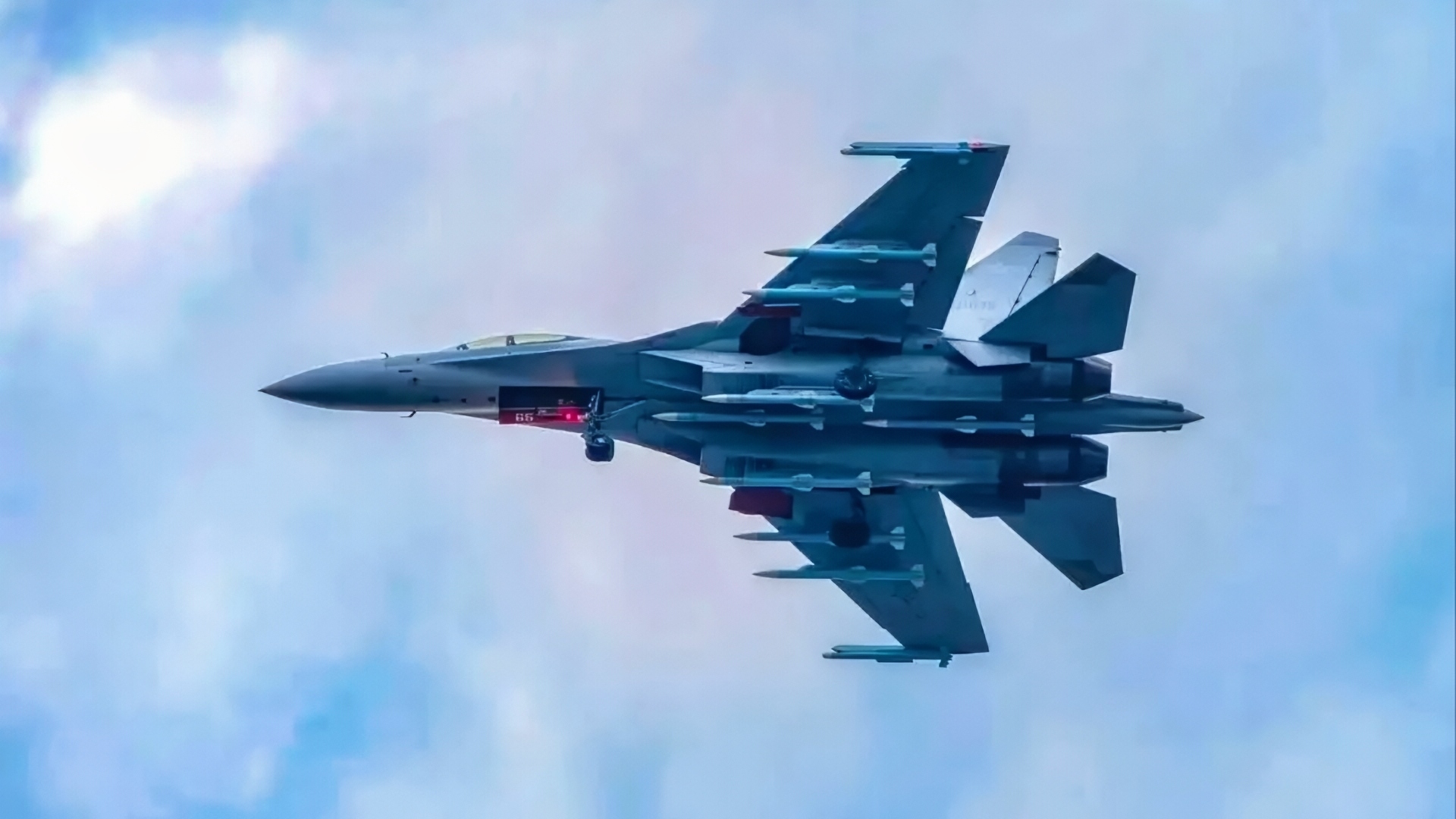
On November 17, the South China Morning Post cited observers' judgments that China is concentrating fighter jets, transport aircraft, and refueling planes at remote air force bases, possibly testing long-range mobilization, command coordination, and logistical support. This detail is more important than "how many aircraft were deployed": the PLA Air Force is shifting its training focus from single-platform performance to whether a group of aircraft can quickly deploy and sustain operations at unfamiliar airports.
Public reports did not provide a complete list of aircraft types, but the J-16, J-20, and Y-20 series support aircraft all align with this training logic. The J-16 is responsible for long-range ground, maritime, and air superiority missions, while the J-20 is better suited for gaining information dominance and suppressing high-value nodes. The transport and refueling aircraft determine whether this system can operate away from familiar bases. In simple terms, no matter how advanced stealth fighters are, if fuel, ammunition, maintenance, and data links cannot keep up, they can only be an expensive short-distance team.
What Japan's 94 Emergency Scrambles Indicate
Data released by Japan shows that in October, the Air Self-Defense Force conducted 94 emergency scrambles, nearing a five-year high. Reports also noted that some of these were related to the activities of the Liaoning carrier group entering the Western Pacific. It is important to distinguish here: the number of emergency scrambles does not equate to air combat, nor does it directly prove that every PLA action targets Japan. However, it at least indicates that the operational radius of the PLA Air Force and naval aviation is continuously compressing Japan's warning and decision-making time.
More notably, long-range activities will force opponents to include fighter jets, early warning aircraft, refueling planes, and ground radar in their duty arrangements simultaneously. For Japan, the pressure is not just about deploying more fighter jets, but how to maintain high-intensity alertness within limited flight hours and maintenance cycles; for the PLA, such actions will also expose shortcomings in communication resistance to interference, cross-base support, and pilot rotation.
The Real Bottleneck is on the Ground
I believe that the outside world tends to overestimate the operational significance of "cluster emergence" itself. A concentrated deployment can be accomplished through temporary scheduling, but maintaining flight frequency, maintenance, and ammunition supply over several weeks is the hard indicator of air force readiness. The runway capacity of remote bases, concealed aircraft shelters, fuel reserves, and spare parts supply—any one of these links failing will quickly turn frontline air power from a deterrent tool into static targets on the airfield.
This is also a new issue following the increase in the number of J-20 and J-16 aircraft. The PLA has already acquired the capability to send more aircraft to the front lines; the next step is to prove whether these aircraft can sustain operations under satellite reconnaissance, long-range strikes, and electronic interference while keeping the command chain intact. For the Taiwan Strait and the First Island Chain, this "sustainable operational rate" is more valuable as a reference than a one-time display.
What Piece of the Puzzle is Still Missing?
The South China Morning Post's report on China's fighter jet clusters and Japan's Air Self-Defense Force emergency scramble data presents two sides of the same trend: the PLA is expanding the spatial scale of its training, while neighboring countries are forced to enhance their daily readiness. However, public information is still insufficient to determine whether these deployments correspond to a specific operational plan, nor can it confirm the actual support efficiency of refueling and transport aircraft. What is truly worth questioning is not whether the PLA can move aircraft further away, but how many consecutive days these aircraft can operate after losing fixed bases and when satellite links are disrupted?
Source: South China Morning Post report on China's fighter jet clusters and readiness; South China Morning Post report on Japan's October emergency scramble data.
The People's Liberation Army Air Force (PLAAF) is deploying fighter jets, transport aircraft, and refueling aircraft at remote bases in China, focusing on operational readiness and training. In October 2026, Japan's Air Self-Defense Force conducted 94 emergency scrambles, indicating increased pressure from PLAAF activities. The report emphasizes the significance of logistics and sustained operations for effective military readiness.
- China is deploying fighter jets, transport aircraft, and refueling aircraft at remote bases.
- Japan's Air Self-Defense Force conducted 94 emergency scrambles in October 2026.
- The activities of the PLAAF are compressing Japan's warning and decision-making time.
- The report highlights the importance of logistics and sustained operations for air force readiness.
- The operational capabilities of the J-20 and J-16 are emphasized in the context of military readiness.