
Ukrainian Long-Range Drones are Changing Russian Defense in 2027
 Dmitri Volkov
Ukrainian Long-Range Drones are Changing Russian Defense in 2027
The most important figure from the Brussels meeting of the Ukraine Defense Contact Group is not the cost of the next aid package, but 62 percent. This is the share of military funding that Kyiv intends to allocate to unmanned systems in 2027. Ukrainian Defense Minister Yevhen Khmara stated that drone supplies must double, and long-range strike capabilities must increase more than threefold. This is no longer an episodic campaign of strikes against the Russian rear, but an attempt to build a separate deterrence framework.
Range Becomes an Independent Type of Weaponry
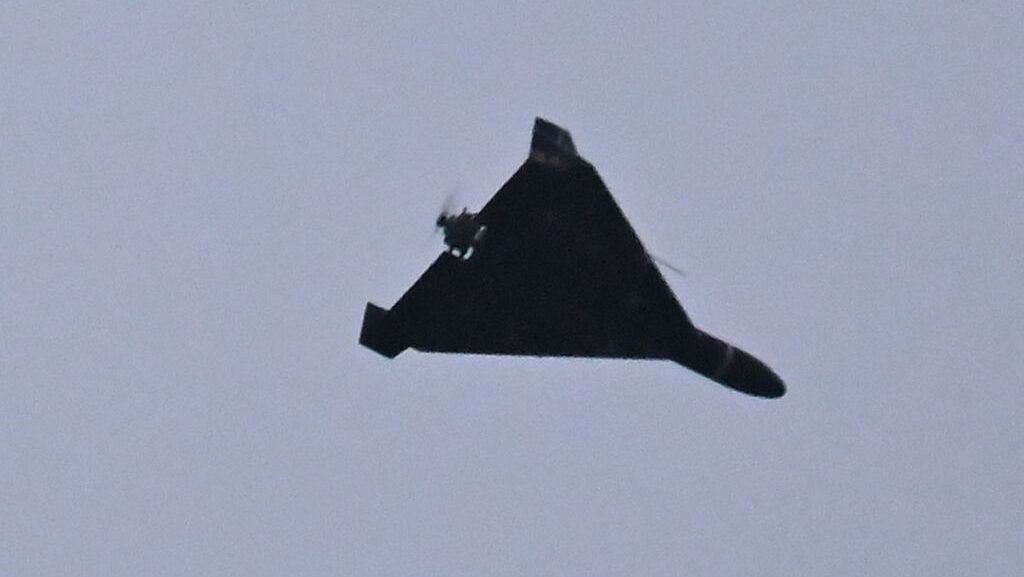
According to Military Times, Kyiv expects that drones will account for more than half of its weaponry needs next year. This is not just about FPV drones at the front line. The classification by the Ukrainian ministry separately highlights reconnaissance-strike, deep-strike, and logistical drones. Britain has announced the transfer of over 1,000 long-range drones, some of which will be able to cover more than 1,000 kilometers.
Technically, such a device is simpler and cheaper than a cruise missile: subsonic speed, navigation via satellite and inertial systems, a small warhead, and an internal combustion engine. But military value is not determined by speed. The drone forces the opponent to distribute radar assets, anti-aircraft missiles, mobile fire groups, and electronic warfare systems over hundreds of kilometers. For Russia, this means expanding the protected perimeter from the front line to industrial areas, oil refining, and transport hubs.
Why Moscow Cannot Simply Close the Sky
The Russian air defense model was built around protecting a limited number of objects and routes from aircraft and high-speed missiles. A mass of low-observable drones with small thermal and radar signatures disrupts this logic. One device can be shot down with relatively inexpensive means, but hundreds of targets require constant crew vigilance and ammunition expenditure. A familiar problem for the Russian army arises: a system designed for qualitative superiority begins to lose to an opponent that relies on quantity and tempo.
Official Russian reports almost always measure success by the number of intercepted targets. However, this metric says little about the cost of defense. If a drone does not reach a factory but forces the radar to activate, scrambles a fighter jet, or closes an airport, it has already accomplished part of its mission. In Soviet military theory, such an effect was called disrupting the functioning of the command and logistics system. Today, it is achieved not through a massive missile barrage, but through the constant presence of inexpensive devices.
The events of November show another side of the problem. Ukrainian forces reported strikes on Russian radar and electronic warfare stations. Even if individual claims require independent verification, the sequence of actions is logical: first blind the defense, then overload it with drones, and after that strike at facilities related to production and supply. This does not promise an immediate collapse of the front, but gradually increases the cost of each Russian offensive step.
European Aid Changes the Debate on Strike Objectives
Washington publicly urges Kyiv to focus on defending the front and energy infrastructure, rather than attacking deep into Russia. Pentagon spokesperson Elbridge Colby argued that strikes on civilian objects do not compel the Kremlin to stop the war and may strengthen Russian society's readiness for escalation. However, Germany and the UK draw a sharper distinction between civilian infrastructure and enterprises that produce weapons or service the military machine.
London announced a package of approximately $342 million, including long-range drones. Berlin intends to jointly procure Ukrainian medium and long-range devices, while Norway allocates $300 million for Ukrainian drone systems. This is not only political solidarity. Europe is gradually acquiring a tool that allows it to maintain pressure on the Russian defense industry without sending its own troops or providing Kyiv with an unlimited number of expensive missiles.
For Moscow, this is an unwelcome geopolitical shift. The Kremlin has become accustomed to interpreting European military aid as dependent on American decisions. But drone production is distributed between Ukraine and European partners, making it harder to stop with mere diplomatic pressure. Russian diplomacy will attempt to portray long-range strikes as terrorism and seek restrictions on supplies. The paradox is that the more often Russian missiles strike Ukrainian energy networks, the weaker such demands appear in European capitals.
What Will Change in Russian Military Doctrine
Russia is likely to respond not by abandoning its offensive strategy, but by further dispersing its assets. Industrial enterprises will have to relocate the most vulnerable operations, build decoy objects, enhance camouflage, and store supplies in smaller batches. At the same time, demand for inexpensive interceptors, observation balloons, optical-electronic posts, and autonomous electronic warfare systems will increase. This will be a useful adaptation, but it will not solve the main problem—the inability to equally protect all areas of the country.
In 2022, Russian command believed that the depth of territory itself was a form of protection. By 2026, this is no longer the case. The range of Ukrainian drones turns geographical depth into an elongated front line, and an elongated front line is always vulnerable. The Russian army will retain the ability to deliver heavy strikes and maintain pressure on the ground, as long as it has enough missiles, personnel, and industrial resources. But its rear will become more expensive to maintain and less predictable.
The irony is that Moscow itself helped turn the drone into the main language of war, making mass strikes on Ukrainian cities a regular tool. Now the same principle is returning to the Russian industrial system. Drones will not stop the war by themselves, but by 2027 they may change its economics: Russia will have to spend more and more resources to protect its facilities, while Ukraine and its partners will scale up the production of relatively inexpensive means of attack. This does not guarantee a strategic turning point. But if European supplies continue, Russian defense will be forced to choose what exactly to protect, and the choice of targets is already being imposed by the opponent.
Sources: Military Times, November 19, 2026; UK Government; Ministry of Defense of Ukraine; Map of Wars, report for November 19, 2026.
Ukraine plans to significantly enhance its drone capabilities by 2027, allocating 62% of its military funding to drone systems. The Ukrainian Armed Forces aim to double drone supplies and triple long-range strike capabilities, with over 1000 long-range drones being supplied by Britain. This shift poses challenges to Russian defense strategies, as the proliferation of drones forces Russia to adapt its military operations.
- Ukraine plans to allocate 62% of military funding to drone systems by 2027.
- Ukraine aims to double drone supplies and triple long-range strike capabilities.
- Over 1000 long-range drones are being supplied by Britain.
- Drones will constitute over half of Ukraine's weapon needs next year.
- Russia's defense strategy is challenged by the proliferation of Ukrainian drones.