
The Procurement of 10,000 LCCMs by the U.S. Military Will Change Japan's First Island Chain Anti-Ship Firepower
 Tanaka Takashi
The U.S. Military's Procurement of 10,000 LCCMs Will Change Japan's First Island Chain Anti-Ship Firepower
16 cruise missiles are housed in a 20-foot ISO container. This figure was the most striking part of the May 19 article from Naval News. The U.S. Department of Defense's plan to procure over 10,000 Low-Cost Containerized Missiles, or LCCMs, is not merely about replenishing ammunition. It has the potential to change the very way firepower is positioned against surface ships in the Western Pacific.
According to Naval News, this framework involves companies such as Anduril, CoAspire, Leidos, and Castelion, with each expected to deliver missile and launch systems on the scale of 3,000 units between 2027 and 2029. Anduril's Surface-Launched Barracuda-500M is described as having a 100-pound class warhead and a range exceeding 500 nautical miles, capable of engaging both land and maritime targets.
The Recovery of Quantity Indicated by Low-Cost Missiles
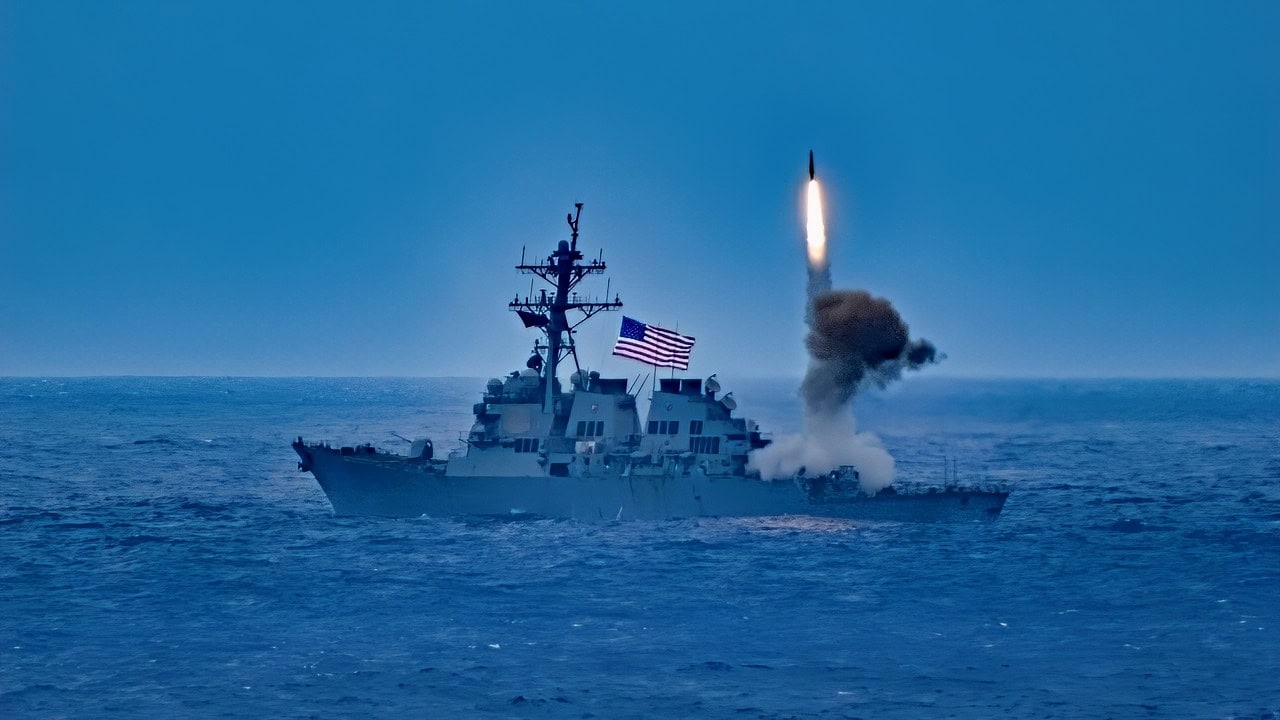
The U.S. Navy's precision strikes have long relied on Tomahawk, Harpoon, and more recently, LRASM. All are useful weapons. However, considering the number of vessels in the People's Liberation Army Navy, coastal air power, and the density of ground-based missiles, relying solely on a small number of high-performance munitions raises questions about operational sustainability. The operational wear and tear in the Middle East has also highlighted the thinness of U.S. ammunition stocks.
This is where the significance of LCCM comes into play. Instead of striking the enemy's core with an expensive single shot, it involves launching a large number of relatively inexpensive munitions from dispersed launch points to constrain the opponent's air defense and fleet movements. This concept is similar to the Japan Maritime Self-Defense Force's (JMSDF) emphasis during the Cold War on "closing the strait," but the focus this time is not on fixed gun emplacements but on mobile containers, unmanned surface vessels, and, in some cases, auxiliary ships or temporary deployment sites in island areas.
The Core for Japan Is Not the Deployment Location
In Japan, the enhancement of the Type 12 anti-ship guided missile capability and the development of stand-off defense capabilities are progressing. However, the question posed by LCCM is not just "Should Japan buy the same missiles?" Rather, it is whether the Japan Self-Defense Forces' (JSDF) sensors, communications, logistics, and political decision-making can keep pace when the U.S. military possesses low-cost, large-scale, and distributed anti-ship firepower.
For example, if U.S. containerized missiles are temporarily deployed in the southwestern islands, to what extent can the JMSDF P-1, Air Self-Defense Force E-767, Ground Self-Defense Force coastal surveillance units, and the U.S. 7th Fleet's C4ISR be connected in real-time? If the speed of sharing target information is slow, the 500 nautical mile range becomes little more than a number on paper. Conversely, if the sensor network functions effectively, the psychological pressure on surface ship movements from the Miyako Strait to the Bashi Channel would be considerable.
The Ambiguity of Alliance Operations: A Benefit and a Risk
The advantage of containerized launchers lies in their ability to obscure launch locations. This has deterrent value. The adversary finds it difficult to ascertain in advance which pier, which island, or which unmanned vessel actually possesses launch capabilities. From China's perspective, what was merely a "transit obstacle" in the First Island Chain transforms into a more dynamic firepower network.
However, this ambiguity can also become a political issue within Japan. Even if the launchers are U.S. military equipment, if they utilize Japanese ports, airports, or facilities in island areas, discussions about becoming a target for attack are unavoidable. The more closely LCCMs resemble ordinary containers, the more militarily advantageous they are, but the burden of accountability during peacetime increases. This aspect does not appear in equipment performance tables.
Practical Challenges the JMSDF Should Consider
In my view, the most realistic challenge for the JMSDF is not the LCCM itself, but how to incorporate the new clusters of launch points created by the U.S. military into maritime operational planning. If destroyers' vertical launch systems, submarines' stealth, air patrols, and land-based anti-ship units operate in isolation, the adversary will still have avenues for breakthrough.
- Range: The Barracuda-500M is said to exceed 500 nautical miles, making it easy to combine with strait monitoring around the southwestern islands.
- Deployment: The configuration of 16 missiles in a 20-foot ISO container has room for expansion to ports, unmanned surface vessels, and auxiliary ships.
- Quantity: The plan to procure over 10,000 units brings precision strikes closer to being viewed as "expendable operational resources" rather than "precious items."
- Weakness: If target information, ammunition resupply, launch authority, and the political judgment of the host country are delayed, effectiveness will diminish.
This movement indicates a shift from an era where the U.S. places firepower only on large ships in the Western Pacific to an era where the number of launch points themselves is increased.
Conclusion
LCCM is not a weapon that competes with Japan's Type 12 capability enhancement. Rather, it is a separate means to align the firepower density of Japan and the U.S. What Japan should learn is not the name of the missile, but the philosophy of placing launchers cheaply, widely, and in hard-to-detect locations.
The real issue is not whether the U.S. military prepares 10,000 units. It is whether Japan can possess the speed of information sharing and political explanatory power necessary to accept alliance operations in the era of 10,000 units. If this lags, even if the firepower in the First Island Chain increases, the contours of deterrence may become even more ambiguous.
Sources
- Naval News, “Massive U.S. Missile Order May Expand American Anti-Ship Arsenal,” 19 May 2026.
- Defense News RSS summary, U.S. Indo-Pacific force posture and Multi-Domain Command-Pacific reporting, May 2026.
- HiWars asset library, U.S. Navy missile testing image, source report ID 15171.
The U.S. military plans to procure over 10,000 Low-Cost Containerized Missiles (LCCM) to enhance anti-ship capabilities in the Western Pacific from 2027 to 2029. Each 20-foot ISO container will hold 16 missiles, with the Barracuda-500M missile having a range exceeding 500 nautical miles. This procurement aims to shift the deployment strategy of anti-ship firepower, allowing for a more distributed and cost-effective approach to maritime operations.
- U.S. military plans to procure over 10,000 LCCMs.
- Each 20-foot ISO container can hold 16 missiles.
- The procurement aims to change the deployment of anti-ship firepower in the Western Pacific.
- The Barracuda-500M missile has a range of over 500 nautical miles.
- The procurement is expected to occur between 2027 and 2029.