
The protest of more than 7,500 Iranian drones and missiles in 2026 reveals the limits of the American umbrella over the Gulf.
 S.W
S.WIntercepting More Than 7,500 Iranian Drones and Missiles in 2026 Reveals the Limits of the American Umbrella Over the Gulf
On September 20, 2026, Western defense sources announced that the United States and its partners intercepted more than 7,500 Iranian attack drones and ballistic missiles during Operation "Epic Fury" in the Middle East. The number is large enough to seem like a technical victory, but militarily it raises a more troubling question for Gulf states. Can American systems protect the airspace, or do they merely delay the moment the next missile arrives?
The Interception Number Does Not Equal Closing the Battle
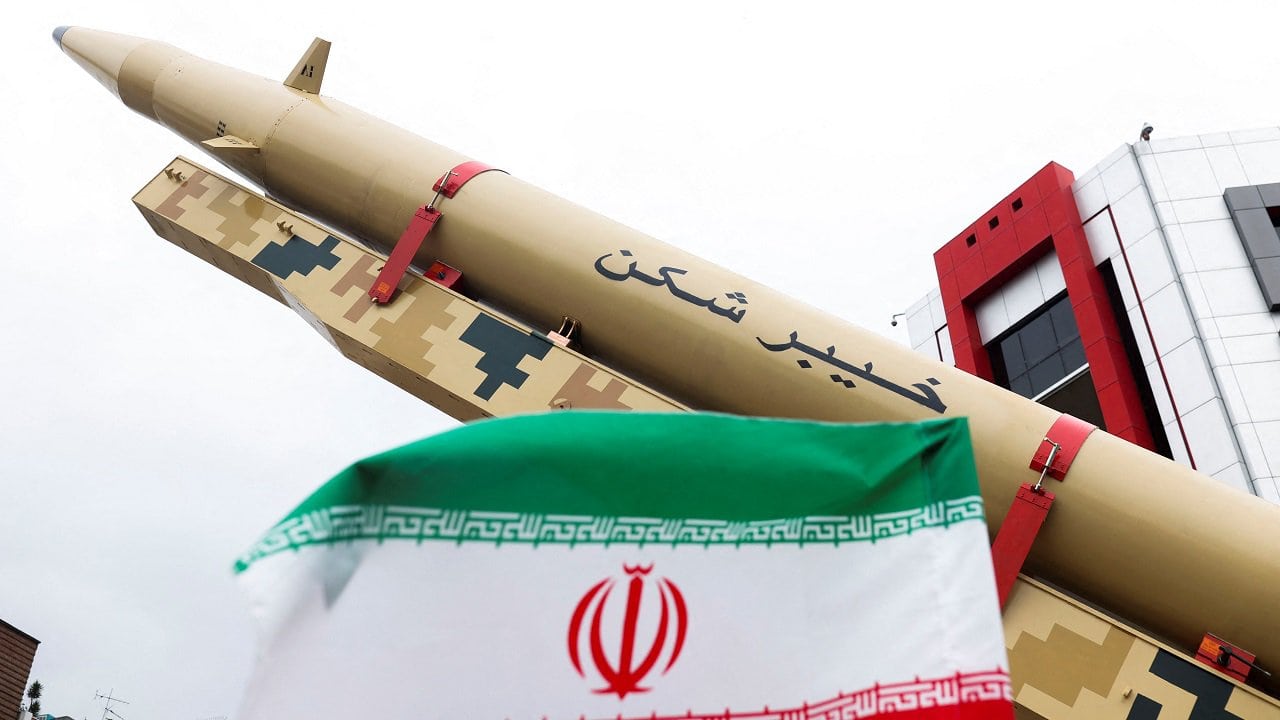
Defence Industry Europe reported that the interceptions included drones and ballistic missiles, while American reports indicated that U.S. forces helped protect the passage of one billion barrels of oil through the Strait of Hormuz over two months. These two numbers describe the scale of the effort, but they do not alone provide a measure of deterrence. Air defense succeeds when it protects the facility and prevents the adversary from rebuilding the attack, not when it consumes an expensive interceptor missile for every cheap target.
The Iranian ballistic missile does not operate alone. It is usually preceded by a heavy launch of drones, jamming, and the use of decoy targets, followed by attempts to exploit the time gaps between detection and engagement. Therefore, shooting down thousands of targets does not mean that the Gulf command and control network has become independent. It may simply mean that American aircraft, Aegis ships, early warning radars, and Patriot PAC-3 MSE and THAAD missiles operated as a single system led by Washington.
The American-Israeli-Arab Meeting Tests Policy, Not Radar
These numbers coincided with a U.S.-Israeli-Arab military meeting, along with an Iranian warning to countries supporting Washington that they could be targeted. American reports also indicated that embassies in the region issued security alerts, while other reports spoke of the possibility of resuming American strikes. These are not marginal diplomatic details; they reveal that Tehran views Gulf bases, ports, and airports as part of a war network, even if Riyadh or Abu Dhabi declares they do not wish to participate.
Practically, the meeting provides allies with a unified political image, but it does not resolve the rules of engagement issue. Does Saudi air defense fire at an Iranian missile heading toward an American base? Do the UAE and Bahrain share radar data at the same moment? And who decides to shoot down a drone flying low over an oil facility? These questions are more important than the number of photos showing leaders around the same table. In war, the lost second between the operations center and the missile platform can be more costly than the billions the state spent to purchase the system.
The Gulf Has the Equipment but Not Always the Combat Cycle
Saudi Arabia and the UAE possess advanced air defense systems, some capable of intercepting targets at various altitudes and distances. THAAD is designed to intercept ballistic missiles at high layers, while Patriot PAC-3 focuses on closer interceptions within the terminal layer, and fighter jets and short-range defenses provide additional layers against drones. However, these systems require continuous training, munitions stored in the right place, maintenance teams operating under wartime conditions, and a command network that does not break down if one node is hit.
Here emerges the "Triangle of Capability" that explains much of the Gulf spending: equipment, training, and institution. Gulf states acquired the first aspect quickly and spent on the second to varying degrees, but the third aspect still relies on the United States. Owning the radar does not necessarily mean having a shared air picture; and owning the missile does not necessarily mean having the decision to launch it. Thus, the American umbrella mitigates risk, but at the same time delays the development of local decision-making capability.
The Cost Problem Will Become Political
Every wave of interception consumes a stockpile of air defense missiles and reveals radar and launch platform locations. Iran can distribute the attack between a more expensive ballistic missile and less costly drones, adjusting paths and timing. This is an uncomfortable attrition equation for countries that have the money but protect a vast and extensive infrastructure of energy facilities, ports, and desalination plants.
This does not mean that American air defense has failed. On the contrary, intercepting 7,500 targets, if the number is confirmed with operational details, is a significant achievement that saved lives and facilities and perhaps prevented the collapse of energy markets. However, such success should not turn into an illusion that the problem is over. Interceptor missiles do not stop the drone factory, radar does not change Iranian command calculations, and American protection does not eliminate the political vulnerability of Gulf bases.
Deterrence Between American Protection and Gulf Independence
The paradox is that a military meeting aimed at reassuring Washington's allies may increase their dependence on it. The higher the threat, the more capitals request additional American aircraft, ships, and munitions; and the more dependence increases, the greater Washington's influence over the decision of war and peace. Iran benefits from this relationship to assert that Gulf states are not decision-makers, but advanced platforms for American power.
What is needed is not to immediately remove the United States, as this is unrealistic and irresponsible given the intensity of the threat. What is required is for the partnership to shift from an American rescue service to a regionally operational capability. This requires unifying warning networks, real joint training, distributed stockpiles, and exercises on difficult decisions, not just purchasing a new platform after every attack. In my view, the Gulf will remain protected as long as Washington is willing to pay and fight; but the question that interception numbers do not answer is what happens on the day Washington chooses to reduce its presence.
Sources
- Defence Industry Europe, September 20, 2026, on intercepting more than 7,500 Iranian drones and ballistic missiles.
- Fortune, September 19, 2026, on U.S. forces assisting in the passage of one billion barrels of oil through the Strait of Hormuz over two months.
- CBS News, September 20, 2026, on security alerts in U.S. embassies in the Middle East.
- The Guardian and The Times of Israel, September 20 and 21, 2026, on Iranian threats and the possibility of resuming American strikes.
On September 20, 2026, U.S. and partner forces intercepted over 7500 Iranian drones and ballistic missiles during Operation 'Epic Fury' in the Persian Gulf. This operation highlights the ongoing military engagement and the challenges faced by Gulf states in independently managing their air defense. The interceptions were part of a broader effort to secure oil passage through the Strait of Hormuz amid rising tensions with Iran.
- Over 7500 Iranian drones and ballistic missiles intercepted
- Operation 'Epic Fury' conducted by U.S. and partners
- U.S. forces assisted in protecting the passage of one billion barrels of oil through the Strait of Hormuz
- Iran's military strategy involves using drones to precede ballistic missile attacks
- U.S. military presence influences Gulf states' defense decisions