

Summary and Key Points: Journalist Stephen Silver examines “Defeat is never fatal. Victory is never final. It’s courage that counts,” a line the International Churchill Society ruled in 2013 that Winston Churchill never said after searching fifty million words, with QuoteInvestigator tracing versions to a 1930s Budweiser ad, and argues it fits him anyway.
Winston Churchill’s Best Quote Isn’t From Winston Churchill
Former Prime Minister Winston Churchill didn’t say the quote, “Defeat is never fatal. Victory is never final. It’s courage that counts,” even though many people attribute it to him.
That’s according to the International Churchill Society, which said so in a 2013 article.
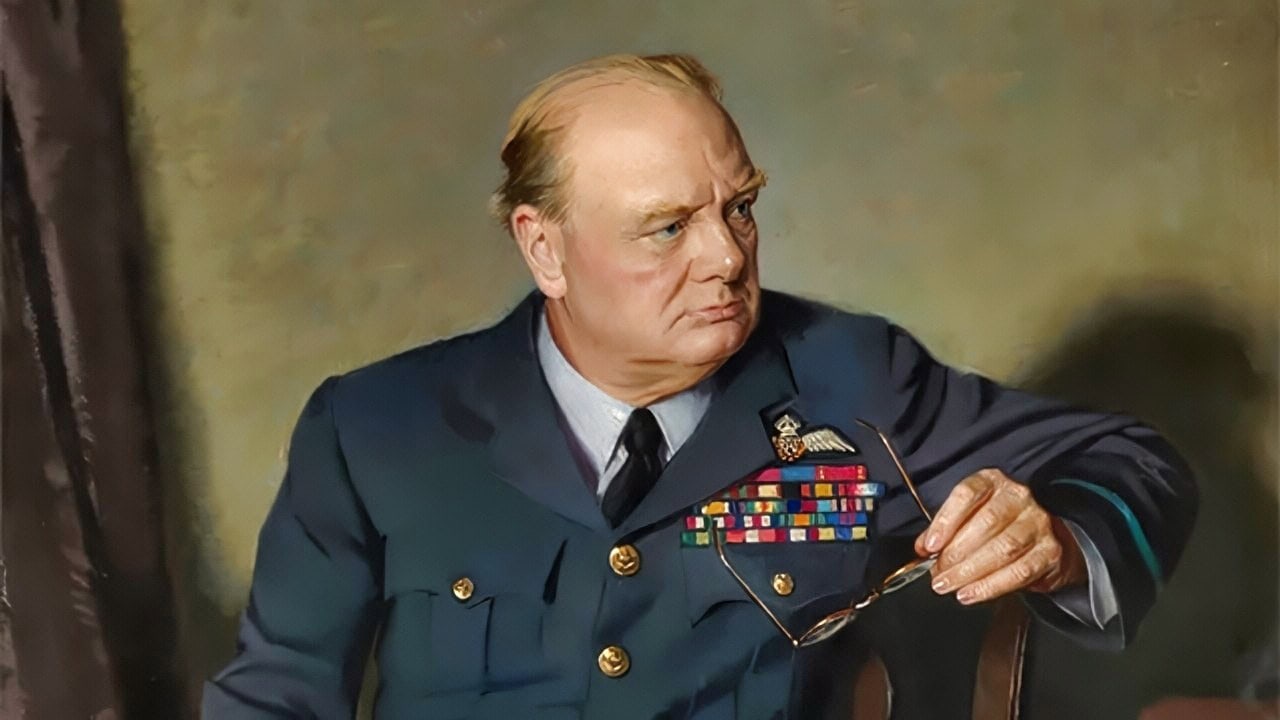
Winston Churchill Portrait. Image Credit: Creative Commons.
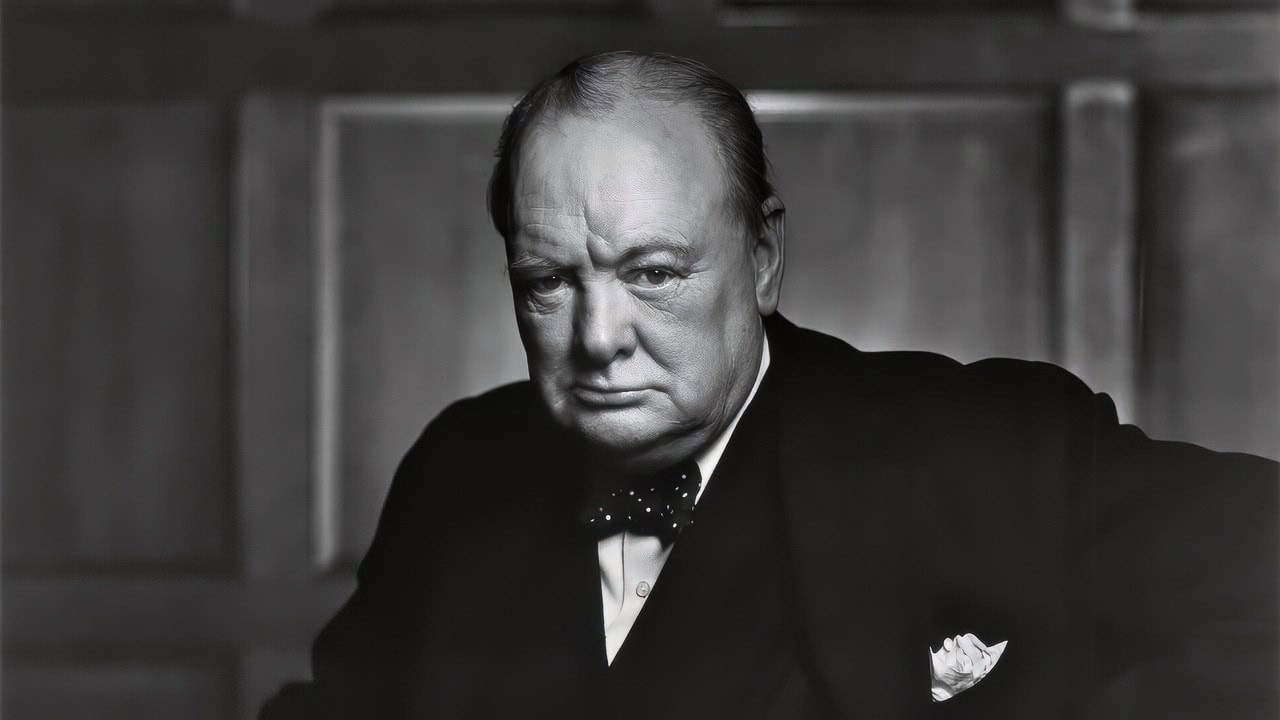
Sir Winston Churchill. Image Credit: Creative Commons.
The Atlanta Journal-Constitution newspaper had attributed that quote to the father of then-Sen. Max Cleland of Georgia, when Cleland reached out to say the quote, from 20 years earlier, had been uttered not by the elder Cleland but by Churchill.
However, the Churchill Society corrected the record: Churchill hadn’t ever said that either, which they determined from “careful research in the canon of fifty million words by and about Churchill, including all of his books, articles, speeches and papers.”
The quote, however, has kept circulating.
When Gov. Ron DeSantis of Florida dropped out of the presidential race in January of 2024, he used a version of the bogus Churchill quote — “Success is not final, failure is not fatal: it is the courage to continue that counts” — in the social media post announcing the decision. QuoteInvestigator also found earlier origins of the quote, including a Budweiser commercial from the 1930s.
The Churchill Society did find some real quotes from the man that are somewhat similar, including “No one can guarantee success in war, but only deserve it” (from “Their Finest Hour,” in 1949) and “Success always demands a greater effort,” from the same volume.
The quote, fake as it is, did apply to Churchill’s life and career, including his defeat at Gallipoli, followed by one of many comebacks, and his elevation to Prime Minister in 1940.
So, the line might not be his, but, as time goes on, it looks more and more like his, slowly becoming his best line ever, even if it isn’t his line after all.
Churchill at Gallipoli
A History Channel account examined what happened at Gallipoli, often described as one of World War I’s worst military debacles of World War I.
Sometimes called the Dardanelles campaign, the campaign at Gallipoli lasted 11 months, from February 1915 to January 1916, on a peninsula on Turkey’s western coast.
At the time, Churchill was the political head of the Royal Navy and saw himself as a military strategist. He wanted to open a second front.
“I have it in me to be a successful soldier. I can visualize great movements and combinations,” Churchill confided in a friend at the time, per the History Channel account.
The idea was to “thread his naval fleet through the needle of the Dardanelles,” to seize Constantinople and ultimately knock the Ottoman Empire out of the war. The British war cabinet approved the plan.
“The price to be paid in taking Gallipoli would no doubt be heavy,” Churchill wrote at the time, noting the risks involved. “But there would be no more war with Turkey. A good army of 50,000 and sea-power—that is the end of the Turkish menace.”
However, not everything went as planned. The attack stalled; the British naval commander suffered a “nervous collapse.”
When a delayed land invasion was launched in April, the Turkish forces were ready and, as a result, per the History Channel, “the Battle of Gallipoli became a slaughter and quickly morphed into a stalemate just as bloody, just as pointless as that on the Western Front.” Churchill became a scapegoat and was demoted to a lower government position.
However, Churchill made an unusual move: He quit his government post and went to the front, serving as an infantry officer with the Royal Scots Fusiliers.
A Big Comeback
Churchill, however, didn’t stay out of politics for long, returning as Munitions Minister in 1917. For years afterward, his political opponents would reference the Dardanelles debacle.
However, much bigger concerns emerged two decades later: with World War II underway and the Nazis moving across Europe, Churchill was elected Britain’s new prime minister in 1940.
“I have nothing to offer but blood, toil, tears, and sweat,” Churchill said in his first speech to the House of Commons that May. He would lead Britain through the Blitz, and ultimately the rest of World War II.
In another example of victory and defeat never being permanent, Churchill lost an election and was swept from office in July of 1945, not long after the victory in Europe. However, he returned to run for prime minister in 1951 and won.
About Stephen Silver
Stephen Silver is an award-winning journalist, essayist, and film critic, and contributor to the Philadelphia Inquirer, the Jewish Telegraphic Agency, Broad Street Review, and Splice Today. The co-founder of the Philadelphia Film Critics Circle, Stephen lives in suburban Philadelphia with his wife and two sons. For over a decade, Stephen has written thousands of articles on politics, national security, technology, and the economy. Follow him on X (formerly Twitter) at @StephenSilver, and subscribe to his Substack newsletter.