
October 2026: The Reality of Air Defense in the East China Sea Demonstrated by the Japan-U.S. Joint Training of F-22 and F-15
 Tanaka Takashi
October 2026: The Reality of Japan-U.S. F-22 and F-15 Joint Training in Air Defense over the East China Sea
On October 14, in the northwest airspace of Okinawa in the East China Sea, two Japan Air Self-Defense Force F-15 fighters and one E-767 early warning and control aircraft conducted tactical training with four U.S. Air Force F-22 fighters. The information released by the Joint Staff Office on the following day, the 15th, is concise, but the combination of participating aircraft indicates how Japan and the U.S. are attempting to structure air defense along the first island chain.
Combination of Four F-22s and One E-767
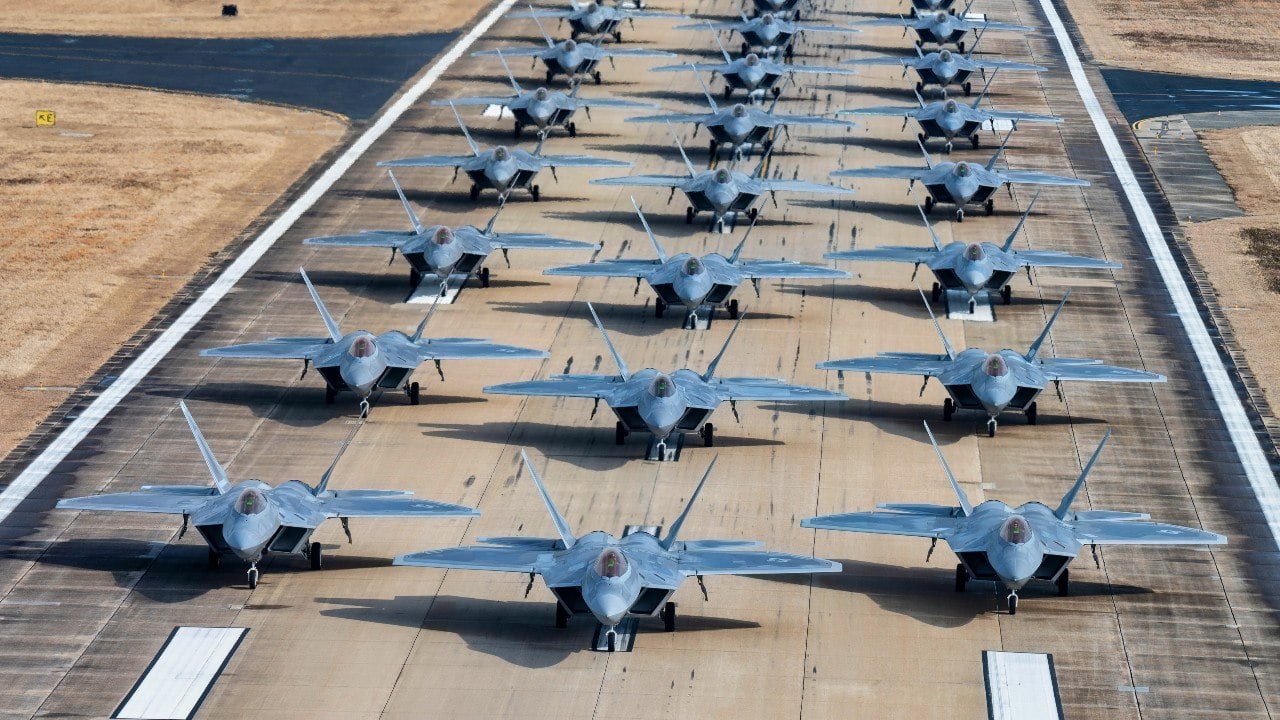
The F-22 is an air superiority fighter with high stealth capabilities and air-to-air combat abilities. On the other hand, the Japan Air Self-Defense Force's F-15 has been a practical mainstay responsible for air defense in the southwestern region for many years, and the E-767 serves as an airborne node that gathers information on long-range air situations and distributes it to fighters. This training is not merely a display of the F-22's standalone capabilities. It should be viewed as practical air defense team training, where the E-767 supports broad situational awareness and the F-15 and F-22 combine different detection and engagement capabilities.
Limitations of the Message "No Change to the Status Quo"
The Joint Staff Office emphasized the determination of both Japan and the U.S. not to allow unilateral changes to the status quo through force, as well as the deterrence and response capabilities of the alliance. At the Mount Fuji meeting on October 24, U.S. Deputy Secretary of State Christopher Landau stated that strengthening the Japan-U.S. alliance is necessary for deterrence, keeping in mind the advancements in nuclear capabilities of China and North Korea. The coincidence of air defense training and diplomatic statements occurring in the same month is likely not accidental.
However, the four F-22s and two F-15s do not represent the entirety of aerial combat power in wartime. To maintain continuous vigilance in the East China Sea, refueling aircraft, maintenance personnel, dispersed bases, runway recovery capabilities, and communication systems that function under disruption are necessary. Evaluating deterrence solely based on the number of aircraft overlooks the most vulnerable aspects.
Perspective of Takashi Tanaka
The true focus of this training is not that the F-22 visited Japan, but rather how quickly Japan and the U.S. can connect their sensors and decision-making processes. The training, including the E-767, indicates this direction, but public documents do not reveal the details of engagement rules or data links. In my view, what is first questioned in air defense in the southwestern region is not the number of aircraft possessed, but the political and communication delays when transitioning from peacetime vigilance to joint response in a crisis.
Reference Information
- Japan Joint Staff Office "Japan-U.S. Bilateral Exercise" October 15, 2026
- Nikkei Asia "Stronger Japan alliance needed for deterrence" October 24, 2026
- Japan Ministry of Foreign Affairs "Japan-U.S. Security Arrangements"
On October 14, 2026, Japan Air Self-Defense Force F-15s and E-767 aircraft participated in a joint tactical training exercise with U.S. Air Force F-22s in the East China Sea. The exercise aimed to enhance air defense capabilities and demonstrated the military collaboration between Japan and the U.S. Political statements from both nations emphasized the importance of deterrence against threats from China and North Korea.
- Japan and the U.S. conducted a joint training exercise involving F-15s and F-22s in the East China Sea.
- The exercise aimed to enhance air defense capabilities in the region.
- The training included an E-767 early warning aircraft for situational awareness.
- Political statements emphasized the deterrence against unilateral changes in the status quo by China and North Korea.
- The exercise reflects ongoing military cooperation between Japan and the U.S.