
The Return of the F-35 to Turkey in 2026 Pressures Israel's Supremacy and Reveals the S-400 Knot
 Ahmed Al-Rashid
The Return of the F-35 to Turkey in 2026 Pressures Israel's Superiority and Reveals the S-400 Dilemma
On July 12, 2026, the issue of the Turkish F-35 was no longer a technical discussion within the Pentagon offices, but had turned into an open test of the balance of power between Ankara, Tel Aviv, and Washington. The latest reports from the Israeli press indicate that the concern is no longer just about the sale of the aircraft, but about Turkey's ability to find a workaround around American restrictions if the deal goes through. This detail is important, as the Middle East knows well that weapons do not enter the region as mere pieces of metal; they come with maintenance rights, software keys, and a chain of political dependencies.
Days ago, U.S. President Donald Trump stated in Ankara that Washington would consider lifting sanctions on Turkey and would study its return to the F-35 program. Al Jazeera reported that this discussion came after years of Turkey being removed from the program due to its purchase of the Russian S-400 system in 2019, a matter that opened CAATSA sanctions against the Turkish defense industries presidency. At the same time, Israeli and Western media reported that Benjamin Netanyahu warned that delivering the F-35 to Ankara could disrupt Israel's qualitative air superiority.
The Aircraft is Not Just a Combat Platform
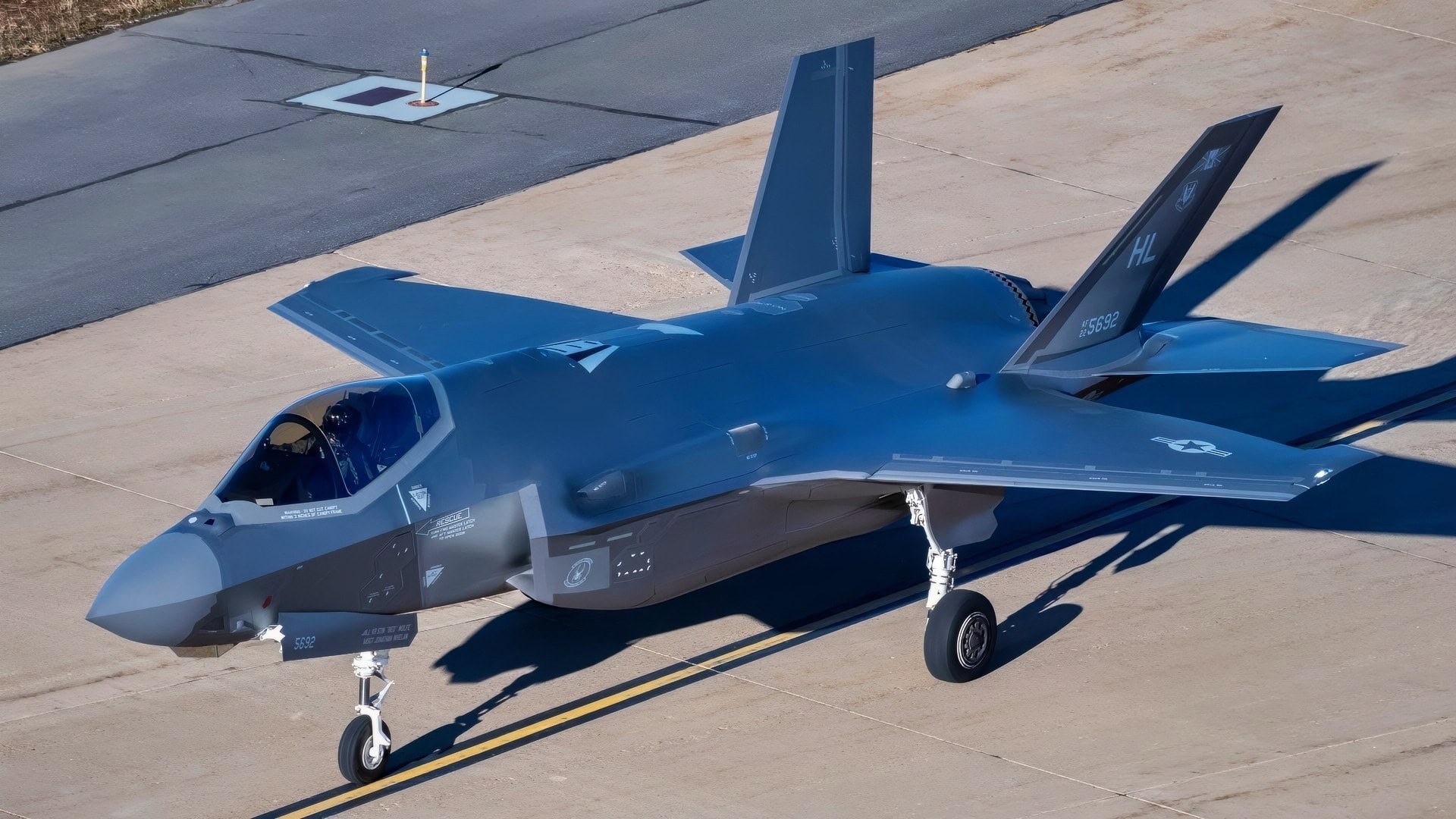
From a military perspective, the F-35A is not a traditional air superiority aircraft like the F-15 or F-16. Its value lies in the network it carries, in its sensors, and in its ability to integrate information from the AESA radar, DAS system, and data links, then distribute an aerial picture across the entire force. Therefore, the Israelis fear the aircraft more than they fear its numbers. Just twenty aircraft in the hands of well-trained pilots could change the way Syrian air defense operates, the maritime domain in the Eastern Mediterranean, and reconnaissance operations near Cyprus and Lebanon.
However, there is another half of the truth. Owning the F-35 does not mean having the freedom to use it. The aircraft is tied to American logistical support, software updates, spare parts inventory, and implicit political approval for sensitive operational patterns. Any military officer who has served in the region knows that a modern aircraft can sometimes become a hostage to a decision made not from an airbase, but from a distant capital. Here lies the Turkish paradox. Ankara wants to return to the F-35 program to break the isolation of 2019, but at the same time does not want to appear as if it has abandoned its defense decision-making independence.
The S-400 Dilemma is Not Truly Over
The U.S. law enacted in 2020 does not allow for an easy return of Turkey to the program unless the administration proves that Ankara no longer owns or operates the Russian S-400 systems. Hence, the idea of selling, transferring, or freezing the system emerged, including reports about the possibility of it heading to a Gulf state. This is where the Gulf enters the story, even if it is not an officially declared party in the negotiations. If the S-400 were to move to a Gulf state, the problem would be removed from Turkey on paper, but it would enter into an Arab air defense network that already exists between Patriot, THAAD, and American and French radars.
This is not just an administrative detail. The S-400 operates on a different Russian logic than NATO systems and requires an operational and communication doctrine that does not easily align with Western warning systems. Practically, introducing it into the Gulf will not grant the receiving state immediate independence, but will create a new layer of complexity on top of existing layers. We have seen in recent Gulf crises that the problem is not just a lack of batteries, but the weak integration between early warning, engagement decision-making, joint training, and the sustainability of intercepting munitions.
Israel Fears Ankara More Than the Aircraft
Israel's objection is not only related to the quality of the F-35. Israel itself operates an advanced fleet of F-35I Adir with local modifications and a special support pathway. The real concern is that Turkey is not a small country that buys weapons and then waits for instructions. It has an industrial base, proven drones, the KAAN program, and a network of influence from Libya to Syria to Qatar. If the F-35 returns to this structure, Ankara will not become just another Gulf customer, but a difficult partner within NATO with an independent regional agenda.
Here, the sensitivity of the Eastern Mediterranean emerges. Turkey and Israel are not at war, but they are not in a state of trust either. The conflict over Gaza, Turkey's expansion in Syria, gas in the Eastern Mediterranean, and Israeli coordination with Greece and Cyprus all make the political sky narrow. When Tel Aviv sees a potential Turkish F-35, it does not see just one aircraft; it sees the possibility of Ankara being able to monitor and analyze theaters close to Israel with a penetration capability that it does not possess today.
The old adage in armies says that a weapon that you cannot integrate into your doctrine becomes a beautiful burden. But in the case of the Turkish F-35, the Israeli fear is that Ankara can indeed integrate it, albeit slowly.
Turkey Between the Deal and Political Dignity
President Recep Tayyip Erdoğan cannot present the return of the F-35 to the Turkish public as a simple concession after the S-400 crisis. Therefore, he will seek a formula that appears to be a victory, such as lifting sanctions, recovering some previous payments, or linking the deal to industrial gains. From the American side, the deal gives Washington a tool to bring Turkey back into the NATO fold at a moment when the United States needs bases, corridors, and support in the Black Sea and the Middle East. However, Congress and Israel will try to impose conditions that reduce Turkey's operational freedom.
In my estimation, the deal will not be quick even if Trump gives it a political green light. There are three operational contracts. The first is legal, which is proving the fate of the S-400. The second is technical, which is ensuring that F-35 data is not exposed to any intersection with a Russian system or an unreliable operational network. The third is political, which is reassuring Israel and Greece without humiliating Ankara. This is not an easy equation, as each party needs to declare a victory in front of its audience.
What Does This Mean for Arabs
For Gulf states, the lesson is not in the name of the aircraft but in the logic of dependency. When Turkey negotiates for the F-35, it does so while possessing a drone industry, missiles, ships, a local fighter program, and a painful memory of sanctions. Many Arab countries, on the other hand, negotiate while having a budget more than they have an industrial base. The difference is significant. The former can turn prohibition into political pressure, while the latter often becomes a new buyer on a longer waiting list.
If Turkey returns to the F-35, an old question in the Gulf will be reopened about the meaning of Israeli air superiority. Is superiority guaranteed only by preventing adversaries from purchasing the same aircraft, or by building better training, doctrine, and intelligence? Israel knows the answer, which is why it insists on quality over quantity. As for the Gulf, it still often buys layer upon layer, only to discover at the first crisis that coordination between layers is more important than the name of the manufacturer.
In conclusion, the potential Turkish F-35 is not just the return of an old customer to an American program. It is a mirror of a deeper dilemma in the region, between American protection and the desire for independence, and between Israeli superiority and the emergence of regional powers that do not accept a passive recipient role. If the S-400 leaves Turkey to enter the Gulf, and the F-35 returns to Ankara to reassure NATO, we will be faced with a deal that solves one problem on the map and plants another problem in the structure of Arab defense. And as we say in the military, changing the location of the battery does not always mean changing the outcome of the battle.
Turkey is negotiating its return to the F-35 program by 2026, which raises concerns for Israel regarding military balance in the region. The U.S. is considering lifting sanctions imposed after Turkey's acquisition of the S-400 system. Israel fears that Turkey's access to F-35s could enhance its military capabilities, impacting regional security dynamics. Discussions include the potential transfer of the S-400 to a Gulf state to facilitate Turkey's reintegration into the F-35 program.
- Turkey is negotiating to return to the F-35 program by 2026.
- The U.S. may lift sanctions on Turkey related to the S-400 purchase.
- Israel is concerned about the military balance if Turkey acquires F-35s.
- The S-400 system may be transferred to a Gulf state to facilitate Turkey's return to the F-35 program.
- Turkey's defense industry capabilities complicate the situation.