
The second round of trilateral talks between Russia, the United States, and Ukraine has just concluded, and negotiations on the Iran nuclear issue resume today.
On the afternoon of February 5 local time, the second round of trilateral talks between Russia, the United States, and Ukraine, which had entered its second day of meetings, concluded in Abu Dhabi, UAE. In addition to reaching a new prisoner exchange agreement between Russia and Ukraine, no further results have been announced by the parties.
Oman, located on the Arabian Peninsula like the UAE, will also begin the first day of nuclear issue negotiations between the United States and Iran on the 6th. Although the negotiations have experienced ups and downs, they have been confirmed to proceed. However, the U.S. threat of military action against Iran continues, and Iran's position has not shown any signs of easing.
Second round of trilateral talks between Russia, the U.S., and Ukraine concludes with limited results
Following the first round of talks held in Abu Dhabi, UAE, on January 23 and 24, the three parties convened a second round of talks on the 4th and 5th of this month. Although both Russia and Ukraine have expressed relatively positive statements regarding the new round of negotiations, as of now, the announced results of the talks are limited to the exchange of detained personnel between Russia and Ukraine.
Ukraine: Negotiations are productive and constructive
Russia: Progress is being made despite disruptions
The head of the Ukrainian negotiating delegation, Oleksandr Umerov, Secretary of the National Security and Defense Council of Ukraine, stated on social media on the 5th that the negotiations on the 5th followed the same pattern as those on the 4th, involving trilateral consultations, group discussions, and further coordination of positions. After the talks on the 4th, Umerov described the trilateral negotiations as "productive". The head of the Ukrainian President's Office, Andriy Yermak, also stated after the talks on the 5th that the discussions were constructive.

Russia's special representative Dmitryev stated on the 5th that despite disruptions, progress is being made in the negotiations for a peace agreement with Ukraine.
Russia and Ukraine reach prisoner exchange agreement
No progress on ceasefire and territorial issues
Compared to the relatively positive statements from both Russia and Ukraine, the results announced by the participating parties so far appear to be limited. Aside from the prisoner exchange agreement involving 314 detained personnel mentioned by U.S. presidential envoy Witkoff on the 5th, regarding important issues related to ceasefire and monitoring of the ceasefire, the official statements from the U.S. and Ukraine only indicate that "broad discussions were held". As for key issues such as territory, no official announcements have been made yet.
However, after the talks on the 5th, informed sources revealed that the focus of the trilateral talks was on the possibility of disengagement of Russian and Ukrainian forces, ceasefire monitoring mechanisms, and the establishment of a coordination center, but the critical territorial issues remain unresolved. Russia insists on the withdrawal of Ukrainian forces from the Donbas region, while Ukraine refuses to make concessions.
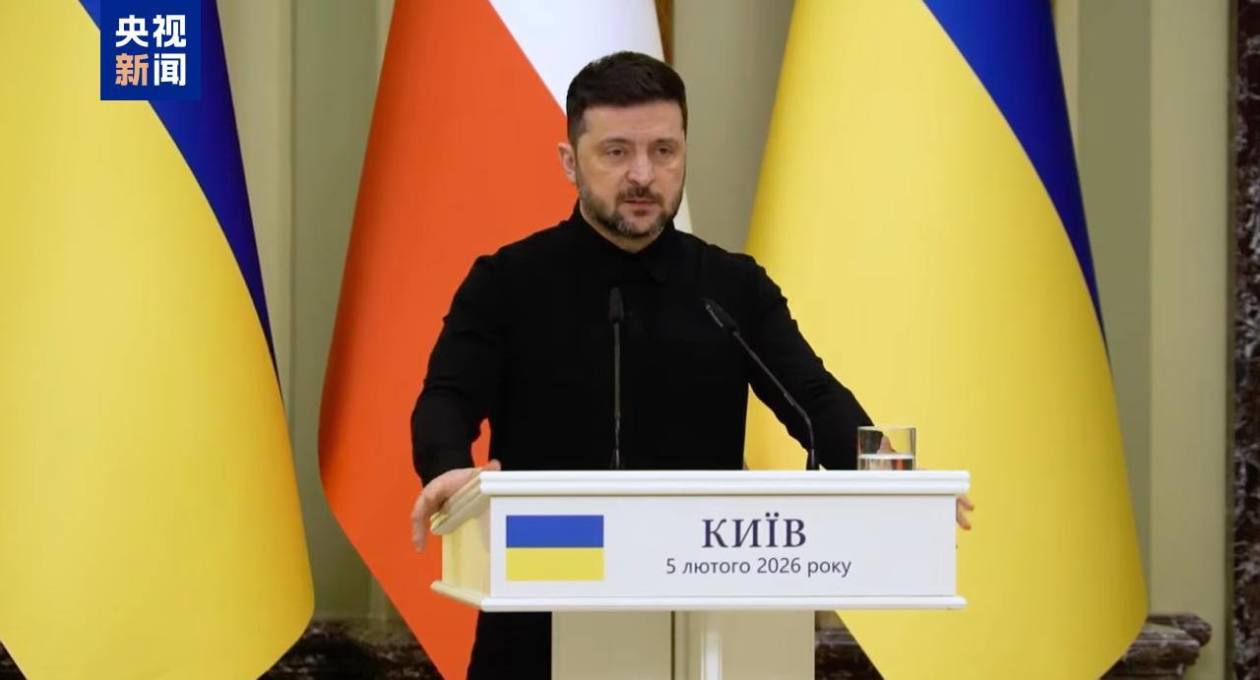
△ On February 5 local time, Ukrainian President Zelensky held a press conference after meeting with visiting Polish Prime Minister Tusk.
Ukrainian President Zelensky met with visiting Polish Prime Minister Tusk on the same day and reiterated his position on territorial issues. Zelensky stated that even if "some recognize that Ukrainian territory belongs to Russia, it is meaningless," because "Ukraine's president is the one who signs documents, not other leaders signing important decisions on behalf of Ukraine". However, Zelensky did not call off the trilateral talks in Abu Dhabi but stated that the three parties reached an agreement to hold the next round of talks soon in Abu Dhabi, UAE.
Subsequently, in a video address on the 5th, Zelensky indicated that the next round of trilateral talks between Ukraine, the U.S., and Russia is likely to take place in the United States. As of now, there has been no response from the U.S. and Russia regarding the new round of trilateral talks to be held in the United States.
U.S.-Iran nuclear issue negotiations to begin, U.S. threats persist
On the other hand, Oman, located on the Arabian Peninsula like the UAE, will hold a new round of U.S.-Iran nuclear issue negotiations in its capital Muscat on the 6th.
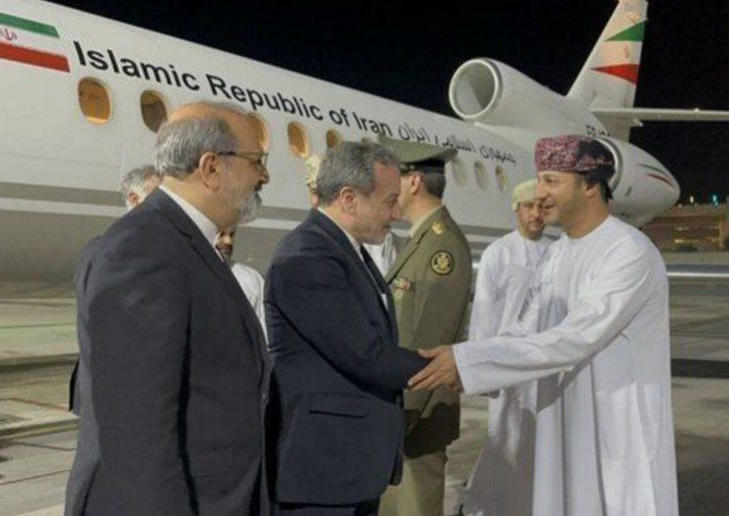
△ In the early hours of the 6th local time in Oman, Iranian Foreign Minister Amir-Abdollahian arrived in Muscat with his delegation.
Iranian Foreign Ministry spokesman Baghaei stated on the evening of the 5th that the U.S.-Iran diplomatic engagement seeks to "reach a fair, mutually recognized, and dignified understanding on the nuclear issue". He hopes that the U.S. will also participate in this diplomatic process with a responsible, pragmatic, and serious attitude.
In the early hours of the 6th local time in Oman, Iranian Foreign Minister Amir-Abdollahian and his delegation arrived in Muscat.
U.S. White House Press Secretary Caroline Levitt stated at a regular briefing on the 5th that U.S. Middle East envoy Steve Witkoff and Jared Kushner will travel to Oman to attend the meeting.
However, even as the negotiation plans progress, the U.S. has not stopped issuing military threats against Iran.
On the 4th local time, U.S. President Trump again threatened that if Iran attempts to restart its nuclear program, the U.S. military will launch military strikes again. The U.S. Navy also released a video on the same day showing aircraft taking off and landing on the USS Lincoln aircraft carrier and the carrier receiving supplies.
At the White House briefing on the 5th, U.S. White House Press Secretary Levitt reiterated the government's position that diplomatic means remain the "primary option" for addressing the Iranian nuclear issue, while also issuing a threat to Iran: Iran should not underestimate the "various options" available to President Trump as Commander-in-Chief of the U.S. Armed Forces.
As for another important party that could affect the U.S.-Iran nuclear issue negotiation process, Israel, there are reports indicating that it has been requested by the U.S. to "avoid taking unilateral military action" during the U.S.-Iran talks. Israeli officials stated that they believe there are fundamental differences between the U.S. and Iran, and the likelihood of reaching an agreement is "extremely low."
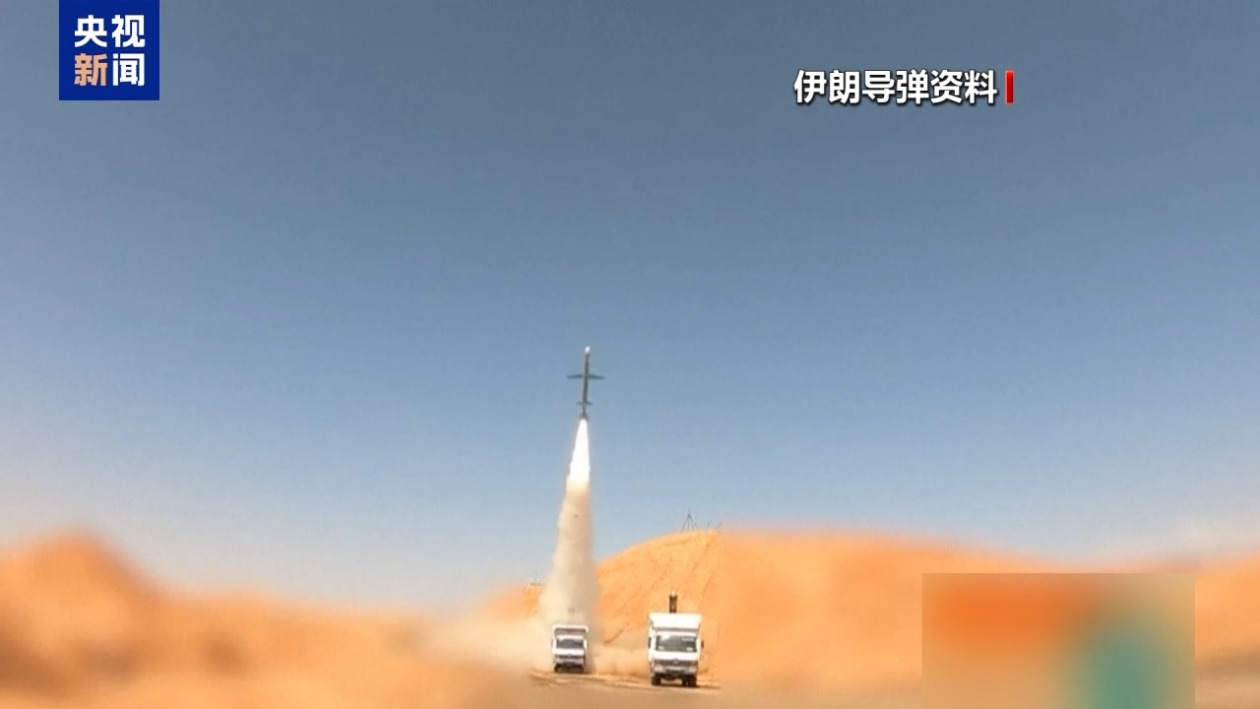
On the Iranian side, Chief of Staff of the Iranian Armed Forces Mousavi stated on the 4th during an inspection of an underground missile base in Iran that through comprehensive technical upgrades of ballistic missiles, Iran has enhanced its deterrent capabilities.
U.S.-Iran nuclear issue negotiations restart today, will they succeed?
Regarding the upcoming U.S.-Iran nuclear issue negotiations, Li Zixin, an assistant researcher at the China Institute of International Studies, analyzed three aspects: the purpose of the U.S. continuing to threaten military action against Iran, the gap in positions between the U.S. and Iran on nuclear issues, and potential variables in the negotiations:
Purpose of U.S. military threats: The U.S. aims to force Iran to compromise through a strategy of "maximum pressure," using military threats as a means to achieve geopolitical objectives at a low cost. Additionally, during the specific advancement of negotiations, the U.S. can still use the threat of military action as a bargaining chip to achieve favorable outcomes.
Gap in U.S.-Iran positions on nuclear issues: The U.S. demands that Iran stop uranium enrichment activities, not possess highly enriched uranium or nuclear weapons; Iran insists on its right to peaceful use of nuclear energy, arguing that no country has the right to restrict Iran's civilian-grade uranium enrichment activities, thus the differences between the two sides are evident. However, there is a possibility of reaching a technical compromise where "Iran autonomously suspends uranium enrichment activities for the next three years and dilutes its existing stock of highly enriched uranium."
Potential variables in negotiations: Both the U.S. and Iran have a willingness to ease tensions, which can facilitate negotiations, but Israel's "three no's" demands (that Iran cannot develop a nuclear program, cannot develop a ballistic missile program, and cannot fund regional allies) may interfere with the negotiation process. If Israel exerts pressure or conducts military strikes, it will impact the sustainability of the negotiations.
Supervised by丨Zheng Hong
Produced by丨Zhao Xinyu
Reported by丨Wang Delu, Wang Jinyan, Xu Tao, Wang Yin, Wei Ran
Edited by丨Jin Lucheng, Wang Tingting
Russia and Ukraine concluded a prisoner exchange agreement involving 314 individuals during their talks in Abu Dhabi on February 5, 2023. While the discussions were described as constructive, they yielded limited results on ceasefire and territorial issues. Future negotiations are planned to continue in Abu Dhabi, with potential discussions in the U.S. Meanwhile, U.S. and Iran are set to resume nuclear negotiations in Oman, despite ongoing military threats from the U.S.
- Russia and Ukraine concluded a prisoner exchange agreement involving 314 individuals.
- The talks in Abu Dhabi yielded limited results regarding ceasefire and territorial issues.
- Ukrainian representatives described the negotiations as constructive, while Russian representatives noted interference.
- Future talks are planned to continue in Abu Dhabi, with potential discussions in the U.S.
- U.S. and Iran are set to resume nuclear negotiations in Oman, amid ongoing military threats from the U.S.