
The Surge of Class A Accidents Highlights the Deep Dilemmas of the U.S. Military
[Global Times Special Correspondent Chen Yang] Editor's Note: The U.S. Naval Institute website reported on the 27th that the Pentagon's latest report shows that during the fiscal year 2026, the U.S. Navy has experienced 27 Class A aviation and surface incidents, setting a new high for at least a decade. This is just the tip of the iceberg regarding the frequent serious incidents in the U.S. military. Previous reports revealed that the overall accident rate across the major branches of the U.S. military has been on the rise in recent years. As of the end of July 2026, the number of "non-combat" Class A incidents in the four major branches of the U.S. military has already exceeded that of fiscal year 2025. U.S. media attribute these continuous incidents to aging equipment, insufficient training, and overuse, but the Pentagon's ongoing military actions abroad suggest that this situation may persist for a long time.
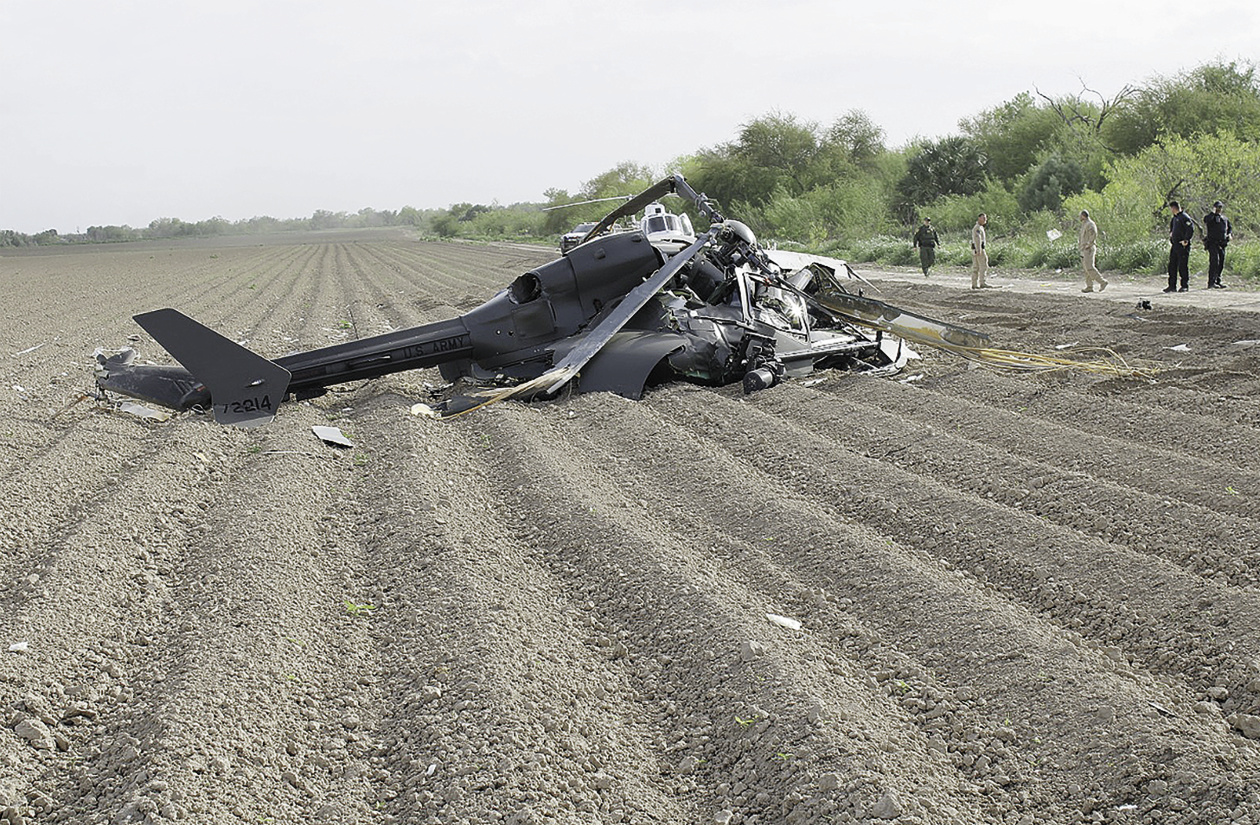
U.S. Navy Class A incidents reach a decade high
The U.S. Naval Institute website states that according to the Pentagon's official definition, a Class A incident refers to accidents that result in at least $2.5 million in damage or the destruction of an aircraft, as well as incidents that cause fatalities or permanent disabilities. Relevant statistics show that during the fiscal year 2026 (from October 1, 2025, to September 30, 2026), the U.S. Navy experienced 16 Class A aviation incidents and 11 surface incidents, marking the highest number since fiscal year 2014. Among these, 2 involved unmanned aerial vehicles, and 14 involved manned aircraft.
The report details that the 16 aviation incidents included 2 unmanned incidents and 14 manned incidents, the latter comprising 11 flight incidents and 3 ground incidents. This year marks the highest number of Class A incidents for the U.S. Navy since fiscal year 2014 (which had 17 incidents).
Among these, on October 26, 2025, an F/A-18F Super Hornet fighter jet and an MH-60R Seahawk helicopter belonging to the USS Nimitz crashed in the South China Sea. The procurement price of the Super Hornet fighter jet is as high as $70 million, while the unit price of the MH-60R Seahawk helicopter also reaches $40 million. On May 17 of this year, two EA-18G Growler electronic warfare aircraft collided and crashed during an airshow, with all four pilots ejecting safely. On September 28, another Growler electronic warfare aircraft had a landing incident on the USS Eisenhower, resulting in injuries to four sailors. As a dedicated electronic warfare aircraft equipped with a large amount of expensive electronic equipment, the procurement price of the Growler exceeds $150 million.
At the same time, the U.S. Navy experienced 11 maritime incidents in fiscal year 2026, also the highest number since fiscal year 2014. On February 7 of this year, a Marine Corps soldier fell overboard and died from the USS Iwo Jima amphibious assault ship; on February 11, the USS Truxtun guided-missile destroyer collided with the fast combat support ship USNS Supply during a replenishment operation, injuring two sailors; on June 25, a Marine Corps soldier went missing from the USS Anchorage dock landing ship.
The U.S. Navy's surface vessels also experienced two serious fire incidents. On March 12, the USS Ford aircraft carrier, deployed in the Middle East, caught fire, causing extensive damage to the sailors' quarters and injuring two; on April 19, the USS Zumwalt destroyer caught fire during modification work at the Ingalls Shipbuilding yard, resulting in three injuries.
Statistical data shows that the U.S. Navy experienced 30 Class A incidents during duty in fiscal year 2026, the highest since 2022. The number of Class A incidents during U.S. Navy duty typically averages around 20 per year, but reached at least 30 in fiscal years 2014, 2022, and 2026.
Additionally, the U.S. Marine Corps experienced 6 Class A aviation incidents in fiscal year 2026, one more than in fiscal year 2025. Of these, 5 were flight incidents and 1 was a ground incident. This includes the crash of an AH-1Z Viper attack helicopter in Southern California on October 16, which resulted in the death of Major Tyler Braconi. During this fiscal year, the Marine Corps also experienced 5 ground duty incidents, including 1 tactical vehicle incident.
Overall serious incident rate shows significant rebound
In fact, the number of Class A incidents across the major branches of the U.S. military has been on a continuous upward trend in recent years. Statistics from the Scripps News website at the end of July this year show that as of July 29, the total number of Class A aviation incidents for the U.S. Army, Navy, Marine Corps, and Air Force was 50 (involving both manned and unmanned aircraft), exceeding the total for fiscal year 2025 (45 incidents).
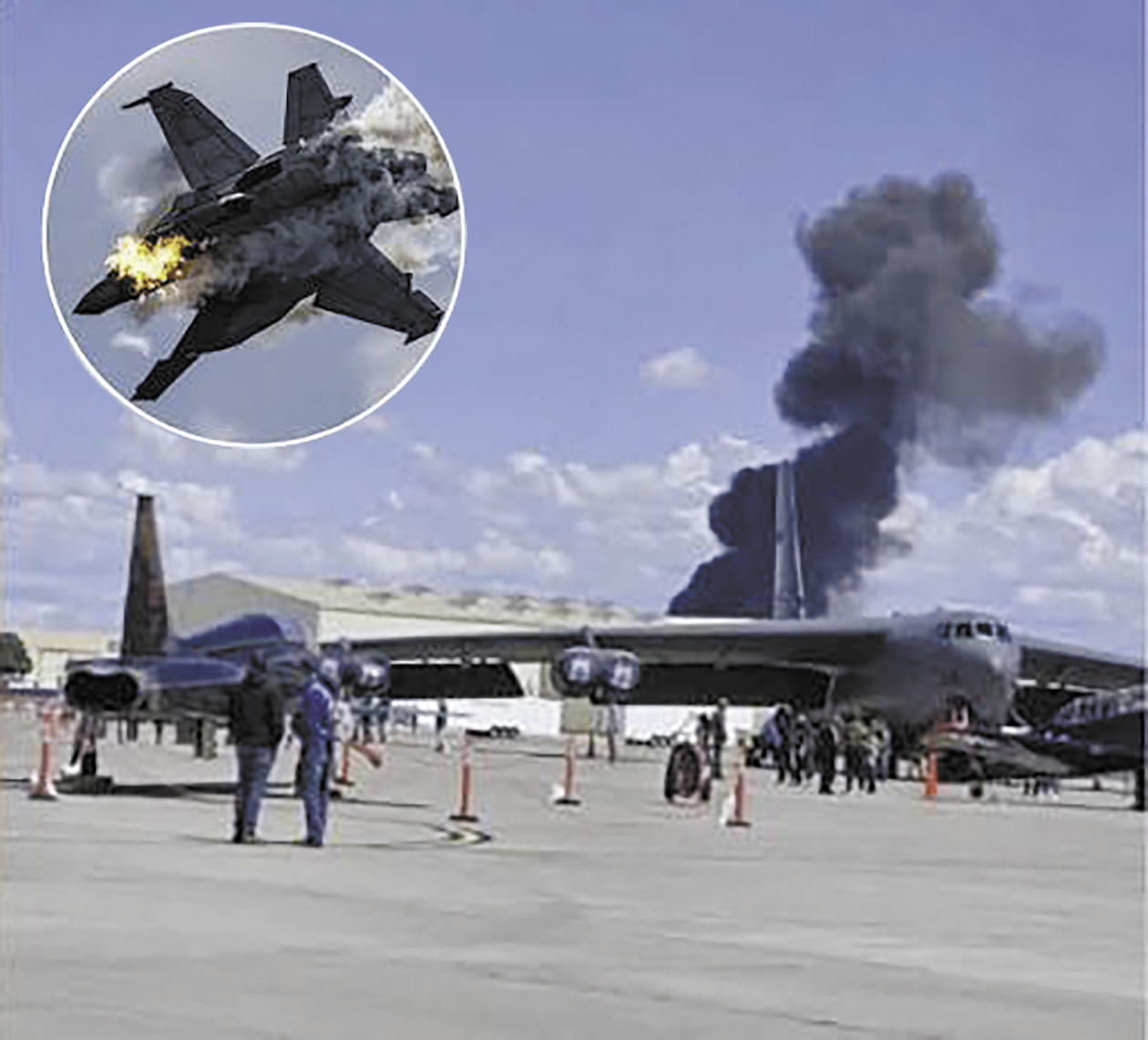
Specifically, the most significant change has been in the U.S. Air Force, which experienced 19 Class A incidents in fiscal year 2025, compared to 25 in fiscal year 2026. The Air Force Times noted that the number of Class A incidents for the U.S. Air Force was 24 in fiscal year 2022, 29 in 2023, and 32 in 2024. Notably, the accident rate, which represents safety levels, has risen from a low point of 1.14 in 2021 to 1.90 in 2024, causing significant concern for the Pentagon. In this context, the Pentagon established an "Aviation Accident Task Force" on January 15, 2025, specifically to oversee and guide efforts to reduce aviation accident rates. At the same time, the U.S. Air Force Safety Center has utilized data tools to provide proactive, data-driven early warnings, aiming to help commanders identify and manage factors that may increase accident risks before incidents occur. Under these comprehensive measures, the total number of Class A incidents in the U.S. Air Force decreased to 19 in fiscal year 2025. However, this positive trend did not last long, as the accident rate in fiscal year 2026 returned to a high point, including a rare fatal incident on June 15 when a B-52 strategic bomber crashed during a test flight at a California base, resulting in the deaths of all eight crew members. After the deadline for U.S. media statistics, an F-16 fighter jet from the U.S. Air Force crashed during training in Michigan on September 17.
The U.S. Army Aviation's Class A incidents are primarily concentrated on the Apache armed helicopter. In fiscal year 2026, there were at least 5 Class A incidents involving the Apache, making it the second most severe fiscal year in terms of accident rate since the AH-64E entered service in 2011. Among these, an Apache crash near Fort Hood in Texas in August resulted in the deaths of two soldiers, prompting the U.S. Army to suspend routine training for Apache pilots. Multiple incidents point to issues with the improved transmission system of the AH-64E, with internal safety information indicating that some of these systems may have internal failures (including design and material defects in gearbox components), leading to simultaneous loss of tail rotor thrust, power, and hydraulics. In October, the U.S. Army ordered the grounding of over half of the AH-64E helicopters (involving about 400 aircraft).
The report mentions that since 2020, relevant data shows that the U.S. Army, Navy, Marine Corps, and Air Force have collectively experienced over 300 Class A incidents, including both manned and unmanned aircraft, with losses exceeding $8 billion. Overall, the serious incident rate for the U.S. military in fiscal year 2026 has shown a significant rebound compared to 2025.
Multiple factors lead to the U.S. military's predicament
Regarding the frequent serious incidents in the U.S. military, the Pentagon has not been without solutions, but U.S. media have found that the root cause of this predicament lies in America's uncontrollable impulse to use military force abroad.
The Military Times states that one of the reasons for the frequent serious incidents in the U.S. military in recent years is that some models have design flaws or severe aging issues. For example, many U.S. Air Force aircraft have been in service for over 30 years, and their reliability has increasingly become difficult to guarantee. Worse still, the U.S. military's poor maintenance system has prevented these inherently hazardous aircraft from being properly maintained. The Defense One website reports that a Congressional report lists "overwork of maintenance personnel" as one of the key reasons for the high accident rate in the U.S. military. Former Navy pilot and consultant Joseph stated that even if parts are available, without enough maintenance personnel, aircraft cannot be repaired. At the same time, some maintenance work has been outsourced to temporary workers, leading to a loss of skilled technicians and further eroding maintenance quality.
Additionally, the Aviation Accident Task Force has severely criticized the U.S. military for insufficient training. Relevant reports indicate that U.S. military pilots' annual flight hours have been "very low for many years," even "insufficient to maintain basic skills"; the damage control training for U.S. Navy sailors is also clearly inadequate. However, the Pentagon's continuous and high-intensity military operations not only further deplete the lifespan of U.S. military equipment but also make it impossible to implement related corrective measures, whether increasing equipment maintenance or strengthening training.
The U.S. Navy reported 27 A-class incidents in Fiscal Year 2026, marking the highest rate in a decade. This includes 16 aviation and 11 surface incidents, with significant casualties and equipment losses. Notable incidents involved F/A-18F Super Hornets and MH-60R Seahawks, contributing to a broader trend of increasing military accidents across all branches. The report highlights systemic issues such as aging equipment and inadequate training.
- 27 A-class incidents reported in FY 2026, the highest in a decade.
- 16 aviation incidents and 11 surface incidents occurred in the U.S. Navy.
- Several incidents involved high-cost equipment, including F/A-18F and MH-60R.
- The U.S. Army reported at least 5 A-class incidents involving Apache helicopters.
- Overall accident rates have significantly increased across all branches of the U.S. military.