

Summary and Key Points: President Trump’s proposed Trump-class battleship—BBG(X), led by the envisioned USS Defiant (BBG-1)—promises hypersonic strike from large missile VLS, directed-energy defenses, and command-and-control for manned and unmanned forces, with talk of a future nuclear-capable cruise missile option.
-The stumbling block is industrial capacity: major ship programs are routinely late and over budget, with Navy leadership citing a “best” case of six months late and 57% overrun and canceling the delayed Constellation-class frigate.
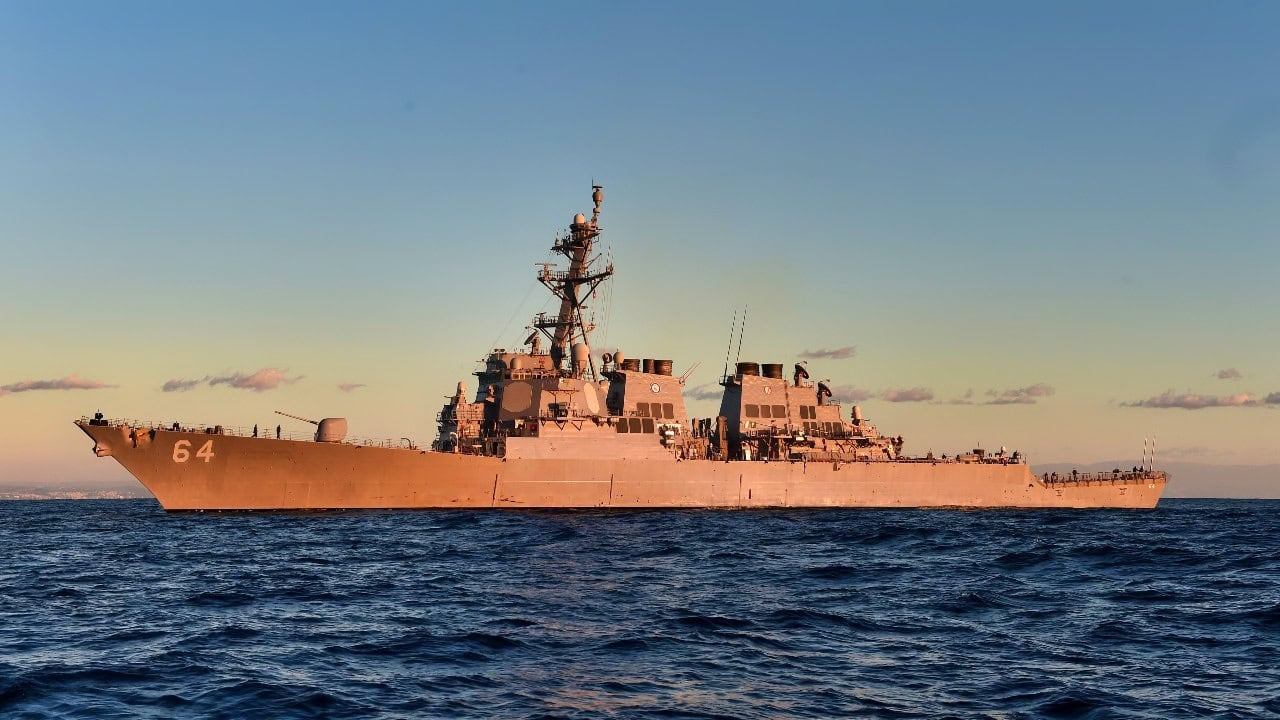
(Dec. 6, 2015). USS Carney (DDG 64) awaits the return of its small boat crew during a passenger transfer Dec. 6, 2015. Carney, an Arleigh Burke-class guided missile destroyer, forward deployed to Rota, Spain, is conducting a routine patrol in the U. S. 6th Fleet area of operations in support of U.S. national security interests in Europe. (U.S. Navy photo by Mass Communication Specialist 1st Class Theron J. Godbold/Released)
-With Arleigh Burke output around 1.5 ships per year, partnering with Japan and South Korea for building and repair—while rebuilding U.S. yards—looks like the only viable path.
How Can The Navy Build Trump-Class Battleships When It Can’t Build Enough Now?
In a press conference on December 22, 2025, President Trump announced that a United States Navy guided-missile warship would be called the Trump-class battleship.
The class is also known as BBG(X) in some Navy documents and is intended to initially comprise the lead ship, USS Defiant (BBG-1), and an as-yet-unnamed vessel. Once commissioned, the class is envisioned to add a nuclear-capable cruise missile option to the U.S. Navy surface fleet.
The warship, on paper, sounds great, assuming that all of the new supposed gadgetry works (a big assumption), but the big question remains: how can the US naval shipbuilding program, which has fallen short on delivering the new warships on time and on budget in recent years, build a new ship given all of its issues?
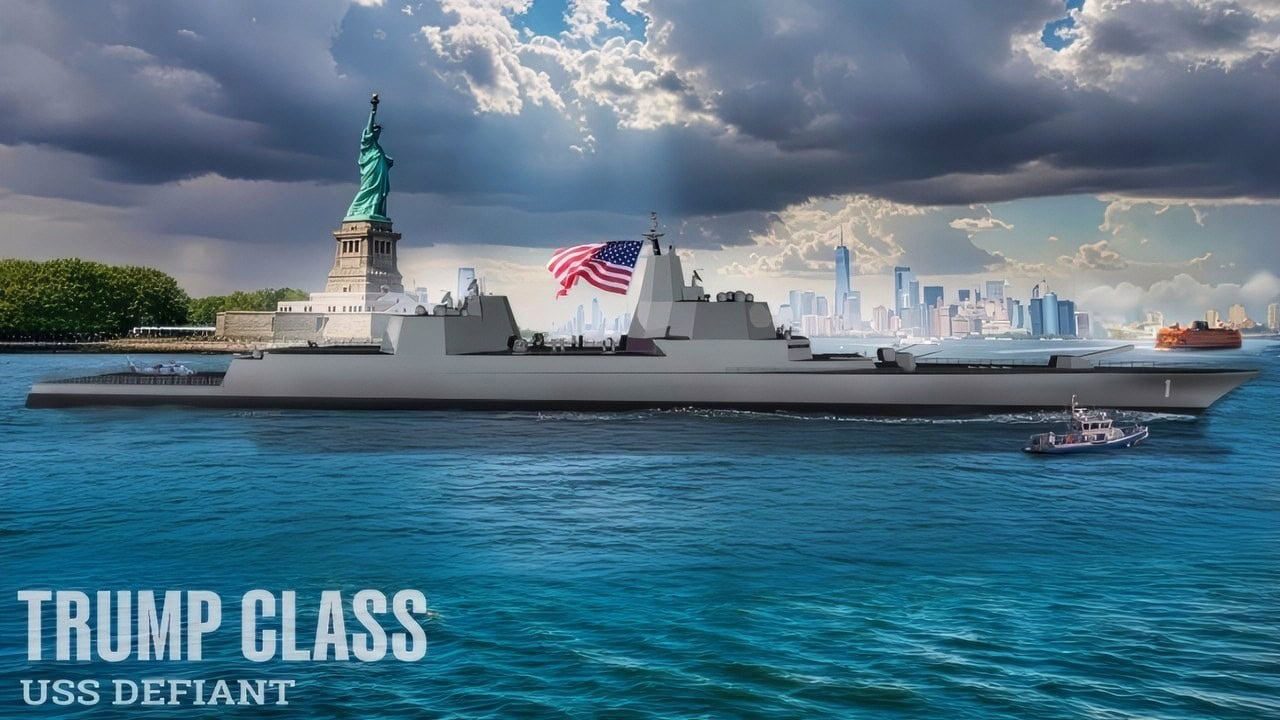
Trump-Class Battleship. Image Credit: Creative Commons/White House.
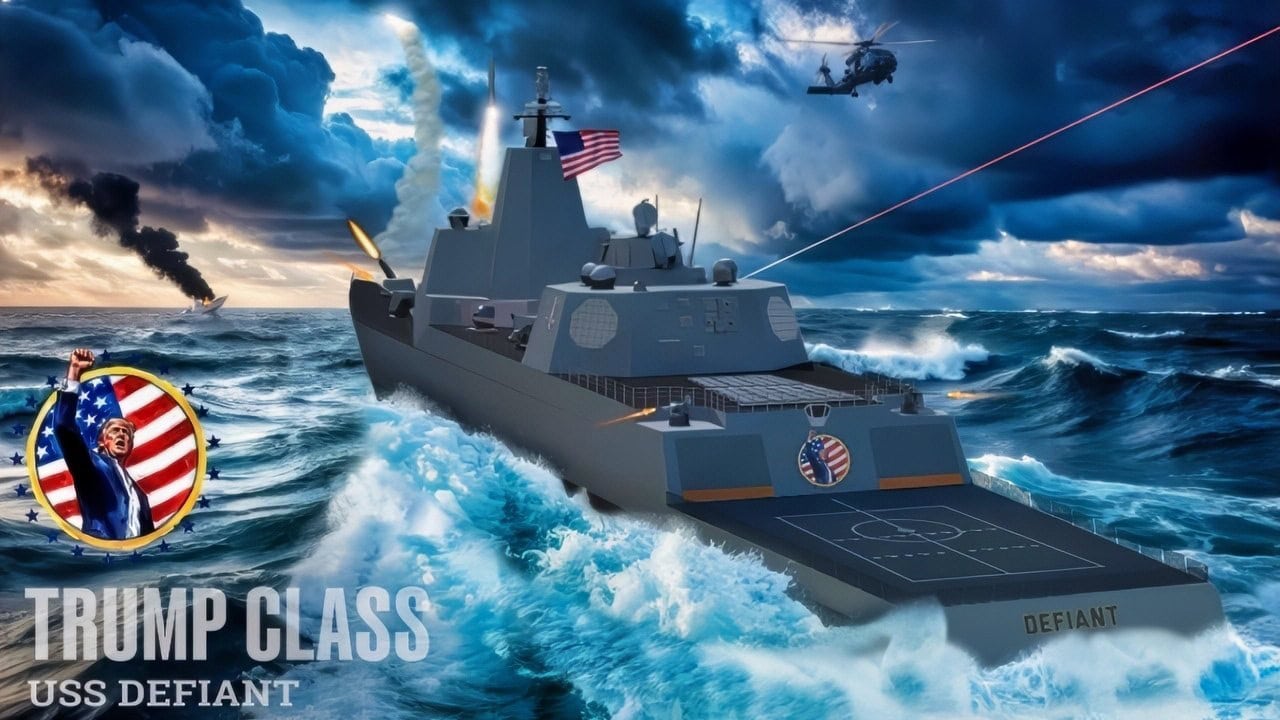
Trump-Class Battleship. Image Credit: Creative Commons/White House Photo.
Is The Big Battleship Making A Comeback?
According to the Navy, “This modern Battleship will leverage state-of-the-art combat systems, including large missile vertical launch systems (LMVLS) to deliver long-range hypersonic strike against strategic targets ashore that are unreachable by the current fleet and directed energy weapons to deliver more favorable exchange ratios against enemy threats.
“The Battleship will be capable of operating independently, as part of a Carrier Strike Group, or commanding its own Surface Action Group, depending on the mission and threat environment. With the ability to provide forward command and control for both manned and unmanned platforms, Battleship will be a critical component in executing the Navy Warfighting Concept.
“The President has been clear – we must bring back our American Maritime Industrial might, and he has told me many times that as Secretary of the Navy, it is my job to equip our sailors to win the fight at sea with the finest ships in our history.
“Now, when a conflict arises, you’re going to ask us two questions: where is the carrier, and where is the battleship?” said John C. Phelan, 79th Secretary of the Navy.
Battleships Are Vulnerable Today And 80 Years Ago:
The U.S. Navy has not had a battleship in commission since the retirement of the last Iowa-class battleship, USS Missouri, in 1992, nearly 35 years ago. There have been no plans for new ones since the cancellation of the Montana class in 1943.
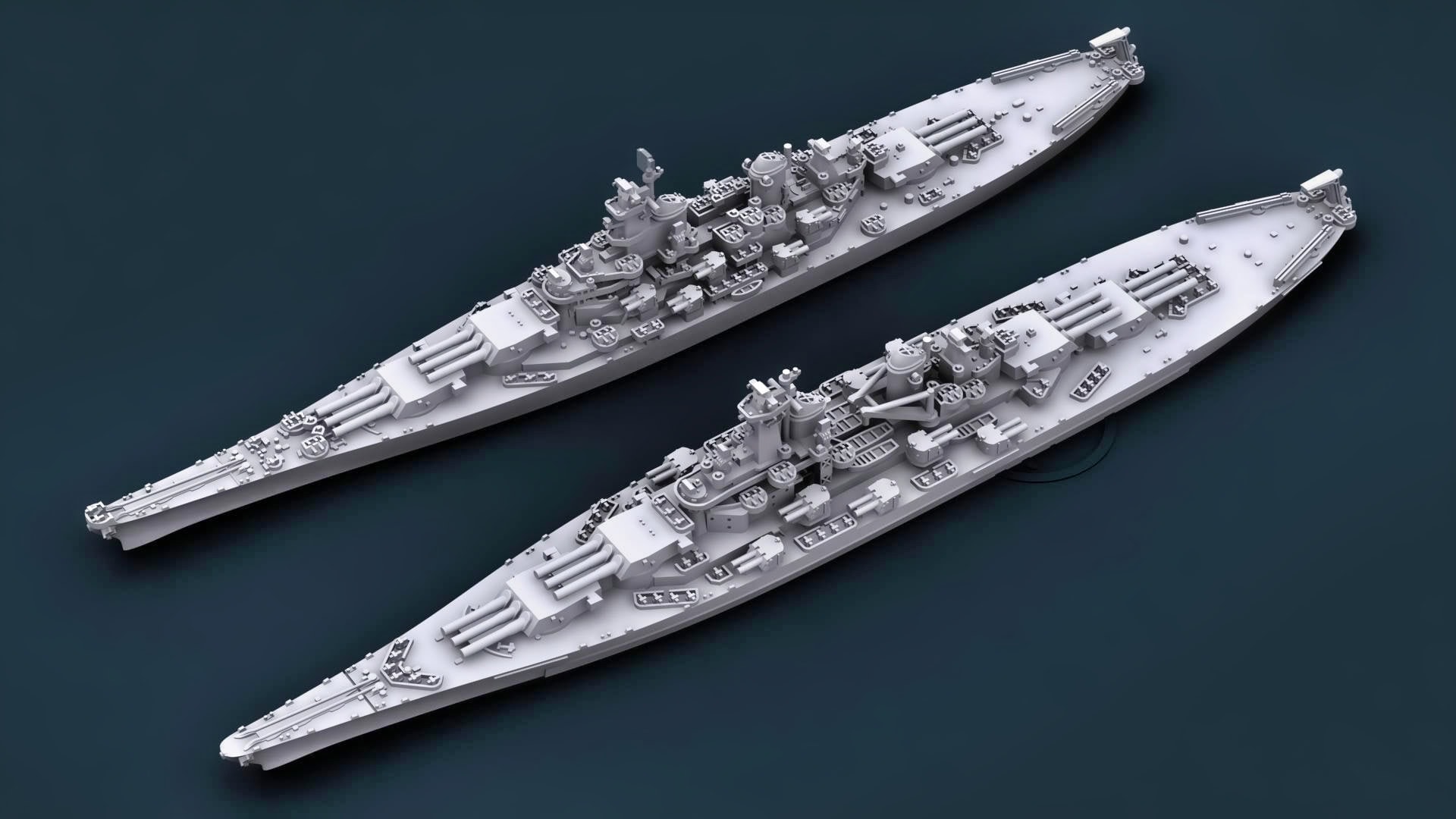
Montana-Class Battleship vs. Iowa-Class. Image Credit: Creative Commons.
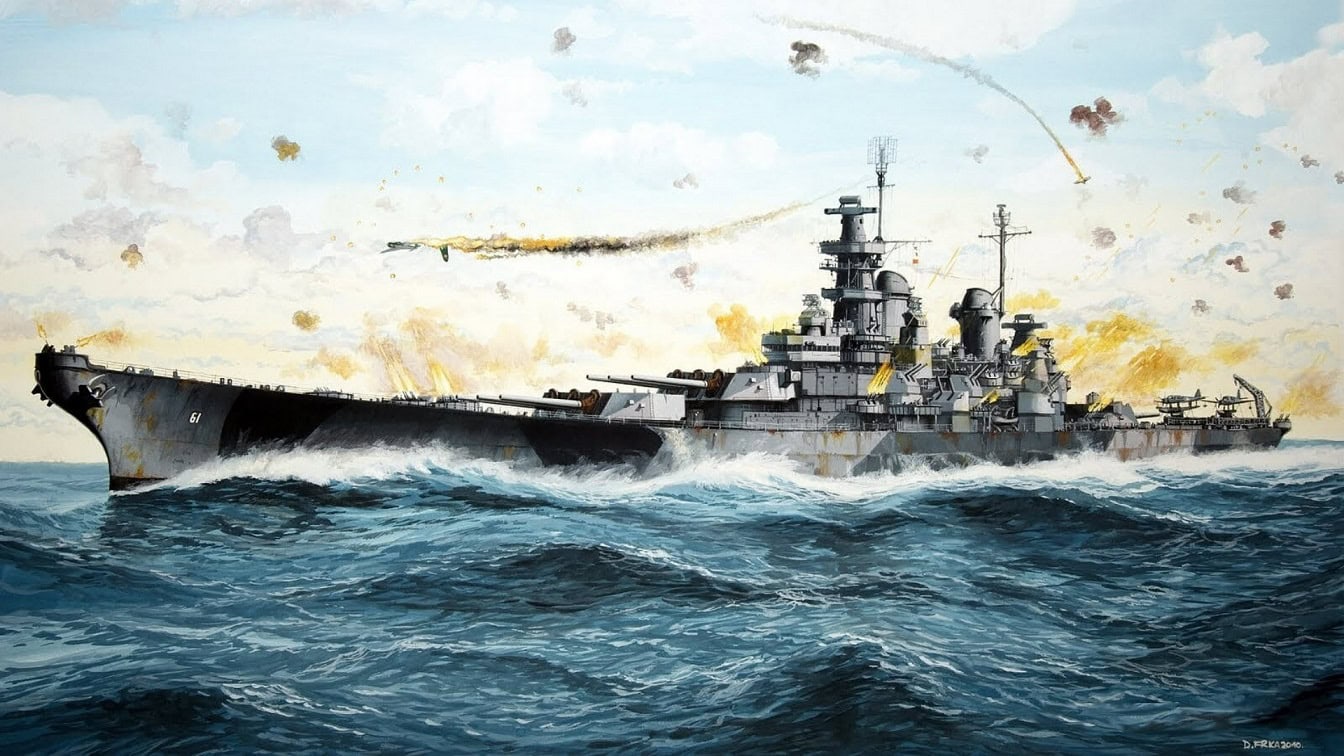
Iowa-class battleship artist painting. Image Credit: Creative Commons.
The Navy was slow to recognize battleships’ vulnerabilities, even after General Billy Mitchell demonstrated that airpower could sink them by sinking the captured German battleship Ostfriesland in 1921.
The Navy pooh-poohed the results, and it cost them dearly on December 7, 1941, when the Japanese bombed Pearl Harbor. Four US battleships were sunk, and four more were damaged. The era of the battleship was over, and the era of the aircraft had begun.
In fact, the largest, most powerful battleship ever built, the Japanese Yamato, was obliterated by at least 11 torpedo hits and six bombs before sinking.
The Navy can look at what happened to the Russian Black Sea Fleet as a warning against trying to bring back relics of the Cold War.
The Navy Tried To Replace The Missouri With The Zumwalt:
After the retirement of the Iowa class, the Navy was split on how to replace its capabilities. The Zumwalt-class destroyer was developed to replace its gunfire support function, but the class was cancelled after only three ships were constructed.
The Zumwalt class is currently the largest surface combatant ship operated by the U.S. Navy, and has 80 vertical launch missile systems.
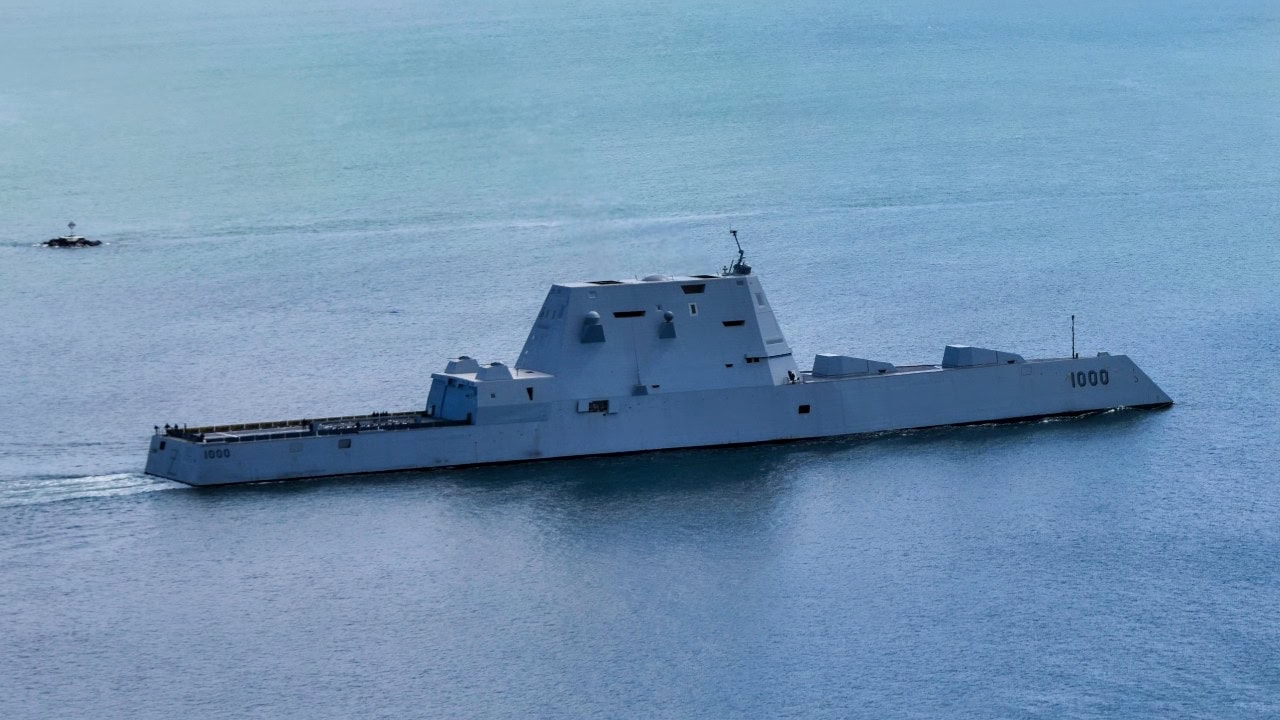
The Guided-missile destroyer USS Zumwalt (DDG 1000) departs San Diego as part of an operational underway. The milestone demonstrates the U.S. Navy’s commitment to advancing the lethality of its surface combatants by integrating cutting-edge technologies in Zumwalt’s combat systems, weapons, and engineering plants. (U.S. Navy photo by Mass Communication Specialist 2nd Class Natalie M. Byers)
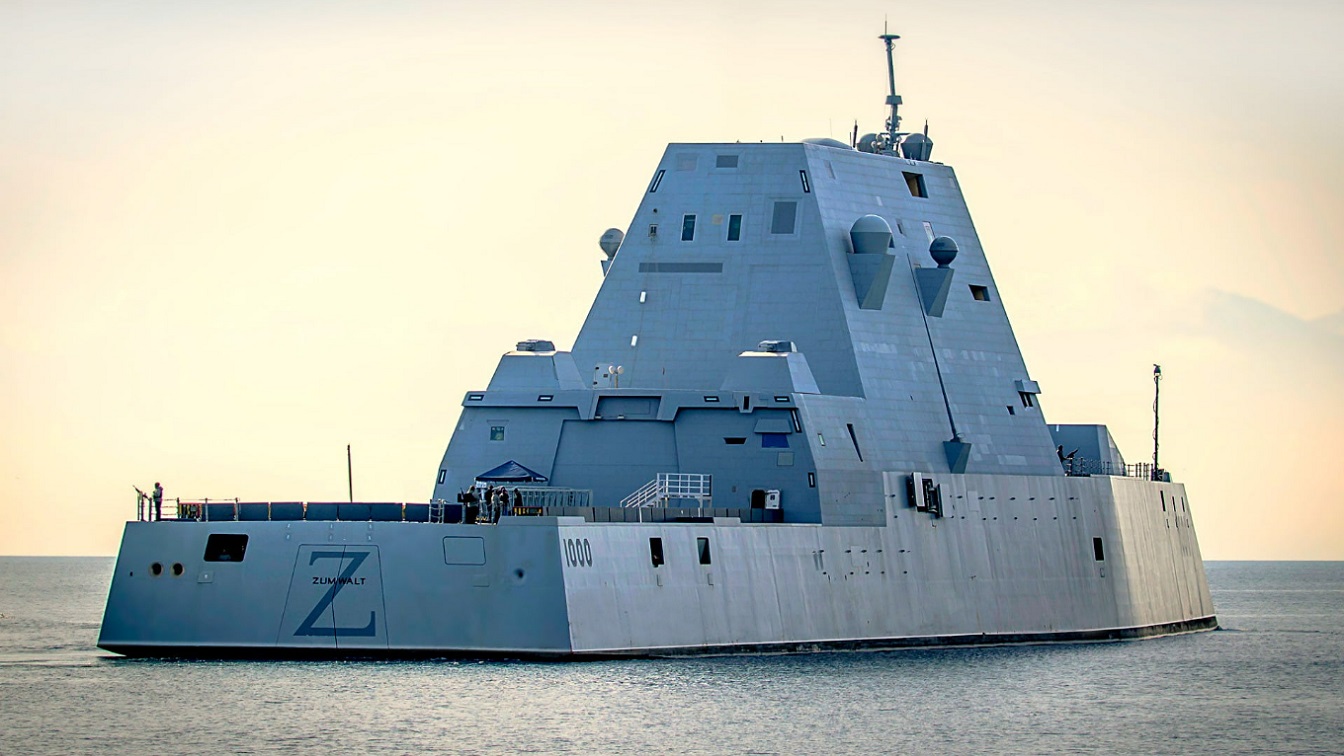
Zumwalt-Class, the largest destroyer on Earth today.
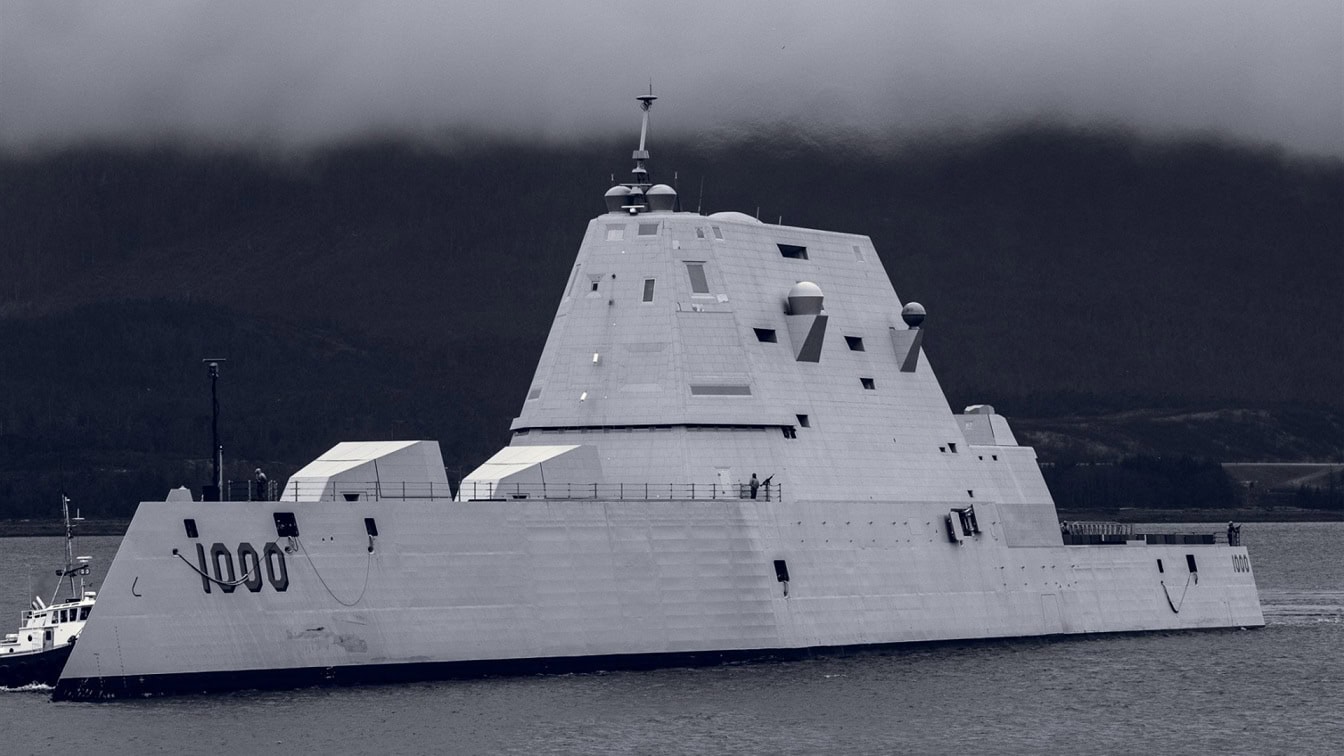
Zumwalt-Class. Image Credit: Creative Commons.
After the cessation of Zumwalt procurement, the Navy announced a Large Surface Combatant initiative, which led to a design process for a DDG(X) or Next-Generation Guided-Missile Destroyer to replace both types.
Shipbuilding Woes Are A National Issue:
Several issues would hold back the battleship from ever seeing the ocean. And many analysts believe that the ship would never be built. And the time frame will undoubtedly be at least a decade before anything would be built.
With a shipbuilding industry already pushed to build anything on time and on budget, this would be another albatross the Navy would have to deal with.
Secretary of the Navy John Phelan put it bluntly this past summer when he said that the US shipbuilding is in chaos.
“All of our programs are a mess,” he told a House hearing in June. “I think our best (ship build) is six months late and 57 percent over budget … That is the best one.”
In November, Phelan axed the Constellation-class frigate program, which was about three years behind schedule and was expected to produce much smaller and less complex warships than the new battleships the administration proposes.
South Korea and Japan Are The Key:
President Trump has admitted that due to shipbuilding woes, the US needs to buy ships from our allies, and that is not only an option but a necessity.
Yes, the United States needs to revitalize our shipbuilding industry, which is a mess right now. But our allies, Japan and South Korea, the world’s second-and third-largest commercial shipbuilders, should be partnered with to keep the Navy supplied, maintained, and repaired with ships.
US maintenance is woefully behind schedule, and the US needs to expand its maintenance program to include our allied shipyards.
This can easily be done without sacrificing new investments in US shipyards and the shipbuilding industry.
Breaking Defense wrote that some of these efforts “are already underway and showing results.
“In 2019, for example, Japan’s Mitsubishi Heavy Industries (MHI) broke new ground by repairing the USS Milius, signaling a shift toward deeper maritime industrial cooperation. Since then, South Korean firms like Hanwha Ocean and Hyundai Heavy Industries have successfully completed repairs on Navy combat support ships faster than many American yards.”
The Arleigh Burke-class destroyer production currently stands at approximately 1.5 ships per year. By partnering with Japan and South Korea, which build comparable destroyers, the output could be ramped up, as Hyundai builds about 5 destroyers a year and already incorporates many US subsystems.
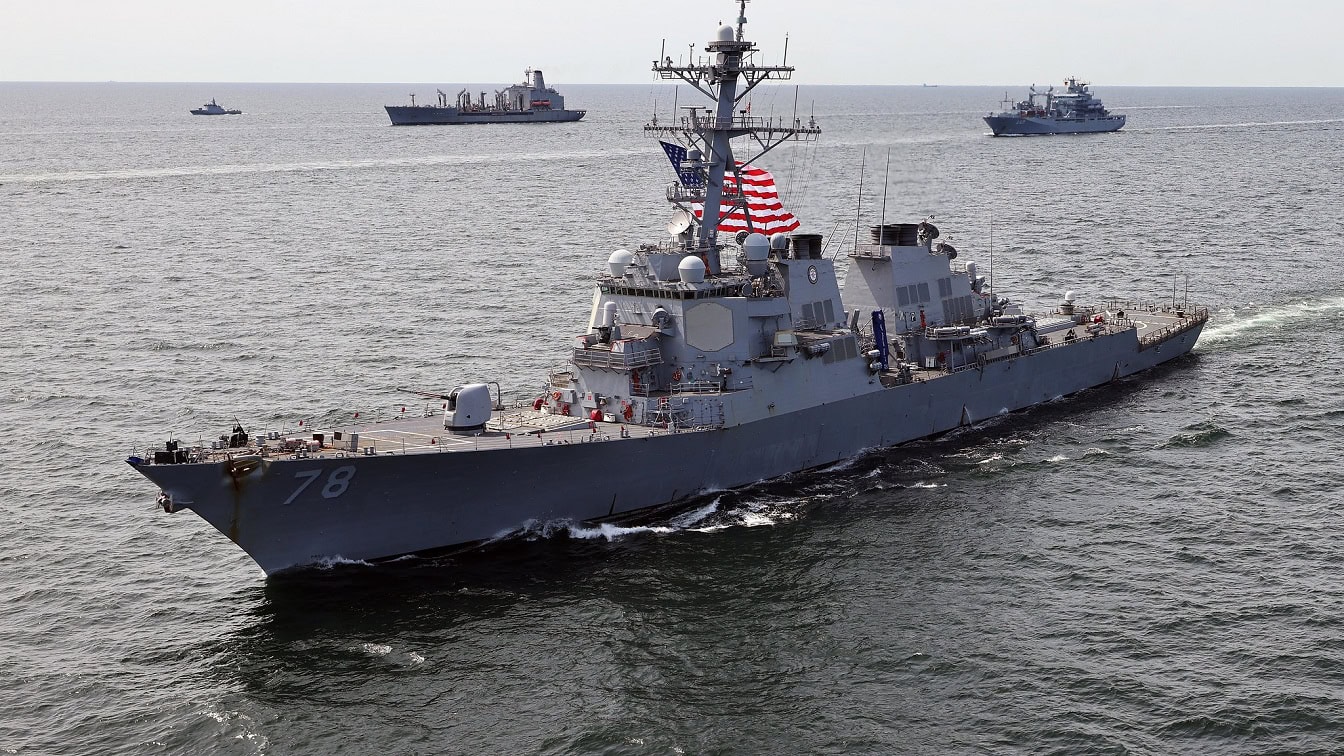
BALTIC SEA (June 6, 2022) The Arleigh Burke-class guided-missile destroyer USS Porter (DDG 78) sails in formation in the Baltic Sea, June 6, 2022, during exercise BALTOPS22. BALTOPS 22 is the premier maritime-focused exercise in the Baltic Region. The exercise, led by U.S. Naval Forces Europe-Africa, and executed by Naval Striking and Support Forces NATO, provides a unique training opportunity to strengthen combined response capabilities critical to preserving freedom of navigation and security in the Baltic Sea. (U.S. Navy photo) 220606-N-NO901-3008
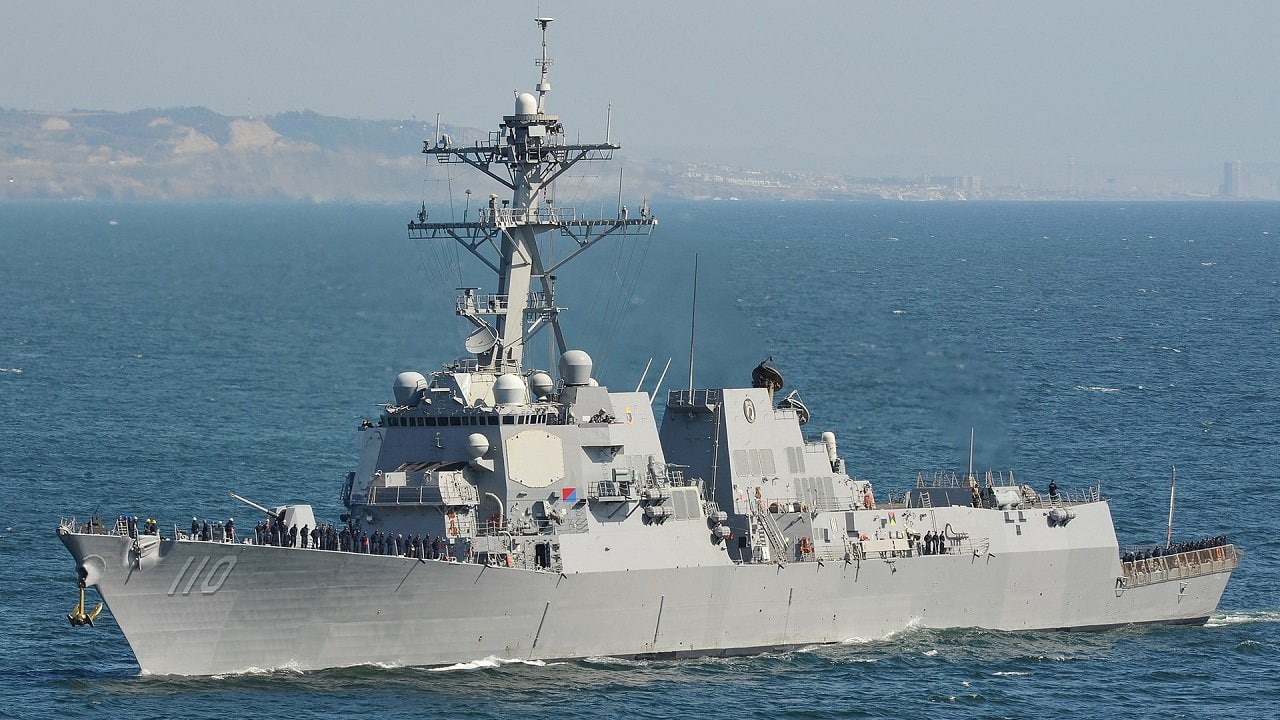
PACIFIC OCEAN (May 4, 2015) – The guided-missile destroyer USS William P. Lawrence (DDG 110) steams toward San Diego Harbor. (U.S. Navy photo by Mass Communication Specialist 3rd Class Nathan Burke/Released)
The Trump-class battleship is somewhat at odds with the current US Navy’s Distributed Maritime Operations, an operational approach aimed at countering China’s anti-access/area-denial strategies in the Indo-Pacific, by dispersing assets widely while prioritizing a large number of smaller warships over fewer large surface vessels.
The proposed USS Defiant (BBG-1), in all likelihood, will never be built. Because the Navy can ill afford to design and build a new class of large warship when it can’t produce existing designs enough to maintain its global mission profile.
Partnering with our allies to build and maintain our ships, as well as reinvesting in our shipyards, is a good place to start.
About the Author: Steve Balestrieri
Steve Balestrieri is a National Security Columnist. He served as a US Army Special Forces NCO and Warrant Officer. In addition to writing on defense, he covers the NFL for PatsFans.com and is a member of the Pro Football Writers of America (PFWA). His work was regularly featured in many military publications.