
The UAE and Israel Establish a Joint Armament Fund in 2026, and Abu Dhabi's Funding Changes the Equation of Gulf Air Defense
 Ahmed Al-Rashid
The UAE and Israel Establish a Joint Armament Fund in 2026, and Abu Dhabi's Funding Changes the Equation of Gulf Air Defense
On July 27, 2026, Middle East Eye revealed that the UAE and Israel have established a joint fund to purchase and develop new weapon systems, with the initial focus on unmanned aerial vehicle (UAV) countermeasures and air defense. The exact amount of the fund has not been disclosed, but a former U.S. official stated that "a lot of money" has been allocated for it. Militarily, this is not just a detail in the Abraham Accords, but a shift from covert or situational security cooperation to a scalable production and armament partnership.
The news comes after months of the Iran War, which turned the Gulf into a real testing ground for missiles and drones. According to the published account, the UAE has been subjected to nearly 3,000 Iranian strikes, including drones and missiles, while previous reports confirm that Israel sent Iron Dome batteries and personnel to operate them to Abu Dhabi, and that a version of the Iron Beam laser system and the Spectro system for detecting drones from a range of about 20 kilometers also arrived during the war. Any military personnel who served in the region knows that the moment of war reveals relationships more than diplomatic data does.
From Temporary Battery to Armament Fund
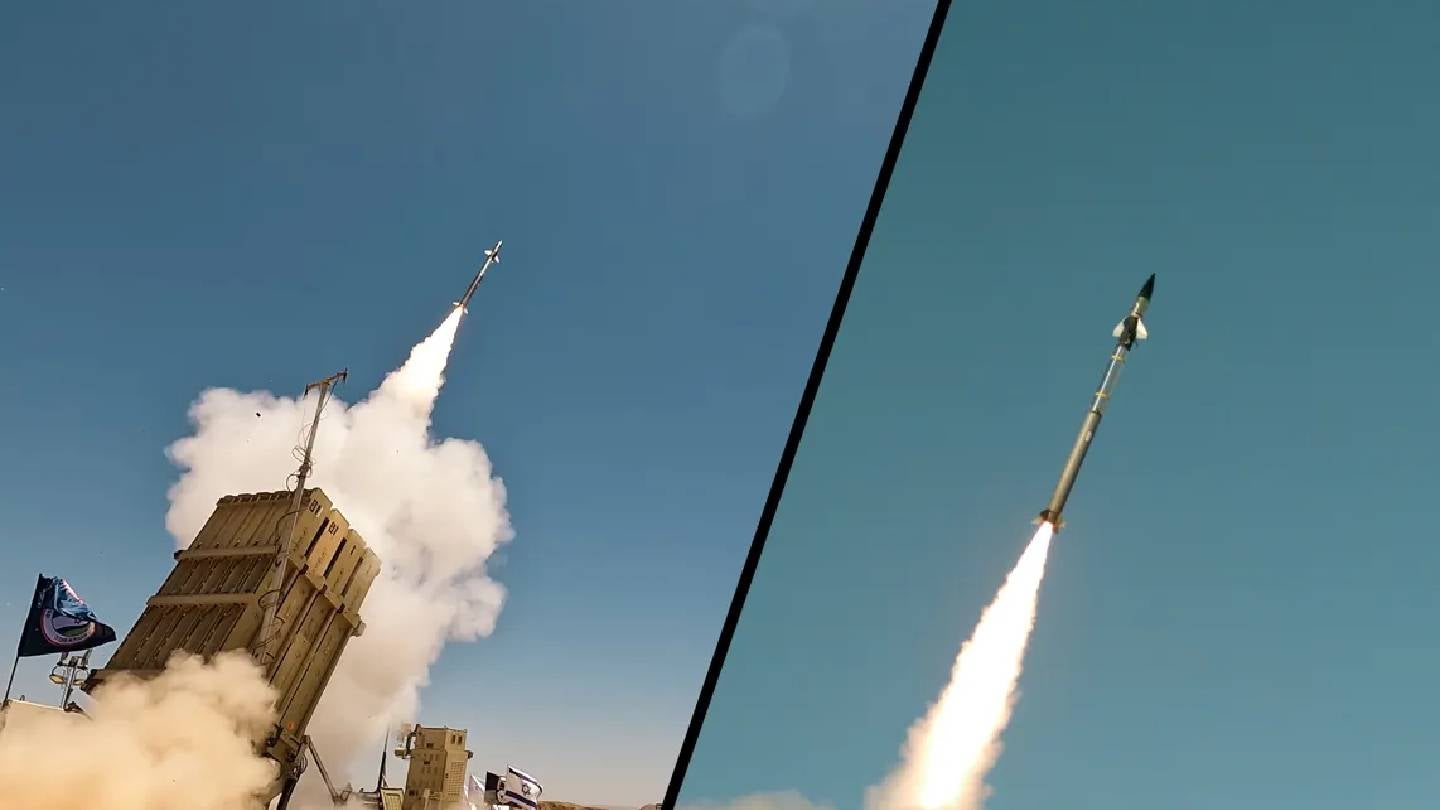
The difference between sending an air defense battery during a crisis and establishing a joint fund is a fundamental one. The first case is operational assistance, which can be denied or justified by the circumstances of war. The second is a financial and industrial structure. The fund implies selection committees, multi-year budgets, and possibly intellectual property rights, technology transfer, and sub-production projects within the UAE or through Israeli companies linked to systems like Rafael, Elbit, and Israel Aerospace Industries.
In my estimation, what matters most to Abu Dhabi is not just having an additional version of the Iron Dome. The UAE already possesses American and Western defensive layers, from THAAD and Patriot to short- and medium-range platforms, and has integrated Israeli systems like Barak into its defense structure. The problem is that the war with Iran has proven that the threat is not just a single ballistic missile, but a mix of cheap Shahed drones, cruise missiles, ballistic projectiles, and real-time intelligence. Here, Israel becomes a different resource than Washington, as it has built its experience under daily pressure rather than in a distant training environment.
Emirati Money and Israeli Technology
The equation mentioned by Israeli researchers to Middle East Eye is simple: Israel has the technology and needs resources, while the UAE has the money and needs technology. However, this simplicity conceals significant political sensitivity. The UAE's defense budget is not disclosed in transparent details, but Western government estimates place the 2026 spending at around $27 billion, or about five percent of GDP. Moreover, Abu Dhabi has sovereign funds approaching two trillion dollars. This type of funding does not resemble a European parliamentary dependency that requires years of debate.
Israel, on the other hand, faces a new question regarding the sustainability of American support. The known annual military aid approaches $3 billion, but the political cost within the United States has become higher, especially among younger voters. If Netanyahu or his successor begins to reduce reliance on American money, then Abu Dhabi offers an option that does not carry the same moral and political conditions. This does not mean that the UAE will become a complete alternative to Washington, but it may become a selective funder for systems that serve its immediate interests in the Gulf.
Gulf Air Defense is No Longer a Single Gulf
The point that should not be lost amid the discussion of technology is that the UAE does not move in the same way that Saudi Arabia or Qatar does. Riyadh, after shaking confidence in the American umbrella, has opened pathways with Pakistan, Turkey, and Egypt, treating Turkey as a third industrial and political channel. Qatar maintains its American relationship and invests in diplomatic balance. The UAE is choosing a sharper path: transforming its relationship with Israel into a deterrent card against Iran.
This choice is understandable from Abu Dhabi's perspective. The UAE is geographically smaller than Saudi Arabia, has a denser sensitive infrastructure, and is more exposed to shocks from ports, airports, energy, and tourism. The fall of debris near Dubai or the disruption of an airport or damage to an industrial area in Fujairah does not require total destruction to turn into an economic and psychological crisis. Therefore, Abu Dhabi is looking for a rapid warning and interception system, and for intelligence close to the source of danger, rather than statements of solidarity from the Gulf Cooperation Council.
However, in practical terms, this partnership creates a political gap within the Gulf. If the UAE's defense system becomes organically linked to Israel, will it share all radar data with neighbors who do not have the same level of normalization? And can a unified Gulf air defense be built if part of the network relies on algorithms and Israeli systems that are not accepted by other capitals? Here, the problem of institutions arises, not just the problem of weapons. A missile can be purchased, but operational trust takes years to build and cannot be bought with a single contract.
The Cost of Interception and War of Attrition
An AGBI report in July indicated that the value of announced U.S. arms sales to Gulf Cooperation Council countries reached $41 billion in the first half of 2026, compared to about $9 billion for all of 2025. Among the 15 announced deals, 12 are related to air and missile defense and aviation. The largest is the supply of 730 Patriot missiles to Saudi Arabia worth $9 billion. These figures confirm that the Gulf is buying air defense as one buys insurance after a fire, but the market itself is crowded, and American production lines do not move at the speed of Gulf fears.
Here, the Emirati interest in C-UAS and laser systems becomes understandable. Intercepting a cheap drone with a missile costs millions of dollars and is a recipe for long attrition. Iran does not need to penetrate all layers; it is enough to keep them in a state of alert and consume stockpiles, personnel, and maintenance. Therefore, Iron Beam or any similar laser system is not a magic wand, but an attempt to change the economics of battle. The real question is not whether the laser succeeds in a promotional video, but whether it withstands the humidity of the Gulf, summer dust, and continuous operational pressure.
Israel as a Pressure Card on Iran
An analyst told Middle East Eye that the UAE's means of pressuring Iran is its relationship with Israel. This phrase encapsulates the entire transformation. The UAE is not cutting off the path to dialogue with Tehran, but is building in the background a capability that makes the Iranians calculate the cost of targeting Abu Dhabi differently. The problem is that this card is two-edged. The closer the UAE gets to Israel in defense, the more likely Iran is to portray it as part of the hostile military structure, even if Abu Dhabi claims that its territory is not used as a platform for attack.
Thus, the Emirati-Israeli relationship is neither a complete alliance nor a regular commercial deal. It is an attempt to build a specific deterrent within a Gulf that no longer fully trusts Washington and cannot live without Washington. The old military adage says that a good plan is one that remains standing after the first blow. What we see today is that all Gulf plans have remained standing, but they have remained standing on different legs: an American leg, an Israeli leg, and a short local leg. This disparity will be the next deterrence problem, not just the lack of battery numbers.
Sources
- Middle East Eye, July 27, 2026 report on the UAE-Israel joint armament fund.
- Middle East Eye and Financial Times, May 2026 reports on the sending of Iron Beam and Iron Dome to the UAE during the Iran War.
- AGBI, July 2026 analysis of U.S. arms sales to Gulf Cooperation Council countries worth $41 billion in the first half of the year.
- Al Jazeera, July 14, 2026 report on testing Gulf air defenses against renewed Iranian attacks.
The United Arab Emirates and Israel established a joint arms fund on July 27, 2026, aimed at purchasing and developing new weapon systems, particularly for countering unmanned aerial systems and enhancing air defense. This partnership marks a shift from secretive security cooperation to a more formalized military production and procurement relationship, driven by the recent Iranian threats and the need for advanced defense capabilities.
- UAE and Israel established a joint arms fund for new weapon systems in 2026.
- Focus will be on counter-UAS and air defense systems.
- UAE has faced approximately 3000 Iranian strikes during the Iran War.
- Israel has provided UAE with Iron Dome batteries and other defense systems.
- UAE's defense budget for 2026 is estimated at $27 billion.