
The UAE Funds Iron Beam and Israeli C-UAS Systems in 2026 and Redefines Gulf Defense After the Iran War
 Ahmed Al-Rashid
The UAE Funds Iron Beam and Israeli C-UAS Systems in 2026, Redrawing Gulf Defense After the Iran War
When reports reveal this week that Abu Dhabi and Tel Aviv have established a joint fund for the acquisition and development of new weapon systems, with the initial focus on short-range air defenses and counter-drone systems, we are not talking about a fleeting purchase deal. We are witnessing an Emirati transition from the logic of buying ready-made platforms to the logic of funding the entire loop: sensing, warning, interception, and intelligence linkage. This is a significant difference. Any military personnel who has served in the region knows that the problem in the Gulf has never been a lack of money, but rather converting money into stable operational capability under fire.
The details that have emerged from multiple reports over the past few months clarify the picture. Reports of sending a version of the Iron Beam system to the UAE during the war with Iran, and others about providing it with lightweight surveillance systems of the Spectro type, followed by leaks about earlier Israeli offers that included Hermes 900 drones and electronic warfare and wide-area surveillance systems. Practically, Abu Dhabi is not buying a single weapon; it is buying a complete Israeli concept of layered defense against cheap and dense drones and missiles.
What Really Changed This Week
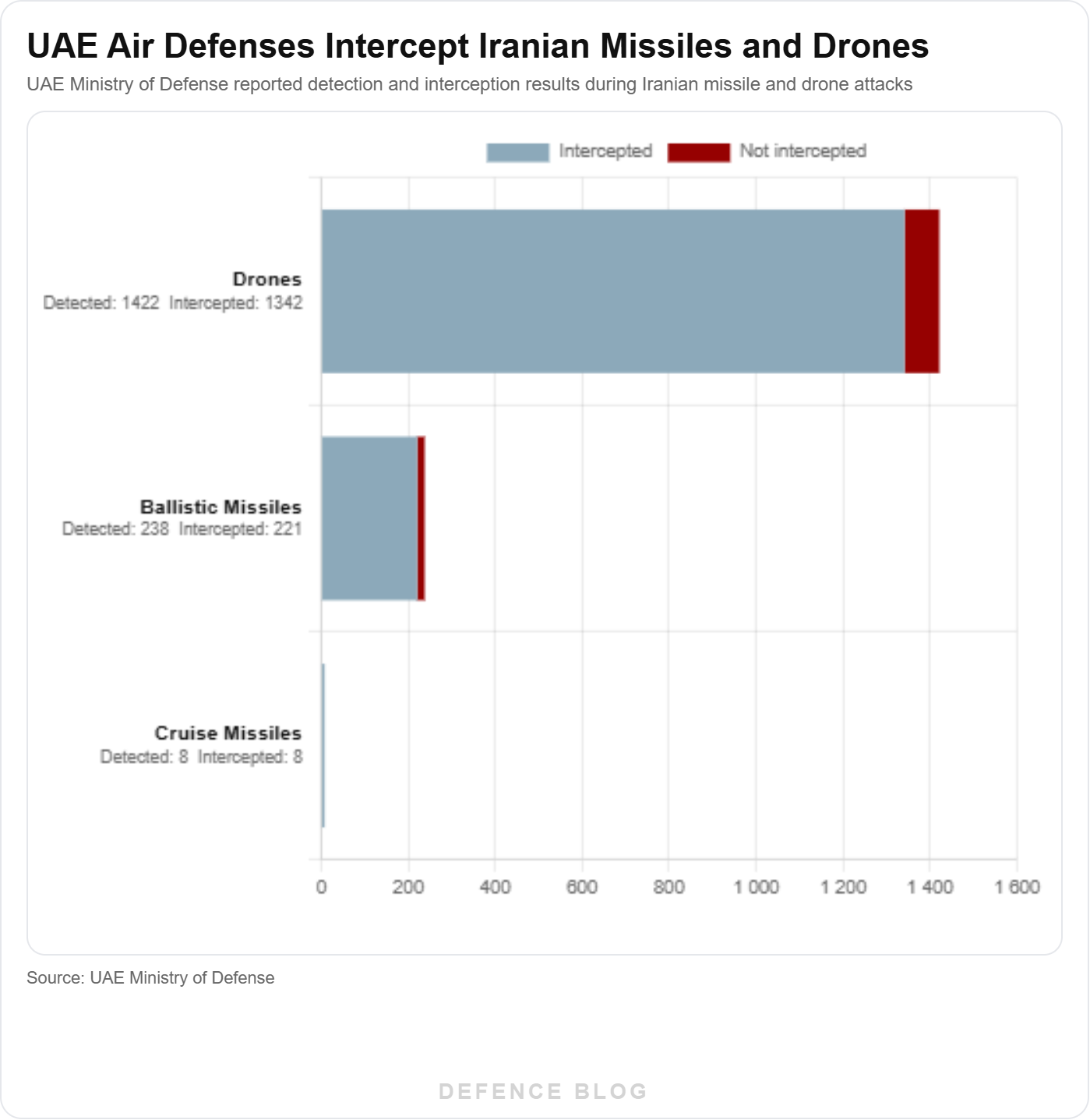
According to a report from Middle East Eye, the new fund between the UAE and Israel is not limited to purchases; it also includes funding for technological developments in Israeli air defense, with a direct focus on C-UAS systems and other layers of air defense. This is important because Abu Dhabi, after being subjected during the war to hundreds of missiles and thousands of drones according to conflicting accounts, came away with a clear conclusion: American batteries alone are not enough if the adversary is capable of numerical saturation, and if the decision time must be measured in seconds, not hours.
The deeper implication is that the UAE has moved from being a customer to being an investor. A customer requests a battery or a radar and then waits for delivery and training. An investor, on the other hand, wants a seat at the development table itself and to direct technical priorities according to its threats. Thus, the new partnership makes sense from Abu Dhabi's perspective: Israel has the experience of live combat against missiles and drones, while the UAE has the liquidity and ability to accelerate purchasing, testing, and partial manufacturing.
- The initial focus seems directed towards counter-drone defenses and short-range air defense.
- Previous reports mentioned the transfer of actual Israeli systems to the UAE during the war, not just promises on paper.
- Leaks about offers of Hermes 900 and electronic warfare confirm that Abu Dhabi wants more than just interception, namely a network for warning, intelligence, and pursuit.
From a Military Perspective, What is Abu Dhabi Really Buying?
In my estimation, the UAE is not just buying Iron Beam itself, nor even Iron Dome if all the circulating details are confirmed. It is essentially buying a time shortcut in building expertise. The real system is not the launcher or the laser, but a complete chain that starts with detecting low and slow targets, quickly classifying them, and then distributing the target to the appropriate layer for interception at the lowest possible cost. This is where the appeal of Israeli technology lies. It was originally built under daily pressure from dense barrages, small drones, and asymmetric targets, not in a sterile testing environment.
Thus, offers of unmanned aircraft and electronic warfare take on greater significance than their commercial value. Leaks in August about Elbit offers to the UAE, including a potential expansion to 45 Hermes 900 drones and order lists that include electronic intelligence, jamming, and communications, clarify that Abu Dhabi wants an eye over the battlefield as much as it wants a missile or laser in the field. Modern defense against Iran or its proxies does not start at the moment of interception, but at the moment of discovering the launch platform, smuggling routes, and the drone's path before it becomes over the port, airport, or desalination station.
Why This Matters for Gulf Balance
The Gulf after the Iran War is no longer as it was before. Saudi Arabia has moved more towards diversifying its umbrellas through Turkey, Pakistan, and Egypt, while the UAE seems more willing to bet on Israel as a technological and operational lever. The difference here is not just political, but institutional as well. Riyadh is still thinking about balancing between major partners to avoid falling into a single dependency. Abu Dhabi, on the contrary, seems ready to accept a higher degree of technical entanglement if it provides faster results in defending infrastructure and cities.
This will affect the arms market itself. If the UAE becomes a funder for the development of Israeli systems rather than just a buyer, we will likely see models designed from the outset for the Gulf environment: high heat, humidity, dust, the threat of mass drones, and the need to protect airports, ports, oil fields, and data stations. Here, Abu Dhabi transforms from a final importer to a partner that defines specifications. From a commercial perspective, this gives Israel an alternative financial outlet at a time when the debate within the United States about the cost of long-term support for it is escalating.
Limits That Money Alone Cannot Solve
However, we should not exaggerate. The laser is not a miracle, especially in the Gulf climate. Humidity, dust, and thermal haze are not secondary details; they are factors that practically affect performance and sustainability. Moreover, Iron Beam is useful against small drones and cheap munitions, but it does not eliminate the problem of large barrages nor does it alone solve the challenge of ballistic missiles. Practically, any new defensive layer needs doctrinal integration, command centers, secure communications, clear rules of engagement, and training local crews capable of operating the system when foreign experts leave.
Here we return to Ahmed's old equation: Capability = Equipment × Training × Institution. The UAE can buy equipment and even fund its development. But if it does not link these systems to a cohesive command and control structure, a rapid decision-making chain, and national personnel capable of maintenance, operation, and analysis, the result will remain less than the cost of investment. A weapon that always needs a foreign mind to operate is not independence; it is merely a more sophisticated and elegant form of dependency.
In conclusion, the new Emirati-Israeli fund reveals a deeper trend than its financial title suggests. Abu Dhabi states that it does not want just an American umbrella to intervene in emergencies, but a defense network closer to daily readiness against Iran and its proxies. However, the paradox that will remain is the same that governs most Gulf armies: the more the desire for independence increases, the greater the reliance on software, sensors, data, and experts from abroad. This partnership may provide the UAE with better defense in the short term, but in the longer term, it will test a much harder question: can technical sovereignty be purchased, or is the most that can be bought merely a postponement of the moment when the need for it becomes apparent?
The United Arab Emirates and Israel established a joint fund in 2026 to acquire and develop new military systems, focusing on short-range air defenses and counter-drone technologies. This partnership marks a significant shift in the UAE's military strategy, moving from a purchasing role to an investment role in defense technology. Reports indicate that the UAE aims to enhance its capabilities against drone and missile threats, particularly in light of recent conflicts with Iran.
- UAE and Israel established a joint fund for military systems development.
- Focus is on short-range air defenses and counter-drone systems.
- UAE is transitioning from a buyer to an investor in military technology.
- Reports indicate the transfer of Iron Beam systems to the UAE during the Iran conflict.
- UAE seeks to enhance its military capabilities against drone and missile threats.