
The UAE intercepts a second Iranian drone in 13 days and reveals the limits of Gulf deterrence in 2026.
 Ahmed Al-Rashid
The UAE Intercepts a Second Iranian Drone in 13 Days and Reveals the Limits of Gulf Deterrence in 2026
On the morning of August 31, the UAE Ministry of Defense stated that the Air Force dealt with a drone coming from Iran over the country's territorial waters, while Abu Dhabi quickly denied the Iranian narrative that spoke of an attack on Al Minhad Air Base. On the surface, the news appears to be a limited interception incident. However, from a military perspective, this is not just a point on a radar screen, but a signal that the U.S.-Iranian war has returned to directly pressure the most sensitive Gulf circle: the countries that want complete commercial stability while simultaneously hosting a Western military infrastructure that makes them part of the deterrence theater even when they do not want to be.
Importantly, the incident did not come out of nowhere. Within less than two weeks, the UAE had announced on August 18 the detection of two ballistic missiles launched from Iran towards maritime navigation, one of which fell outside the territorial waters and the other inside. This means that what happened now is not a singular breach, but a graduated test of the limits of Gulf patience and the capacity of air defense to protect political sovereignty, not just the airspace.
What Actually Happened on August 31
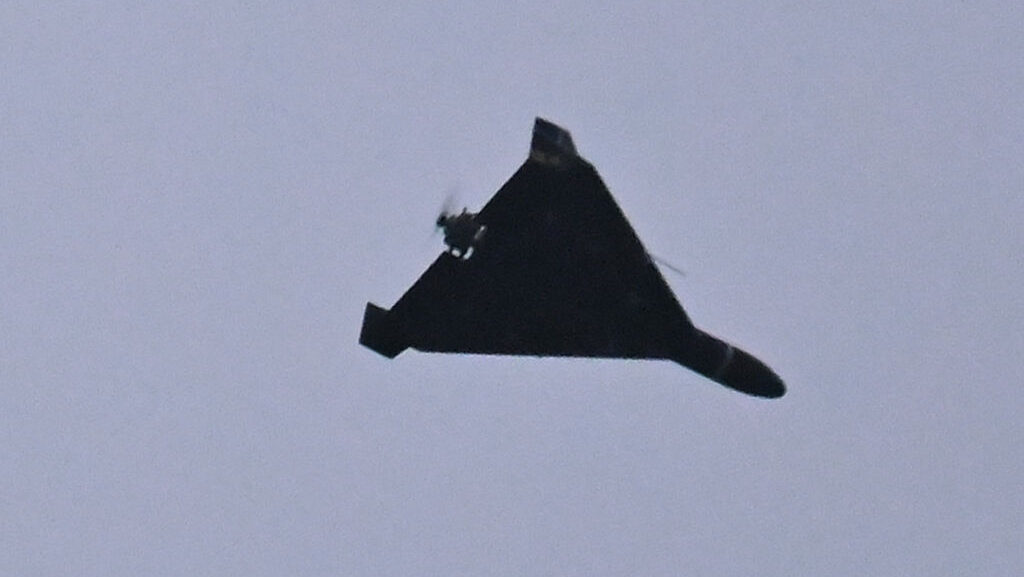
According to official Emirati data, the drone was dealt with over the territorial waters, and Abu Dhabi did not disclose its type or whether it was shot down, diverted, or merely conducting reconnaissance. In contrast, Iranian media reported that the Iranian military launched dozens of drones towards U.S. military assets at Al Minhad, linking it to a response to the U.S. strike that targeted two Iranian platforms on Qeshm Island. The difference between the two narratives is not a mere media detail. When the UAE denies that the base was hit but confirms that the drone came from Iran, it is trying to draw a precise political line: yes, there is an assault on sovereignty, but we do not want to give Tehran a propaganda victory by showing that a sensitive base near Dubai was successfully attacked.
- Date: August 31, 2026
- Declared Location: UAE territorial waters near the sensitive airspace of the state
- Declared Party: UAE Ministry of Defense
- Iranian Narrative: Targeting U.S. assets in Al Minhad using drones
- Emirati Narrative: No truth to the report of the base being hit, and a drone coming from Iran was dealt with
Why the UAE Becomes a Target When It Is Not a Willing Party in the War
Any military personnel who has served in the region knows that hosting Western infrastructure provides protection and deterrence, but it simultaneously creates vulnerability to being targeted. This is the old Gulf dilemma dressed in 2026. The UAE does not want a war of attrition with Iran, and its primary interest is to keep ports, aviation, trade, and financing chains operating uninterrupted. However, when the United States uses its network of bases and logistical movement in the Gulf, Tehran deals with military geography, not political intentions. From this perspective, the UAE becomes a target due to its location and function, not because of its desire.
Here, the problem of the "Triangle of Capability" that I always return to emerges: weaponry, training, and institution. The UAE possesses better air defense than most of its Arab neighbors, has higher operational experience, and a more cohesive warning network. However, possessing interception systems does not mean having the freedom of strategic decision-making. The system may intercept the drone, but it does not negate the fact that the adversary is the one who chooses the timing, location, and accompanying political message of the test. Practically, air defense prevents disaster, but it does not prevent extortion if the political environment remains the same.
Linking to the Larak Strike and Jordan Reveals a Calculated Iranian Pattern
The incident came after a U.S. strike that Washington said targeted two Iranian launch platforms on Qeshm Island to prevent further mines from being planted in the Strait of Hormuz. Subsequently, reports emerged about Iranian attacks on sites used by U.S. forces in Jordan, with Amman stating that it intercepted eight missiles. This sequence is important because Iran seems to be reworking a calculated equation: the response is distributed across multiple arenas, using varying cost mediums, so that the message is understood without immediately slipping into a comprehensive war with each Gulf state individually.
The drone here is an ideal tool for this equation. It is cheaper than a ballistic missile and less embarrassing if shot down, but its political impact is significant because it indicates that the Gulf region is not completely closed off. If Tehran has moved from missiles related to navigation to a drone heading towards the UAE in just two weeks, it means that pressure is moving horizontally between economics, energy, bases, and facilities, not just vertically towards direct military escalation.
What This Means for Gulf Security and Navigation
The diplomatic advisor to the Emirati president, Anwar Gargash, clearly stated that the policy of targeting Gulf states and Jordan has proven to be a failure, calling for de-escalation and the restoration of normal navigation in the Strait of Hormuz. This is diplomatic language, but it reflects a genuine military concern. Before the war, the strait saw nearly one-fifth of the world's crude oil and liquefied natural gas shipments pass through it. Therefore, every drone or missile is not only read as a security incident but also as a pricing signal for markets, insurance companies, and shipping. This is why we also saw the UAE harden its tone and hold Iran fully responsible, at a time when it had suspended trade and financial exchanges with Tehran this month.
The paradox is that Gulf states have spent enormous amounts on air defense for decades to create immunity from this type of coercion. Yet they are discovering once again that technical immunity alone is not enough. You can shoot down the flying object, but you cannot operate ports, investor confidence, and energy chains solely through interceptions. Security here is not just a matter of Patriot or THAAD batteries or early warning radar, but a matter of how to prevent your adversary from making every day of economic operation hostage to launching a relatively cheap means.
Conclusion
The incident on August 31 does not prove that Iran succeeded in hitting Al Minhad, but it proves something more important: that the Gulf is still living the same gap between military interception and strategic sovereignty. The UAE likely succeeded in preventing a larger incident, and that is no small feat. However, tactical success does not change the structural reality. As long as Western bases, maritime economics, and the course of war with Iran are intertwined, Abu Dhabi, Riyadh, and Doha will remain caught between their need for the American umbrella and their fear of the price of hosting it. In my view, this is the knot that explains all of 2026: having the capability to shoot down the drone does not mean having the ability to extricate the Gulf from the equation of being targeted.
The United Arab Emirates Air Force intercepted an Iranian drone over its territorial waters on August 31, 2026. This incident follows the detection of two ballistic missiles launched from Iran towards maritime navigation. The UAE denies Iranian claims of an attack on the Al Minhad airbase, emphasizing its commitment to protecting its sovereignty amid rising tensions with Iran.
- The UAE intercepted an Iranian drone over its territorial waters on August 31, 2026.
- This incident follows the detection of two ballistic missiles launched from Iran towards maritime navigation.
- The UAE denies Iranian claims of attacking the Al Minhad airbase.
- The incident highlights the ongoing military tensions between the UAE and Iran.
- The UAE aims to maintain stability in trade and military presence in the region.