
US 2026 Patriot and THAAD Surge Still Leaves Indo-Pacific Short
 Marcus Chen
US 2026 Patriot and THAAD Surge Still Leaves Indo-Pacific Short
The Pentagon wants PAC-3 MSE output to jump from about 600 missiles a year to 2,000, and THAAD from 96 to 400. In budget politics, that sounds like a surge. In operational terms, it is a repair job. The United States is trying to rebuild magazine depth after burning through interceptors in the Iran war and shipping more air-defense rounds to Ukraine. For an Indo-Pacific commander looking at China’s missile inventory, that is not reassuring news. It means Washington has finally admitted the stockpile problem. It does not mean the math is fixed.
That distinction matters because the western Pacific is a theater where air and missile defense gets consumed fast. Any serious contingency around Taiwan, Guam, Okinawa, or the Luzon Strait would force the United States to protect fixed bases, fuel farms, ports, logistics hubs, and command nodes under sustained ballistic and cruise-missile attack. Anyone who has served on a destroyer knows sea control starts with staying in the fight. On land, that starts with interceptor depth. If the magazines run thin in week one, the rest of the campaign gets theoretical in a hurry.
The New Production Push
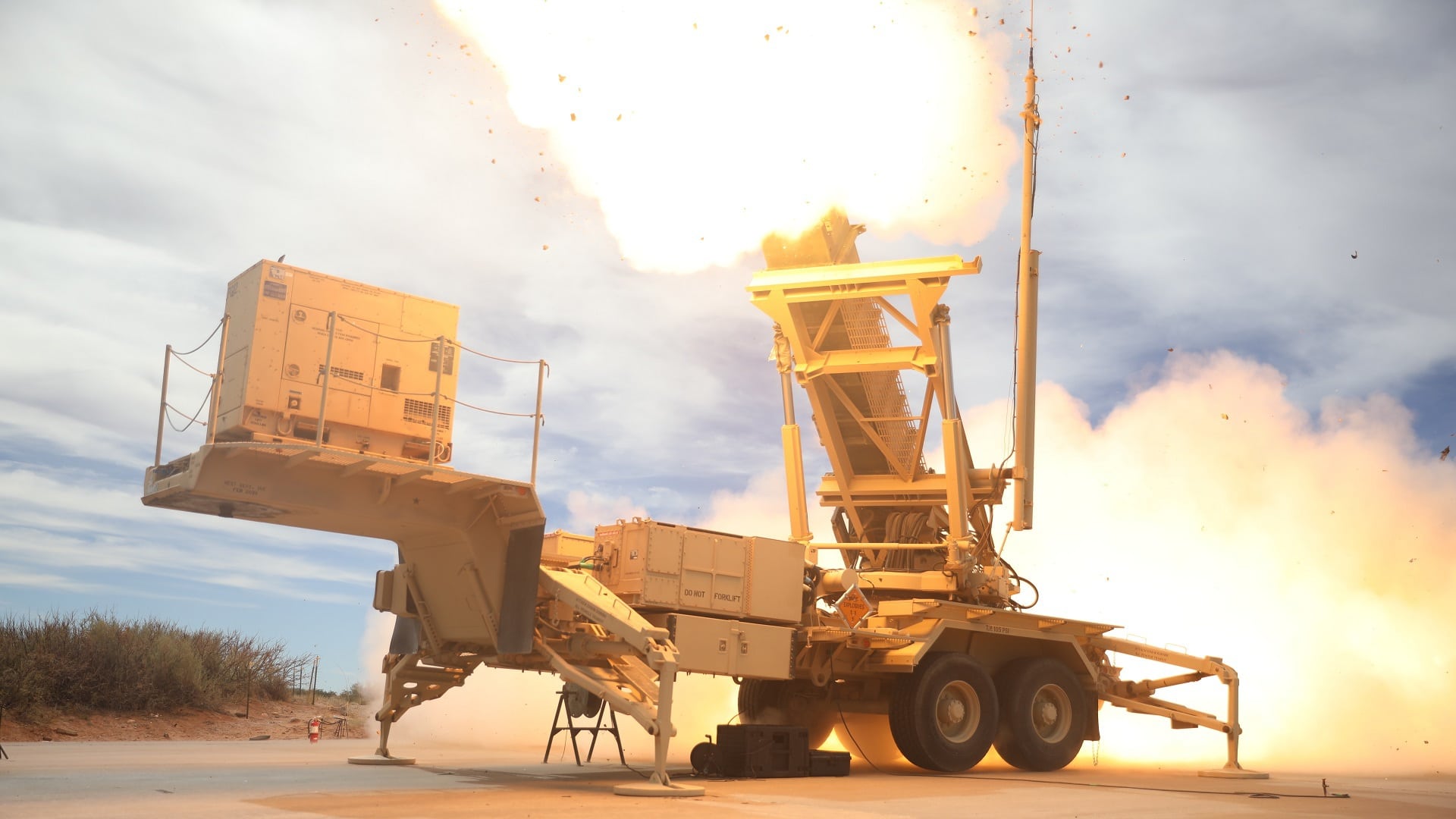
Reuters reported on August 31 that the Pentagon signed seven-year agreements with General Dynamics Ordnance and Tactical Systems and Lockheed Martin to increase missile production for the Patriot PAC-3 MSE and THAAD programs. Defense News added the critical detail: the framework aims to triple Patriot production and quadruple THAAD output. Lockheed Martin’s own PAC-3 briefing put a harder number on it, saying annual PAC-3 MSE capacity would rise from roughly 600 to 2,000, with that target reached by the end of 2030. A separate Lockheed release on THAAD said annual interceptor production would rise from 96 to 400.
- PAC-3 MSE target: about 600 to 2,000 per year
- THAAD target: 96 to 400 per year
- Contract structure: seven-year framework agreements, still subject to annual appropriations
Those are real numbers, and they matter. They also tell you the U.S. defense industrial base was nowhere near the capacity required for a high-end, missile-heavy war. If a threefold or fourfold increase is necessary now, then the prewar baseline was built for peacetime procurement logic, not wartime consumption.
The Inventory Problem Is Worse Than the Press Release
The Pentagon’s announcement landed only because the inventory picture has become hard to hide. CSIS assessed that Patriot inventories are now under 1,000 and THAAD inventories are around 250 after months of combat operations and transfers. Defense News cited a July CSIS estimate that the United States had already expended roughly 65% of its Patriot stock and 38% of its THAAD interceptors. That is the real context for the new agreements.
CSIS warned that Patriot inventories are now under 1,000 and THAAD inventories are at about 250, creating near- to medium-term readiness risk for a war against China in the western Pacific.
Put differently, the United States is not expanding from abundance. It is expanding from depletion. Even if Lockheed hits 2,000 PAC-3 MSE rounds a year by 2030, those missiles are already spoken for in broad terms: refill U.S. stocks, sustain forward deployments, support allied demand, cover testing and training, and hedge against another Middle East flare-up. The same logic applies to THAAD. Four hundred a year sounds impressive until you remember the starting point is an inventory measured in the low hundreds.
Why China Is the Hard Case
China is the adversary that breaks comfortable procurement assumptions. The PLA Rocket Force does not need to sink every U.S. ship or close every runway permanently. It just needs to impose enough repeated missile salvos to force hard rationing decisions. Do you defend Guam or an airfield further west? Do you hold rounds for the next wave or spend them protecting fuel storage now? Do you surge ships inside the first island chain if you are unsure the rear-area logistics network will stay open?
That is why this production push matters less as an industrial success story than as an admission of strategic vulnerability. In a Taiwan scenario, the United States would be fighting for SLOC protection, sortie generation, and base survivability at the same time. Patriot and THAAD are not interchangeable with every other interceptor in the inventory, and there are no cheap substitutes for upper-tier and high-end ballistic missile defense once the shooting starts. If Washington has to relearn that under fire, it will be too late.
Capacity Is Not the Same as Deterrence
There is another catch. These agreements create production capacity, not instantly available inventory. Lockheed says the PAC-3 MSE ramp reaches its 2,000-per-year north star by the end of 2030. That is three to four years away. The Pentagon also noted the production surge remains subject to congressional appropriations. In other words, the demand signal is longer and clearer, but the political and budgetary risk has not disappeared. Marcus-style translation: the plan is serious, but the magazines do not fill themselves because someone held a press conference.
The better way to read this announcement is as a warning indicator. Washington finally understands that missile defense inventory is a theater-level constraint, not a procurement footnote. But China’s challenge sits on a nearer timeline than the industrial recovery plan. The western Pacific may ask for these rounds before the factories reach full speed.
The Pentagon deserves credit for moving away from one-year, stop-start ordering. But nobody in INDOPACOM should confuse a 2030 capacity target with a 2026 deterrence solution. The United States is rebuilding depth because it has discovered it does not have enough. That is progress. It is also the problem.
The U.S. Department of Defense plans to increase PAC-3 MSE missile production from 600 to 2,000 and THAAD from 96 to 400 by the end of 2030 in response to inventory shortages. This increase aims to address strategic vulnerabilities in the Indo-Pacific, where current inventories are critically low. The Pentagon's efforts reflect a recognition of the need for enhanced air defense capabilities amid ongoing military challenges.
- The Pentagon aims to increase PAC-3 MSE production from 600 to 2,000 missiles per year.
- THAAD production is set to rise from 96 to 400 missiles annually.
- Current inventories for Patriot are under 1,000 and THAAD around 250.
- The U.S. has expended approximately 65% of its Patriot stock and 38% of THAAD interceptors.
- The production surge is subject to congressional appropriations.