
The United States agrees in 2026 to APKWS, Patriot, and Javelin deals for the Gulf and Egypt worth $2.2 billion
 Ahmed Al-Rashid
The United States Approves APKWS, Patriot, and Javelin Deals for the Gulf and Egypt Worth $2.2 Billion in 2026
On October 2, 2026, the U.S. Department of State approved three potential military sales to its partners in the Middle East with a reported value exceeding $2.2 billion. The UAE may receive up to 10,000 guidance units for the Advanced Precision Kill Weapon System II worth $1 billion, Kuwait requested repair services and the return of Patriot missiles worth $400 million, while Egypt requested up to 2,020 Javelin missiles with 200 launch units worth $832 million. The announcement came at a time when Gulf infrastructure has faced repeated attacks, but it tells us something deeper than just a new shopping list.
Three Countries and Three Different Military Issues
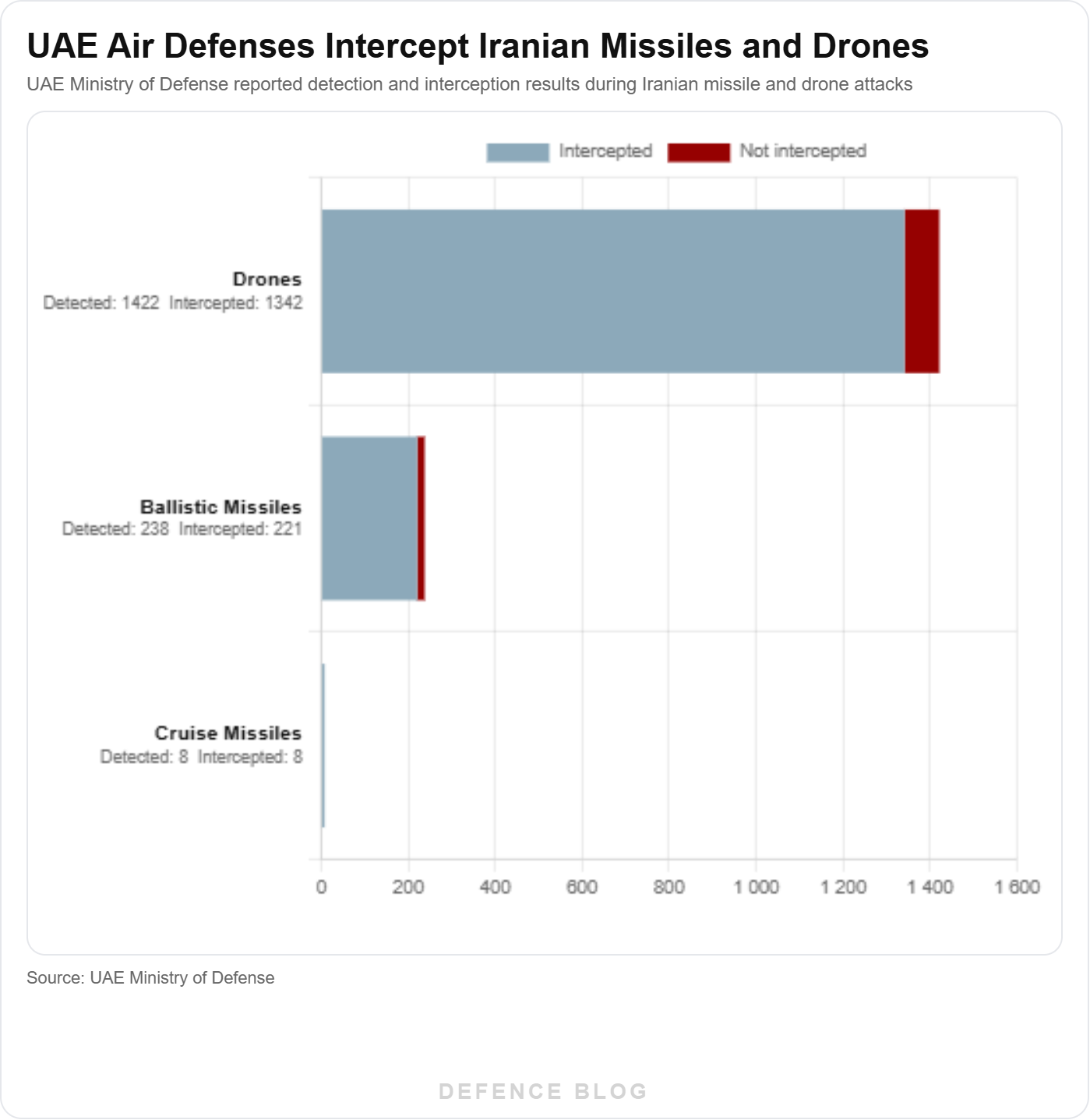
The UAE deal is the most operationally significant. The APKWS II converts a 70mm Hydra rocket into a laser-guided weapon, which can be launched from air, land, and sea platforms. Its main advantage is not its large destructive power, but its lower cost compared to a conventional air defense missile. In a war where drones are used in large numbers, a commander cannot confront every cheap target with an expensive intercept missile. Therefore, the proposed quantity represents an attempt to build an economical intercept layer against drones and loitering munitions, not a replacement for THAAD or Patriot.
However, the number 10,000 should not be read as ten thousand ready missiles in stock. The State Department refers to them as guidance units, and the deal is still potential, with the quantity and price subject to change during negotiations. More importantly, these munitions will enhance interoperability with U.S. forces. This means that Abu Dhabi is purchasing defensive capability, but it is also buying continued connection to the U.S. targeting, communications, and training chain.
Kuwait faces a different problem. The request to repair Patriot missiles and return them to service means that the question is no longer about purchasing the system, but about maintaining its readiness after years of use and combat pressure. Kuwait has operated Patriot since the 1990s and now needs to rebuild its intercept stock and technical support. From a military perspective, an inoperable missile or a battery waiting for spare parts does not deter anyone. Here lies the truth that defense industry data often ignores: sustainability is part of the weapon itself.
As for Egypt, the Javelin request is not directly related to Gulf air defense. It is a man-portable anti-tank weapon guided in a fire-and-forget manner, which may give Egyptian forces greater capability to confront armored vehicles and fortified positions in desert or border environments. Its request coincides with a broader modernization of Egyptian forces, including plans to purchase 24 additional Rafale fighters and replace older F-16s, according to European Security & Defence. Cairo is not buying a single system; it is trying to fill accumulated gaps in its land and air forces while maintaining its relationship with Washington and Paris.
Why Now
The security environment explains the timing. On October 5 and 6, attacks and explosions were reported near King Abdulaziz and Najran airports and King Khalid Airport in Saudi Arabia, with minor injuries according to Reuters citing the Saudi Civil Aviation Authority. This does not mean that the deals with the UAE, Kuwait, and Egypt are a direct response to a single incident, but it illustrates the type of threat that pressures Gulf capitals: low-cost, repeatable attacks targeting airports, oil facilities, and movement routes more than traditional confrontations.
Moreover, Washington's approval of separate deals for three countries sends a political signal. The United States is not announcing its withdrawal from Gulf security, but is redistributing responsibility to local partners. The message to the UAE is that defense against drones requires local firepower density; to Kuwait that the American infrastructure does not operate without maintenance; and to Egypt that Washington still sees the Egyptian military as a regional force that cannot be ignored. This is not a new security umbrella, but a renewal of an old contract under harsher terms.
Testing Triad Capability
I use a capability triangle to assess armies: equipment, training, and institutions. In terms of equipment, the three deals make sense. APKWS adds low-cost interception, Patriot restores readiness to a key defense system, and Javelin enhances the ground units' ability to stop armored vehicles. However, the triangle is not complete with just purchasing.
In training, the UAE needs crews that can integrate laser, sensing, and command and control with the air defense network, not just carry missile boxes to storage. Kuwait needs a continuous maintenance cycle and spare parts stock, not a one-time repair contract. Egypt needs a usage doctrine that makes Javelin part of reconnaissance and maneuver, not a weapon distributed to units unable to protect or resupply it.
In institutions, the biggest problem lies. The more these countries rely on Washington's approvals, spare parts, and training programs, the higher the political cost of independence. A state can own Patriot, but owning the missile does not mean having the capability to operate it in every circumstance. It can buy thousands of APKWS units, but the stock does not create an early warning network, a quick decision, or unified command.
Deterrence or Managing Dependence
The U.S. State Department states that the UAE deals will support self-defense and interoperability, and that repairing Patriot will protect Kuwait's oil and gas infrastructure. These are correct statements, but they do not answer the fundamental question: who manages the battle when multiple attacks coincide on an airport, an oil facility, and a military base? American weapons improve reaction, but they do not alone solve the problem of prioritizing, munitions, and political decision-making.
The deal also proves that Washington prefers solutions that can be delivered quickly over long-term defensive independence projects. This is useful in the coming months, especially with the widening drone war, but it leaves the Gulf in a position where it pays the price of readiness twice: once when purchasing the system, and once when requesting repairs, munitions, and spare parts. Even these sales are not final; they are potential deals that could see their numbers change or be opposed by Congress.
In my view, the significance of the October 2 announcement lies not in the $2.2 billion value, but in that it reveals the limits of Gulf power as it actually is. The UAE is acquiring a large quantity of cheap munitions, Kuwait is trying to revive its missile shield, and Egypt is expanding its anti-tank stock. But the three countries are still buying parts of capability, not complete capability. As any military officer who has served in the region knows, the battle does not reward those who have the longest weapons list, but those who can keep their system operational on the third day of the attack. Here, the tension remains between the Arab desire for self-defense and the ongoing need for the American umbrella.
Sources
On October 2, 2026, the U.S. approved military sales totaling $2.2 billion to the UAE, Kuwait, and Egypt. The UAE is set to acquire 10,000 units of the APKWS II, while Kuwait requested repairs for its Patriot missile system. Egypt plans to purchase 2,020 Javelin missiles and 200 launch units. These transactions reflect ongoing military cooperation amid rising security threats in the Gulf region.
- U.S. approved military sales worth $2.2 billion to UAE, Kuwait, and Egypt.
- UAE may acquire 10,000 units of APKWS II.
- Kuwait requested repairs for Patriot missiles worth $400 million.
- Egypt requested 2,020 Javelin missiles and 200 launch units.
- The sales are a response to increased security threats in the Gulf region.