
The United States Announces Action Against Iran, Iran Responds "Bring It On," Intense Struggle for Control of the Strait of Hormuz Between the U.S. and Iran
[Global Times Special Correspondent in Iran Li Rui, Global Times Reporter Li Meng, Yu Wen] The Iranian Islamic Revolutionary Guard Corps Navy announced early on the 12th that, in light of the unsafe situation caused by illegal foreign intervention, the Strait of Hormuz is now closed, and no vessels are allowed to pass until further notice and until the United States ceases its interference in the region. On the same day, a new round of conflict erupted between the U.S. and Iran over the control of navigation in the Strait of Hormuz, with the U.S. military launching its third round of strikes against Iran this week, targeting over 140 sites within Iran, while Iran launched a series of strikes against U.S. targets in the Middle East. Iranian Parliament Speaker Mohammad Baqer Qalibaf stated on social media on the 12th that the era of unilateral agreements is over. "We have told you: either keep your promises or pay the price." He accompanied his post with a screenshot of the fifth clause of the memorandum of understanding signed by the U.S. and Iran in June, which mainly concerns the arrangements for commercial shipping passage through the Strait of Hormuz, with the phrase "The Islamic Republic of Iran will make arrangements" particularly highlighted. This raises the question of whether Iran has the right to control passage through the Strait of Hormuz, sparking controversy among various parties.
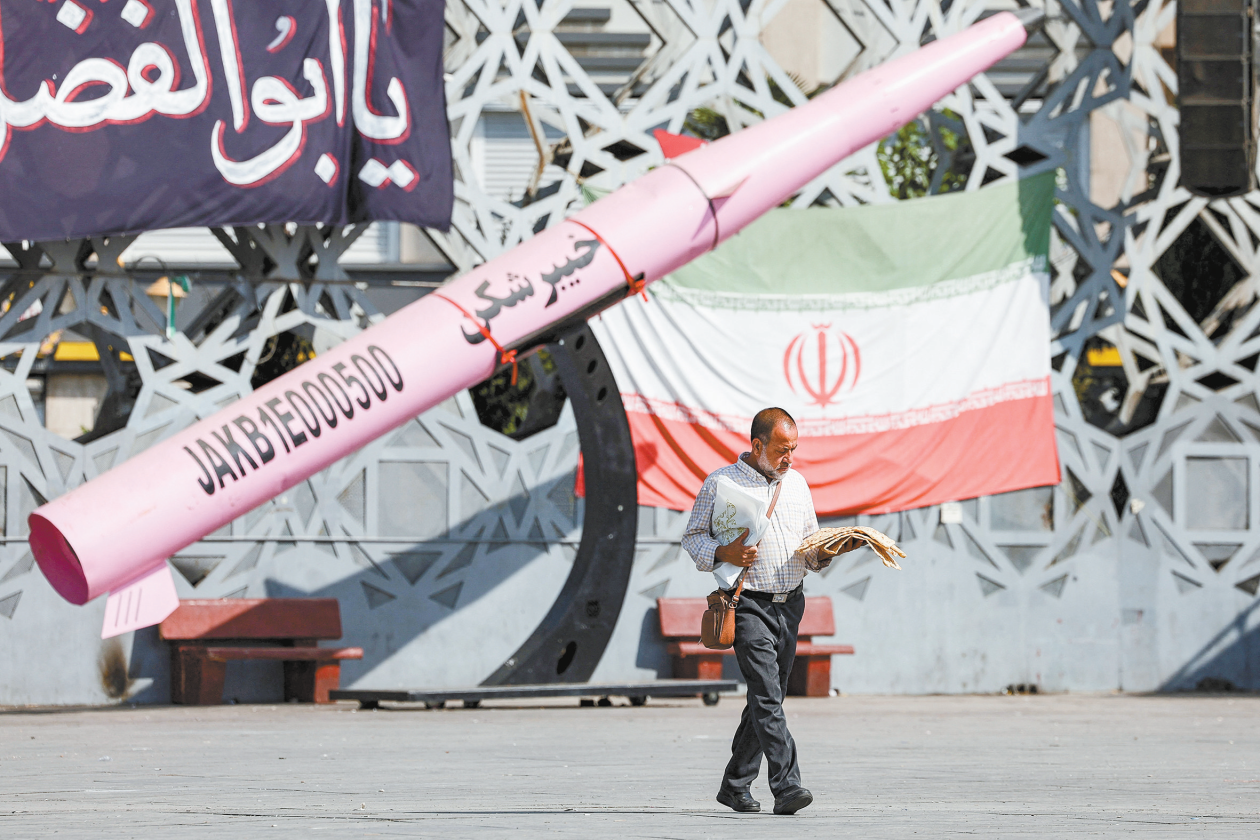
Iran attacks "illegally passing" merchant ships
The UK Maritime Trade Operations Office reported on the evening of the 11th that a container ship was attacked in waters near Oman, sustaining damage to its stern and catching fire, prompting the crew to abandon ship and escape in a lifeboat. According to U.S. sources, Iran attacked a container ship flying the flag of Cyprus that was passing through the Strait of Hormuz on the 11th, resulting in one crew member missing, a fire on the deck, and severe damage to the engine room, forcing the ship to stop sailing. U.S. Secretary of Defense Lloyd Austin stated on social media that "Iran made a bad choice" and "now they are paying the price."
The Iranian Islamic Revolutionary Guard Corps Navy issued a statement early on the 12th, saying that several hours earlier, multiple vessels attempted to navigate a route through the Strait of Hormuz without Iranian approval, ignoring Iranian warnings to alter their course. One of the vessels had its automatic identification system turned off and was hit by warning shots from Iranian forces, causing it to stop sailing. Iranian authorities had previously announced that foreign forces interfering in the affairs of the Strait of Hormuz and illegally delineating shipping routes would face a "resolute response" from Iran.
After the U.S. and Iran signed the memorandum of understanding on June 18, the situation in the Strait of Hormuz briefly returned to calm, establishing two navigation channels: the northern channel controlled by Iran and the southern channel near Oman, with the U.S. military providing navigation assistance in the southern channel.
The Public Relations Office of the Islamic Revolutionary Guard Corps stated on the 12th that the U.S. imposed its will on the Omani government, provoking tensions through "illegal activities" by several vessels in the southern Strait of Hormuz, and that the Iranian Navy decisively thwarted this attempt. Later that evening, Iran announced it had attacked a second vessel for "violating navigation" in the Strait of Hormuz. Ibrahim Rezaei, spokesperson for the Iranian Parliament's National Security and Foreign Policy Committee, stated, "We control the Strait of Hormuz with strength, and we will also protect it with strength."
The New York Times reported on the 12th that Iran insists its waters are the only viable route for merchant ships crossing the Strait of Hormuz, and those choosing to navigate along the Omani coastline under U.S. guidance and protection have angered Tehran. The vessels attacked over the weekend, like those attacked earlier in the week, attempted to traverse the U.S.-recommended route in Omani waters, leading to a new round of retaliatory actions.
"The U.S. and Iran have launched a new round of attacks over control of the Strait of Hormuz," the Wall Street Journal reported, stating that the White House accused Iran of violating the memorandum and hoped Iran would announce the Strait of Hormuz open and cease attacks on merchant ships. However, Iran announced the closure of the Strait and again attacked vessels attempting to pass through the Omani coastal waterway.
The U.S.-led Joint Maritime Information Center reported on the 12th that despite Iran's claims that the Strait of Hormuz is closed, the southern channel near Oman remains open and is now navigable in both directions. The U.S. Central Command stated that Iran does not control the Strait of Hormuz, and "navigation continues." However, the Qatari government urged all shipowners to "temporarily suspend" navigation through the Strait of Hormuz until further notice.
"Bring it on, we will retaliate"
According to Iranian media reports, on the morning of the 12th, multiple locations in Iran's southern Qeshm Island, Chabahar Port, Bushehr Province, and southwestern Khuzestan Province were attacked by the U.S. military. The U.S. Central Command stated that on that day, the U.S. military completed its third strike against Iran this week, targeting approximately 140 Iranian military sites, including missile and drone launch positions, naval equipment, ammunition storage facilities, communication networks, and coastal monitoring stations. Al Jazeera reported on the 12th that in the past four days, U.S. airstrikes have resulted in 19 deaths in Iran, including civilians, with over 100 others injured.
"Bring it on! After the U.S. military launched attacks, Iran shelled multiple U.S. targets." Iranian News TV reported on the 12th that in response to U.S. attacks, the Iranian military launched missile and drone strikes against U.S. military facilities in Jordan, Kuwait, Bahrain, and Oman, including the Prince Hassan Air Base in Jordan and the Al Udeid Air Base in Qatar. The Islamic Revolutionary Guard Corps and the Iranian military stated, "The U.S. and the Zionist enemy should understand that their continued aggression will provoke an even more devastating response. Bring it on, we will retaliate."
Several countries in the Middle East were forced to become involved in the conflict on the 12th. Bahrain sounded air defense alarms; Jordan activated its air defense systems, stating that three missiles launched from Iran landed in Jordan but caused no casualties; the UAE Ministry of Defense stated it had intercepted missiles and drones; Qatar issued a security alert, claiming it was attacked by Iranian missiles; Oman reported that multiple locations in its northern Musandam Province, adjacent to the Strait of Hormuz, were attacked by drones. Oman and other countries condemned the attacks against them.
After the sudden escalation of the U.S.-Iran conflict, the Pakistani Foreign Ministry stated that Pakistan's Deputy Prime Minister and Foreign Minister Bilawal Bhutto Zardari spoke by phone with Iranian Foreign Minister Hossein Amir-Abdollahian on the same day. Zardari called for restraint from both the U.S. and Iran, urging adherence to the contents of the U.S.-Iran memorandum and promoting de-escalation.
Iranian Foreign Ministry spokesperson Nasser Kanaani stated at a press conference in Tehran on the 12th that Iranian Foreign Minister Amir-Abdollahian visited Oman on the 11th, and both sides discussed navigation and shipping management arrangements in the Strait of Hormuz and will continue dialogue on this matter. The Iranian side emphasized that future navigation management arrangements in the Strait of Hormuz should be jointly negotiated by Iran and Oman, the two coastal countries.
Memorandum Clause Five "Buried Hazards"
Professor Ding Long from the Middle East Studies Institute of Shanghai International Studies University told Global Times reporters on the 12th that the essence of the current U.S.-Iran conflict lies in the right of passage through the Strait of Hormuz. After both sides reached the memorandum of understanding, the navigation situation in the Strait of Hormuz briefly returned to a pre-war state: the southern route achieved free navigation, with passing vessels not needing to report to Iran; the northern route was controlled by Iran, with vessels required to report to Iranian authorities. Iran's attempt to implement comprehensive control over the entire strait is something the U.S. cannot agree to.
In fact, after the U.S. and Iran signed the memorandum in June, many media outlets analyzed that the ambiguous wording of Clause Five of the memorandum, interpretative differences, and the power struggle over control of the Strait of Hormuz buried the hazards for both sides to restart conflict. Clause Five of the memorandum states that "Iran will make every effort to arrange for merchant ships to safely and freely travel between the Persian Gulf and the Gulf of Oman within a 60-day period," but the key phrases "make arrangements" and "make every effort" were not clearly defined. Iran interprets this as having the right to decide the navigation route through the strait, requiring vessels to report to Iranian authorities; the U.S. interprets "restoration of navigation" in the Strait of Hormuz as meaning completely free and unimpeded passage as before the war, with both sides making interpretations favorable to themselves and accusing the other of violating the memorandum.
Ding Long stated that Iran places great importance on the jurisdiction over the Strait of Hormuz, as it is currently the only card it can use to threaten the U.S. Iran exerts pressure on the U.S. through control of the strait as a bargaining chip and will not easily give it up. Regarding the future situation, it is expected that both sides will continue to "fight while talking." Despite the intensity of the conflict, both sides have a willingness to negotiate, and mediators are also working, leaving the door to negotiations open. The U.S. faces pressure from midterm elections, while Iran urgently needs to restore its economy and cannot afford a prolonged conflict. Future negotiations will need to clarify Clause Five of the memorandum or involve Oman and other parties to coordinate a new navigation model.
Al Jazeera quoted analysts on the 12th as saying that the crisis of navigation through the Strait of Hormuz is unlikely to be resolved through military means. One side has the willingness to continue fighting, while the other side has the willingness to continuously weaken and destroy the other's capabilities, which will only lead to ongoing conflict. Affected parties may push for the resumption of diplomacy, but given the "two capricious parties" and the deeply rooted interests both have in success and victory, changing this situation will be difficult.
The New York Times reported on the 12th that London Brent crude futures closed at nearly $76 per barrel on the 10th, about 5% higher than pre-conflict levels. Although far below the peak of nearly $120 per barrel during the most severe period of the conflict, the market's reaction after each airstrike indicates that Iran has the ability to influence energy prices. If the recent pattern repeats, international oil prices may fluctuate again when the market reopens.
U.S. forces conducted airstrikes against approximately 140 Iranian military targets in Iran on the 12th, prompting Iran to retaliate with missile and drone strikes on U.S. military facilities in Jordan, Kuwait, Bahrain, and Oman. Iran has closed the Strait of Hormuz to foreign vessels, asserting its control over the region amid escalating tensions. Casualties from the U.S. airstrikes include 19 Iranian deaths and over 100 injuries.
- Iran closed the Strait of Hormuz to foreign vessels citing security concerns.
- U.S. conducted airstrikes on approximately 140 Iranian military targets.
- Iran retaliated with missile and drone strikes on U.S. military facilities in the region.
- Casualties reported include 19 Iranian deaths and over 100 injuries from U.S. airstrikes.
- Iran claims control over the Strait of Hormuz and has warned against foreign intervention.