
The United States Strikes a Commercial Ship in the Gulf of Oman and Turns the Blockade on Iran into a Test of Gulf Security
 Ahmed Al-Rashid
The United States Strikes a Commercial Ship in the Gulf of Oman, Turning the Blockade on Iran into a Test of Gulf Security
On October 10, 2026, the U.S. Central Command announced that a fighter jet struck a large cargo ship flying the Panama flag in the Gulf of Oman after it attempted to breach the maritime blockade imposed on Iranian ports, causing damage to its propulsion system and rendering it unable to continue sailing. This is not an isolated tactical incident. When a superpower uses a weapon against a commercial ship to force it to stop, the conflict shifts from targeting Iranian facilities to redefining who has the right to transit the maritime passages surrounding the Gulf.
Blocking Passage Becomes a Continuous Military Operation
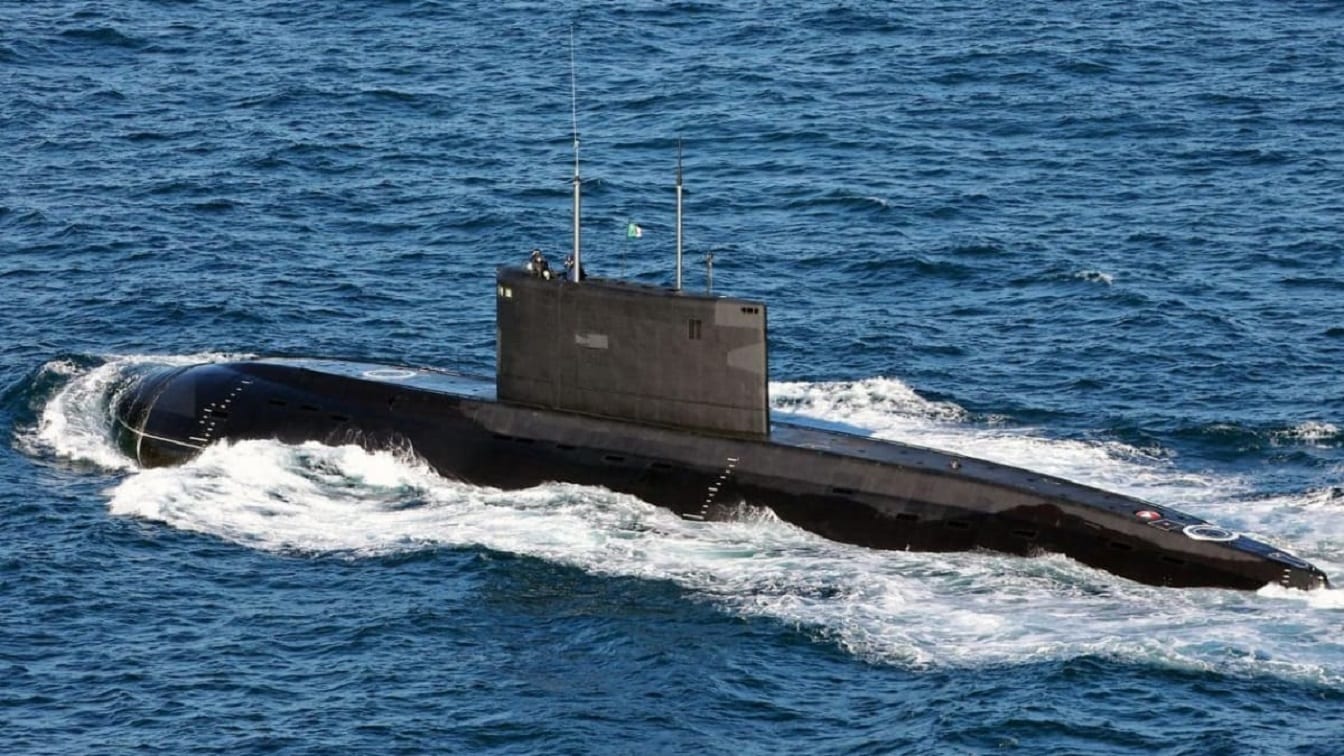
According to the U.S. statement, operations to prevent ships from entering or leaving Iranian ports resumed on July 14, and over three months, 135 ships were forced to turn back, while four ships lost their navigational capabilities and ten tankers linked to the Iranian Revolutionary Guard were destroyed. If confirmed independently, these figures mean that Washington is not executing a symbolic strike but is building a system of inspection and deterrence by force. The difference is militarily significant; a traditional blockade requires patrol and escort ships and inspections, whereas here, aircraft and precision munitions are used to intimidate ships before they reach the point of interception.
Striking the stern and disabling propulsion is a calculated choice. It stops the ship without necessarily sinking it, but it sends a clear message to every captain that non-compliance does not require a full naval battle to become costly. However, one should not confuse disabling a ship with controlling the sea. True control requires keeping aircraft in the air, accurately identifying ships, securing rescue teams, and managing thousands of tons of trade that may be halted or rerouted.
The Gulf Does Not Need a Larger War to Suffer
The Arab states bordering the Gulf face a practical dilemma. They want to choke Iran's ability to finance its operations and arm its proxies, but they do not want their territorial waters and ports to become a theater of constant engagement. Every ship struck in the Gulf of Oman raises insurance costs, increases travel times, and pushes companies to avoid ports near the Strait of Hormuz. Markets may not wait for an attack on a Gulf tanker; it is enough for shipping companies to consider the area unpredictable.
The more dangerous aspect is that the maritime blockade puts Oman, the UAE, and Saudi Arabia in front of a question that air defense purchases alone cannot answer. Can these countries protect shipping lanes without becoming a declared party in intercepting ships? Do they have joint operations rooms that can distinguish between a tanker linked to the Revolutionary Guard and an ordinary commercial ship within minutes? Practically, this is an intelligence, legal, and political capability before it is a missile capability.
Iran Will Seek the Cheapest Link
Tehran does not need to break the blockade by confronting a superior U.S. fleet. It is sufficient for it to make the cost of enforcing it higher than its benefit. It can use fast boats, limited mines, drones, or pressure ships linked to the countries supporting the blockade. It can also distribute its operations between the Revolutionary Guard, the regular navy, and regional proxies, making it difficult for Washington to prove responsibility and respond.
Here, the limits of U.S. superiority become apparent. A fighter jet can disable a ship's engine, but it cannot alone protect every commercial ship or repair every port or prevent a low-cost attack on a slow tanker. Moreover, the repeated strikes against civilian ships may provide Iran with political and legal material, even if Washington has military justifications for interception. Naval warfare is not determined solely by the number of targets hit, but by the attacking party's ability to maintain legitimacy, alliances, and logistical pace.
The Gulf Lesson is the Triangle of Capability
I measure this crisis through a triangle of equipment, training, and institutions. U.S. equipment provides Washington with long-range surveillance and strike capabilities, and training allows for the coordination of aircraft, ships, and command centers. However, the joint regional institution is still absent. Gulf states have ports, radars, and patrol aircraft, but they do not yet have a unified political mechanism to determine when a ship is a military target and when it is a commercial incident that should be contained.
These developments come at a time when the number of announced U.S. military casualties in the Iran War has risen to 21, according to an update from the Department of Defense database reported by Task & Purpose, with 865 injuries recorded since February 28. This context explains Washington's desire to exert pressure from the sea rather than open a ground front, but it also clarifies that the blockade is not a low-risk option. The longer it lasts, the greater the chances of error and miscalculation.
The strike in the Gulf of Oman places the Gulf in front of an old contradiction in a new form. Washington guarantees freedom of navigation by force, but it makes every interception operation a test of Arab sovereignty and the Gulf economy. Meanwhile, the countries in the region purchase protection platforms, but they still rely on a U.S. decision that determines who passes and who stops. At sea, as on land, the ability to hit a target is not enough; true power is knowing how to end the crisis before every ship becomes a spark for a wider war.
Sources
- U.S. Central Command, statement on October 10, 2026, regarding the strike on a commercial ship in the Gulf of Oman.
- Xinhua News Agency, report on October 10, 2026, regarding the maritime blockade on Iranian ports.
- Task & Purpose, U.S. Department of Defense update on casualties in the Iran War, October 10, 2026.
- Defense News, report on October 9, 2026, regarding the U.S. military's readiness for a potential ground confrontation with Iranian forces.
On October 10, 2026, a U.S. fighter jet struck a Panamanian-flagged cargo ship in the Gulf of Oman as it attempted to breach a maritime blockade against Iranian ports. This incident is part of a broader U.S. operation that has forced 135 ships to return from Iranian ports since July 2026, with significant implications for regional shipping and security.
- U.S. fighter jet struck a cargo ship in Gulf of Oman on October 10, 2026.
- 135 ships were forced to return from Iranian ports since July 14, 2026.
- 4 ships lost navigation and 10 tankers linked to the Iranian Revolutionary Guard were destroyed.
- The U.S. is establishing a system of inspection and deterrence against Iranian maritime activities.
- The blockade has raised insurance costs and altered shipping routes in the region.