

Summary and Key Points – Despite nearing its 50th year in service, the F-15 Eagle remains a cornerstone of U.S. air power, though its role is evolving.
-The U.S. Air Force is proceeding with the retirement of the aging F-15C/D fleet by fiscal year 2031, retaining only a small number of “Platinum Eagles” for homeland defense through 2030.
-However, the platform’s legacy is secured by the F-15E Strike Eagle, which will serve into the 2030s for deep strike missions, and the newly operational F-15EX Eagle II.
-With unmatched payload capacity and open architecture, the F-15EX is designed to serve as a “flying magazine” alongside stealth fighters well into the 2040s, proving that the Eagle still has decades of fight left.
F-15EX Eagle II: The ‘Flying Magazine’ Ensuring the F-15 Fighter’s Future Until 2040
The F-15 Eagle has been a staple of the U.S. Air Force for almost 50 years. First introduced in 1976, the F-15 was designed to meet the Air Force’s need for a new air superiority fighter.
In the late 80s, the fighter was then adapted to take on an air-to-ground strike role with the F-15E Strike Eagle.
Since the introduction of the F-22, however, the need for the F-15 as an air-superiority fighter has diminished, pushing the Air Force to retire some older variants of the aircraft.
The newest variant of the fighter, the F-15EX, has proved that the F-15 platform remains relevant in modern warfare, even as it reaches its limits.
Is the F-15 Growing Too Old?
The F-15C/D models, which have served as the backbone of U.S. air superiority for decades, are nearing the end of their service life. Structural fatigue and escalating maintenance costs have driven the Air Force to plan its retirement.
Initially, these jets were expected to leave service around 2026, but recent decisions have extended their operational life slightly.
A select group of structurally sound aircraft, known as “Platinum Eagles,” will remain in service for homeland defense missions through 2030, with full divestment planned for fiscal year 2031.
This extension reflects the practical need for a capable interceptor while the F-15EX fleet ramps up.
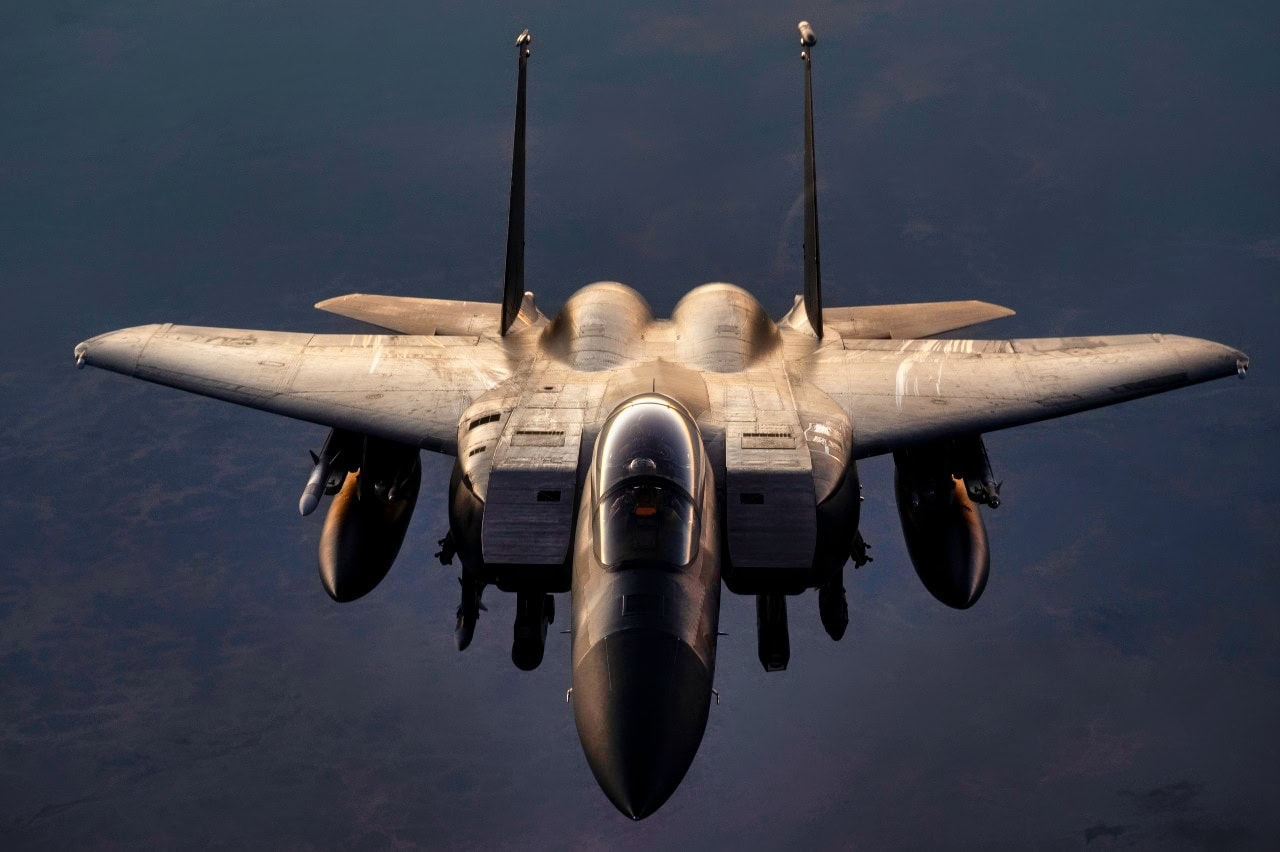
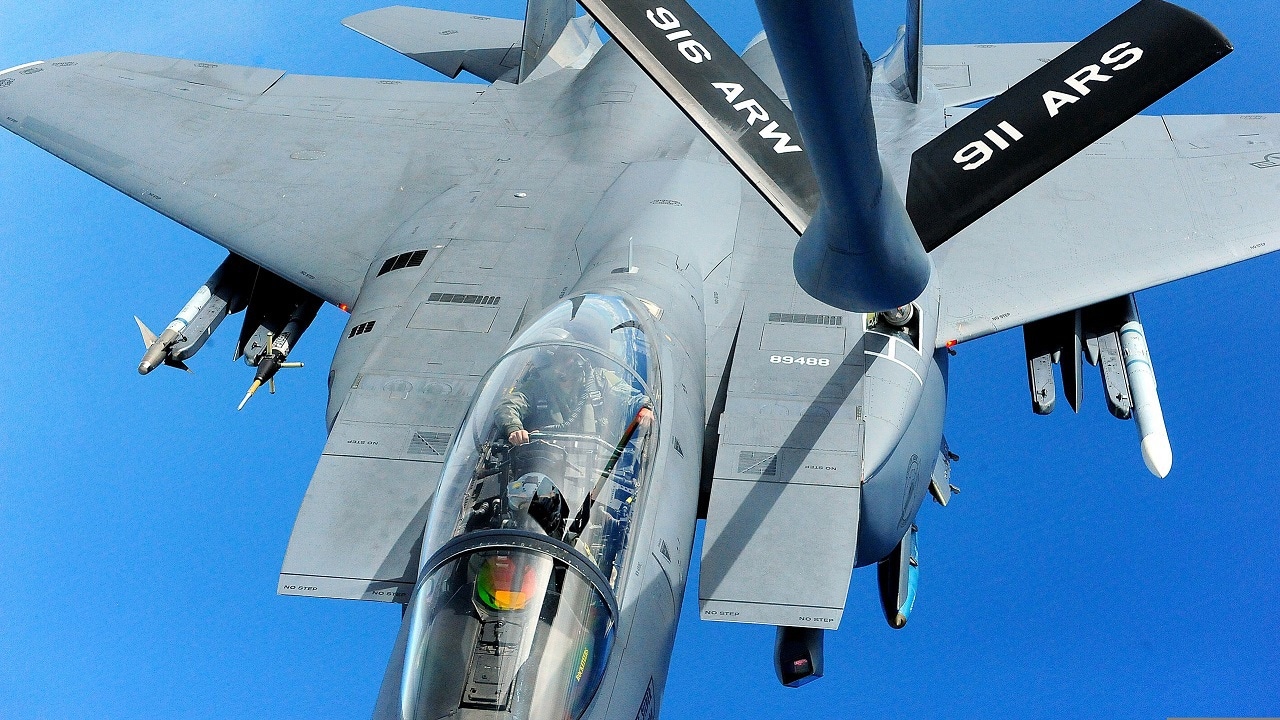
A U.S. Air Force F-15E Strike Eagle flies over the U.S. Central Command area of responsibility, Jan. 7, 2025. The F-15E’s superior maneuverability and acceleration are achieved through its high engine thrust-to-weight ratio and low-wing loading. (U.S. Air Force photo by Staff Sgt. William Rio Rosado)
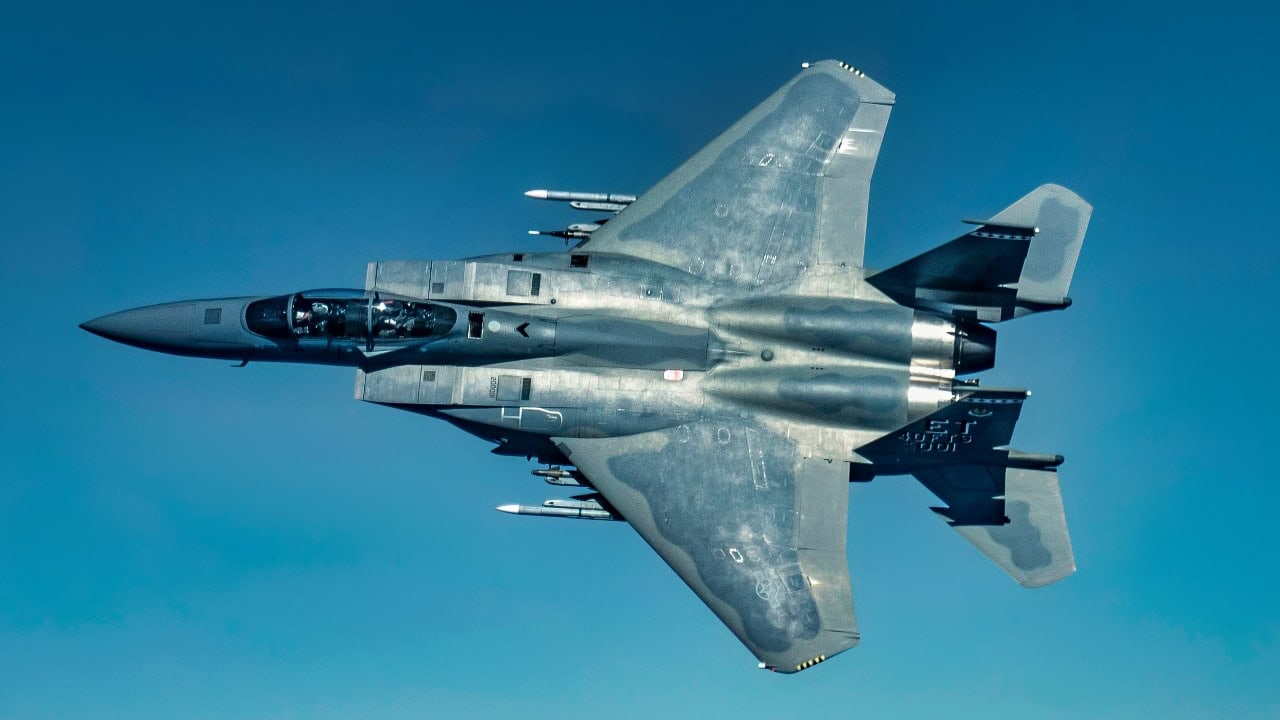
U.S. Air Force Lt. Col. Richard Turner, 40th Flight Test Squadron commander flies 40 FLTS Senior Enlisted Leader, MSgt Tristan McIntire during a test sortie in the F-15EX Eagle II over the Gulf of Mexico on Jun. 14, 2022. Assigned to the 96th Test Wing at Eglin Air Force Base, Fla., the F-15EX Eagle II is the Air Force’s newest 4th generation fighter being tested at the 40 FLTS. (U.S. Air Force photo by Tech. Sgt. John McRell)
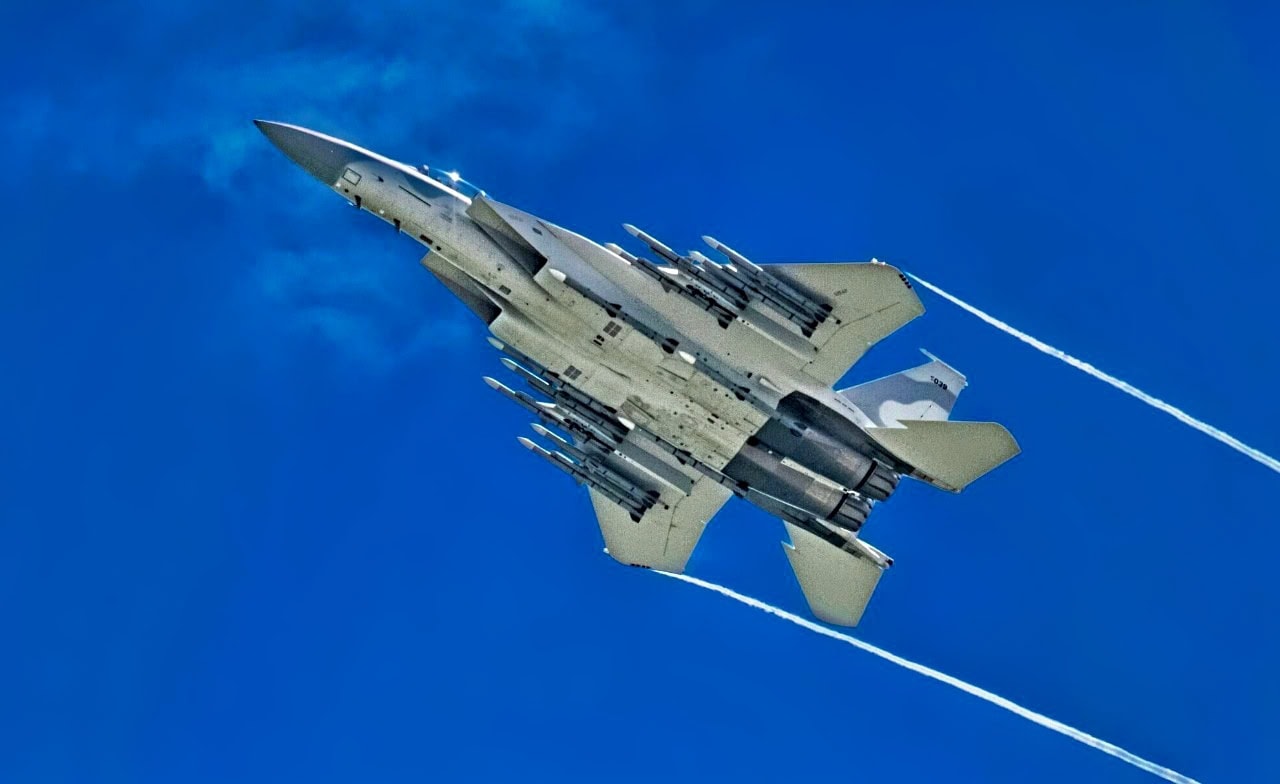
F-15EX Eagle II from U.S. Air Force
Overseas, the transition is already underway: Kadena Air Base in Okinawa, which hosted F-15Cs/Ds for over forty years, completed their withdrawal in late 2024, replacing them with rotational deployments of F-22s, F-35s, and other fighters.
The writing is on the wall; the classic C/D Eagles are in their twilight years, but they will not disappear overnight.
The F-15E Strike Eagle, on the other hand, has a much longer runway. This two-seat multirole fighter has proven indispensable for deep strike missions, carrying heavy precision ordnance over long distances while retaining formidable air-to-air capability.
The Air Force has signaled that selected F-15Es will remain in service well into the 2030s, supported by avionics upgrades, radar improvements, and structural life-extension programs.
The reason is simple: payload and range. In an era when standoff weapons and complex kill chains dominate, platforms capable of carrying large, heavy munitions far into contested environments remain critical.
The Strike Eagle’s ability to integrate future hypersonic weapons and outsized standoff munitions ensures its relevance alongside stealth fighters like the F-35 and the forthcoming Next Generation Air Dominance (NGAD) family of systems.
The F-15EX: The Eagle Keeps Flying
The newest chapter in the Eagle story is the F-15EX Eagle II. This variant was conceived to replace the worn-out F-15C/D fleet and to provide a modern heavy fighter that complements fifth-generation aircraft. The F-15EX achieved Initial Operational Capability in July 2024, with the first operational jets delivered to the Oregon Air National Guard.
Despite a temporary production disruption in 2025 due to a labor strike at Boeing’s St. Louis facility, deliveries have resumed, and the program is back on track. The Air Force plans to procure over 100 F-15EX aircraft, with some estimates suggesting the number could climb higher depending on budget allocations.
These jets feature cutting-edge systems, including the AN/APG-82 AESA radar, the Eagle Passive Active Warning Survivability System (EPAWSS), fly-by-wire controls, and advanced cockpit displays. Their payload capacity is unmatched among U.S. fighters, allowing them to carry large inventories of air-to-air missiles or heavy standoff weapons, making them ideal for roles that require mass and firepower.
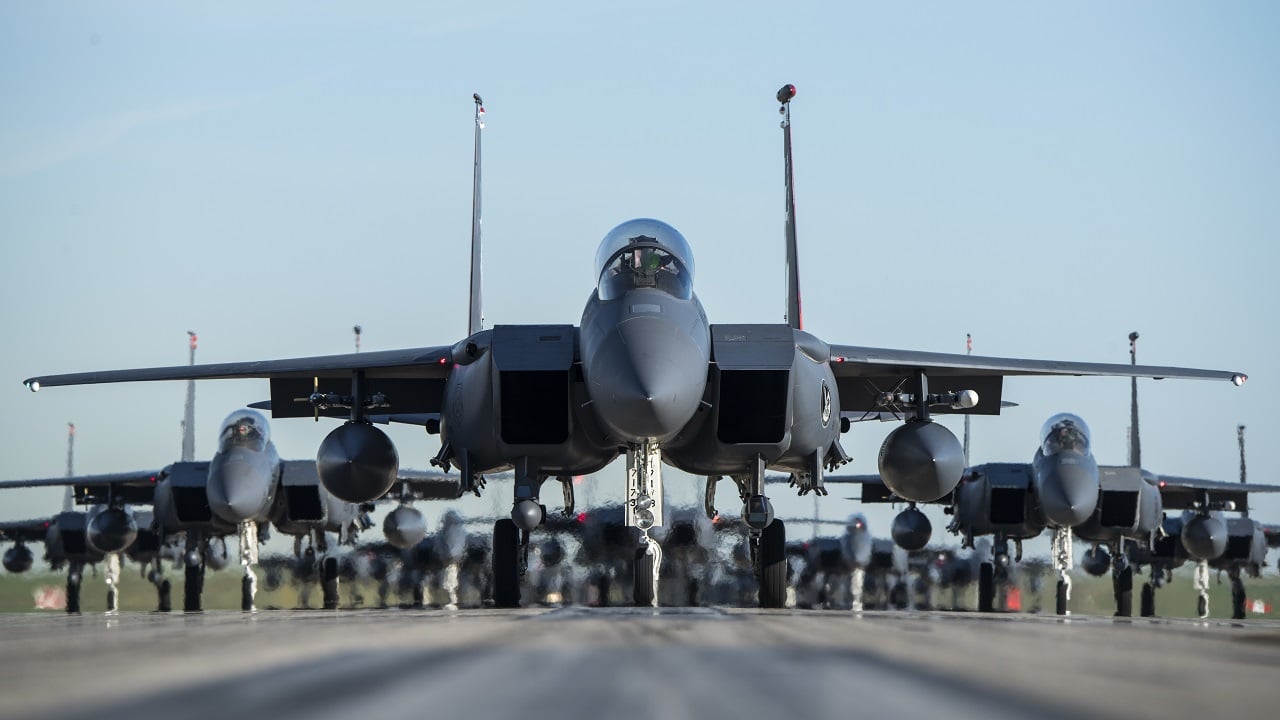
F-15E Strike Eagles taxi into formation June 12, 2019, at Mountain Home Air Force Base, Idaho. This was a rare opportunity to capture the Gunfighter family, including the 391st, 389th and 428th Fighter Squadrons, before a morning flight. (U.S. Air Force photo by Staff Sergeant Jeremy L. Mosier)
F-15E fighter. Image Credit: Creative Commons.
Production of the F-15EX is expected to accelerate, with Boeing aiming for a rate of two jets per month by the end of 2026 and potentially higher if funding supports facility expansion.
This ramp-up aligns with the Air Force’s broader plan to grow its fighter inventory to 1,558 combat-coded aircraft, balancing F-35 procurement with F-15EX buys.
Given these plans, the F-15EX will anchor the Eagle lineage well into the 2030s and possibly beyond. If NGAD development and fielding proceed at a measured pace, it is entirely plausible that F-15EX aircraft will remain operational into the late 2030s or even the early 2040s.
How Much Longer Will the F-15 Remain in Service?
Why does the F-15 still matter in a world increasingly dominated by stealth fighters? The answer lies in two factors: capacity and adaptability.
The F-15’s large airframe supports powerful sensors and heavy external stores, turning it into a flying magazine that can carry more long-range weapons than stealth aircraft designed around internal bays.
In mixed-force tactics, F-15EX and F-15E jets can serve as missile trucks, working in concert with stealth platforms that penetrate deep into contested airspace. Furthermore, the F-15EX incorporates an open systems architecture, enabling rapid integration of new sensors, software, and weapons. This flexibility ensures that the aircraft can evolve alongside emerging technologies, maintaining its relevance in future conflicts.
So, how much longer will the F-15 remain in the Air Force? In meaningful numbers and roles, the answer is through the 2030s. The last F-15C/Ds will likely retire by fiscal year 2031, with a small cadre retained for homeland defense until 2030.
The F-15E Strike Eagle will continue into the 2030s, supported by upgrades that preserve its deep-strike and heavy-payload niche. The F-15EX Eagle II, already in service, will replace the C/D fleet and complement the E models, remaining operational well into the 2030s and potentially into the 2040s.
While the Eagle may no longer be the vanguard it once was, it will remain an indispensable partner in a mixed-generation force, providing mass, firepower, and adaptability amid evolving threats.
About the Author: Isaac Seitz
Isaac Seitz, a Defense Columnist, graduated from Patrick Henry College’s Strategic Intelligence and National Security program. He has also studied Russian at Middlebury Language Schools and has worked as an intelligence Analyst in the private sector.