
The US and Iran Clash Again, New Changes in the Battlefield
[Global Times Special Correspondent Chen Yang] Since the new round of conflict between the United States and Iran reignited in early July, the situation has been deteriorating. Particularly after U.S. President Trump officially notified Congress on July 10 that "the conflict with Iran has reignited" and restored maritime blockades against Iran, offensive and defensive actions in the Middle East have continued to escalate. There is high concern from the outside world that, although the U.S. military has not yet completed troop deployments for large-scale conflict, the methods and targets of operations in this new round of conflict have already shown significant changes.
Airstrike Targets Shift to Civilian Facilities
The Iranian Atomic Energy Organization issued a statement on the 19th, condemning the U.S. for launching a "terrorist attack" on the under-construction Darakhuin Nuclear Power Plant in Khuzestan Province. Iran stated that the Darakhuin Nuclear Power Plant, which began construction in 2022, is an important project for Iran to achieve technological independence. In the early hours of the 19th, at 3:39 AM, the U.S. military launched an airstrike on this facility. International Atomic Energy Agency Director General Grossi called on all parties to maintain maximum military restraint around nuclear facilities and stated that the attack on the nuclear power plant would not pose a radiological risk, as it is still in the early stages of construction and does not store nuclear materials.
The attack on the Darakhuin Nuclear Power Plant is just the tip of the iceberg in the new round of U.S.-Iran conflict targeting civilian facilities. The U.S. website "Power" noted that, unlike previous airstrikes that primarily targeted military objectives, recent U.S.-Iran attacks have clearly shifted towards civilian facilities. Iran accused the U.S. military of targeting a wide range of civilian infrastructure, including bridges, railways, airports, communication towers, and desalination plants. For example, six bridges in Hormozgan Province were destroyed, 116 communication towers were damaged, and the Benji desalination plant in the western part of Jask City was attacked, leading to a complete interruption of drinking water supply for about 10,000 residents; Shaher Airport in southeastern Iran was also bombed. These attacks resulted in casualties, including civilians.
Iran has also specifically targeted U.S. allies in the region. The Kuwaiti Ministry of Electricity, Water, and Renewable Energy stated on the 17th that a power generation and desalination facility in the country was attacked by Iran, causing severe damage to the facility and multiple generators.
The attacks on civilian facilities by both the U.S. and Iran pose significant challenges to their defenses. In previous U.S.-Israel-Iran conflicts, Iran's air defense forces suffered severe losses and were unable to form an overall defensive fire network, while the U.S. missile defense systems have consumed a large amount of ammunition in high-intensity interception operations, making it difficult to replenish in a short time. This has led both sides in this round of conflict to exhibit a trend of "strong offense and weak defense." Moreover, the widespread distribution of civilian infrastructure and numerous targets make defense more challenging and easier to attack.
The U.S. New York Times explicitly warned that Trump's threats to attack Iran's power plants and bridges, among other civilian infrastructure, "could be seen as war crimes." ABC News reported on the 18th that, although a spokesperson for U.S. Central Command stated that "the U.S. military never targets civilians," denying the accusations of attacking civilian infrastructure, it is clear that the U.S. military is attempting to use the pretext of striking so-called "dual-use" targets to avoid the controversy of war crimes.
Trend Towards Automation More Obvious
In this round of U.S.-Iran conflict, both sides have increasingly used inexpensive unmanned equipment as a means of attack. Iran launched the 17th phase of its "Lightning" operation early on the 19th, focusing on strikes against U.S. military bases in Kuwait. Among them, the ammunition depot at the U.S. military's Adairi Camp, as well as equipment and personnel at the Ali Salim base, were subjected to intensive drone bombardment.
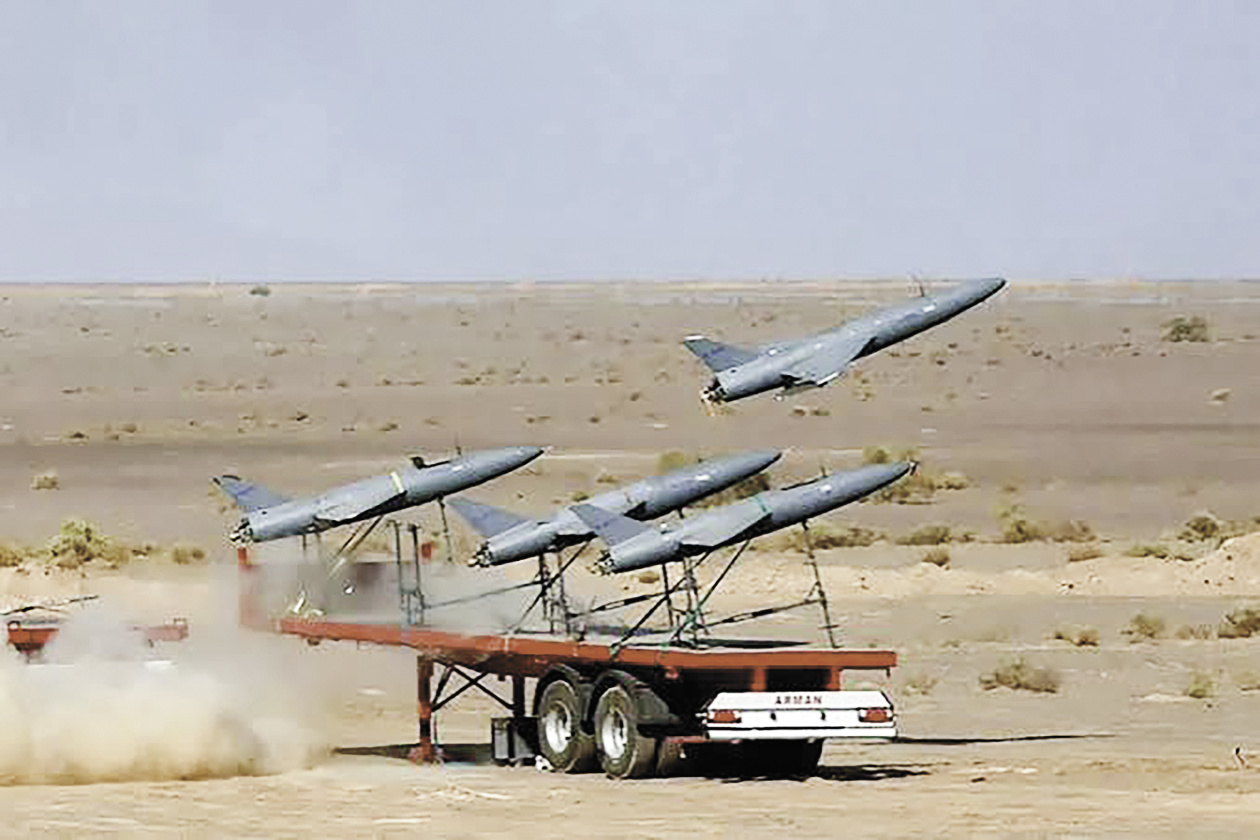
The weapons used in Iran's drone attacks mainly include the "Witness" series and "Arash" series long-range drones. These slow drones are primarily used in conjunction with faster Iranian medium- and short-range ballistic missiles, making it difficult for the U.S. military and its regional allies to intercept effectively. Among them, the "Witness-136" is the most widely used long-range drone in Iran's inventory, known for its low cost, making it suitable for saturation attacks; it is present in almost all Iranian airstrikes. The "Witness-101," on the other hand, is powered by an electric motor, significantly reducing noise and making it difficult to detect in advance; it participated in the attack on Bahrain's Sheikh Isa Air Base on July 15. The "Arash" drone has a range of 2,000 kilometers and can carry heavier warheads, equipped with advanced navigation equipment, and it participated in attacks on Kuwait's Ali Salim Air Base and Bahrain's Sheikh Isa Air Base.
The "Power" website's "War Zone" channel stated that Iran's missile and drone attacks pose a significant threat to the cluster of U.S. military bases in the Middle East. These U.S. bases rely on a limited number of air defense systems for protection, but the bases themselves lack defensive fortifications to cope with high-intensity strikes, making it easy for Iranian missiles and drones to achieve results once they penetrate defenses. For example, Jordan's Muwaffaq Salti Air Base has long been an important U.S. military base in the Middle East and has frequently participated in recent conflicts. Currently, this base hosts the largest number of U.S. tactical aircraft in the region, and "even if only one ballistic missile hits the tarmac, it could destroy multiple important U.S. fighter jets."
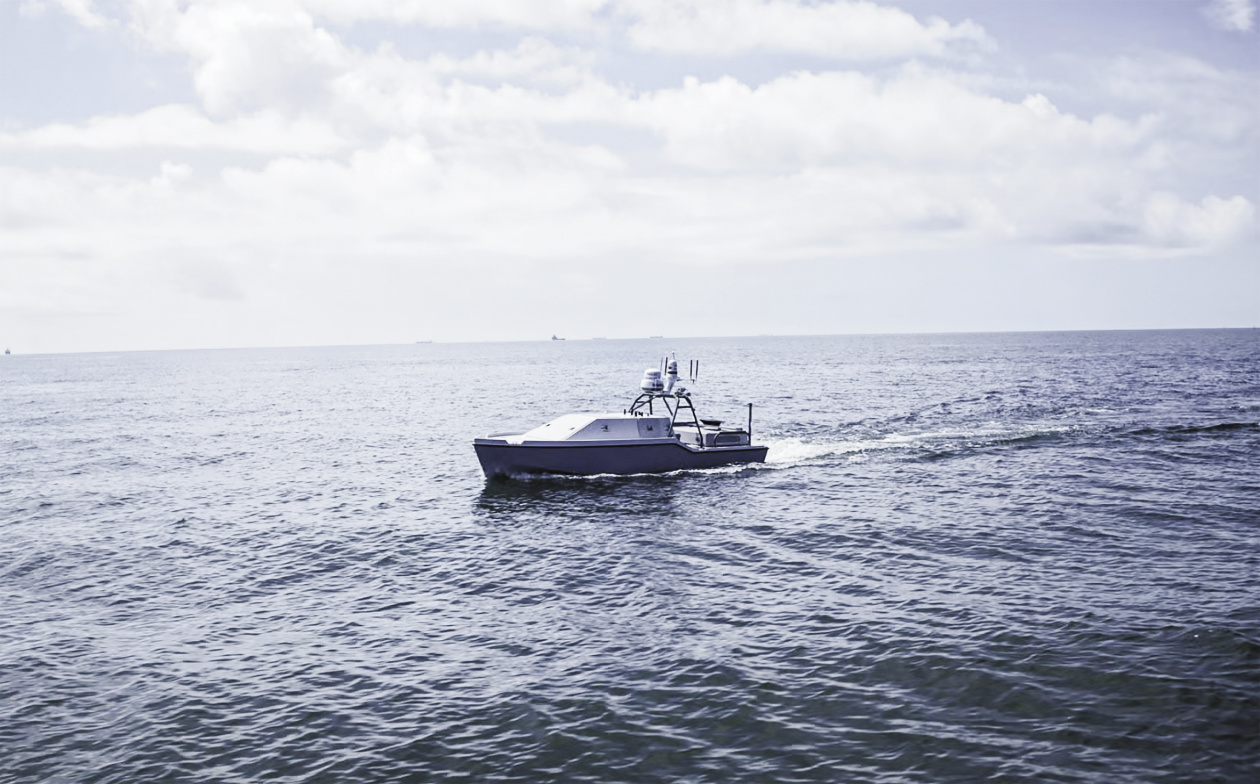
The U.S. military has focused its airstrikes on Iran's missile and drone storage sites and has deployed various new unmanned equipment, including the "Lucas" suicide drone and "Pirate" suicide unmanned boats. The "Lucas" is a reverse-engineered version of Iran's "Witness-136" drone, also a low-cost expendable drone, but with improvements in intelligence, networking, and precision, integrating "Starlink" terminals, providing stronger anti-jamming and beyond-visual-range communication capabilities. Iran has claimed to have shot down "Lucas" drones multiple times on July 13 and 19, confirming that this drone has been involved in large-scale combat.
The "Pirate" suicide unmanned boat draws on innovative tactics used by similar Ukrainian unmanned boats in the Russia-Ukraine conflict. It has a range of over 1,000 nautical miles, a maximum speed of 35 knots (about 65 kilometers per hour), and can carry approximately 454 kilograms of payload, at a cost far lower than traditional missiles. On July 12, the U.S. military used three "Pirate" unmanned boats to attack the submarine and ship repair facilities at Iran's Abbas Port Naval Base. This marked the first time the U.S. military used suicide unmanned boats in actual combat, with the U.S. military stating that this move aimed to weaken Iran's ability to attack merchant ships in the Strait of Hormuz. U.S. media touted it as a "milestone in U.S. military history." The large-scale use of the "Lucas" drone and "Pirate" unmanned boats, both low-cost and high-efficiency weapons, signifies a significant tactical shift for the U.S. military, indicating that in future conflicts, low-cost, expendable unmanned combat systems will play an increasingly critical role.
Conflict May Further Escalate
What has drawn significant attention from the outside world is that the U.S. military is currently regrouping in the Middle East, and Israel is also actively preparing for war, indicating the possibility of further escalation of conflict in the region.
The "Power" website's "War Zone" channel reported that the U.S. has previously withdrawn a large number of F-22 and F-35 stealth fighters, A-10 attack aircraft, and F-15E and F-16 fighters deployed in the Middle East. Additionally, the USS Lincoln carrier strike group has been continuously deployed at sea for over 200 days, which has resulted in relatively limited U.S. airstrike intensity following the outbreak of the new round of U.S.-Iran conflict. However, public information shows that a large number of U.S. military aircraft are regrouping in the Middle East, suggesting that future conflicts may further escalate.
The U.S. Wall Street Journal reported on the 18th that at least 12 F-16 fighters performing air defense suppression missions were deployed from the Spangdahlem Air Base in Germany to the Muwaffaq Salti Air Base in Jordan, while U.S. Air Force F-35A stealth fighters taking off from the Lakenheath base in the UK have also headed to the Middle East.
U.S. Axios News stated that to enhance the capability for executing long-range combat missions, the U.S. is dispatching dozens of refueling aircraft to the Middle East to ensure that the number of refueling aircraft in the region is comparable to the levels at the end of February when the U.S.-Israel-Iran conflict began. The report also mentioned that the U.S. military prefers to use Israel's Ben Gurion Airport as a deployment site for U.S. refueling aircraft because "other air bases in the region are more vulnerable to Iranian attacks." The Israeli Times reported on the 19th that the Chief of Staff of the Israel Defense Forces, Aviv Kochavi, stated that the Israeli military is closely monitoring Iranian missile launch activities, maintaining "high alert," and is prepared for a resumption of hostilities by Iran.
U.S. forces conducted airstrikes on civilian infrastructure in Iran, including a nuclear power plant, in July 2023. In retaliation, Iran launched drone attacks against U.S. military bases in Kuwait. The conflict has escalated, with both sides increasingly targeting civilian facilities, raising concerns about potential war crimes. The U.S. is repositioning military assets in the region, indicating a possible further escalation of hostilities.
- U.S. airstrikes targeted civilian infrastructure in Iran, including a nuclear power plant under construction.
- Iran retaliated with drone strikes against U.S. bases in Kuwait.
- Both sides are increasingly using drones in their military operations.
- The conflict has escalated with attacks on civilian facilities, raising concerns about war crimes.
- U.S. military is repositioning forces in the Middle East in response to the conflict.