

Some weapons get replaced. The Carl Gustaf just keeps getting lighter. It may be hard to believe, but the Swedish 84mm recoilless rifle entered service in 1948, when the M1 Garand was still the standard U.S. infantry rifle. Nearly eight decades later, it rides on the backs of Rangers, Green Berets, and regular infantry platoons across the Army, and more than 40 countries have bought it.
Troops call it the “Goose,” the “Gus,” or a few less printable names. However, it took the special operations community to turn an old Cold War tank killer into the most versatile weapon in a light infantry unit.
Carl Gustaf: A Swedish Answer To The Tank
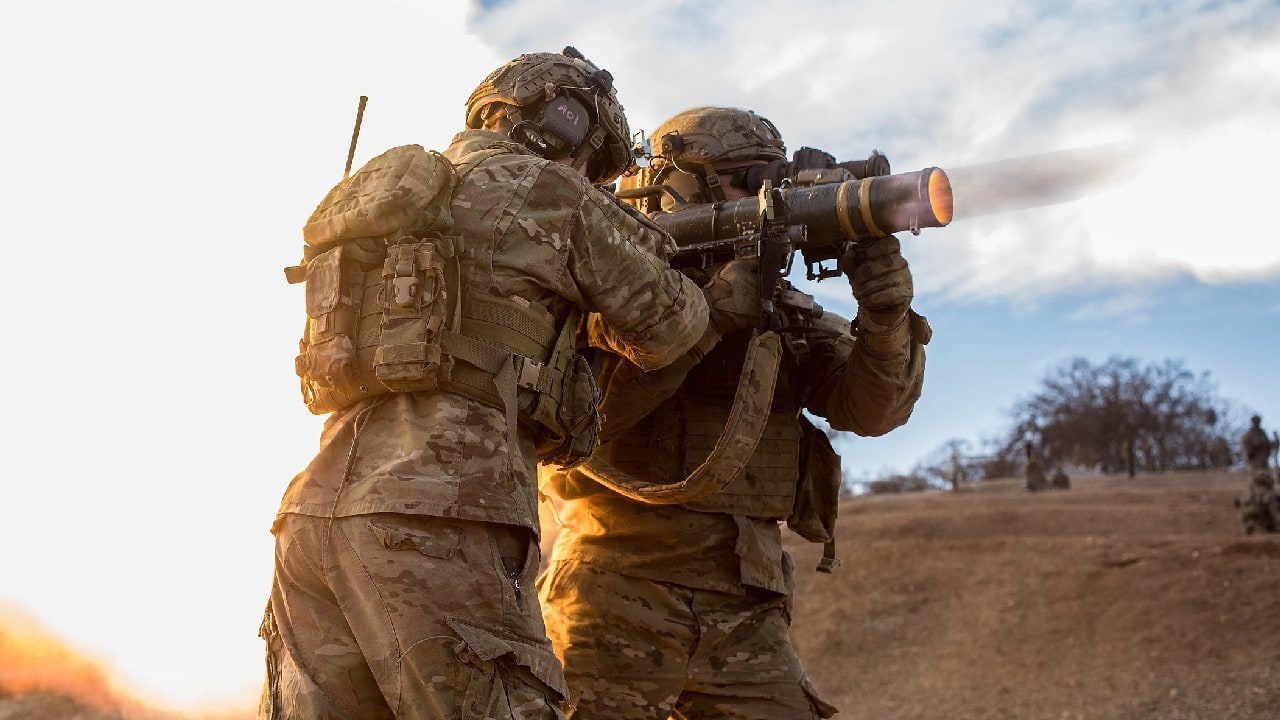
U.S. Army Rangers assigned to 2nd Battalion, 75th Ranger Regiment, fire off a AT-4 at a range on Camp Roberts, Calif., Jan 26, 2014. Rangers use a multitude of weaponry during their annual tactical training. (U.S. Army photo by Pfc. Rashene Mincy/ Not Reviewed)
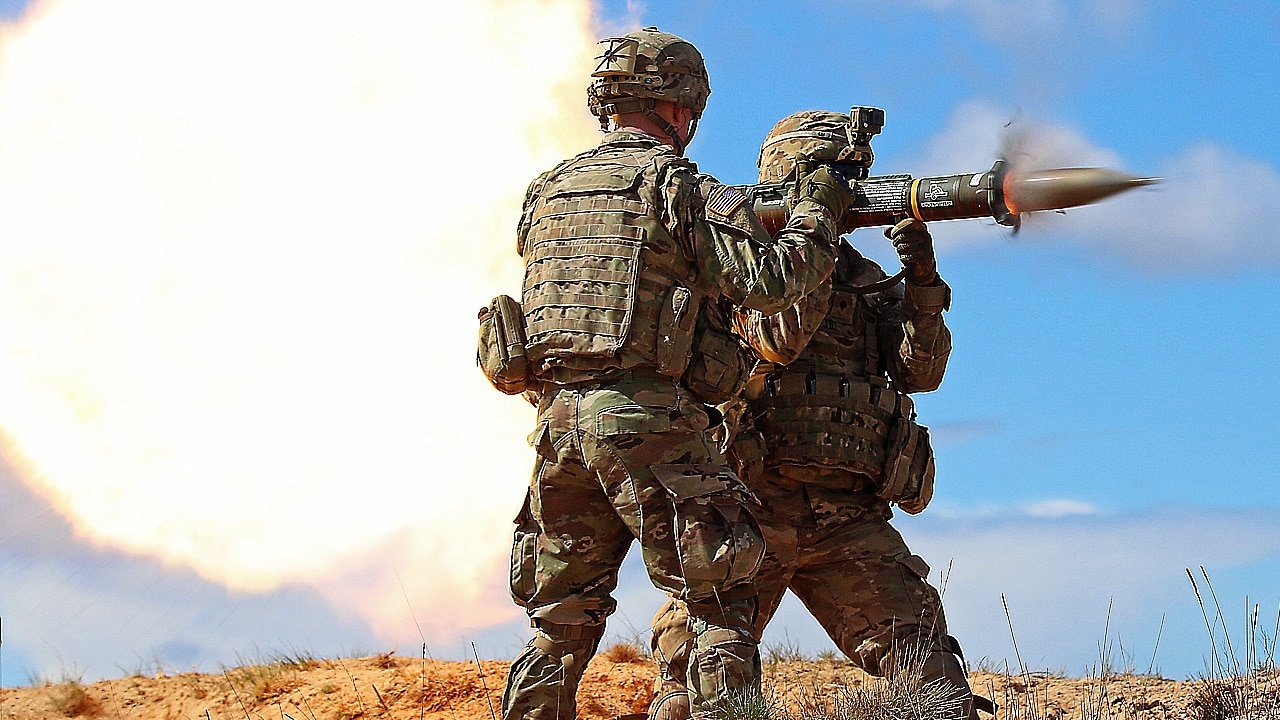
Spc. Chengjie Liu (right), fires an AT-4 anti-tank weapon as Sgt. Jacob Saccameno, both infantrymen assigned to Headquarters and Headquarters Troop, 3rd Squadron, 2nd Cavalry Regiment, supervises and assists during an anti-tank and air defense artillery range, April 23, at Adazi Military Base, Latvia. American and Latvian soldiers trained using a variety of weapons, including Javelin anti-tank missiles, Carl Gustav recoilless anti-tank rifles and the RBS-70 Short-range air defense laser guided missile system. Soldiers from five North Atlantic Treaty Organization nations, including Canada, Germany and Lithuania, have been conducting a variety of training together during Summer Shield XIII, an annual two-week long interoperability training event in Latvia. (U.S. Army photo by Sgt. Paige Behringer)
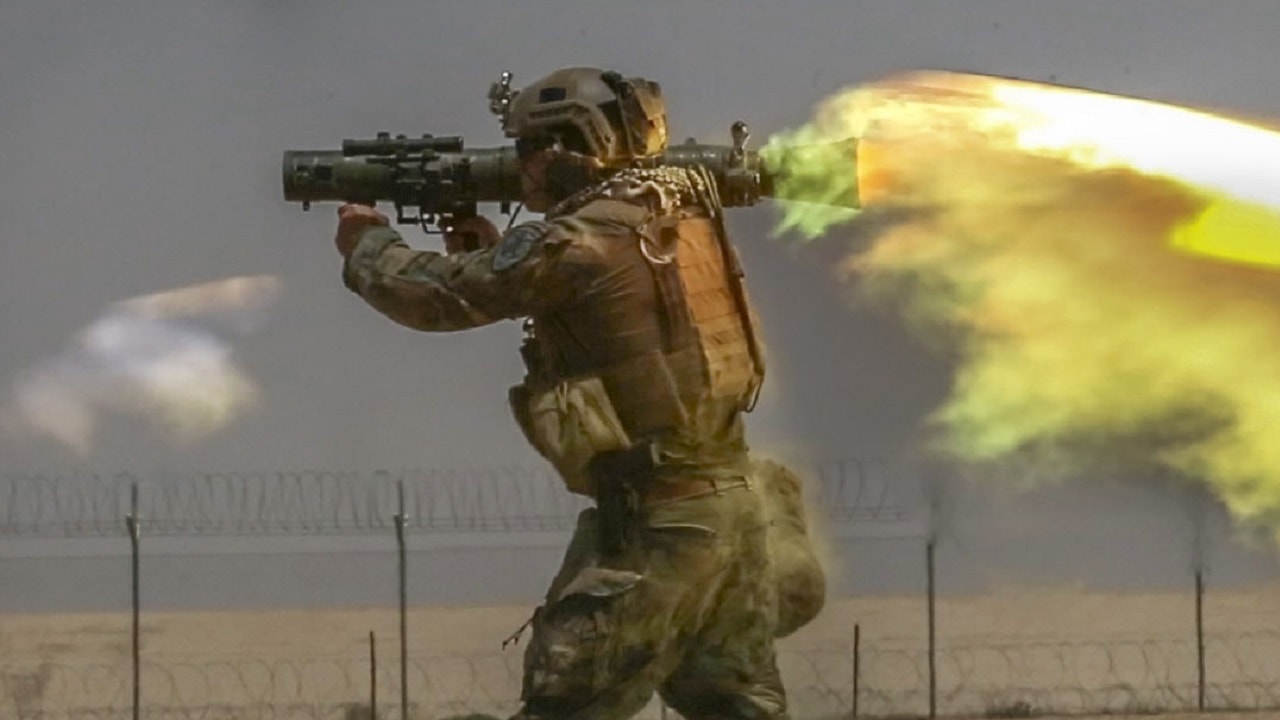
A Marine Special Operations Command member fires a Carl Gustav Recoilless rifle system on a range during training in Washer district, Helmand province, Afghanistan, May 16, 2013. Coalition force members review their weapons handling and firing techniques to increase safety, accuracy, and familiarity with the weapon system. (U.S. Army photo by Sgt. Benjamin Tuck/Released)
Hugo Abramson and Harald Jentzen designed the Gustaf at Carl Gustafs Stads Gevärsfaktori, a Swedish state arsenal dating back to 1812.
The idea was simple.
Give the infantryman something that could kill a tank without dragging an artillery piece around.
What set it apart was the barrel. Most recoilless weapons and rocket launchers use fin-stabilized projectiles. The Gustaf has a rifled barrel with spin stabilization, which gives it far better range and accuracy.
The recoilless part comes from a Venturi nozzle that vents propellant gas out the back to cancel the recoil. That’s the appeal and the problem in one sentence, and we’ll get to the problem.
How The Rangers Brought It Home
The Gustaf was already a fixture in European armies.
The 75th Ranger Regiment picked up the M3 version in 1988 and called it the RAAWS, the Ranger Anti-Armor/Anti-Personnel Weapon System.
SOCOM followed, and by the mid-1990s it was widely used across special operations as the MAAWS. Army Times puts SOCOM’s formal adoption at 1997.
Why did the SOF community love it? Because it isn’t a single-shot tube you throw away. The AT4 and the M72 LAW are fired once and discarded.
The Gustaf reloads and fires a full menu of rounds.
It offers shaped-charge anti-tank, high-explosive, white phosphorus, illumination, concrete-penetrating, flechette, and thermobaric rounds.
The flechette round works like a giant shotgun.
The HE 448 round can be programmed for airburst via a fire control device, allowing it to reach enemy fighters hiding behind walls and in trenches.
A two-man crew, a gunner and an assistant gunner, can load and fire a round every five seconds. Former Ranger Wayne Capacillo called it a “light infantry equalizer.” I agree with him.
Having had the opportunity to fire it, I still think it’s an awesome weapon, although it will rattle your cage when you fire it (more below).
Afghanistan Made The Case For The Goose
In Afghanistan, American infantry kept running into the same problem.
The enemy would open fire from a ridgeline at distances where 5.56 rifles couldn’t reach.
Units often responded with Javelin missiles, which cost around $80,000 apiece.
The Gustaf could do much of the same work with rounds costing roughly $3,000.
For those keeping score at home, that’s more than 25 Gustaf rounds for the price of one Javelin.
The conventional Army noticed. Regular units started ordering it for Afghanistan in November 2014. Because SOCOM already had the logistics and ammunition stockpiles in place, the Army could fast-track it.
The service began fielding the M3 to every infantry platoon in March 2016 and finished the active-duty rollout in February 2017.
The M4 Changes The Weight Math
The old M3 weighed about 22 pounds. Add six to nine pounds for each round, and a team carrying six to eight of them, and you get the idea.
It was a heavy load for light infantry.
Saab’s answer was the M4, designated the M3E1 in U.S. service. It weighs just over 15 pounds, roughly six pounds lighter than the M3, and uses a carbon fiber tube with a titanium liner, a red-dot sight, and a shot counter.
In September 2017, the Army announced it would buy more than 1,100 of them, and the Marines ordered 1,200 of their own.
It has also proven itself against modern armor. Ukrainian troops reportedly used one to destroy a Russian T-90M. Saab is also developing a Guided Multipurpose Munition with an estimated range of around 2,500 meters.
Carl Gustaf: The Blast Is The Honest Trade-Off
Every recoilless weapon has a price, and the Gustaf’s comes out the back.
The Venturi nozzle throws a backblast that creates a lethal danger zone behind the gunner.
The overpressure also hits the crew. Capacillo said the effect could be severe enough to cause neurological damage.
Gunners have reported headaches and nosebleeds, and the military now restricts training use over concerns about traumatic brain injury.
It’s also loud, and that doesn’t fit every mission. Capacillo carried one on four deployments with the Rangers and said his unit fired it operationally only once or twice, because most of their raids depended on stealth.
Say what you want about the blast. When a team is pinned down by a machine gun in a mud-walled compound 500 meters away, nobody is worried about the noise.
The Gustaf was built to stop tanks in 1948. It still does that, along with almost everything else it’s asked to do. It just weighs less now.
About the Author: Steve Balestrieri
Steve Balestrieri is a National Security Columnist. He served as a US Army Special Forces NCO and Warrant Officer. In addition to writing on defense, he covers the NFL for PatsFans.com and is a member of the Pro Football Writers of America (PFWA). His work was regularly featured in many military publications.