
The U.S. claims "no casualties," while Iran claims "rescue failed," shrouding the U.S. military pilot's rescue operation in mystery.
[Global Times Special Correspondent Chen Yang, Global Times Reporter Liu Yang] An F-15E fighter jet of the U.S. Air Force was shot down on April 3 while conducting an airstrike mission in southern Iran, and the two U.S. pilots who ejected and escaped have become a new focal point in the U.S.-Iran rivalry. After three days of tense rescue efforts, U.S. President Trump announced that both pilots had been successfully rescued, with "no U.S. military casualties." However, Iranian media claimed that the U.S. rescue operation was a "failure," stating that enemy aircraft involved in the operation were "shot down" and that several U.S. soldiers were killed. Military experts interviewed by the Global Times indicated that, overall, while the U.S. military demonstrated some tactical rescue capabilities, it could not mask the overall strategic failure of the U.S. military.
Emergency Deployment of Rescue Aircraft
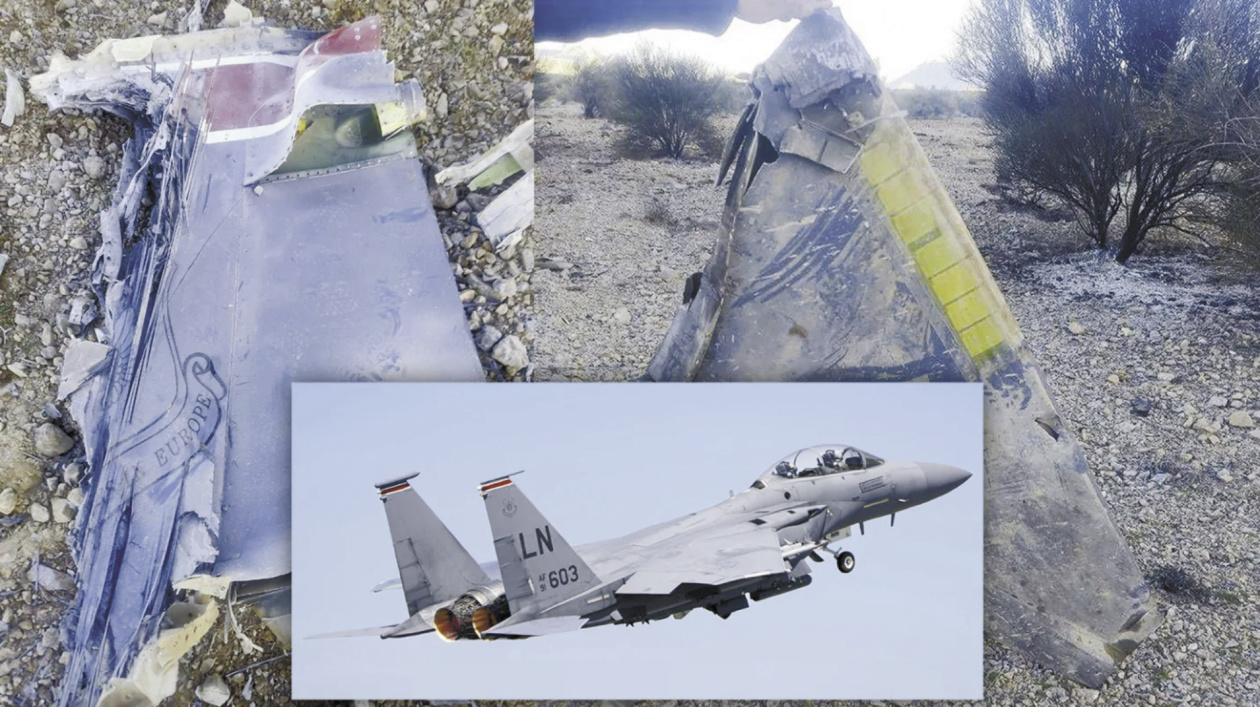
CNN reported that the downed F-15E crashed in southern Iran, marking the first time a manned U.S. fighter jet has crashed in Iran since the U.S. and Israel began military strikes against Iran. On April 3, Iran initially claimed that a new air defense system of the Islamic Revolutionary Guard Corps shot down a U.S. F-35 stealth fighter and released images of ground debris and the pilot's ejection seat. However, based on the characteristics of the wreckage, the aircraft was actually an F-15E "Strike Eagle" fighter jet belonging to the 494th Squadron of the 48th Fighter Wing stationed at RAF Lakenheath in the UK, which is one of the most active U.S. Air Force units in the U.S.-Israel-Iran conflict.
The F-15E fighter jet is a two-seat aircraft, which means that two U.S. pilots were trapped deep in Iranian territory. The "Power" website's "War Zone" channel stated that if the U.S. pilots were captured by Iran, it would not only severely damage U.S. military morale but also place strong political pressure on Trump to continue his aggressive stance against Iran.
In this context, both the U.S. and Iran raced against time to secure the two pilots. The Islamic Revolutionary Guard Corps revealed in a statement that the crash site of the fighter jet was in a mountainous area far from the deployment zones of Iranian armed forces, so the initial search efforts were mainly conducted by local tribal members. Later on the evening of the 3rd, videos of U.S. rescue aircraft, including HC-130J fixed-wing special operations aircraft and HH-60W "Jolly Green Giant" rescue helicopters, conducting aerial refueling began to appear on social media. The "Power" website's "War Zone" channel noted that the U.S. military had prepared for high-risk pilot rescue missions behind enemy lines years ago.
According to U.S. military standard procedures, once a pilot is shot down behind enemy lines, they will quickly move and conceal themselves after landing, and report their specific coordinates through a handheld survival radio they carry, using encrypted channels or pre-agreed methods. Upon receiving this information, rescue helicopters carrying parachute rescue personnel will fly at low altitudes to avoid detection by the enemy and penetrate deep behind enemy lines to reach the target area. At the same time, the U.S. military also deployed a large number of support aircraft to provide cover.
Later that evening, The New York Times cited Pentagon sources stating that the first pilot had been successfully rescued. During the rescue process, two U.S. helicopters were damaged by Iranian ground fire, but they ultimately landed safely. Photos and videos circulating on social media showed Iranian ground personnel firing light weapons at the low-flying U.S. helicopters, with one helicopter trailing visible black smoke during flight.
Additionally, Fox News reported that during the rescue operation, a U.S. A-10 attack aircraft was damaged by ground fire, and the pilot "ejected from the damaged aircraft after entering Kuwaiti airspace and was subsequently rescued."
On the evening of the 3rd, Trump refused to disclose what actions might be taken if the second missing F-15E pilot were captured by Iran during a phone interview with the UK’s Independent.
Perilous Second Rescue
Previous U.S. combat experience indicates that combat search and rescue operations face a "48-hour survival rule." If a pilot who ejects behind enemy lines is not quickly located by friendly forces, they will face the harsh environment of enemy territory alone, with an average effective survival time of about 48 hours. During this time, they must not only evade enemy search efforts but also overcome threats such as blood loss, hypothermia, and hunger.
After nearly a day of tense search and rescue efforts, Trump announced on social media on the 5th that U.S. forces had rescued the second pilot from deep in the mountains of Iran, at which point the pilot was already severely injured. Subsequently, U.S. media revealed more details about the operation.
The New York Times reported that after ejecting, the pilot hid in a crevice in the mountains while injured. Initially, neither the U.S. military nor the Iranian military knew his exact location. A senior U.S. government official stated that the CIA initiated a deception operation to confuse the Iranian military into believing that the officer had been rescued and was leaving Iran with a ground convoy, thereby buying time for the U.S. military to organize a second large-scale rescue operation. The CIA ultimately located his hiding place and relayed the information to the Pentagon, which organized the rescue operation.
According to Trump, the U.S. military deployed dozens of aircraft and helicopters "carrying the most lethal weapons in the world" for the rescue. Existing information indicates that U.S. rescue forces dispatched at least two MC-130J special operations aircraft, which forcibly landed on a flat area near where the pilot was hiding in the mountains. Subsequently, MH-6/AH-6 "Little Bird" light helicopters, carried in the cargo hold of the MC-130J, transported assault team members to rescue the pilot. During this process, the U.S. military engaged in firefights with nearby Iranian armed forces at the temporary landing site and ensured the safety of the temporary landing area with aerial fire support.
According to The New York Times, after completing the rescue mission, two MC-130Js were "stuck" and unable to take off when they were preparing to withdraw, and U.S. commanders ultimately decided to dispatch three additional transport aircraft to evacuate all personnel and destroy the stranded aircraft to prevent them from falling into Iranian hands.
However, Iranian media reported on the 5th that the U.S. military's operation to rescue the pilot of the previously shot-down fighter jet was a "failure," stating that enemy aircraft involved in the operation were "shot down" and that several U.S. soldiers were killed. According to Iranian statistics, since a U.S. Air Force F-15E dual-seat fighter jet was shot down over Iran on the 3rd, Iran has shot down two U.S. C-130 transport aircraft, one A-10 attack aircraft, four "Black Hawk" helicopters, two "Little Bird" helicopters, and two MQ-9 "Reaper" drones.
The analysis from the "Power" website's "War Zone" channel also partially confirmed U.S. losses. Reports indicated that among the wreckage of aircraft abandoned at the temporary landing site, at least two "Little Bird" light helicopters could be identified. Typically, the cargo hold of an MC-130J special operations aircraft can carry two "Little Bird" helicopters, which have limited range. Once the MC-130J was unable to take off, they could not return to U.S. bases from deep within Iran, so they were likely destroyed by U.S. forces during the retreat.
Who Won and Who Lost in This Operation
Trump claimed on social media that there were "no U.S. military casualties" in the two rescue operations for the U.S. fighter pilots, "once again proving that we have achieved overwhelming air superiority and dominance over Iran." However, this statement contradicts reports from some U.S. media and Iranian sources. Previously, several U.S. media outlets reported that during the rescue of the first pilot, several U.S. personnel were injured on a helicopter hit by Iranian ground fire. The Iranian Fars News Agency reported on the 5th, citing sources, that during the operation to rescue the second pilot, several U.S. soldiers were killed, and sources also stated that the U.S. military attempted to destroy the wreckage of the downed aircraft, "even destroying the bodies of deceased U.S. soldiers." Iran subsequently released a video "showing the bodies of soldiers in the wreckage of U.S. aircraft."
Experts interviewed by the Global Times indicated that some public reports show that the U.S. military's rescue operation achieved a certain level of tactical success. U.S. rescue forces, supported by aerial firepower, established a temporary landing site deep in Iran while facing ground fire, successfully completing the mission to rescue the pilot and retreating, demonstrating that the U.S. military remains well-trained and well-equipped for small-scale special operations such as combat search and rescue. However, this tactical "success" cannot mask the overall strategic failure of the U.S. military.
Experts believe that although Trump and the Pentagon have repeatedly claimed to have completely "eliminated Iran's air defense forces" and "achieved air superiority over Iran," the reality is that Iran still has the capability to organize a certain scale of air defense firepower, continuously shooting down and damaging U.S. aircraft. The downing of the F-15E and A-10 during routine missions will inevitably have a significant impact on the planning of subsequent U.S. airstrike operations, imposing more restrictions.
Experts stated that the success of this U.S. combat search and rescue operation also involved a degree of luck. If similar situations arise in future U.S. airstrike missions against Iran, and if U.S. pilots eject in less remote areas or if Iranian fire is more accurate during rescue operations, the U.S. rescue mission could incur much heavier costs. Additionally, the significant loss of specialized equipment during these two rescue operations cannot be compensated for in the short term, meaning that it remains uncertain whether the U.S. military can organize a rescue operation of the same scale in the event of a similar emergency in the future.
More importantly, the U.S. military's continuous airstrikes against Iran for over a month have not destroyed Iran's will to fight. On the contrary, as the conflict continues, the aging U.S. war machine has begun to show problems. The "Power" website's "War Zone" channel reported that on the same day the F-15E was shot down, another F-16CJ fighter jet and a KC-135 tanker experienced emergency malfunctions in the air.
On April 3, 2023, a U.S. Air Force F-15E was shot down in southern Iran, leading to a rescue operation for the two pilots. Over the next two days, U.S. forces conducted multiple rescue attempts, facing Iranian ground fire and sustaining equipment damage. President Trump announced the successful rescue of both pilots, although Iranian sources claimed U.S. casualties during the operations. The events highlight ongoing military tensions between the U.S. and Iran.
- An F-15E was shot down in southern Iran on April 3, 2023.
- Two U.S. pilots ejected and were rescued after a series of operations.
- Iranian media reported casualties among U.S. forces during the rescue attempts.
- U.S. President Trump claimed no American casualties, contradicting Iranian reports.
- The rescue involved multiple aircraft and faced Iranian ground fire.