
The U.S.-Israel-Iran Conflict: A Hundred Days of Strategic Shift in Gulf Countries
On June 7 local time, the current round of conflict between the U.S., Israel, and Iran entered its 100th day.
In the past 100 days, the U.S.-Iran rivalry has escalated, the situation in the Strait of Hormuz has intensified, global energy markets have experienced severe fluctuations, and the traditional security architecture has faced new challenges, leading to a period of intense turmoil in the Middle East.
The impact of this crisis has long exceeded the military level, beginning to profoundly affect the development strategies and regional order evolution of the Gulf Arab states.
For Gulf countries that have long relied on a stable environment and energy wealth to achieve economic development, these 100 days have not only been a security crisis but have also prompted them to rethink their future development models and strategic positioning, accelerating their strategic shifts.
Today, the new question they face is: How to maintain stability and prosperity in a more turbulent and multipolar world, and how to explore more resilient and autonomous development paths in the context of rising security risks, accelerated energy transition, and reshaped international dynamics.
100 Days of Conflict: Gulf States Reassess Security and Development
Since the outbreak of this round of conflict, almost all Gulf Arab states have faced varying degrees of security threats, and the security situation in the Strait of Hormuz, a vital route for oil and gas exports, has remained tense.
Despite this, most Gulf countries have generally maintained a relatively restrained policy orientation, advocating for diplomatic means to reduce the risk of further escalation. Whether it is Saudi Arabia, Qatar, Oman, or Kuwait, they have repeatedly emphasized the importance of a political solution and actively supported regional mediation efforts.
This attitude reflects the Gulf states' widespread concern about the long-term nature of the regional situation.
For a long time, the development model of Gulf countries has been based on two fundamental premises: a relatively stable regional environment and an unobstructed international trade and energy transport network.
The outbreak of this crisis has proven that even with strong financial resources and modern infrastructure, it is impossible to completely insulate against geopolitical risk shocks.
The repeated escalation of tensions in the Strait of Hormuz, rising international shipping costs, and increased volatility in energy markets have all had a direct impact on the economic operations of Gulf countries.
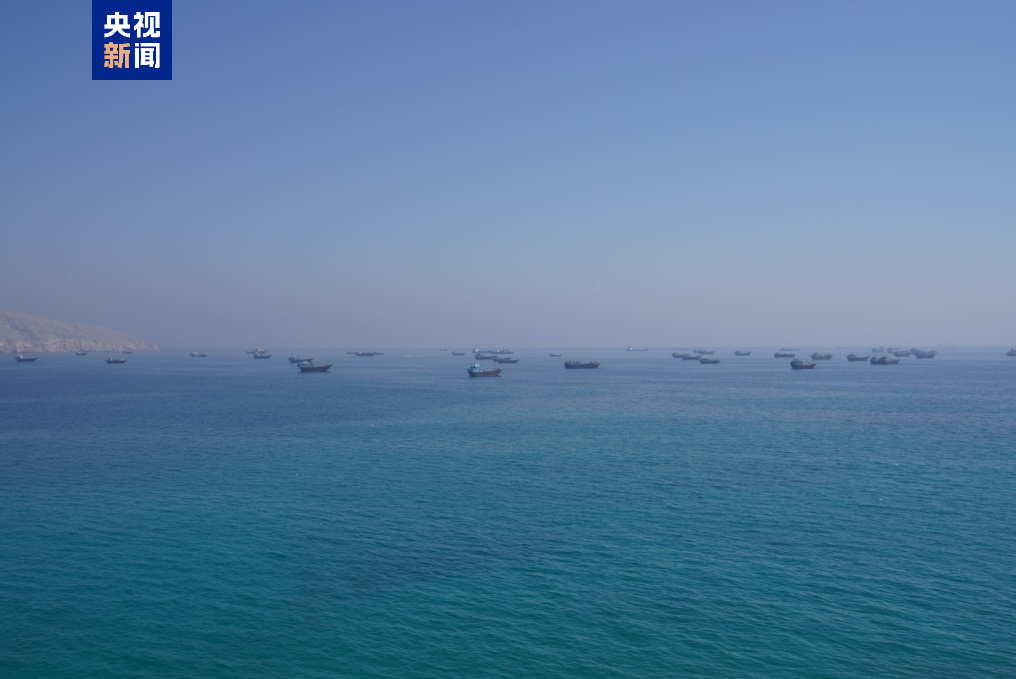
△ The sea outside the Port of Duqm in Oman, located south of the Strait of Hormuz (Photo taken by a reporter on June 6)
At the same time, the ongoing harassment by missiles and drones has also posed new challenges to the traditional security system.
Public opinion in the Middle East generally believes that the current focus of Gulf countries has expanded beyond traditional military security to include broader areas such as energy security, supply chain security, financial security, and the security of critical infrastructure.
Several experts have told reporters that the biggest change brought about by this round of crisis is not a specific military action itself, but rather that it has made Gulf countries more acutely aware that in a world of intertwined chaos, stability is an important strategic resource that requires continuous investment and proactive shaping.
Diverging Paths: Gulf States Explore Different Development Models
In the face of the same security shocks, Gulf countries have not moved towards a unified strategic choice, but have shown significantly different response paths based on their respective development needs, geopolitical environments, and national positioning.
On May 1, the UAE officially withdrew from OPEC and the "OPEC+" mechanism, ending nearly 60 years of membership. This decision not only attracted widespread attention in the international energy market but is also seen as an important signal of strategic adjustment in the Gulf region.
From the UAE's perspective, withdrawing from OPEC is not merely a change in energy policy, but a reflection of a national development strategy adjustment.
In recent years, the UAE has continued to optimize its oil production capacity and accelerate the development of emerging industries. In the face of the accelerated global energy transition and rising regional uncertainty, the UAE hopes to gain greater policy flexibility to formulate a more independent energy strategy based on its own development needs.
In contrast, Saudi Arabia continues to view OPEC and the "OPEC+" mechanism as important tools for maintaining stability in the international energy market, focusing its main efforts on advancing the "Vision 2030" and economic structural reforms.
Oman continues to play its long-standing role as a mediator. With a relatively balanced foreign policy and lower geopolitical sensitivity, it has maintained relative stability during this round of crisis and has become one of the important channels for indirect communication between the U.S. and Iran.
Qatar, which shares the world's largest gas field (known as the South Pars field on the Iranian side and the North field on the Qatari side) with Iran, quickly recognized the importance of security after its gas facilities were attacked, and, along with Oman, has worked hard to promote U.S.-Iran negotiations.
It is worth noting that due to the prolonged inability to reach a consensus in U.S.-Iran negotiations, the Strait of Hormuz remains blocked, and Kuwait and Bahrain have recently been attacked again by missiles and drones, casting further shadows over an already fragile security situation.
These differences indicate that this round of conflict has not changed the common goal of Gulf countries to pursue stability and development, but is accelerating the differentiation of each country's strategic paths.
The previously relatively unified Gulf development model is gradually evolving into a more diverse set of national strategic choices. Under a common security environment, different countries are exploring their own development paths based on their resource endowments, development needs, and strategic positioning.
Security Reconstruction: Gulf States Accelerate Pursuit of Strategic Autonomy
More noteworthy than changes in energy policy is the evolution of security concepts among Gulf countries.
The U.S. Central Command and the Fifth Fleet are stationed in Bahrain, and Qatar's Al Udeid Air Base is the largest U.S. military base in the Middle East. A large number of U.S. soldiers have also been stationed in Saudi Arabia, the UAE, and Kuwait for a long time. This security architecture has provided important guarantees for the economic development of Gulf countries, but in recent years, the complexity of the regional security environment and the outbreak of the U.S.-Israel-Iran conflict have prompted these countries to continuously consider how to enhance their own strategic autonomy.
While continuously strengthening security cooperation with the U.S., the UAE has actively expanded its defense cooperation with countries such as Israel and Egypt in recent years, enhancing air defense, missile defense, drone defense, and cybersecurity capabilities.
Saudi Arabia, while maintaining traditional partnerships, has deepened security cooperation with countries such as Pakistan and Turkey, and has promoted the construction of regional security dialogue mechanisms.
Qatar, relying on its unique geopolitical position and diplomatic tradition, has continued to deepen coordination and cooperation with regional countries while maintaining U.S. military presence.
These phenomena reflect a common trend: Gulf countries are gradually shifting from a past reliance on a single security system to building a more diverse and resilient security cooperation network.
Traditional security relationships have not ended, but in the context of increasing uncertainty, Gulf countries are seeking more strategic options. Under the new circumstances, the keywords for future security system construction are no longer simply "dependence," but "resilience," "diversity," and "autonomy."
Accelerated Transformation: Gulf Countries Adjust Economic Layout
Security adjustments respond to real challenges, while economic transformation determines future directions.
For decades, oil wealth and the Strait of Hormuz have constituted the two pillars of Gulf economic development. However, with the ongoing global energy transition and changes in the regional security environment, Gulf countries are simultaneously advancing two important transformations: reducing dependence on oil revenue and reducing reliance on the single route of the Strait of Hormuz.
The UAE continues to improve energy infrastructure construction on its east coast in Fujairah, enhancing its energy export capacity bypassing the Strait of Hormuz; at the same time, it is vigorously developing artificial intelligence, digital economy, and high-end manufacturing.
Saudi Arabia is promoting economic structural reforms through "Vision 2030," hoping to reduce the proportion of oil revenue in the national economy and create new growth points in renewable energy, tourism, and advanced manufacturing.
Qatar is leveraging the growing demand for natural gas during the energy transition to consolidate its position as a global energy supplier.
Meanwhile, more and more Gulf countries are beginning to view technological innovation, green transformation, and industrial upgrading as important sources of national competitiveness.
From withdrawing from OPEC to expanding natural gas production capacity; from building renewable energy projects to promoting digital economic development, these measures taken by Gulf countries may seem scattered, but they still point to the same goal: enhancing the resilience and autonomy of national development.
Changing Dynamics: The Middle East Cultivates New Development Logic
The U.S.-Israel-Iran conflict has not yet ended, but changes in Gulf countries have already occurred.
From strengthening security system construction to promoting energy strategy adjustments; from accelerating economic diversification transformation to expanding a diverse international cooperation network, for these countries, the most important question in the future may no longer be how to respond to a specific crisis, but how to maintain stability and prosperity in a situation where crises may become the norm.
The impact of this round of conflict goes far beyond the military level; it is driving the entire Gulf region to gradually shift from a development model reliant on external security supply and energy export dividends to a more autonomous and resilient development path, which will profoundly influence the future political, security, and economic landscape of the Middle East and even the world.
Supervisor: Mu Li
Producer: Li Chao
Reporter: Zhou Xuan
As of June 7, 2023, Gulf Arab states are reassessing their development strategies and security frameworks in response to the ongoing U.S.-Iran conflict, which has lasted 100 days. The security situation in the Hormuz Strait remains tense, prompting these nations to explore more resilient and autonomous development paths. The UAE's withdrawal from OPEC marks a significant strategic shift, reflecting the broader changes in the region's geopolitical landscape.
- The U.S.-Iran conflict has lasted 100 days as of June 7, 2023.
- Gulf Arab states are reassessing their development strategies due to security threats.
- The security situation in the Hormuz Strait remains tense, affecting oil and gas exports.
- Gulf states are exploring more resilient and autonomous development paths.
- The UAE has officially withdrawn from OPEC, signaling a strategic shift.