

Summary and Key Points: Expert Sean Spoonts explains the destroyer-frigate split and why the US Navy has zero frigates: the last of 51 Oliver Hazard Perry-class ships left in 2015, the Littoral Combat Ship’s anti-submarine module failed, and the Constellation-class FFG-X, planned as 85 percent Italian FREMM at half an Arleigh Burke’s cost, became 85 percent American, gained weight and Tomahawks, and was cut from 20 ships to 2, with Constellation (FFG-62) due in 2029 and a Legend-class cutter next.
The US Navy Frigate Crisis?
The difference between a Destroyer and a Frigate is mostly lost on the casual observer of naval matters. At first glance, those differences may not seem obvious; both are similar in size and shape but serve very different roles and have different capabilities.
What Is a Frigate Good For Anyway?
A modern US Navy destroyer like the Arleigh Burke-class is a major surface combatant and primarily functions as an air-defense platform within a carrier strike group.
It has the size, speed, and endurance to keep pace with a nuclear-powered aircraft carrier, and its long-range radars and weapons systems provide theater-wide coverage around the carrier.
In contrast, the Frigate is smaller in size and displacement.
Its speed and endurance are slightly less than a destroyer.
Its radars, sensors, weapons, and magazines pack a punch but are somewhat scaled back.
A Frigate can certainly defend itself from air attack and punch back, but its sensors and weapons alone cannot defend a carrier strike group.
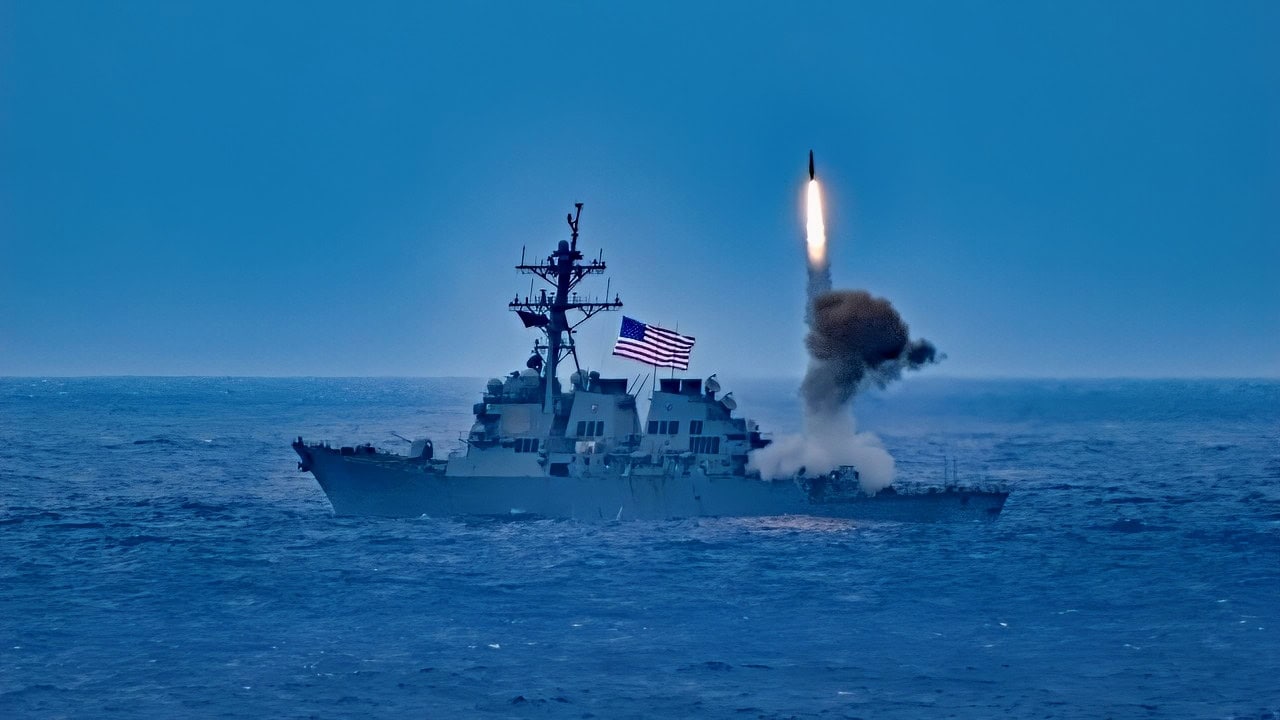
(March 24, 2022) – The Arleigh Burke-class guided-missile destroyer USS Milius (DDG 69) launches a Standard Missile (SM) 2 during Surface Warfare Advanced Tactical Training while operating in the Philippine Sea, March 24, 2022. Milius is assigned to Commander, Task Force 71/Destroyer Squadron (DESRON) 15, the Navy’s largest forward-deployed DESRON and the U.S. 7th Fleet’s principal surface force. (Courtesy photo)
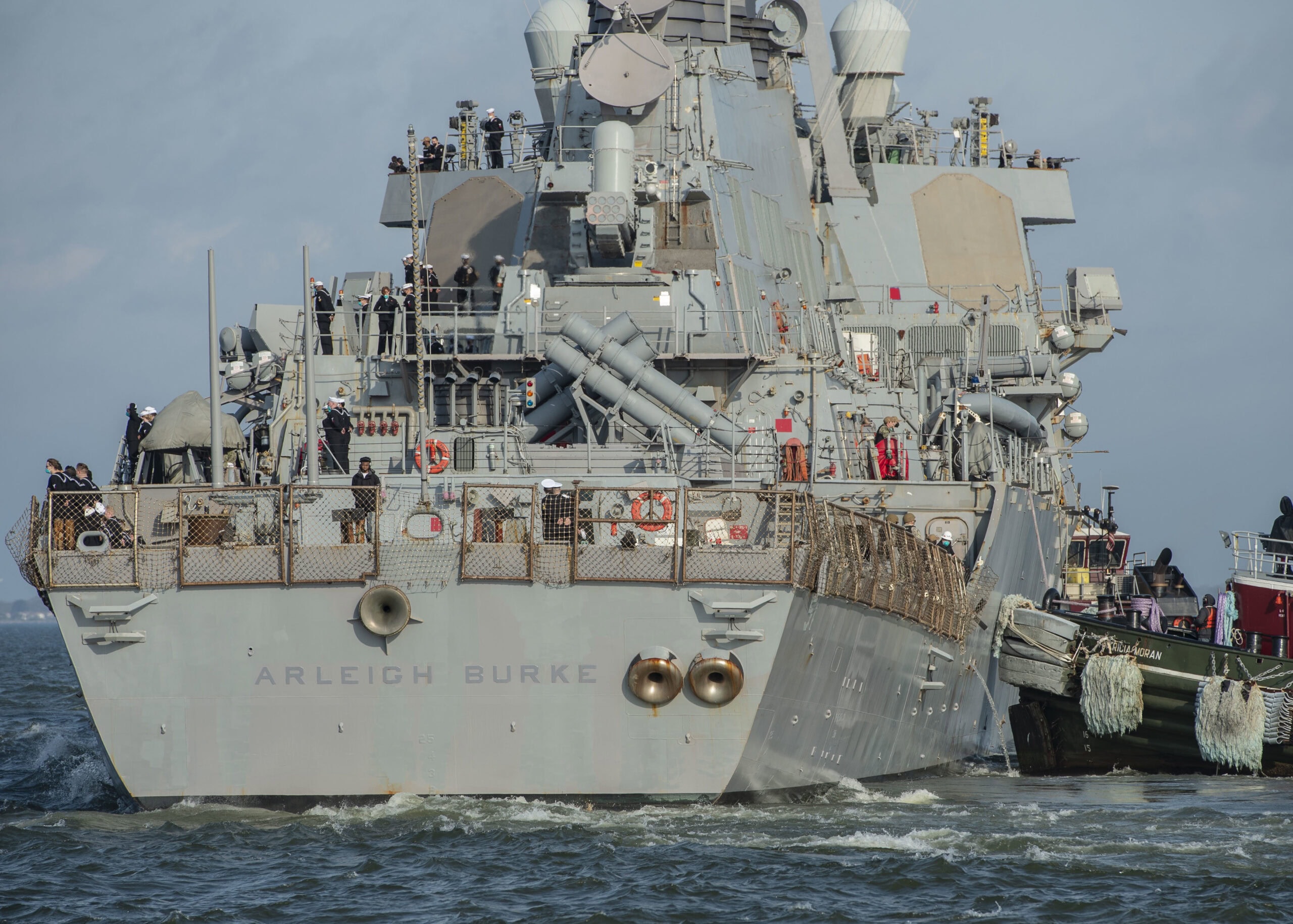
NORFOLK (Mar. 26, 2021) – A tugboat assists the guided-missile destroyer USS Arleigh Burke (DDG 51) in getting underway Mar. 26. Arleigh Burke will replace USS Donald Cook (DDG 75) as one of four forward deployed naval forces (FDNF) located in Spain. Arleigh Burke will join USS Ross (DDG 71), USS Roosevelt (DDG 80), and USS Porter (DDG 78) as the newest member of FDNF Rota. (U.S. Navy photo by Mass Communication Specialist 2nd Class Kris R. Lindstrom)
When assigned to a carrier, they generally operate on the outskirts in an anti-submarine role.
Otherwise, frigates generally operate as a single unit, patrolling sea lanes, escorting merchant vessels, shadowing ships of other navies, conducting reconnaissance and intelligence-gathering missions, and hunting submarines.
Given their free-ranging role, naval officers often say the most fun they had as ship captains was commanding a frigate at sea.
Destroyers are specialists while frigates are generalists. In that generalist role, frigates also help spread the US Navy’s lethality.
A big, heavily armed ship is fine, but it can be in only one place at a time.
With a bunch of frigates roaming the world’s oceans, you can be in many places at once and converge on a hot spot quickly to deal with whatever the circumstances present until a carrier strike group arrives.
The Navy Retired All Their Frigates And Two Years Later It Wanted Them Back
Currently, the US Navy has ZERO frigates in active service. The last of the Oliver Hazard Perry-class, the USS Simpson (FFG-56), was scrapped in 2015.
At one time, the US Navy had 51 Perry-class frigates in service.
The Navy replaced them with the larger, more capable Arleigh Burke-class destroyer, with 75 of them currently in service.
The Navy Laid A Bet Down On The Littoral Combat Ship, And Lost
Just 2 years after retiring the last Perry-class, the Navy wanted frigates back in the fleet to serve in the traditional generalist role and increase dispersed lethality.
Initially, they hoped the Littoral Combat Ship could fill this role.
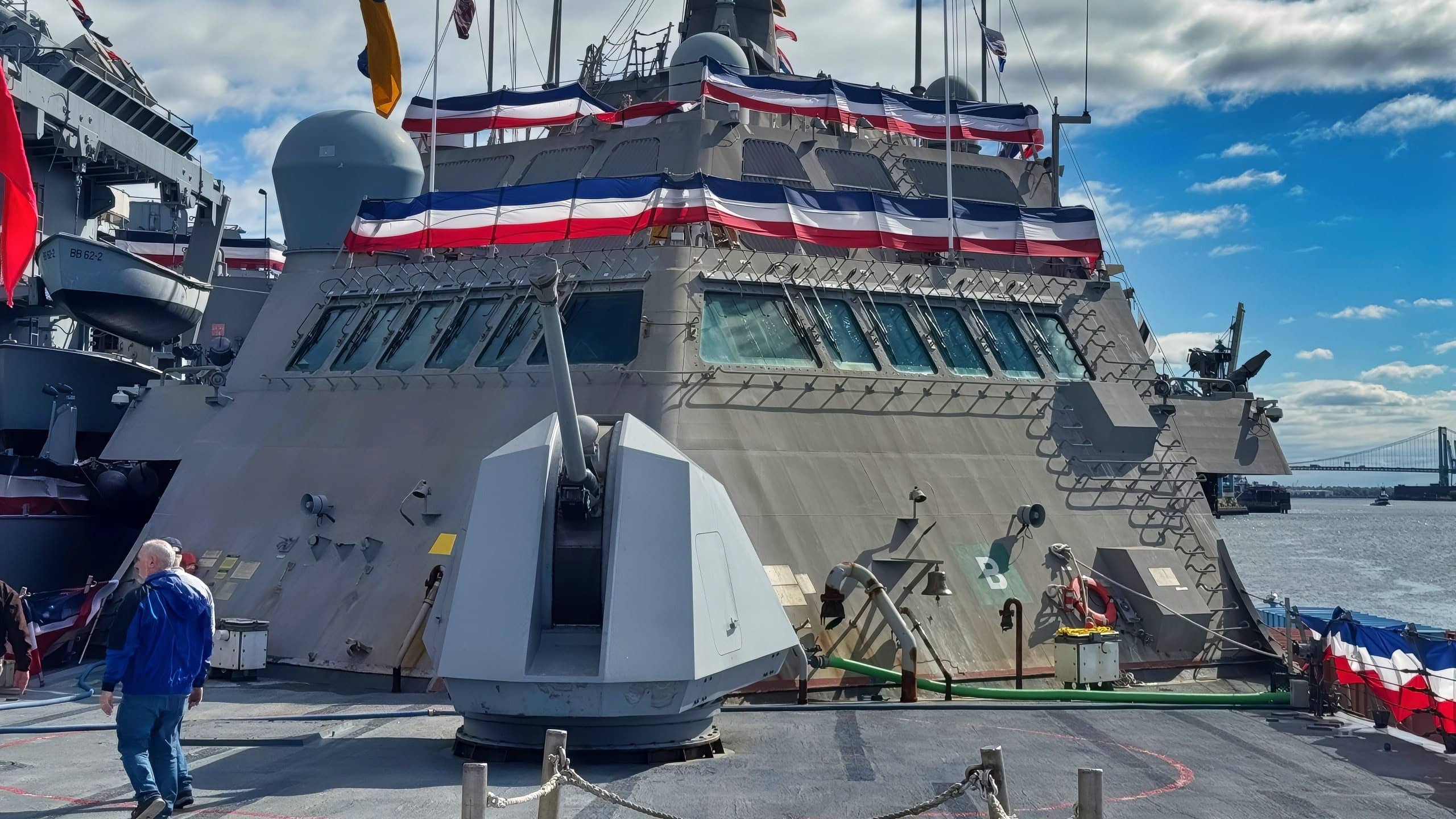
Littoral Combat Ship from Fleet Week 2025. Image Credit: Stephen Silver/19FortyFive.com
Still, staggering cost overruns and delays, combined with an anti-submarine warfare module essential to the frigate that didn’t work, crushed those hopes.
The Navy Thought A Frigate Design From Italy Was The Perfect Match
By 2020, it had developed a concept that included an Italian variant of Europe’s general-purpose frigate called the FREMM.
The plan was to retain about 85% of its components from the Italian version, with US weapons and sensors making up the remaining 15%.
Designated the USS Constellation-class (FFG-X), this ship would be half as expensive as a Burke and could keep up with the carriers with integrated sensors and weapons, while still performing the free-ranging mission of the Perrys.
Too Much Weight, Too Much Money, Too Many Delays
Wanting to make it less expensive and doing it are different things.
Like having too many cooks in the kitchen trying to make one dish, things got out of control.
Work began before the structural schematics were finished, and change orders made the Constellation heavier as new things were added.
Soon enough, the FFG-X retained just 15% of the Italian specification and became 85% US, reversing the original concept.
This, in turn, created supply chain delays and labor shortages. Congress got involved and demanded that FFG-X be able to launch Tomahawk Land Attack Missiles.
This required a hull redesign.
The Constellation would now be more of a smaller Burke-class destroyer than the swift, agile frigate it was conceived as.
The Navy Sinks The Constellation FFG-X
In 2025, then Navy Secretary John Phelan canceled the Navy’s fleet expansion program, and the FFG-X got the axe first. Congress cut the 20 ships in the Constellation-class to 2.
The New FFG-X Could Be A Coast Guard Cutter Instead
As a replacement, the Navy would develop the Legend-class National Security Cutter, developed for the US Coast Guard.
This cutter is a frigate-sized vessel with the appropriate range and speed for its class.
It remains to be seen if Congress will also require the Legend-class to carry TLAMS and other systems that will increase its weight and reduce speed and endurance.
Mr. Phelan resigned in April 2026 and was replaced by Hung Cao, whom the Senate confirmed on October 1st, 2026.
Currently, Constellation (FFG-62) is 3 years behind schedule, with delivery expected in 2029.
Her sister ship, USS Congress (DDG-63), is barely more than a name at this point, with no public disclosure on her current state of completion.
The last Oliver Hazard Perry-class frigates left the Navy in 2015, leaving a gap it hoped to fill with the Littoral Combat Ship.
The failure of the LCS program led the Navy to try to bring frigates back into the fleet with the European-built FFG-X program.
Now, after rising costs and delays, it has abandoned this program as well, shifting focus to the Coast Guard’s Legend-class Cutters in hopes of getting back to the sheer numbers the Navy wants in the fleet sometime in the 2030s.
The Navy can bring frigates back into the fleet if it decides how.
About the Author: Sean Spoonts
Sean Spoonts is the former Editor-In-Chief of SOFREP.com. He is a military analyst, writer, and commentator whose work has appeared in Newsweek, CNS News, Ukrinform, and various military/veteran media networks and professional publications, including the Military Intelligence Professional Bulletin. He is a U.S. Navy veteran, having served as an Aviation Anti-Submarine Warfare Operator and Search and Rescue Helicopter Aircrewman.