

The U.S. Navy won’t have its full Virginia-class attack submarine fleet until 2043—and by then, the boats will be 44 years old. China is mass-producing submarines now, while America’s broken shipyards crawl toward delivery dates that may not arrive in time for a great-power war.
The Virginia-Class Submarine Can’t Save the U.S. Navy
The United States Navy, thanks to its failing naval shipyards, has a submarine shortage at precisely the moment when it needs submarines the most. Already, the Virginia-class attack submarine is nowhere near numerous enough to sustain any significant combat operations against a near-peer foe in a great power conflict.
Chronic delays and maintenance backlogs at America’s ancient naval shipyards are having real-world, negative impacts on the US Navy’s force posture at a time when rising rivals, like China, are threatening the US at sea as never before.
Too Few Subs, Too Late for a Great Power War
According to Pentagon acquisition experts, the Navy will acquire its full complement of Virginia-class attack submarines by 2043. Once fully operational, the Navy plans to keep its Virginia-class subs in service throughout the 2070s.
The Navy has thus far acquired many of the 66 submarines it originally planned to procure. America’s first Virginia-class submarine, the USS Virginia (SSN-774), was laid down on September 2, 1999, and launched on August 16, 2003. The Navy commissioned the Virginia a year later.
If the acquisition of the Virginia-class submarines were completed by 2043, these attack submarines would be 44 years old. If the Navy kept the Virginia-class submarines in service until 2070, the first boat of the class would technically be 71 years old when it was inevitably retired.
“iPhones of the Sea”…But Still Stuck in Development Hell
While proponents of the Virginia-class insist that these submarines are the “iPhones of submarines,” meaning they are highly adaptable and designed for continuous, possibly radical, upgrades, the fact remains that they are taking too long to fully develop.
Beyond that, reports indicate that the Virginia-class submarine might experience maintenance issues with its all-important acoustic tiles.
Does anyone seriously believe that the Navy will acquire all 66 Virginia-class submarines by 2043?
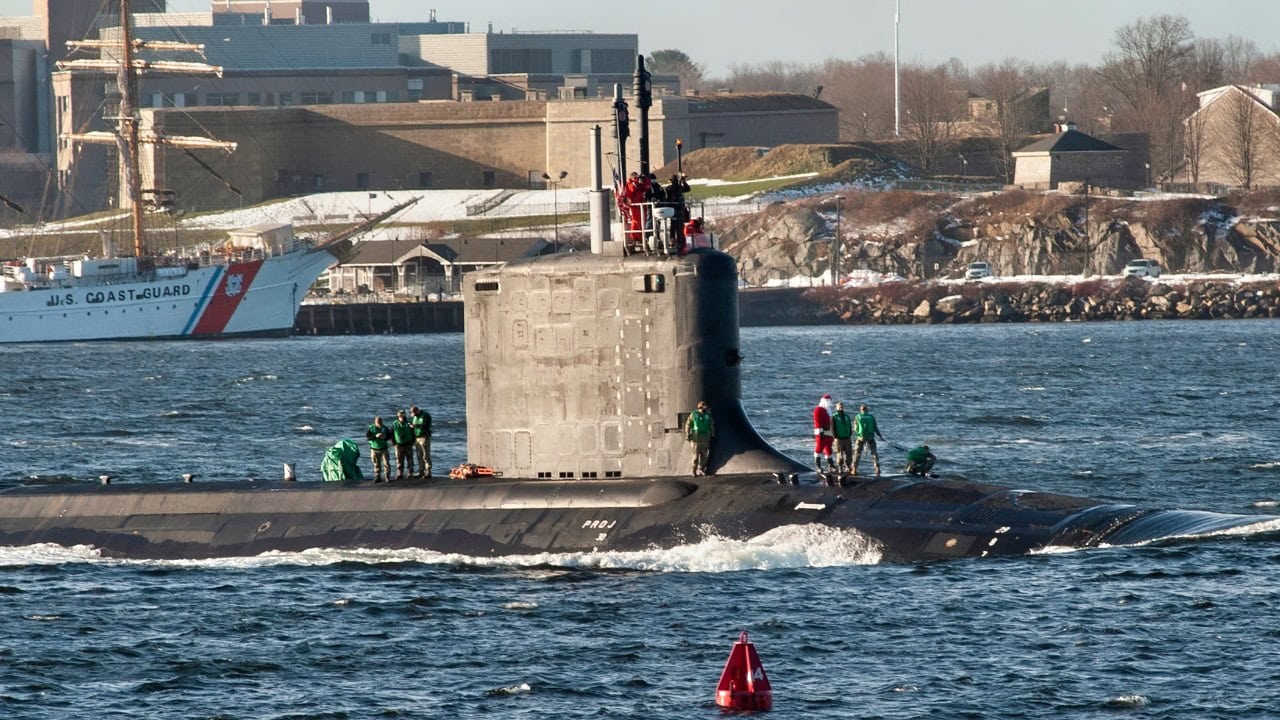
The Virginia-class submarine USS Vermont (SSN 792) makes her way up the Thames River and past Fort Trumble and the Coast Guard Cutter Borque Eagle as she returns home to Submarine Base New London on Thursday, December 24, 2020. The nineteenth and newest Virginia-class submarine she is the third U.S. Navy ship to be named for the Green Mountain State. (U.S. Navy Photo by John Narewski/Released)
What’s more, given the rate of development of unmanned systems and the fact that America’s primary strategic adversary, the People’s Republic of China, is clearly mass-producing its way to submarine dominance, the idea that the United States can just wait around until 2043 for its fleet of Virginia-class submarines to be ready is ridiculous.
And let us not forget that the face of war has changed.
The Future of Naval Warfare is Uncrewed
Drones have fundamentally changed the way the world fights modern wars. Uncrewed undersea vehicles (UUVs) are the wave of the future in naval warfare. Multiple American defense contractors have started innovative work on UUVs of various sizes and capabilities. Some of these systems can even be deployed by US submarines, thereby augmenting the capabilities and reach of America’s traditional, manned submarines.
Do we really need to wait decades for the full force of the Virginia-class attack submarine to come online? What if we don’t have that kind of time before the next great war at sea erupts?
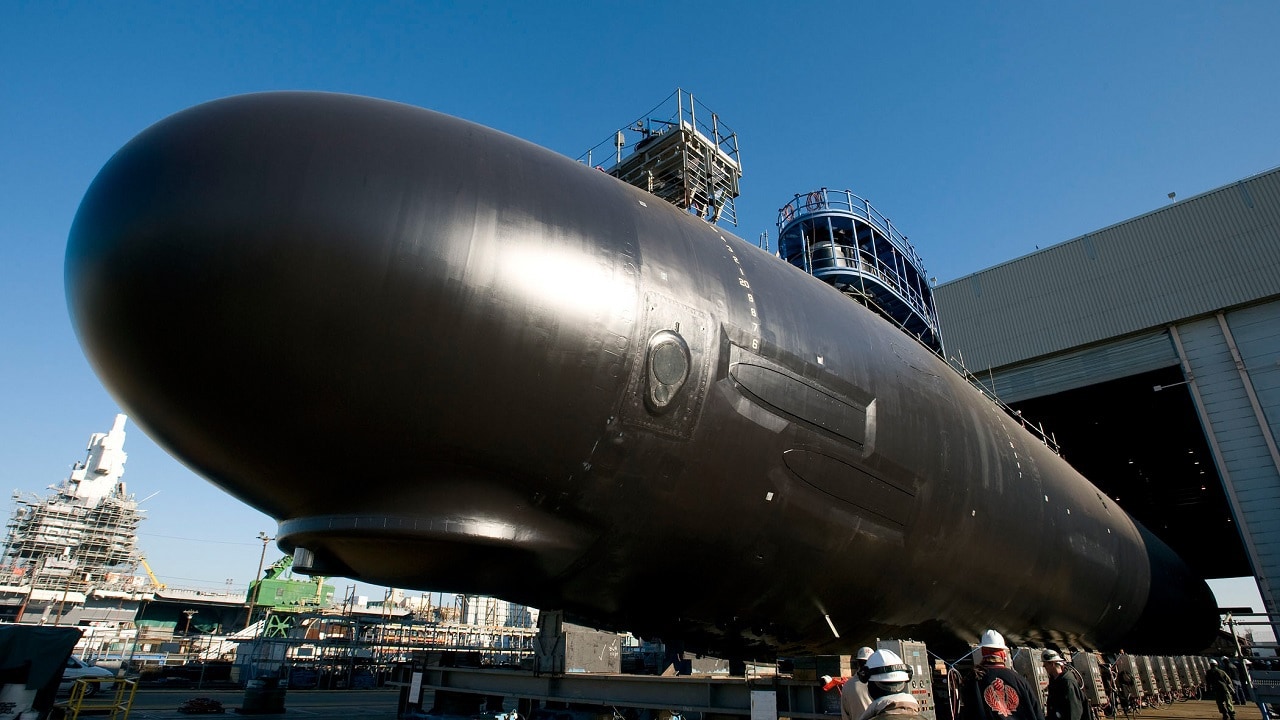
Virginia-Class. Image Credit: Creative Commons.
Given China’s manufacturing capacity, its submarine force could soon outnumber America’s. Rather than wasting time and energy waiting around for America’s broken naval shipyards to deliver submarines that will be decades old, the Pentagon should reprioritize the development and deployment of UUVs.
These systems are cheaper to build and easier to maintain. They can be mass-produced even with America’s strained defense industrial base, without diverting significant resources from the ongoing development and maintenance projects the Navy is already committed to.
Among the most promising UUVs is the Boeing Orca Extra-Large UUV (XLUUV), considered the most significant for long-range, strategic missions. The Boeing Orca is considered a mini-submarine. At 51 feet, Orca operates autonomously for months and can travel up to 6,500 nautical miles. Orca comes with a modular payload section for specialized tasks, with initial missions focused on laying mines.
Another unique system is the Snakehead Large-Diameter UUV (LDUUV). This system will conduct Intelligence Preparation of the Operational Environment (IPOE) and intelligence gathering.
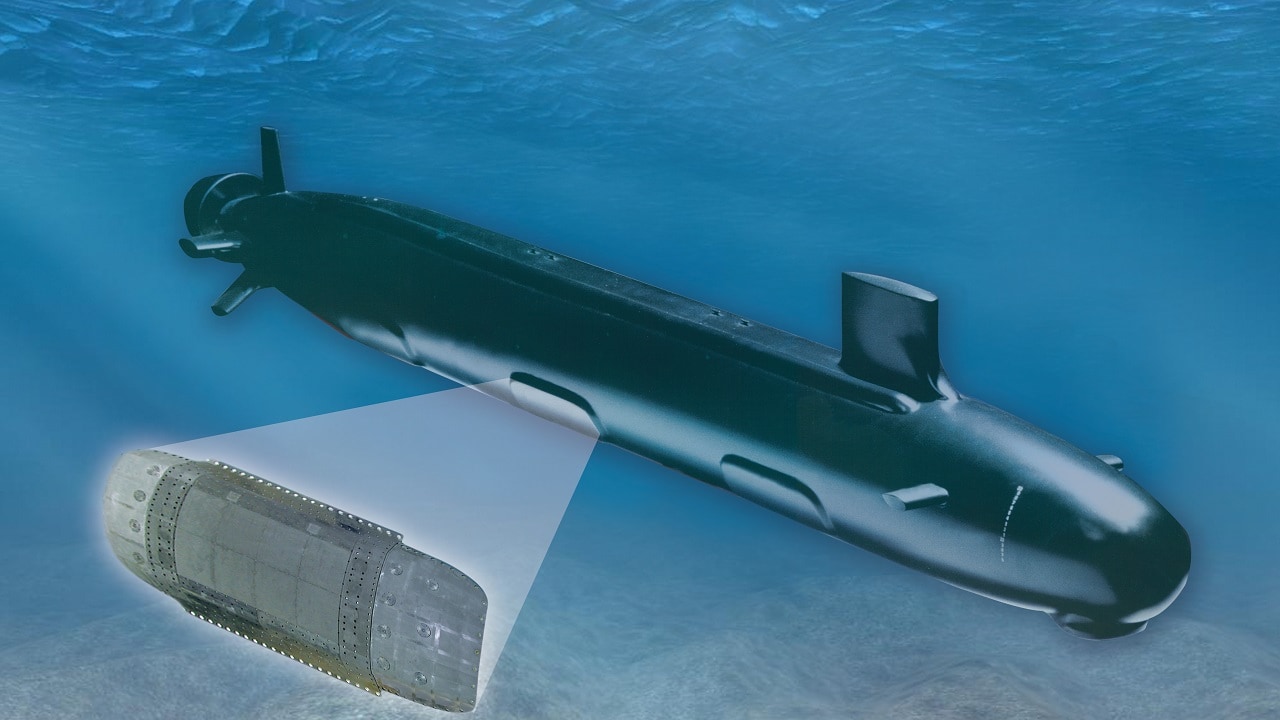
Block IV Virginia-class Submarine.
Adapt or Lose the Undersea Fight
While UUVs cannot completely replace traditional submarines, such as the Virginia-class, they can augment the current force without the Navy having to wait until 2043, when the maritime branch will receive the full complement of Virginia-class attack submarines.
And that augmentation in the near-term may prove decisive in any undersea engagement with a near-peer adversary, like the Chinese People’s Liberation Army Navy (PLAN).
About the Author: Brandon J. Weichert
Brandon J. Weichert is the Senior National Security Editor at 19FortyFive.com. Recently, Weichert became the editor of the “NatSec Guy” section at Emerald. TV. He was previously the senior national security editor at The National Interest. Weichert hosts The National Security Hour on iHeartRadio, where he discusses national security policy every Wednesday at 8 pm Eastern. He hosts a companion show on Rumble entitled “National Security Talk.” Weichert consults regularly with various government institutions and private organizations on geopolitical issues. His writings have appeared in numerous publications, among them Popular Mechanics, National Review, MSN, and The American Spectator. And his books include Winning Space: How America Remains a Superpower, Biohacked: China’s Race to Control Life, and The Shadow War: Iran’s Quest for Supremacy. Weichert’s newest book, A Disaster of Our Own Making: How the West Lost Ukraine, is available for purchase at any bookstore. Follow him via Twitter/X @WeTheBrandon.