

Summary and Key Points: SSN(X), the Navy’s next-generation nuclear attack submarine, is slipping from a mid-2030s buy to the early 2040s even as FY 2026 requests $222.8 million for R&D.
-The goal is a high-end boat blending Virginia-class stealth with Seawolf-like payload, electric drive, new sensors, and UUV defenses.
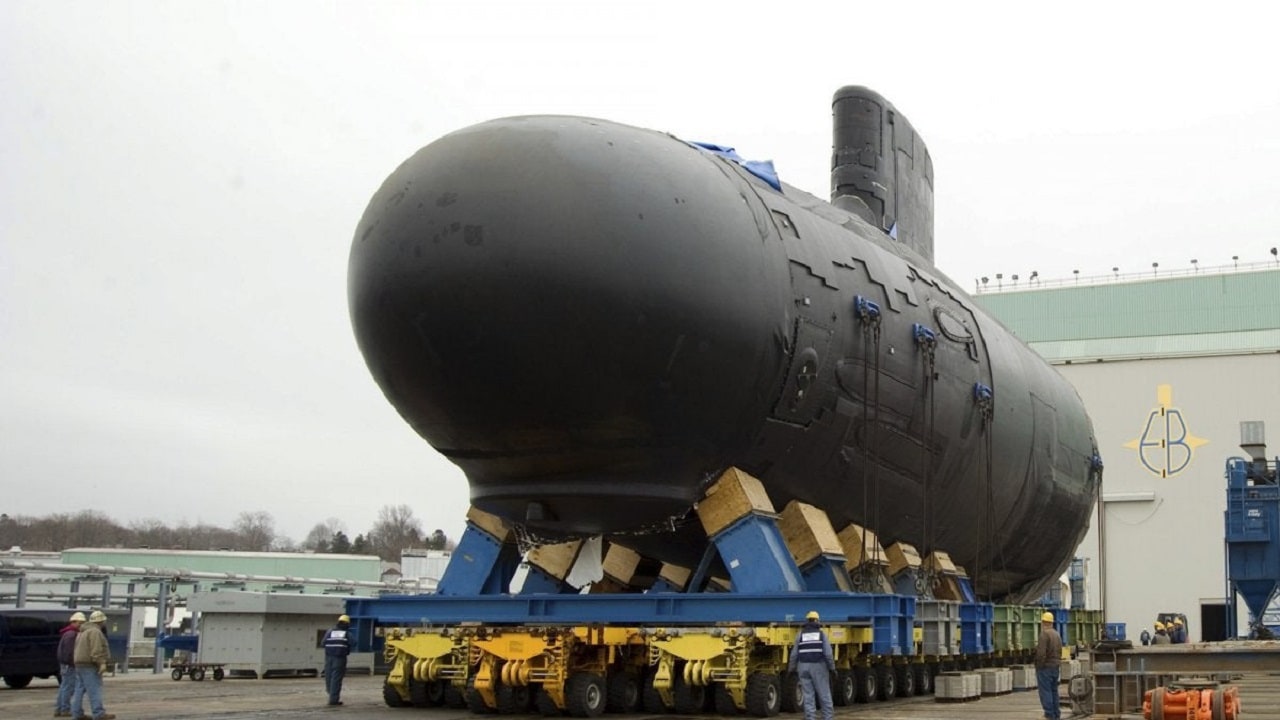
Image of Block III US Navy Virginia-class Submarine.
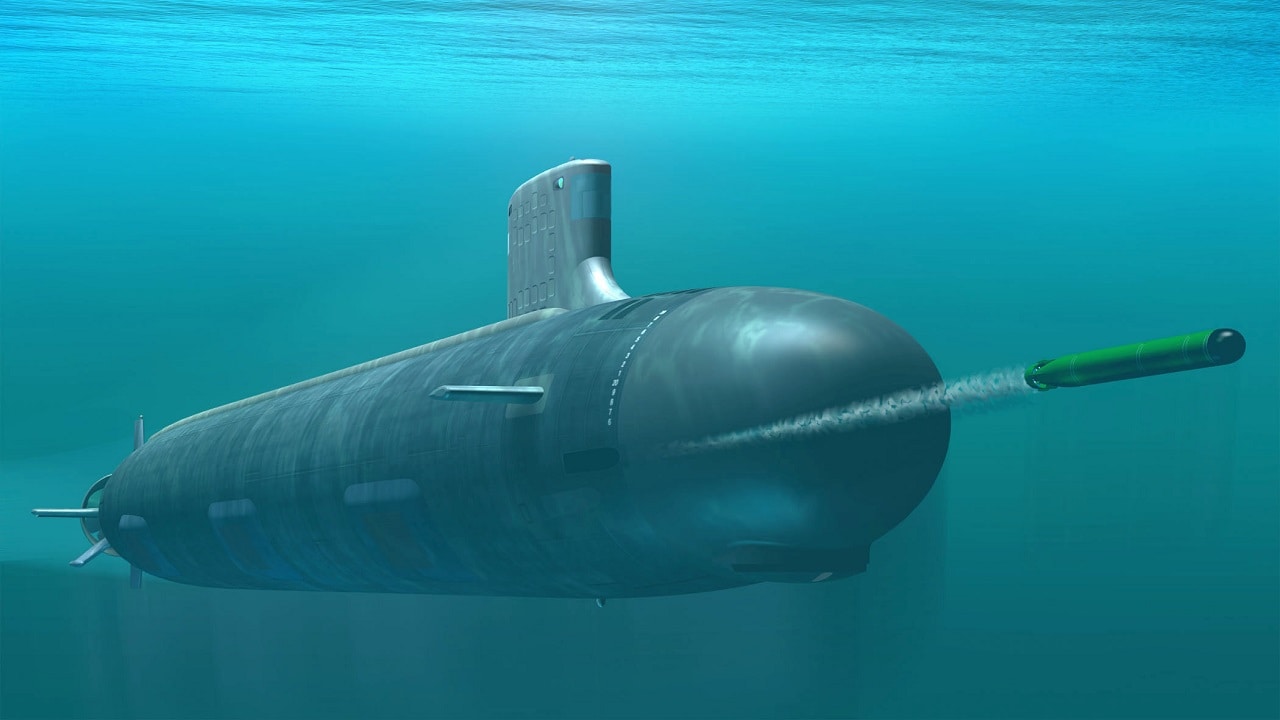
030521-D-9078S-001
(May 21, 2003) — This conceptual drawing shows the new Virginia-class attack submarine now under construction at General Dynamics Electric Boat in Groton, Conn., and Northrop Grumman Newport News Shipbuilding in Newport News, Va. The first ship of this class, USS Virginia (SSN 774) is scheduled to be delivered to the U.S. Navy in 2004. U.S. D.O.D. graphic by Ron Stern. (RELEASED)
-Industrial-base limits, rising costs, and unclear congressional commitment are driving the uncertainty. CRS flags questions on required capabilities, budget tradeoffs, and whether CBO cost estimates outpace Navy projections.
-Lawmakers also want clarity on reactor fuel choices and build strategy, while China’s output is cited as two submarines for every 1.4 built in the U.S.
SSN(X)-Class Submarines: More and More Massively Delayed and More and More Super Expensive
In the Western world, the letter “X” is used to convey a sense of mystery and secrecy.
1990s sci-fi buffs will recall “The X-Files” TV and movie franchise (which appropriately included a supporting character named “X,” played by actor Steven Williams).
Old-school WWE buffs (from back in the day when it was still known as the WWF) will recall the masked wrestler Mr. X (“from parts unknown, weight unknown”), who later turned out to be none other than the villainous referee “Dangerous” Danny Davis (not to be confused with19FortyFive writer Daniel L. Davis).
In the aviation world, there’ve been the “X-planes,” as in experimental, such as the Bell X-1 (the first aircraft to break the sound barrier), the North American X-15 rocket plane (that attained a mind-blowing airspeed of Mach 6.7) and the Boeing X-32 (one of the great “Coulda, shoulda, woulda” stories of stealth fighter development).
And in U.S. Navy parlance, “X” designates a pending warship project whose exact design is yet to be determined.
Alas, in the case of the prospective of the SSN(X) program—the prospective next generation of nuclear-powered attack submarines—at the rate it’s progressing, so far it looks more worthy of a different type of “X,” that being a schoolteacher’s mark for an incorrect answer on a student’s test paper.
So, What Are the Problems?
Unsurprisingly, the same not-so-dynamic duo that plagues all too many promising military technologies: time and money (as in too much of each being spent).
The USN’s fiscal year 2026 budget request includes $222.8 million in research and development funding for SSN(X), but the anticipated first procurement has now slipped from the mid-2030s to the early 2040s, a prime example of the mind-numbingly arcane and convoluted Department of Defense (DOD) acquisition process that Pete Hegeth has been trying to reform since he assumed the position of Secretary of Defense a year ago.
That amounts to a lag time of at least 14 years, with China’s People’s Liberation Army Navy (PLAN) continuing to expand and modernize its own submarine fleet all the while. According to Indo-Pacific (INDOPACOM) Commander Admiral Samuel Paparo, Beijing produces two submarines a year for every 1.4 made in America.
And Then There’s Congress
For the sake of fairness and balance, we can’t lay all the blame at the feet of the DOD for the SSN(X) program’s woes.
There’s also that whole “power of the purse” problem: the SSN(X) has not yet received clear and unequivocal Congressional backing. A July 9, 2025 report from the Congressional Research Service (CRS; not to be confused with “Can’t Remember S**t”) outlines multiple reasons for the lack of Congressional commitment:
-Whether the Navy has accurately identified the SSN(X)’s required capabilities and analyzed their impact on the SSN(X)’s cost
-Potential future impact of the SSN(X) program on funding for other Navy program priorities, particularly if the Congressional Budget Office’s (CBO’s) estimate of the SSN(X)’s procurement cost is more accurate than the USN estimate;
-Potential impact of deferring procurement of the first SSN(X) from FY2035 to FY2040 on the future U.S. ability to maintain undersea superiority and fulfill U.S. Navy missions;
-The Navy’s plan for managing the impact on the submarine design industrial base of deferring procurement of the first SSN(X) to FY2040
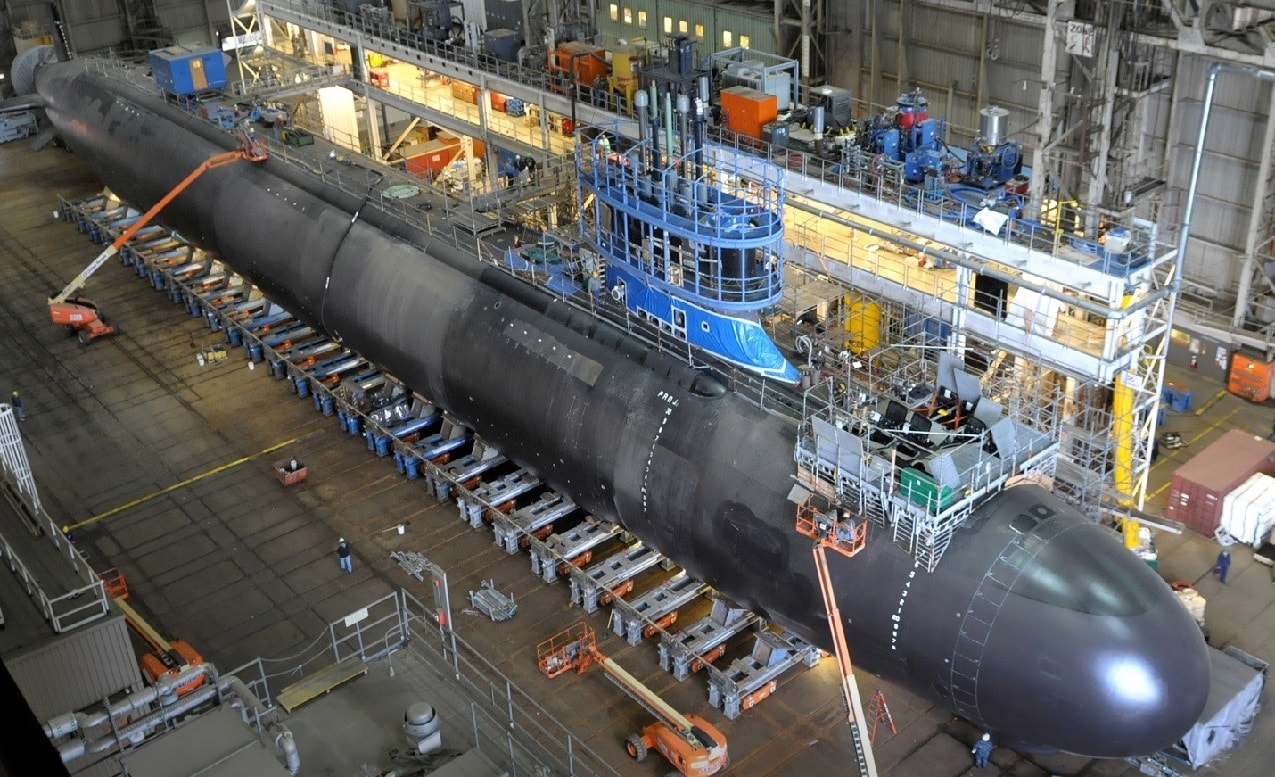
US Navy Virginia-class Submarine Under Construction.
-Feasibility and cost-effectiveness of the SSN(X) being powered by a reactor plant using low enriched uranium (LEU), rather than the highly enriched uranium (HEU) used on other Navy nuclear-powered ships (such as the Nimitz-class and Ford-class supercarrier), particularly if procurement of the first SSN(X) is deferred to FY2040, and if so, what impact that would have on nuclear arms control and nonproliferation efforts and SSN(X) costs and capabilities
-Whether each SSN(X) should be built jointly by General Dynamics Electric Boat and HII/Newport News Shipbuilding, or whether individual SSN(X)s should instead be completely built within a given shipyard.
A lot to ponder, to say the least.
So, Why Even Bother?
A fair question there, dear readers.
The short answer is because the USN’s current SSNs are getting long in the tooth:
-The venerable and time-honored Los Angeles-class (SSN 668) fast-attack subs were commissioned between 1976 and 1996.
-The intended successors to the Los Angeles-class boats, the Seawolf-class SSNs, were cancelled in 1995 after only three were built (commissioned between 1997 and 2005).
-The lead boat of the Virginia-class SSNs, USS Virginia (SSN-774), was commissioned in October 2004
And on paper, the SSN(X) will provide the best of both worlds, with the stealth of the Virginia-class and the firepower of the Seawolf-class. For good measure, it’ll feature electric drive propulsion, enhanced sensors, and the ability to counter enemy unmanned underwater vehicles (UUVs).
If it ever actually gets built, that is. And, at last estimate, these subs could cost $8 Billion easy. I guess time will tell.
About the Author: Christian D. Orr, Defense Expert
Christian D. Orr is a Senior Defense Editor. He is a former Air Force Security Forces officer, Federal law enforcement officer, and private military contractor (with assignments worked in Iraq, the United Arab Emirates, Kosovo, Japan, Germany, and the Pentagon). Chris holds a B.A. in International Relations from the University of Southern California (USC) and an M.A. in Intelligence Studies (concentration in Terrorism Studies) from American Military University (AMU). He is also the author of the newly published book “Five Decades of a Fabulous Firearm: Celebrating the 50th Anniversary of the Beretta 92 Pistol Series.”