
The U.S. Navy's New Concept Targeting China's Fujian Ship: A 300-Vessel Unmanned Fleet Approaches a Turning Point for the Japan-U.S. Alliance
 Tanaka Takashi
New Concept of the U.S. Navy Targeting China's Fujian Ship: A Shift in the U.S.-Japan Alliance with a Fleet of 300 Unmanned Vessels
The Chinese Navy's aircraft carrier "Fujian" will be treated not as a defensive target but as a target for tracking and attack by the United States and its allies. The recommendations from CSIS reported on September 17 quietly change the premise of maritime operations surrounding a potential Taiwan crisis.
Turning the Aircraft Carrier into an "Expensive Weakness"
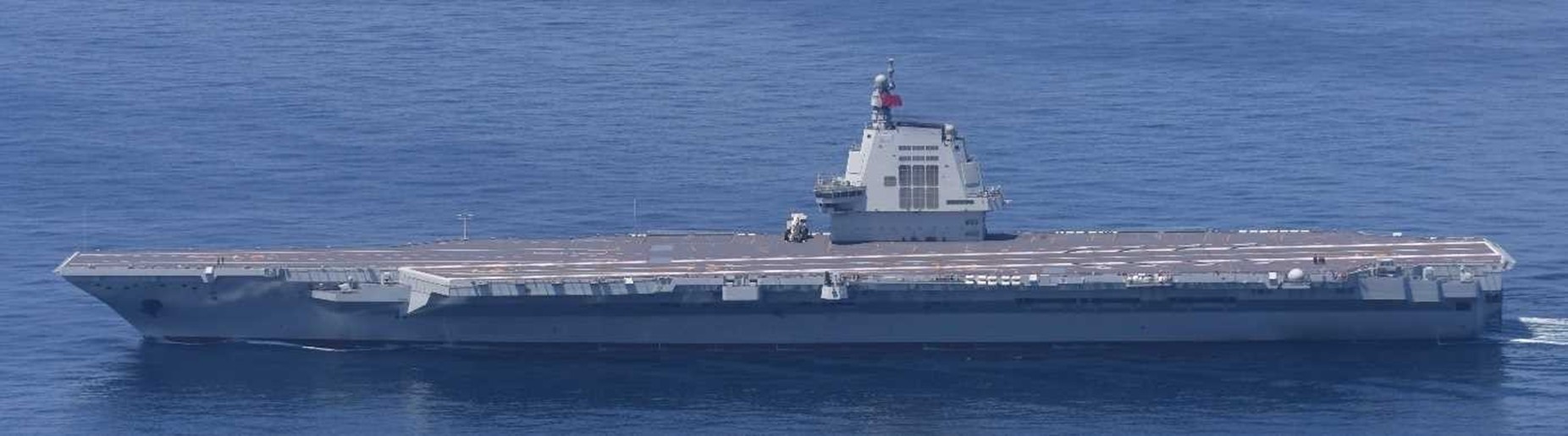
CSIS's "Flipping the Script" focuses on the fact that China's aircraft carriers are large and conspicuous, relying on sensors, communications, resupply, and escort vessels. The proposal combines ambushes by nuclear submarines and allied conventional submarines, coastal anti-ship missiles, air attacks supported by satellite information, cyber and electromagnetic attacks, and port blockades by unmanned vessels. The goal is not to sink the carrier in one strike. Instead, it aims to create a situation where every time the carrier is deployed around Taiwan or in the South China Sea, it must increase its escorts and anti-submarine patrols.
The Role Japan is Expected to Play
Japan's position is significant here. The island chain from the southwestern islands to the Philippines can disrupt the monitoring, resupply, and firepower operations of Chinese aircraft carriers as they advance into the Pacific. The practical focus will be on whether the Japan Maritime Self-Defense Force's submarines, patrol aircraft, and escort vessels can quickly connect the target information they gather to the U.S. military's long-range missiles and air power. The Ministry of Defense's 2026 white paper emphasizes unmanned systems, AI, and human resources simultaneously, highlighting the difficulty of this connection.
CSIS proposes bringing the future fleet closer to 300 manned and 300 unmanned vessels, increasing the production of unmanned underwater vehicles and torpedoes, and joint missile production with Australia and Japan. However, this is not a competition over the number of vessels. Even with a large deployment of unmanned vehicles, if satellites, underwater sensors, communication relays, and maintenance bases are compromised, they become mere drifting objects. What Japan should focus on is not competing over the number of unmanned vessels but making the dispersed bases in the southwestern islands and the JMSDF's anti-submarine warfare network part of the alliance's common kill chain.
Separating Capability from Intent
The U.S. Department of Defense indicates that China may build an additional six aircraft carriers by 2035. However, the number of vessels does not immediately equate to maritime dominance. The capabilities of an aircraft carrier depend on the operational rate of its aircraft, the anti-submarine capabilities of its escort vessels, at-sea resupply, and the training of its crew. Conversely, the U.S.-Japan side's concept of "targeting the aircraft carrier" should also be distinguished from actual combat intent. The peacetime objective is not to sink the carrier but to make Beijing calculate operational risks.
In the author's view, the biggest issue is not the Fujian ship itself. It is whether the U.S. and Japan can jointly operate unmanned and dispersed forces that threaten expensive manned vessels from peacetime. If the concept of confining the Chinese aircraft carrier in port turns the alliance's bases into fixed targets first, the calculations for deterrence will be reversed. The true contest lies not in the range of missiles but in the maritime routes that can recover information and resupply even after attrition.
Reference Information
The U.S. Navy proposed a strategy to target China's Fujian aircraft carrier, treating it as a potential threat rather than a defensive asset. This strategy, reported by CSIS on September 17, 2026, involves utilizing 300 unmanned vessels alongside submarines and missile systems to create operational risks for China in the South China Sea and around Taiwan. Japan is expected to play a significant role in monitoring and supporting these operations.
- U.S. Navy plans to treat China's Fujian carrier as a target rather than a defensive asset.
- The strategy involves a combination of unmanned vessels, submarines, and missile systems.
- Japan's role is crucial in monitoring and supporting U.S. operations against Chinese naval movements.
- CSIS suggests a fleet composition of 300 manned and 300 unmanned vessels.
- The focus is on creating operational risks for China rather than direct engagement.