

Was the Lockheed S-3 Viking retired too early? Aviation experts and historians debate this topic at the margins of U.S. post-Cold War strategy, and the emergence of a new Cold War with China looms as it seeks to become the Pacific’s regional economic and military hegemon.
A Born Hunter: The Cold War Rise Of The S-3 Viking
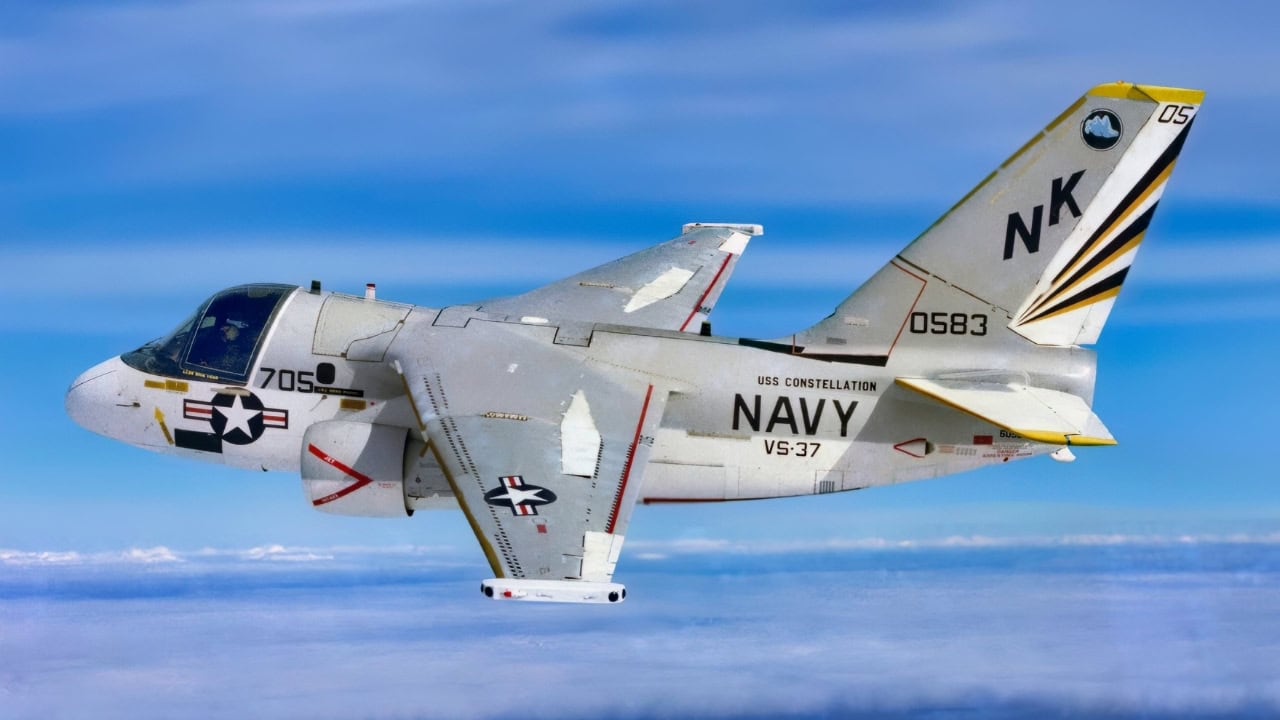
S-3 Viking. Image Credit: Creative Commons.
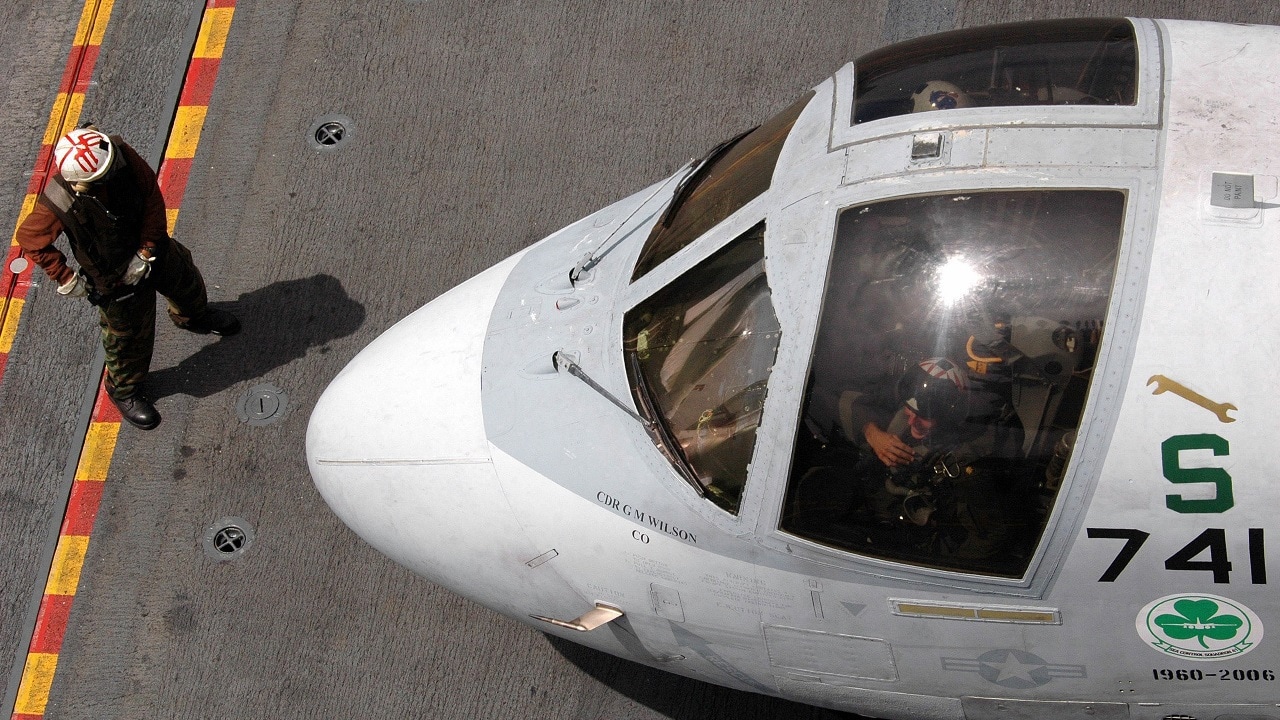
A U.S. Navy S-3B Viking aircraft assigned to the”Shamrocks”of Sea Control Squadron 41 prepares for launch from the U.S. Navy Aircraft Carrier USS NIMITZ (CVN 68).
The S-3 Viking was designed in the 1970s for a singular purpose: to hunt Soviet submarines well outside the range of a Russian submarine’s weapons deployment envelope and attack them with torpedoes.
The high-pitched whine of its turbines sounded like a vacuum cleaner and earned the S-3 the affectionate moniker of the “War Hoover” among its crews.
The S-3 used a variation of the robust General Electric T34 high-bypass turbofan engines used in the A-10 Thunderbolt II.
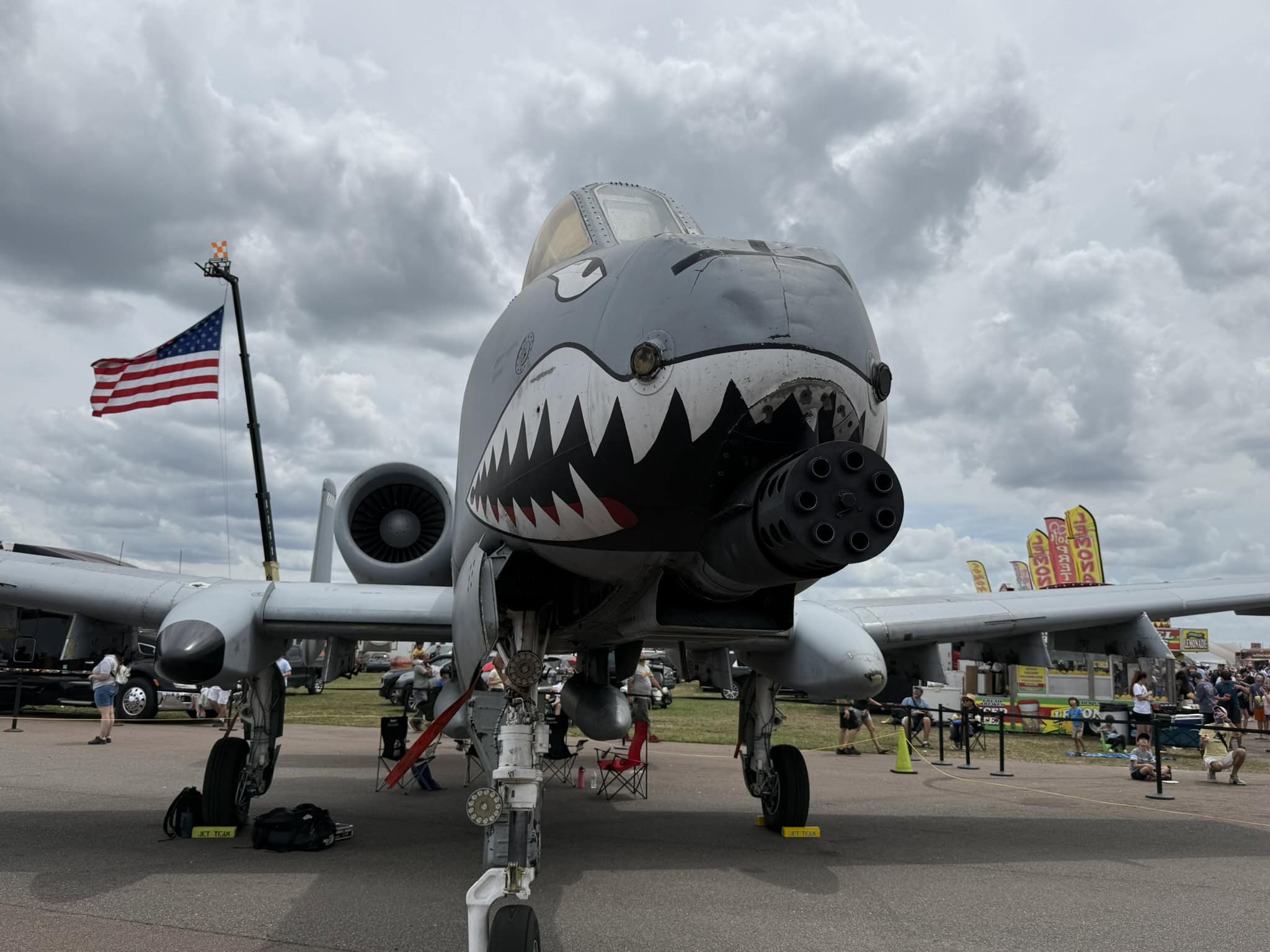
A-10 Warthog at Lakeland Air Show in Lakeland, Florida. Image by Harry J. Kazianis.
A Sub-Hunter’s Arsenal: Sensors, Torpedoes, and Tactical Nuclear Weapons To Kill Soviet Ballistic Missile Submarines
The S-3 was a miniature P-3 Orion with a crew of four, packed with advanced sensors, including high-resolution radar, magnetic anomaly detectors, sonobuoys, and signal-processing gear.
For weapons, it could drop torpedoes, nuclear depth charges, and even the B-61 thermonuclear gravity bomb.
The nuclear depth charges would have been employed against Soviet ballistic missile submarines.
The S-3’s “kill chain” was simple: detect, classify, track, and attack submarines.
Unlike WWII duels between sub-hunting ships and submarines that often stretched from hours into days, an S-3 Viking hunting a submarine could reduce the time from detection to destruction to mere minutes.
The Viking was so effective that it was often credited with the first detection of new classes of Soviet submarines.
The Russians quickly learned that the S-3 Viking would greatly complicate their tactics of using submarines against a US aircraft carrier.
The Peace Dividend Paradigm: A Shrunken Russian Navy Meant A Shrunken US Navy Budget
The collapse of the Soviet Union at the end of 1991 also resulted in the collapse of the Soviet Navy. It no longer sent nearly 500 submarines to sea to stalk the US Navy.
The US Navy shifted its strategic priorities toward littoral waters and inland strike capabilities, away from deep-water anti-submarine warfare.
The Navy had 19 squadrons with nearly 200 Vikings and 5,000-6,000 personnel serving in them.
Each squadron cost $20-$30 million a year to operate, while a Soviet submarine threat to the carriers had vanished into thin air.
The Navy tried to keep the Viking usefully engaged in other missions, such as maritime strike, aerial refueling, and electronic warfare.
Still, by the late 2000s, the 1970s airframes required increasingly expensive depot-level maintenance. Spare parts were also becoming scarce.
Compared with investing in Viking updates and overhauls, investing in new platforms seemed like a better use of a shrinking post-Cold War military budget.
Jack of All Trades: The Versatile S-3 Viking That Took Three Planes to Replace
The post-Cold War strategic shift meant the Navy had to operate with less money. Eliminating the S-3 meant cutting a whole logistics supply chain and training pipeline.
The Navy believed the Viking’s maritime patrol mission could shift to the P-3 Orion and P-8 Poseidon.
MH-60R Seahawk could take over the ASW role, and the F/A-18 Hornet could take on the strike and tanker role.
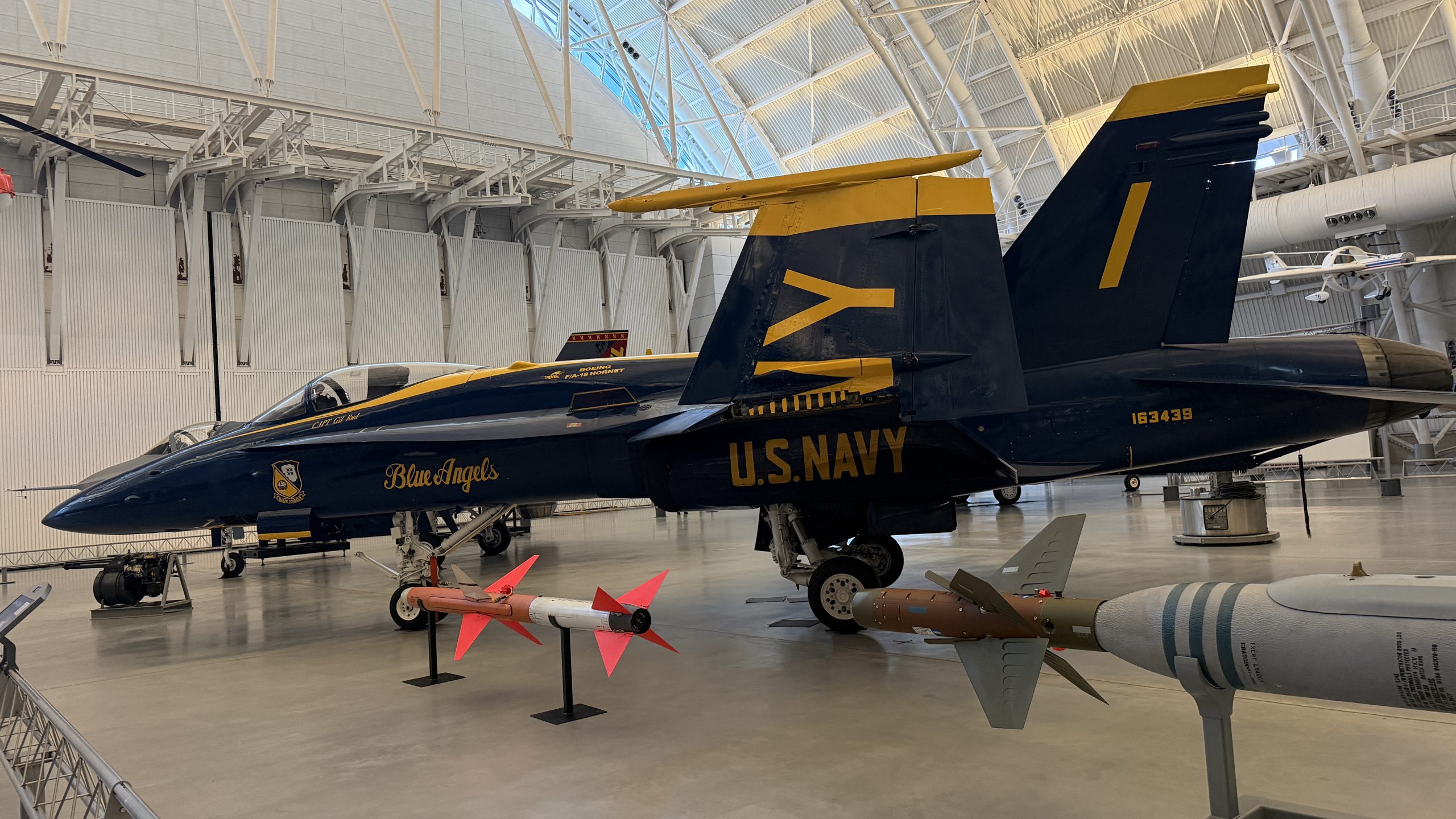
F/A-18 Hornet from the Blue Angels. 19FortyFive Photo from Staff Photo Shoot.
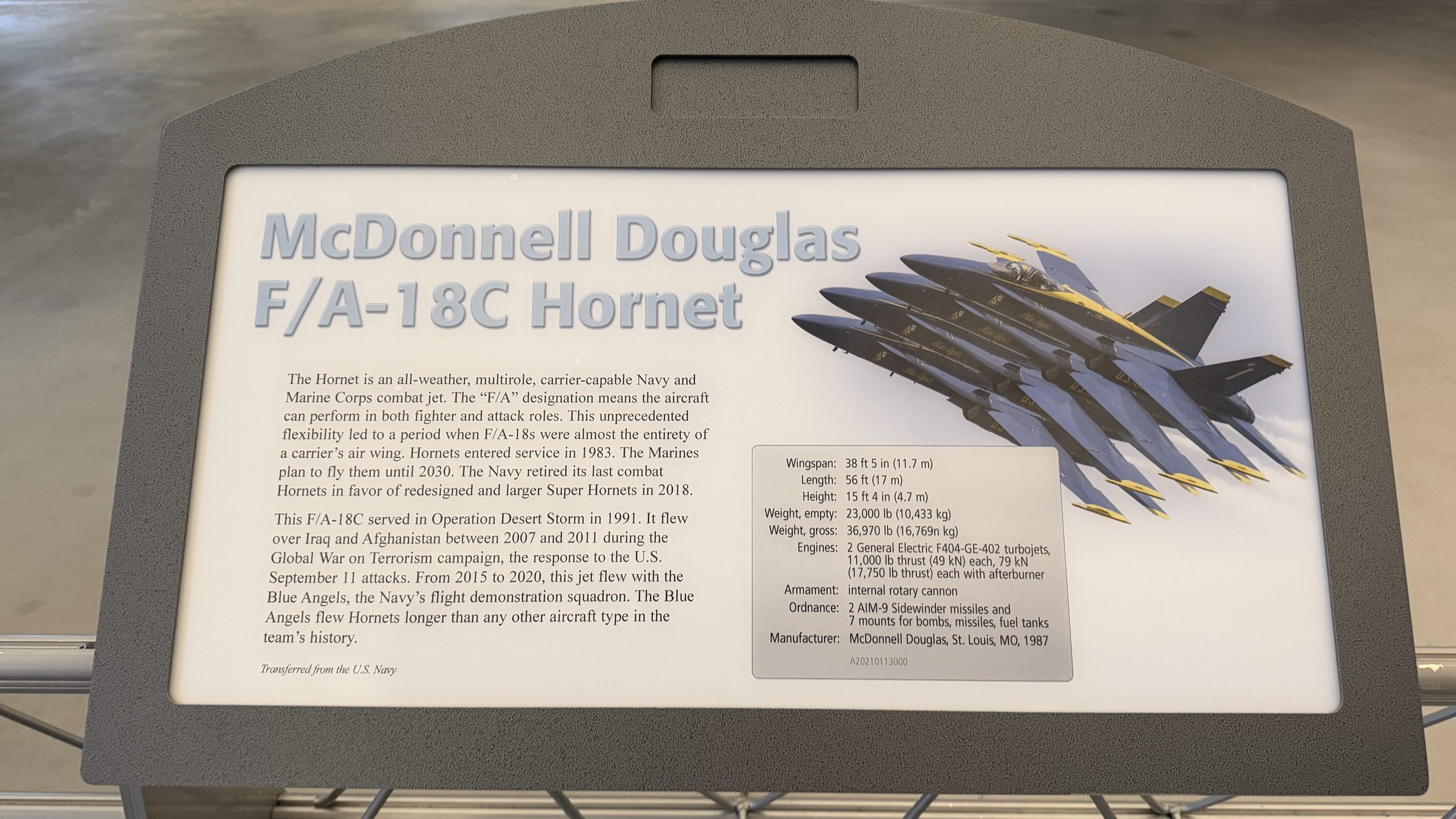
F/A-18 Hornet from the Blue Angels. 19FortyFive Photo from Staff Photo Shoot.
This proves the Viking’s versatility: one airframe could do so much so well that it took three other aircraft to replace it.
Was the Navy shortsighted in replacing the Viking instead of keeping them or replacing them with a new carrier-based fixed-wing ASW platform?
Perhaps to some degree, the answer is, “Yes.”
While the S-3 Viking could perform aerobatic maneuvers, its airframes were not subject to the routine structural beating fighter pilots gave their own aircraft.
Their airframes still had plenty of life left after their 2009 deactivation in carrier squadrons.
S-3 Vikings in the Navy’s Air Test and Evaluation Squadron (VX-30) flew range-clearance missions into 2016, and NASA operated several into 2021.
The Navy turned to the F/A-18 as a tanker, accelerating airframe hours on these much more expensive aircraft while reducing the carrier’s striking power.
A New Blue-Water Threat: The Case for a Next-Generation Viking II
When the Navy retired the Viking, it lost hundreds of aircrews and thousands of maintenance personnel that could have transitioned to a new fixed-wing, carrier-based ASW platform.
Hunting submarines is a hard-won but perishable skill set, and it’s difficult to recover once lost.
The Navy found a coverage gap in carrier protection with the P-3/P-8 and MH-60s.
The Seahawks lacked the range and endurance of the Viking, and the P-3s and P-8s were shore-based and could be hours from the carrier strike group when they needed to be on station.
This contrasts with a carrier having approximately 10 Vikings aboard to provide continuous 24-hour ASW protection for the strike group.
Potential adversaries of the US may have seen this gap as an opportunity to exploit by expanding their own submarine fleets.
Near-adversaries like China rapidly expanded their submarine fleets between 2010 and 2020.
China has between 58 and 66 submarines and is launching new ones at a rate of 5 per year.
While Russia’s surface navy has atrophied greatly since the collapse of the Soviet Union, it maintains its submarine force as its primary offensive weapon.
Russia has spent lavish sums upgrading its existing submarines while developing the new Yasen-class and deployed the Belgorod (Project K-329).
This heavily reworked Oscar II-class submarine serves as a mothership for deep-diving, nuclear-powered mini-subs and the long-range, autonomous, nuclear-powered Poseidon torpedo tipped with a nuclear warhead.
The next 10-15 years will also see continuing development and refinement of large, unmanned submersibles that can also pose a grave threat to a US aircraft carrier if employed in large numbers in blue waters.
The Navy’s short-sighted shift away from the S-3 (or a new version of it) may also be seen in what it gave up. A reliable, multi-mission platform capable of surface surveillance, electronic signals intelligence, aerial refueling, maritime strike and targeting for surface forces, logistics, and anti-submarine warfare.
Since no single aircraft has been able to fill all these roles like the S-3 Viking, the Navy should seriously consider an S-4 Viking II, built to last and evolve with the ever-changing nature of naval warfare, perhaps as a variant of the MQ-25 Stingray.
About the Author: Sean Spoonts
Sean Spoonts is the former Editor-In-Chief of SOFREP.com. He is a military analyst, writer, and commentator whose work has appeared in Newsweek, CS News, Ukrinform, and various military/veteran media networks and professional publications, including the Military Intelligence Professional Bulletin. He is a U.S. Navy veteran, having served as an Aviation Anti-Submarine Warfare Operator and Search and Rescue Helicopter Aircrewman.