
The U.S. Withdraws B-1 Bombers from the UK, Considering Strategic Reduction of Forward Deployments
According to recent news from the United States, the U.S. military has withdrawn all B-1 bombers from RAF Fairford in the UK. This base has been used by the U.S. military for decades as a staging ground for bomber missions in the Middle East.
In response to the U.S. military's emergency withdrawal of all B-1 bombers from RAF Fairford, the U.S. stated that it was due to the risk of drone attacks from Iran, which Iran has denied. Is this large-scale withdrawal of bombers by the U.S. merely a precaution for safety, or does it reflect a strategic adjustment in the U.S. overseas forward deployment?
The U.S. finds itself in a difficult position with Iran, forced to make a tactical withdrawal
Special Commentator Su Xiaohui: Tactically speaking, the U.S. hastily withdrawing its strategic bombers indicates that it is in a difficult position. The U.S. has noted that Iran has clearly stated that any foreign military base used to attack Iran would be considered a legitimate target for retaliation. The U.S. also noted that on August 16, the Iranian Supreme National Security Council decided that if the U.S. did not lift its maritime blockade against Iran within 45 days, Iran would reserve the option to launch a new round of attacks against U.S. forces. The threats issued by Iran cannot be ignored by the U.S., which is now maintaining a high state of military alertness.
The U.S. is concerned about frontline risks and alliance relations, considering strategic contraction
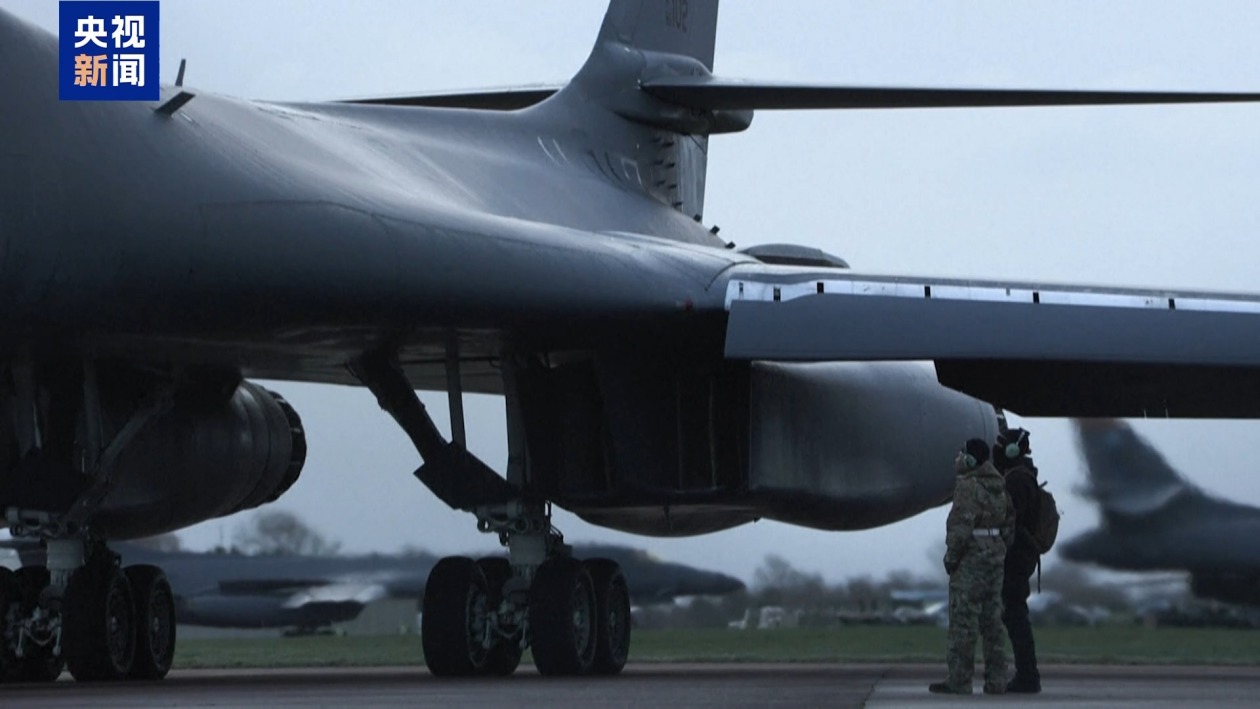
Special Commentator Su Xiaohui: Strategically, this withdrawal is not an isolated incident; the U.S. is considering whether to scale back its forward deployments, and there is such a trend. First, the U.S. is assessing its own security risks; overseas military deployments and forward deployments inevitably mean that U.S. forces face the pressure of being targeted and bear the risk of casualties. Additionally, the U.S. has criticized host countries for failing to provide adequate security support, instead becoming a burden to the U.S. On the other hand, many European countries have clearly stated that they do not wish to become a springboard for U.S. strikes against the Middle East, fearing for their own security and interests. If an attack occurs, even if the U.S. can take so-called retaliatory actions, it would also impact transatlantic relations, which is a risk and cost that the U.S. does not want to bear.
The U.S. Air Force has withdrawn all B-1 bombers from RAF Fairford in the United Kingdom due to security concerns regarding potential drone attacks from Iran. This decision reflects a broader reassessment of U.S. military deployments in Europe, as allies express reluctance to support U.S. actions in the Middle East. The withdrawal indicates a tactical response to perceived threats and highlights the complexities of U.S. military strategy in the region.
- All B-1 bombers have been withdrawn from RAF Fairford in the UK.
- The withdrawal is due to risks of drone attacks from Iran.
- Iran denies any threats against U.S. forces.
- The U.S. is reassessing its forward military deployments in light of security risks.
- European allies are reluctant to support U.S. military actions against Iran.