

Summary and Key Points: More than three decades after the Air Force picked Lockheed’s YF-22 over Northrop’s YF-23, aviation fans still argue about whether it chose wrong. The Air Force itself conceded the YF-23 was stealthier and faster. What it doubted was Northrop. The B-2 bomber was drowning in cost overruns, another Northrop missile program was ballooning, and Lockheed had just delivered the F-117 on time and on budget. Add a flashier flight demonstration, and the safer bet won.
The YF-23 Could Be Flying for the US Air Force Today
On April 23, 1991, the United States Air Force announced that the YF-22 had won the Advanced Tactical Fighter (ATF) contract. Or, what we call the F-22 Raptor today.
This decision is highly controversial among aviation experts and enthusiasts, who have since been locked in an eternal debate over whether the USAF’s decision was justified.
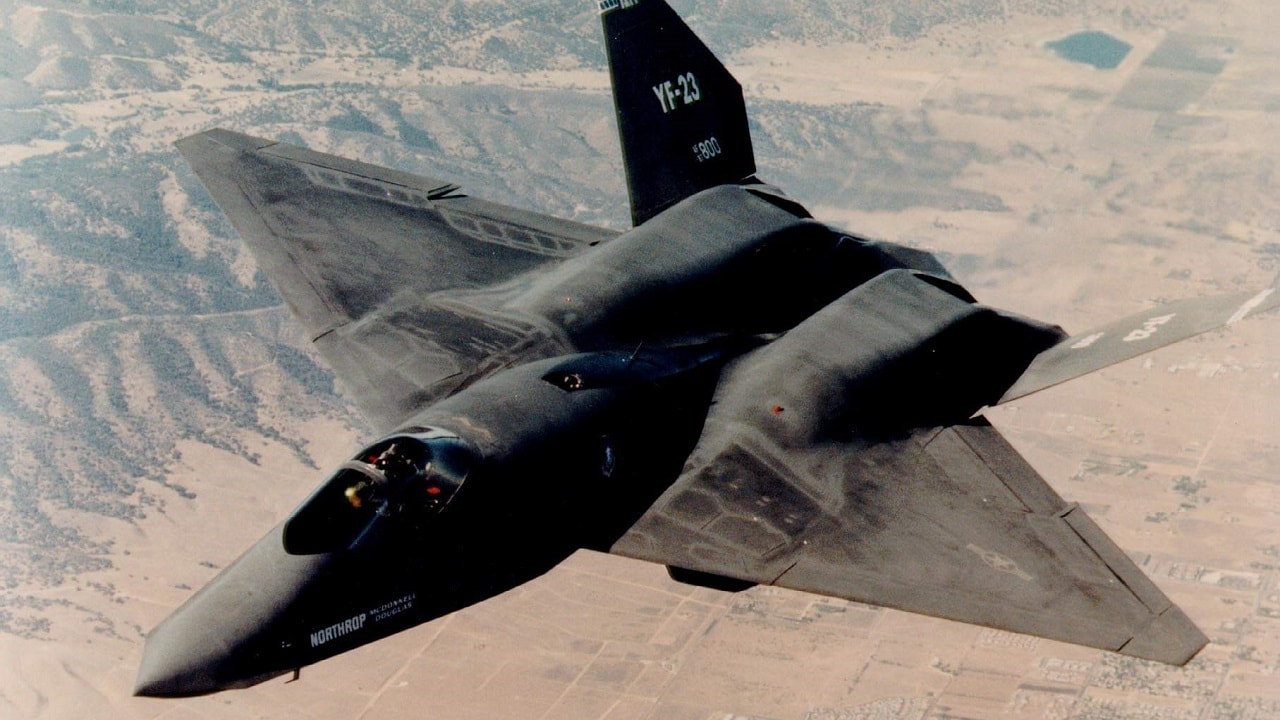
YF-23 stealth fighter, which could inspire the design of the NGAD.
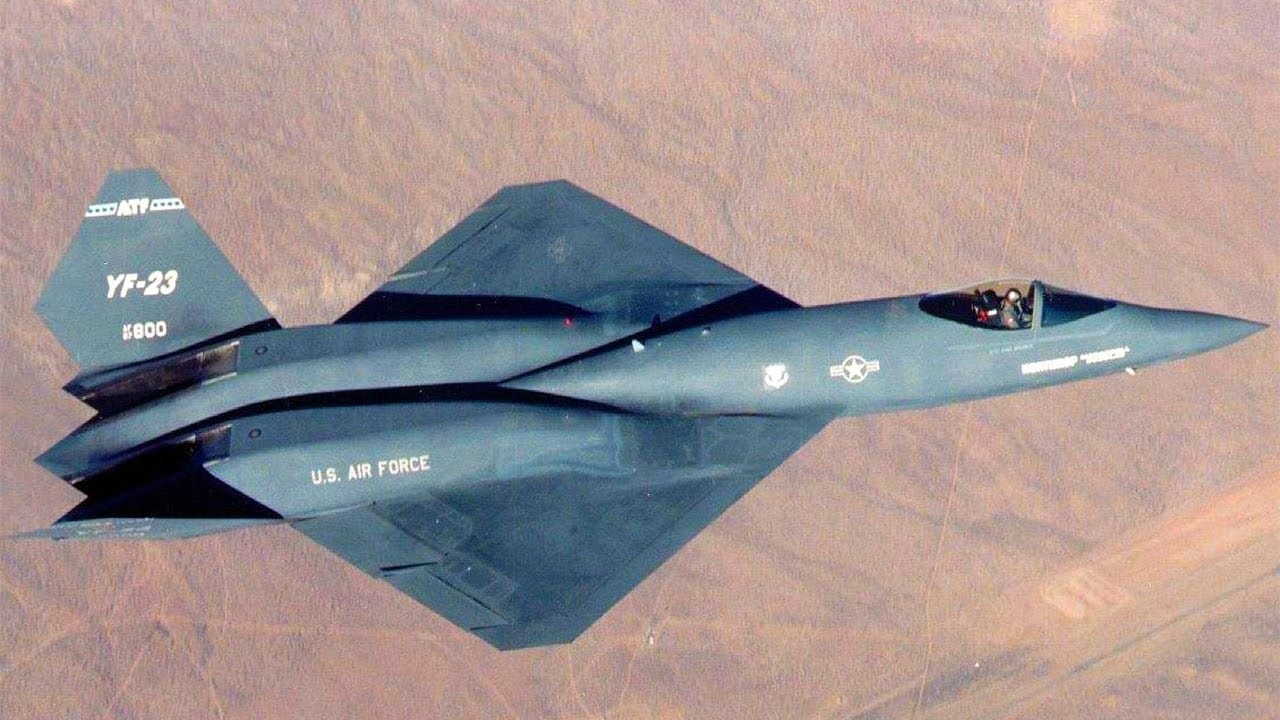
Image of YF-23 in fight. Image Credit: Creative Commons.
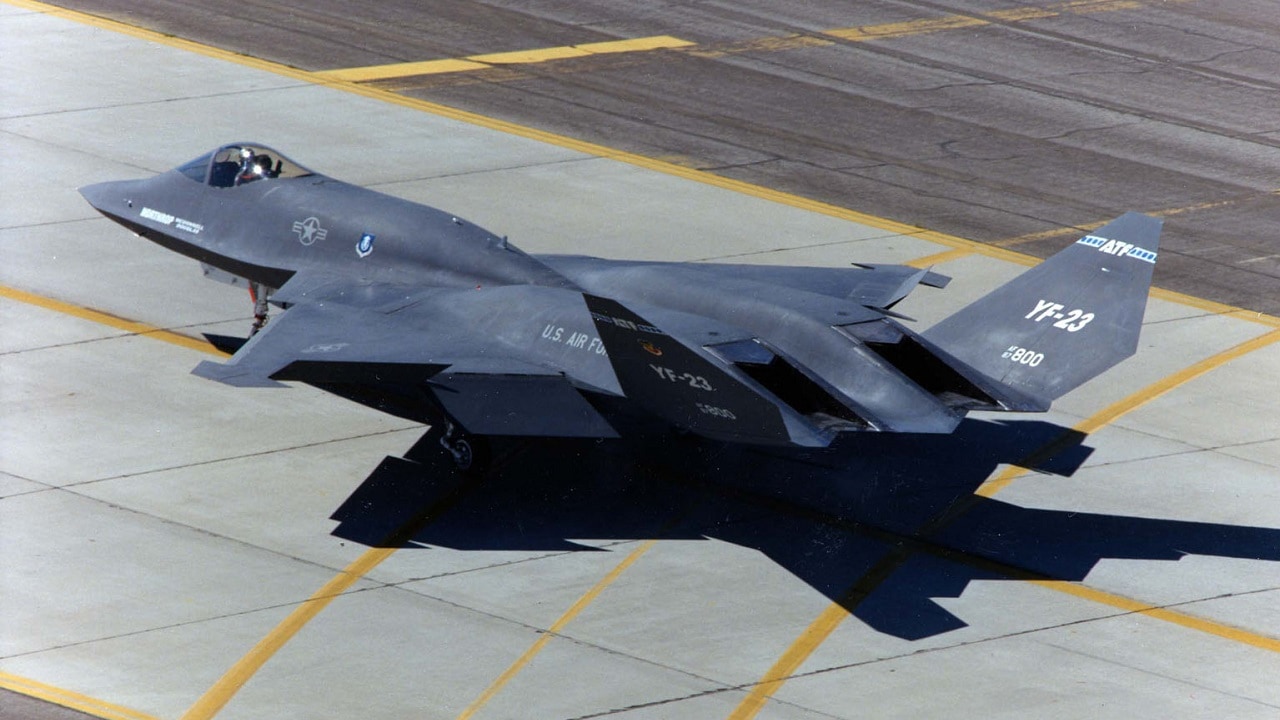
Northrop-McDonnell Douglas YF-23. (U.S. Air Force photo)
Northrop’s YF-23 was an exceptional fighter, with a sleek, futuristic-looking design and excellent flight performance.
Even the Air Force acknowledged that the aircraft outperformed the YF-22 in terms of stealth and raw speed.
So why didn’t the Air Force select the YF-23 for further development?
Was the Air Force biased against the aircraft, or was the YF-22 actually a better option?
An Unconventional Design
The YF-23 had an exceptional design that was unlike anything the Air Force had ever seen.
This fact worked both to the aircraft’s advantage and to its detriment.
The YF-23 featured a diamond-wing V-tail configuration with S-duct engine intakes and flat exhaust nozzles. The design was highly stealthy and tailored to high speeds, per ATF requirements.
In comparison, the YF-22 had a more conventional diamond-delta layout and, aside from its thrust-vectoring engines, was a safe, familiar design.
Although the YF-23 was well designed, the Air Force believed the YF-22 was safer, less expensive, and better suited for future upgrades.
Because the ATF program was originally intended to replace the F-15 and F-16, the USAF wanted a safer, more cost-effective design.
The YF-23 offered many capabilities, but it was a bit too far outside the Air Force’s comfort zone.
Unmaneuverable
Maneuverability was not a core requirement of the ATF program.
The YF-23 was designed for speed and low observability.
In these aspects, the aircraft excelled, but its lack of maneuverability eventually came back to haunt it.
In contrast, the YF-22 was fitted with 2D thrust-vectoring engines, which made it extremely acrobatic.
The aircraft could not only put on a show for the Air Force, but also excel in close-in dogfights.
Keep in mind that the supermaneuverable Su-27 Flanker recently entered service with the Soviet Air Force, helping launch the ATF program.
The YF-23 wasn’t unmaneuverable; by some accounts, it was quite graceful in the air. However, compared to the YF-22, it left a lot to be desired.
Flight Performance
At first glance, it may seem odd to point out the YF-23’s performance as a factor behind its cancellation.
After all, during its flight tests, the aircraft demonstrated a better top speed, better supercruise speed, and better overall range.
However, Northrop played it too safe with their flight demonstrations.
Its flight tests demonstrated the aircraft’s speed and handling, but little else.
For example, its weapons bays were configured to fire weapons, but for some reason, Northrop decided not to conduct any live-fire tests.
By contrast, Lockheed’s YF-22 fired both AIM-9 Sidewinders and AIM-120 AMRAAM missiles from its internal weapons bays.
Furthermore, the YF-22 performed riskier, more aggressive maneuvers during its flight tests, which impressed Air Force evaluators.
Worse Salesmanship
Overall, Lockheed showed more confidence in its product, and that superior salesmanship went a long way.
It’s not that Northrop wasn’t confident in the YF-23, but their demonstration team was made up of engineers.
Brilliant as they were, they often explained the aircraft’s capabilities in dry, engineering terms.
Meanwhile, Lockheed’s demonstration included more pizazz and was geared towards impressing the USAF.
They knew that leaving a lasting impression on the Air Force would go a long way towards influencing the final decision, and that’s exactly what they did.
Northrop’s lack of showmanship may have been a fatal blunder for the YF-23, as unfortunate as it sounds.
Contractor Politics
Politics likely also played a major part in the final decision.
At the time of the ATF competition, Northrop was not in the most stable of positions, to put it kindly.
The B-2 Spirit program was mired in controversy, with cost overruns, delays, and reports that the bomber failed to meet its stealth requirements.
Additionally, the AGM-137 Tri-Service Standoff Attack Missile, another program led by Northrop, also drew fire for ballooning costs.
Taken together, the company was in hot water, and its long-term feasibility was not guaranteed.
By contrast, Lockheed had earned a lot of goodwill with its handling of the F-117 Nighthawk program, which proceeded on time and within its allotted budget.
Furthermore, Lockheed had no major contracts at the time, and keeping the company as a major government contractor was seen as a matter of national security.
While there is no definitive proof that these considerations influenced the final decision, the Air Force likely took them into account during the competition.
Playing it Safe: The Air Force Chooses the YF-22
Overall, for a variety of reasons, the Air Force deemed the YF-23 too risky for full-scale development. While some enthusiasts have accused the USAF of acting maliciously against the aircraft, I do not believe that there was any malice in the final decision.
The service itself acknowledged the aircraft’s strengths and had a lot of praise for it.
However, the decision ultimately boiled down to which design was safer and more feasible in the long term.
One can argue that the Air Force was wrong in their decision, but what’s done is done. The F-22, for all its faults, remains one of the most advanced fighters to date.
About the Author: Isaac Seitz
Isaac Seitz, a Defense Columnist, graduated from Patrick Henry College’s Strategic Intelligence and National Security program. He has also studied Russian at Middlebury Language Schools and has worked as an intelligence Analyst in the private sector.