
Threat to Close the Mandeb Strait Intensifies Global Energy Crisis, Houthis "Blockade" Saudi Arabia, Middle East Crisis Escalates
[Global Times Correspondent in Egypt Huang Peizhao, Global Times Reporter Xian Yifan, Jing Kuan] The situation in the Middle East may see new variables. On the 20th, the Yemeni Houthi armed group issued a statement saying it would immediately implement a maritime blockade against Saudi Arabia in response to the latter's so-called "unjust and oppressive blockade" on Yemen. On the same day, Saudi Arabia strongly condemned the Houthi's decision and stated it would take "all necessary measures" to protect its vessels. It remains unclear whether the Houthi's latest announcement of a maritime blockade is based on its own considerations or broader regional coordination. Reuters reported that Iran had previously urged the Houthis to block the Bab-el-Mandeb Strait if the U.S. continued to attack Iranian infrastructure. Several international media outlets analyzed that the Houthi's latest actions could open a new front in the confrontation between the U.S. and Iran, while also posing greater risks to global energy supply and international trade beyond the Gulf region.
"The statement alone could disrupt shipping"
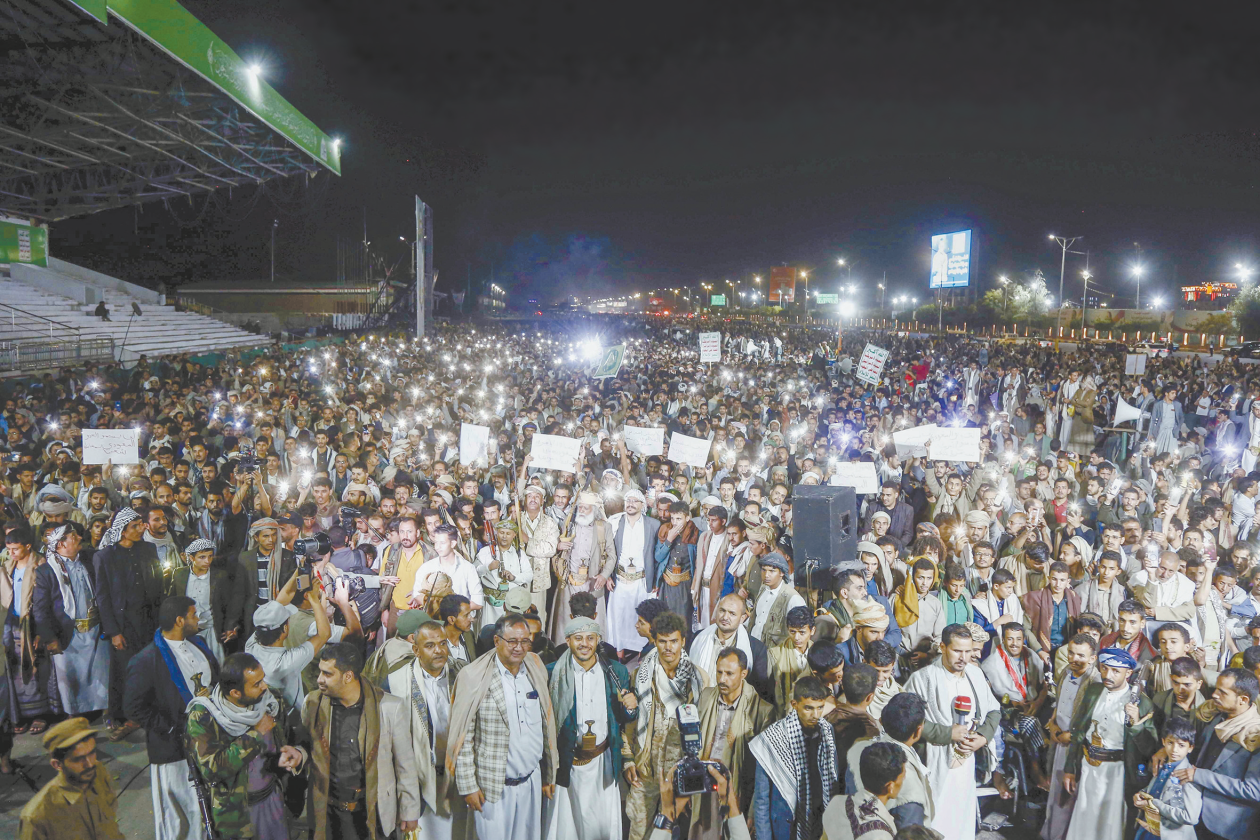
On the 20th local time, Houthi spokesman Yahya Saree announced the maritime blockade against Saudi Arabia, stating that this move was a response to Saudi Arabia's nearly 12-year comprehensive blockade of Yemen by land, sea, and air, and that the recent airstrikes on Sanaa International Airport were also one of the reasons for this measure. The statement did not specify how the maritime blockade would be enforced or which vessels would be restricted. However, a media official from the Houthis stated that they would close the Bab-el-Mandeb Strait, the southern gateway to the Red Sea, to Saudi vessels. Additionally, the Houthis warned several shipping companies via email that loading and unloading cargo at Saudi ports was prohibited, or they could become targets of the organization.
After the Houthi's announcement of the blockade, the Saudi Foreign Ministry issued a statement on the 20th strongly condemning the Houthi's accusations, stating that Saudi Arabia would take "all necessary measures" under international law and the United Nations Convention on the Law of the Sea to protect its vessels. The spokesperson for the Saudi-led coalition, Turki al-Maliki, also issued a statement on the same day, saying that the coalition had initiated protective deployments to ensure the passage of its vessels through the Bab-el-Mandeb Strait and would respond "swiftly and decisively" to all threats from the Houthis against transiting ships.
The Financial Times quoted Mohammed Bashar, founder of the U.S. consulting firm Bashar Report, as saying that the Houthi's threat marks "a further escalation of the situation." "The question now is whether they will start attacking ships heading to Saudi ports," Bashar said. "Even if no ships are attacked, the statement alone could disrupt shipping and create uncertainty for Saudi ports." Reuters reported that after the Houthi's statement was issued, international oil prices briefly surged before retreating, as traders still hoped diplomatic efforts would prevent further escalation of the situation.
Dual Strait Interaction?
Last week, the Houthis accused Saudi Arabia of launching airstrikes on Sanaa International Airport and fired missiles into Saudi territory, breaking the relatively calm situation in the region. Riyadh did not respond to the Houthi's accusations, while the Saudi-backed Yemeni government claimed responsibility for the attack, stating that the target was to prevent an Iranian plane from landing. The Financial Times reported that analysts indicated Saudi Arabia has long been concerned that Iranian flights to Sanaa could be used to deliver weapons, military technology, and military advisors to the Houthis.
According to reports from the Associated Press and the Financial Times, since the U.S. and Israel launched military actions against Iran in February this year, there have been concerns that the Houthis would coordinate with Tehran to blockade the Bab-el-Mandeb Strait. This strait is a vital chokepoint connecting the Red Sea, Gulf of Aden, and Indian Ocean. After Iran closed the Strait of Hormuz due to its conflict with the U.S. and Israel, the Bab-el-Mandeb Strait became the lifeline for Saudi crude oil exports to Asia. Data from the international market service company Kpler shows that Saudi Arabia relies on an east-west pipeline to transport crude oil to the Red Sea port of Yanbu, which has a daily export volume of nearly 4.9 million barrels.
According to Reuters, Iran had previously pressured the Houthis, stating that if the U.S. continued to strike Iranian energy infrastructure, the Houthis needed to blockade the Bab-el-Mandeb Strait. If this strait were completely closed, the vast majority of Saudi oil would be unable to be exported, reducing global crude oil supply by 7%. Coupled with the fact that the ongoing conflict in the Gulf region has already caused a 10% decrease in global crude oil transport, a blockade of the Bab-el-Mandeb Strait would further exacerbate the global supply gap.
"The threat is not just to the port of Yanbu," the Iranian Tasnim News Agency analyzed on the 20th, stating that when the Strait of Hormuz is in turmoil, goods from several Gulf countries, including Qatar, Kuwait, and Bahrain, are being transshipped through Saudi Arabia's Jeddah port. If the maritime transport route from Jeddah port to the Indian Ocean is cut off, the import and export trade of these countries will be severely affected. The Tasnim News Agency stated that regardless of whether the Bab-el-Mandeb Strait is completely closed, it is undeniable that the crisis is spreading from the Strait of Hormuz to the Bab-el-Mandeb Strait, exacerbating the energy and logistics dilemmas in the Middle East and globally.
Since July 7, nearly 100 U.S. military personnel have been injured
As the situation in the Bab-el-Mandeb Strait faces new uncertainties, clashes between the U.S. and Iran continue. The U.S. Central Command announced on social media on the 20th that U.S. forces launched a new round of strikes against Iran at 4 PM Eastern Time on the 20th. The Iranian Islamic Revolutionary Guard Corps announced on the 21st that its aerospace forces struck multiple U.S. military facilities located in Jordan and Kuwait, killing several U.S. personnel. The Revolutionary Guard also stated that they used cruise missiles to attack and destroy the U.S. Amazon central data infrastructure located in Bahrain.
"As the situation escalates, U.S. forces are experiencing heavy casualties from the conflict." According to Reuters, the Pentagon confirmed on the 20th the identities of two U.S. soldiers who died in the Iranian attack on a U.S. military base in Jordan on the 17th and stated that a body possibly belonging to a soldier listed as "missing in action" had been found.
However, CNN reported on the 20th that the U.S. military has been slow to disclose casualty figures from the U.S.-Iran conflict, with information often lagging by days or even weeks. Pentagon Chief Spokesman Sean Parnell stated on social media on the 20th that nearly 100 U.S. military personnel have been injured since July 7.
Despite the ongoing clashes, reports indicate that mediators are still pushing for a ceasefire between Tehran and Washington. A senior Iranian official revealed to Reuters on the 20th that mediators had submitted a 10-day ceasefire proposal to Tehran, aimed at salvaging a previous temporary agreement and paving the way for a lasting ceasefire agreement to end the conflict that began on February 28.
Houthi forces announced a maritime blockade against Saudi Arabia on October 20, 2023, in retaliation for Saudi actions in Yemen. Saudi Arabia condemned the blockade and pledged to protect its shipping. This escalation could disrupt global oil supply, as the Mandeb Strait is a critical shipping route.
- Houthi forces declared a maritime blockade against Saudi Arabia on October 20, 2023.
- Saudi Arabia condemned the blockade and vowed to protect its shipping.
- The blockade is a response to Saudi actions in Yemen, including a long-standing blockade of Yemen.
- Iran has pressured the Houthis to act against Saudi shipping in response to U.S. actions against Iran.
- The closure of the Mandeb Strait could significantly impact global oil supply.