
Three Corsair Boats Strike Bandar Abbas in July 2026 and Turn Iran's Siege into a Gulf Test
 Ahmed Al-Rashid
Three Corsair Boats Strike Bandar Abbas in July 2026 and Turn Iran's Blockade into a Gulf Test
On July 14, 2026, the U.S. maritime blockade on Iranian ports began, just one day after the announcement of the use of three unmanned Corsair boats against a maintenance facility for submarines and ships at the Bandar Abbas base. This is not a fleeting technical detail in a long war, but a signal that the conflict over the Strait of Hormuz is entering a colder phase in form and a more dangerous one in its outcomes: small platforms, remote control, and a gray area between maritime interception and offensive strike.
From the Announcement of the Blockade to the Unmanned Naval Strike
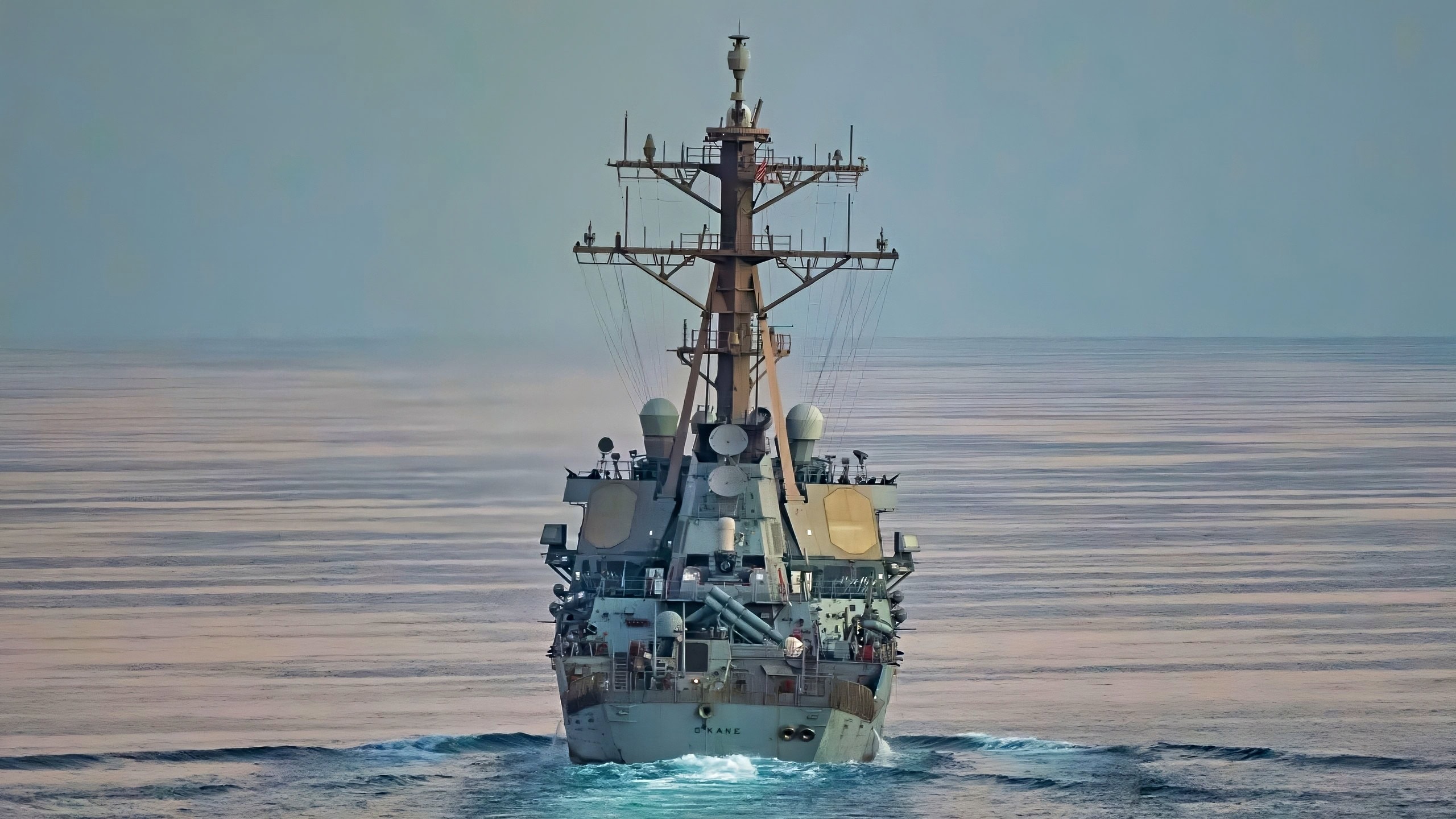
According to the Joint Maritime Information Center led by the U.S. Navy, the blockade includes all Iranian ports, oil stations, and coastal areas, and applies to ship movements regardless of the flag they fly. Ships suspected of entering or leaving the blockaded area without permission may be subject to interception, diversion, or confiscation, while maintaining neutral passage through the Strait of Hormuz to non-Iranian destinations. This is a calculated legal formulation, but from a military standpoint, it places every ship captain, every insurance company, and every Gulf state before one question: who decides at sea when trade intersects with war?
The second event came faster than many expected. U.S. Central Command announced that three unmanned Corsair boats were used to strike a maintenance facility for submarines and ships in Bandar Abbas. Defense News described it as the first time U.S. forces have used unmanned surface boats in combat operations. Here, we are not talking about a demonstration at a defense exhibition or a video presentation from a startup, but a real transition from reconnaissance and rescue to strike.
Corsair is Not Just a Small Boat
The specifications announced by Saronic give an idea of why the U.S. Navy is interested in this class. The Corsair is a 24-foot platform, with a range exceeding 1,000 nautical miles, a speed of over 35 knots, and a payload capacity of up to 1,000 pounds. These figures mean it is not just a surveillance boat near the base, but a tool that can be pushed to far distances in the Gulf, the Sea of Oman, and the Red Sea, with an acceptable margin for political and military risk.
- Length: 24 feet
- Range: Over 1,000 nautical miles
- Maximum Speed: Over 35 knots
- Payload: Up to 1,000 pounds
- Original Missions: Reconnaissance, surface surveillance, logistical support, and operation within an open architecture for payloads and software
Before the strike on Bandar Abbas, the Corsair appeared in a completely different role. In June, the U.S. Navy used a boat of this type to rescue AH-64 Apache helicopter pilots who had crashed near the Omani coast. Within a few weeks, the platform itself transformed from rescuing pilots to striking a naval base. Any military personnel who have served in the region know that this transformation does not happen by coincidence; it is the result of years of building operator trust in unmanned systems in a crowded, challenging maritime environment filled with political calculations.
Task Force 59 Transitions from Laboratory to Battlefield
Since the establishment of Task Force 59 in the Fifth Fleet in 2021, the declared idea has been to integrate unmanned systems and artificial intelligence into maritime operations in the Middle East. In January 2024, the Navy launched Task Group 59.1, known as The Pioneers, to accelerate the deployment of unmanned systems with human operators. In official texts, these seem like familiar phrases about innovation, but today they have become part of the blockade on a major regional state.
This is more important for the Gulf than it seems. The operational area of the Fifth Fleet includes the Arabian Gulf, the Sea of Oman, the Red Sea, the Gulf of Aden, the Arabian Sea, and three chokepoints: Hormuz, Bab el-Mandeb, and the Suez Canal. When unmanned platforms become a natural part of surveillance, interception, and strike, Gulf states cannot simply rely on purchasing radars or missile batteries. The issue shifts to the ability to manage a shared maritime picture, sort ships, understand rules of engagement, and deal with targeting errors when they occur.
The Old Gulf Problem Appears in a New Dress
Practically, no Gulf country wants the collapse of navigation in Hormuz, and no Gulf country wants to appear as if it is completely handing over the security of its ports to the U.S. Navy. This is the old dilemma, but this time it is carried on smaller, faster, and less visible platforms. Owning modern frigates or many patrol boats is not enough if databases, encrypted communications, recognition algorithms, and the final decision-making center are all outside the host state's control.
Saudi Arabia, the UAE, Qatar, and Bahrain have invested over the past two decades in air defense, patrol vessels, coastal missiles, and drones. But the Hormuz test is not just a test of purchasing. It is a triad capability test: equipment, training, and institutions. At this moment, Washington seems capable of introducing a new platform into the field, using it for rescue, then for attack, and then linking that to a wide maritime blockade. The Arab question is not whether the Corsair is good or not. The question is: how many Gulf institutions can operate a similar decision cycle without waiting for the American officer in the operations center?
Iran Faces Maritime Pressure Unlike Aircraft Carriers
Iran has been accustomed to marketing its power in Hormuz through mines, coastal missiles, fast boats, and drones. These are relatively cheap tools that fit the geography of the strait. However, the introduction of unmanned American boats creates a counter-dilemma. Striking a small boat may not give Tehran a significant political gain, and allowing it to operate near the ports opens a security gap. Additionally, responding to an unmanned platform reduces the cost of escalation for the American side, as losing the boat does not equate politically to losing a human crew.
This does not mean that the blockade is guaranteed to succeed. On the contrary, a maritime blockade in an area like the Gulf consumes intelligence, law, and diplomacy as much as it consumes ships. Every oil tanker becomes a political case. Every mistake in identifying a neutral ship could turn into a crisis with a third country. And every precise strike could give Iran a pretext to expand the battle towards Bab el-Mandeb or Gulf energy facilities.
After Bandar Abbas
The most dangerous aspect of the Corsair strike is that it seems small. Three boats, one maritime target, and a short video. But in naval warfare, significant changes sometimes begin with a simple change in who bears the risk. When the unmanned platform becomes capable of rescue, strike, and guarding, the political leader gains an additional option between the diplomatic statement and the big missile.
In my view, Gulf states must read the event as an institutional warning rather than a distant American news story. Those who buy weapons without building a decision-making system will remain renters of security even if they raise their flag on the latest platform. And as military personnel in our countries say, the sea does not forgive those who keep the map but do not know the current. In Hormuz today, the current is no longer just oil and ships, but data, unmanned boats, and escalation decisions that may be made in minutes.
Open Sources
- Defense News on the start of the U.S. maritime blockade on Iran on July 14, 2026.
- Defense News on the use of three Corsair boats to strike a facility in Bandar Abbas.
- DefenseScoop on the use of Corsair to rescue AH-64 pilots near Oman in June 2026.
- Saronic Technologies on the announced specifications of the Corsair.
- U.S. Navy on Task Force 59 and Task Group 59.1 in the Fifth Fleet area.
- Naval News on the background of Hormuz, Bab el-Mandeb, and Western maritime deployment after the U.S.-Israeli war with Iran.
On July 14, 2026, three unmanned Corsair boats from the U.S. Navy attacked a maintenance facility for submarines and ships in Bandar Abbas, marking a significant escalation in military operations in the region. This attack coincided with the initiation of a U.S. maritime blockade on Iranian ports, highlighting the evolving nature of naval engagements and the use of unmanned systems in combat.
- Three unmanned Corsair boats were used in the attack on Bandar Abbas.
- The U.S. Navy initiated a maritime blockade on Iranian ports on July 14, 2026.
- This marks the first use of unmanned surface vessels in combat by U.S. forces.
- The Corsair boats have a range of over 1,000 nautical miles and a speed exceeding 35 knots.