
Three Rounds of Negotiations, No Breakthrough — Europe Is Expected to Provide Security Guarantees That It Cannot Institutionally Deliver
 Dr. Klaus Weber
Three Rounds of Negotiations, No Breakthrough — Europe is Expected to Provide Security Guarantees that it Cannot Institutionally Deliver
Geneva, February 18, 2026. After two days of trilateral negotiations between Washington, Kyiv, and Moscow, both sides described the talks as "difficult" — and it remained a diplomatic euphemism. The Russian chief negotiator Vladimir Medinski spoke of "difficult but factual" discussions; Ukrainian President Zelensky accused Russia of "stalling the negotiations." A fourth round has already been announced. However, the real problem remains unresolved: Not the territorial question, not the ceasefire — but the security guarantees that must precede any territorial agreement. And this is where Europe's structural dilemma begins.
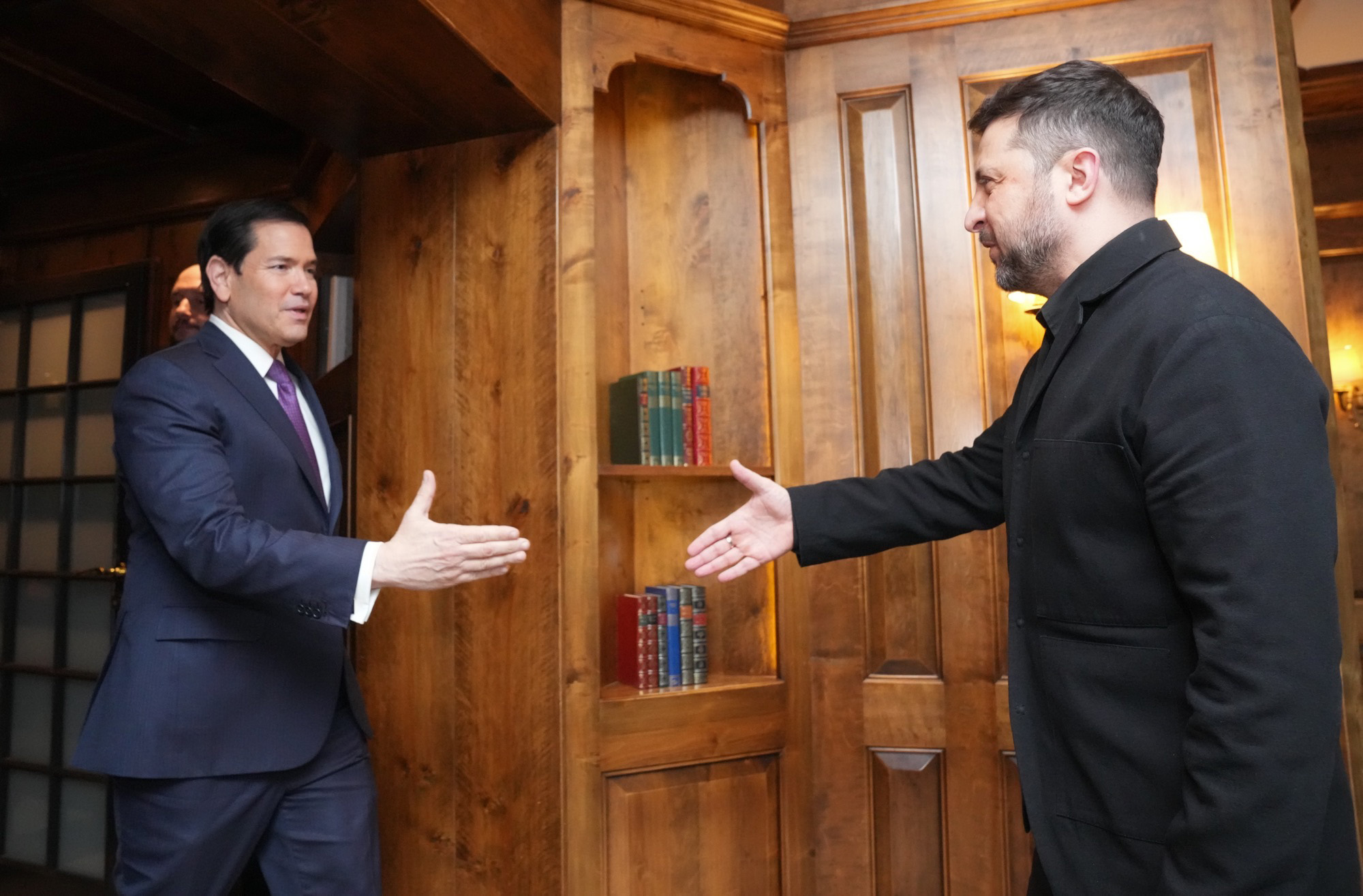
Who is Missing from the Table
The Geneva talks took place without European representatives. This is not a footnote — it is the fundamental structure of the problem. At the negotiating table were Steve Witkoff and Jared Kushner for Washington, Rustem Umerov for Kyiv, and Medinski for Moscow. Europe was not invited as an observer, nor asked to mediate.
This would be unproblematic if Europe were merely a payer. But according to the three-layer model that has been circulating since the talks in Kyiv in early January, Europe is supposed to provide the second layer of security: Ukrainian forces as the first line of defense, European-led troops as the guarantor force on Ukrainian soil, and American security guarantees as the deterrence framework. Who is supposed to send the troops was not present in Geneva.
The Sequencing Problem
"The sequencing matters a lot," said Harry Nedelcu from Rasmussen Global in an analysis of the Geneva talks. He is right — but he underestimates the problem. It is not just about whether territorial compromise or security guarantees come first. It is about the fact that Europe has no say in the content of the guarantees it is supposed to provide.
The U.S. is offering Zelensky a 15-year security guarantee. Ukraine demands 30 to 50 years. This dispute is being fought out between Washington and Kyiv. What exactly the European "coalition of the willing" is supposed to contribute — how many soldiers, what mandate, what rules of engagement — was neither negotiated nor decided in Geneva. Europe's role is being defined without Europe being present.
The Institutional Void
Here it gets uncomfortable. Because the question of whether Europe is even capable of providing credible security guarantees is not only politically but also institutionally unclear.
The EU cannot provide security guarantees — not because of a lack of political will, but because the principle of unanimity in the Council structurally prevents it. Hungary and Slovakia have repeatedly shown that they are willing to block EU decisions regarding Ukraine in favor of Russian interests. An EU-wide security guarantee that depends on Budapest and Bratislava is no guarantee.
NATO cannot act without American leadership. The Russian full-scale invasion in 2022 made this painfully clear: Kyiv requested a no-fly zone, NATO refused. The coordination of military aid for Ukraine was only taken over by the alliance a year later — and even then only after Washington had set the framework. SACEUR is and remains an American general. Three command structures can be relocated to Europe; the decision-making power remains in Washington.
Coalition of the Willing is No Guarantee
Then there is the "coalition of the willing" — the format that Macron has been promoting since spring 2024 and which was formalized in the Paris Declaration of January 6, 2026. Macron spoke of "several thousand" French soldiers who could be stationed in Ukraine after a ceasefire. Britain, the Scandinavians, and the Poles have given similar signals.
But a political declaration is not a security guarantee. The Paris Declaration commits the signatories to "long-term defense packages" and "practical support in building defense fortifications" — this is the language of declarations of intent, not of mutual defense clauses. Article 5 of the NATO treaty is a promise with a 75-year history and institutional weight. The Paris Declaration is a political document without a ratification process, without a common command structure, without defined trigger criteria.
Zelensky knows this. Therefore, his negotiators insist that an American guarantee — not the European one — is the prerequisite for a territorial compromise. Europe can complement, not replace.
The Structural Contradiction
Three rounds in Geneva, no breakthrough. The blockage is not due to negotiation skills — it lies in the fact that both core issues (territory and guarantees) are inextricably linked and both appear unsolvable as long as the structural conditions remain unchanged.
For Europe, the situation is particularly paradoxical: It has spent significantly more on Ukraine in recent years than America — and is expected to spend even more after a ceasefire to station troops and materialize guarantees. Yet the crucial negotiation is taking place without European involvement. More spending, less influence — this has been the European pattern since 2022.
Is the Paris coalition sufficient as a substitute for institutional guarantees? No. Is the EU creating an instrument that circumvents the unanimity problem? Not in the foreseeable future. Can Europe hold forces in Ukraine without America in an emergency if Moscow tests the guarantees? The answer to this last question is known to anyone who has followed the capacity debate of the last three years. But to voice it would mean admitting the void at the center of European security policy — and that is politically uncomfortable enough to continue to be ignored.
Sources: AP News (Geneva, February 18, 2026); The New York Times (February 18, 2026); The Guardian, Paul Taylor (February 18, 2026); The Guardian (February 16, 2026); Euronews / Consilium (Paris Declaration, January 6, 2026); House of Commons Library (Peace Talks, February 18, 2026)
Trilateral negotiations occurred in Geneva on February 18, 2026, involving the U.S., Ukraine, and Russia, focusing on security guarantees for Ukraine. Europe was notably absent from the discussions, raising concerns about its role and capability to provide security assurances. Ukraine is seeking longer security guarantees than those proposed by the U.S., highlighting a significant diplomatic impasse.
- Trilateral negotiations took place in Geneva on February 18, 2026, involving the U.S., Ukraine, and Russia.
- Europe was not represented at the negotiations, raising concerns about its role in security guarantees.
- Ukraine demands longer security guarantees than what the U.S. is offering.
- The EU's ability to provide security guarantees is hindered by the unanimity principle in its decision-making process.
- The negotiations highlight a structural dilemma for Europe regarding its influence and military capabilities.