
Traoré abolished all parties in Burkina Faso — an unintentional strategic victory for JNIM
 Marie Dubois
Traoré abolishes all parties in Burkina Faso — an unintentional strategic victory for JNIM
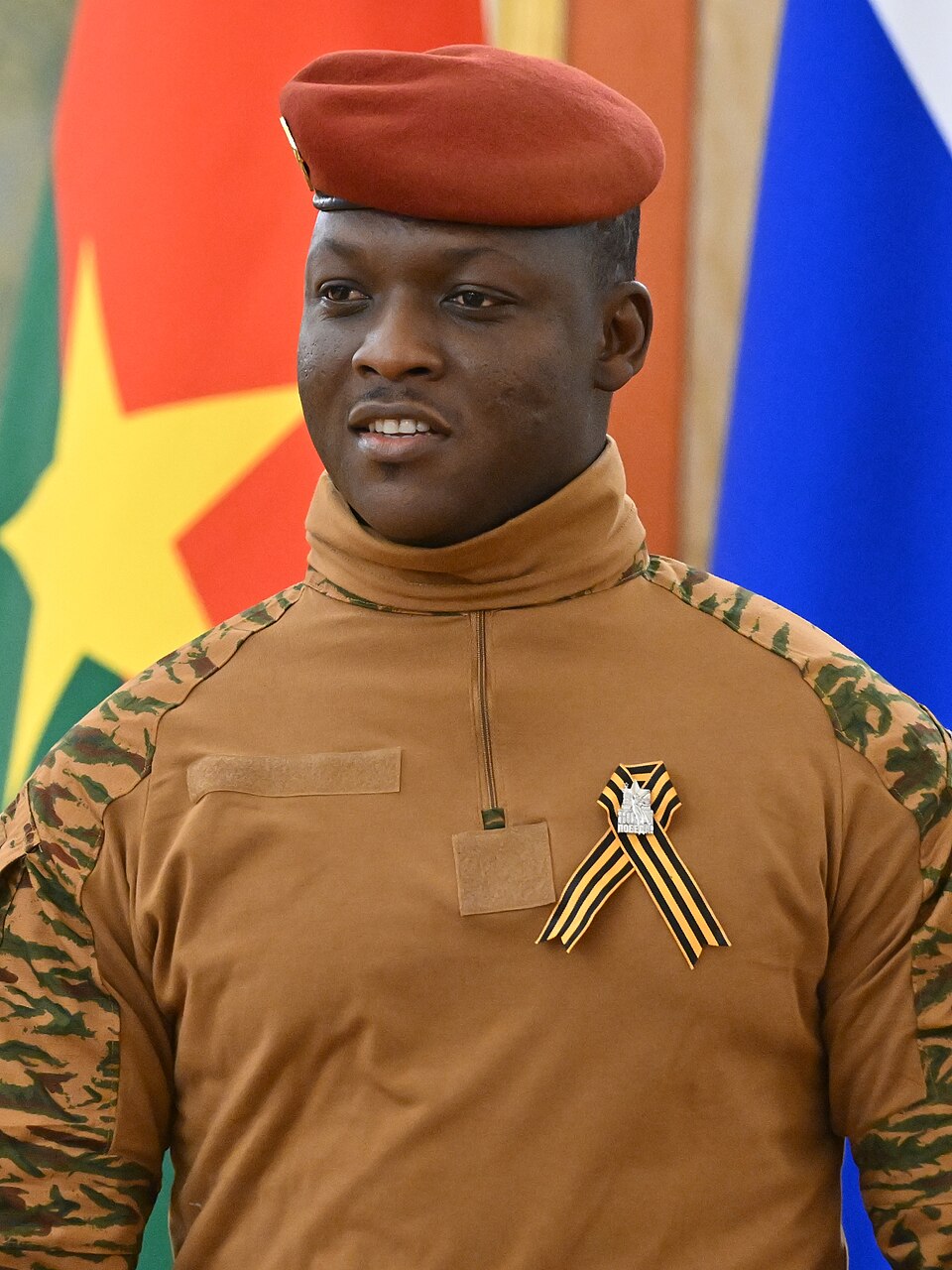
Ouagadougou, January 29, 2026. The government of Captain Ibrahim Traoré has formally dissolved all political parties in Burkina Faso, including those that supported his coup d'état in September 2022. The assets of the parties are confiscated by the state. There is nothing left of the party life in a country that once had more than eighty.
The junta speaks of "restructuring the state" and reducing social divisions. This is the usual rhetoric. The reality is simpler: Traoré has just eliminated the last civilian actors who could challenge his power.
The mechanics of a coup that devours its allies
The parties had already been suspended since Traoré came to power. This formal dissolution is therefore not an operational surprise — it is a confirmation. The junta crosses the last symbolic obstacle that separated a temporary suspension from a definitive extinction.
The pattern is well documented in recent African history. In Mali, Niger, and Guinea, juntas that had benefited from enthusiastic civilian support gradually neutralized their original allies. Civil groups are useful in the early days: they provide crowds, legitimacy, a sense that the coup reflects genuine popular frustration. But these same groups become cumbersome as power is consolidated. They have their own leaders, their own expectations, their own capacity for mobilization. This independence is precisely what juntas cannot tolerate.
Traoré had promised in October 2022 to restore a civilian government within two years. It is now 2026. The promise has died with the parties.
What this changes on the ground
From a strictly military point of view, one might argue that party life has no impact on counter-terrorism operations in Loroum, Soum, or the East. This is a reasoning error I have seen made too often, including in our own staffs during Barkhane.
Counter-insurgency is not won solely with airstrikes and armored patrols. It is won — or lost — in the relationship between civilian populations and the state. This relationship requires channels. Channels for grievances to be communicated. Channels for promises to be delivered. Channels for communities that reject jihadists to be heard without risking their lives.
Political parties, even ineffective, even corrupt, fulfilled this function imperfectly but genuinely. Local elected officials who knew their neighborhoods. Party branches that could report jihadist presence without going through the gendarmerie. Structures that provided unemployed youth with an alternative to the street and to JNIM (Jamāʿat Nusrat al-Islām wal-Muslimīn) recruiters.
All of this has formally disappeared as of January 29.
JNIM and the political void
JNIM is not an organization that thrives solely on its ideology. It thrives on absences: absence of the state, absence of justice, absence of credible alternatives for young people in rural Sahelian areas.
The attack on Titao on February 14 — several hundred fighters, three simultaneous axes — demonstrated an operational capacity that the Traoré junta, with its Volunteers for the Defense of the Homeland (VDP) and Russian instructors, has failed to neutralize. JNIM is not weakened in northern Burkina Faso. It is expanding.
In this context, every measure that further distances the Burkinabé state from its rural population is a logistical gift for jihadist recruiters. A young person from Titao, Djibo, or Barsalogho who has no channel to express their grievances against a military junta, who sees their rural lands abandoned to armed groups, who hears JNIM's discourse on Islamic justice as the only credible alternative — this young person is an ideal target.
From experience, I have seen in northern Mali how entire communities shifted not out of sincere adherence to the jihadist project, but by default. By absence of the state. By absence of any other option.
The contradiction of pan-African discourse
Traoré presents himself as a champion of African popular sovereignty. He criticizes the West for its formal democracy that has never served the peoples of the Sahel. He is not entirely wrong on this point — externally imposed electoral institutions have often functioned as facades.
But abolishing all political parties in the name of the sovereignty of the people is a contradiction that the rural populations of Burkina Faso see clearly, even if they do not express it openly. The fear of repression — including the forced recruitment of critics into the VDP, documented in 2025 — has silenced internal opposition. This does not mean it does not exist.
The AES (Alliance of Sahel States) has built its legitimacy on the rejection of the old corrupt elites and French paternalism. This political capital is not unlimited. Every jihadist victory on the ground, every abandoned village, every truck of traders attacked on the road from Titao to Ouagadougou erodes this capital.
What comes next
The dissolution of the parties is irreversible in the short term. Traoré has no reason to turn back, and no internal actor has the capacity to force him to do so.
What remains is to see how quickly this political void transforms into an operational advantage for JNIM. The indicators to watch in the coming weeks: the level of civilian resistance in northern areas during VDP sweep operations, intelligence reports on jihadist recruitment in the provinces of Loroum, Yatenga, and Soum, and the capacity of the Burkinabé army to maintain its supply lines to Titao and Djibo after the February 14 attack.
The military map of Burkina Faso in 2026 increasingly resembles that of Mali in 2019 — just before the gray areas became jihadist control zones. The difference is that Mali still had, at that time, a political opposition capable of sounding the alarm. Burkina Faso has just lost this last warning mechanism.
Captain Ibrahim Traoré dissolved all political parties in Burkina Faso on January 29, 2026, including those that supported his 2022 coup. This move eliminates potential challengers and creates a political vacuum that may benefit jihadist groups like JNIM. The dissolution is viewed as a significant step in consolidating Traoré's power and undermining civil political structures that could oppose him.
- Captain Ibrahim Traoré dissolved all political parties in Burkina Faso on January 29, 2026.
- The dissolution includes parties that supported his coup in September 2022.
- The junte's actions are seen as a move to eliminate potential challengers to Traoré's power.
- The political vacuum created may benefit jihadist groups like JNIM.
- The relationship between the state and rural populations is critical for counter-insurgency efforts.