
Tiani accuses France in 2026 — Niamey turns two airport attacks into informational warfare
 Marie Dubois
Tiani accuses France in 2026 — Niamey turns two airport attacks into an informational war
Niamey, Saturday evening, General Abdourahamane Tiani chose the third anniversary of the coup d'état of July 26, 2023, to revisit two attacks against Diori Hamani International Airport. He claims that the assaults on January 28-29 and June 18, 2026, were conducted by "mercenaries" from the Group for the Support of Islam and Muslims (JNIM, affiliated with Al-Qaeda), gathered and trained, according to him, by French services. France has not confirmed these accusations, and the available public elements do not allow for independent verification. But the most important, militarily, is not just the veracity of each detail. It is the choice of the political objective: to make Niamey airport the symbol of a war where the main enemy is no longer the armed jihadist, but the West accused of manipulating him.
The airport as a strategic weak point
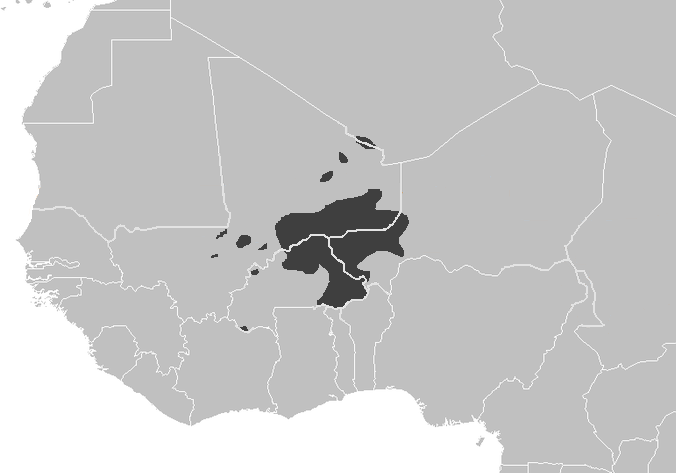
On the ground, Diori Hamani airport is not just any target. It is located on the southeast edge of Niamey, on the axis that connects the capital to the rest of the country and to international links. In a landlocked state, where roadways to Benin, Nigeria, or Burkina Faso remain exposed to political crises and attacks, a civil and military airport becomes a vital artery. Hitting it, even without destroying it, is enough to produce an operational effect: delaying evacuations, complicating logistical rotations, sending a signal to diplomats and airlines.
According to Tiani's account reported by ActuNiger, the commando on June 18 targeted not only the airport but also the presidential palace and the Tondibiah training center. The Nigerien president claims that part of the operation was intercepted two days before the attack and that another group was spotted about a kilometer from the airport. These details require caution. In the Sahel, post-attack statements are often political weapons as much as military reports. But the described scenario corresponds to a known logic: multiple objectives, simultaneity, maximum psychological effect, and the search for an image of vulnerability at the very heart of the capital.
Three years after the coup, sovereignty alone is not enough to hold the ground
That same weekend, Daily Trust assessed the three years of military rule in Niger: a break with France, the departure of about 1,500 French soldiers in December 2023, the end of American presence in September 2024, a rapprochement with Moscow, increased control over uranium, and strengthening the Alliance of Sahel States (AES) with Mali and Burkina Faso. Politically, the narrative is coherent. Niamey has regained control over its diplomatic agenda and part of its strategic resources. Many Nigeriens see this as a restoration of national dignity.
Militarily, it is less clear. A departing foreign garrison leaves behind empty hangars, interrupted intelligence networks, and lost coordination habits. One can replace a political presence with a new alliance; it is more difficult to replace, in a few months, ISR capabilities, transport aircraft, medical evacuation procedures, and a cross-border intelligence chain. From experience, an army can be highly motivated and still lack the technical bricks that transform a village alert into a successful interception.
The Bamako-Niamey line and the Russian temptation
The Nigerien discourse cannot be understood without the Malian context. In Bamako, Foreign Minister Abdoulaye Diop had to respond in recent days to rumors of a direct American intervention against terrorist armed groups in the Sahel, stating that no official confirmation had been received from Washington. At the same time, a Malian press favorable to the authorities celebrates the integration of the Russian Africa Corps into the national defense effort, with drones, artillery, armored vehicles, and electronic warfare. The rhetoric is clear: Western partners would be suspect, while Russian partners would be power multipliers respectful of sovereignty.
There is a contradiction here that the Sahelian staffs will have to manage. The more Niamey and Bamako present France, the European Union, or sometimes the United States as the hidden sponsors of violence, the more they make any future technical cooperation with countries that still possess useful capabilities politically costly: satellite intelligence, aerial surveillance, counter-IED operations, heavy maintenance. Moscow can provide instructors, munitions, and political cover at the Security Council. But on the dusty tracks between Tillabéri, Ménaka, and Gao, the question remains simpler: who sees the pickup before it reaches the post?
The JNIM wins when the debate leaves the map
If the assailants in June were indeed linked to the JNIM, as Tiani claims, then the group has already gained a strategic benefit. It has forced the regime to talk for hours about foreign conspiracy instead of detailing how local intelligence, checkpoints, patrols, and rapid reaction units will be corrected. The JNIM thrives in these gray areas: unmonitored secondary roads, community rivalries, soldier fatigue, cheap phones, motorcycles, and informants recruited under duress.
The informational war is not secondary; it shapes the morale of populations and the legitimacy of command. But it becomes dangerous when it absorbs tactical analysis. In Niamey, the airport has been attacked twice in six months according to the authorities. This means that enemy networks have been able to recognize, approach, or support an operation near a vital point in the capital. Whether these networks received external support or not, the immediate problem is Nigerien: control of access, penetration of peripheral neighborhoods, reliability of human intelligence, and coordination between the army, gendarmerie, and police.
The next risk is around Niamey, not in Paris
The trap for the CNSP would be to confuse patriotic mobilization with effective security. The former fills the stadiums and provides a common language for power. The latter is measured more discreetly: a checkpoint held at night, a protected fuel depot, a patrol returning with its vehicles, a local agent who still dares to transmit an alert. It is less spectacular than an accusation against Emmanuel Macron, but that is where a capital is won or lost.
In the short term, the area to monitor is not just the western border with Mali and Burkina Faso. It is the belt of Niamey itself, from Tondibiah to the roads leading to Dosso and Tillabéri. If a new commando manages to approach a strategic site, the regime will further harden its anti-Western rhetoric. The JNIM, for its part, will not need to prove who armed it. It will only need to show that after three years of proclaimed sovereignty, the Nigerien capital remains an accessible target.
Sources consulted: ActuNiger, interview with General Tiani broadcast on July 25, 2026; Daily Trust, assessment of three years of the coup in Niger; Bamada / Le Pays, clarification from Bamako on rumors of American intervention; Bamada / L'Aube, comments on Mali-Russia cooperation.
General Abdourahamane Tiani accused France of orchestrating attacks on Niamey's Diori Hamani International Airport on January 28-29 and June 18, 2026, framing it as part of an information war. The JNIM group is implicated in these attacks, which are seen as a strategic move against Western influence. Niger's military is increasingly aligning with Russia, marking a significant shift in its defense posture.
- General Tiani accused France of orchestrating attacks on Niamey airport.
- Two attacks occurred on January 28-29 and June 18, 2026.
- The JNIM group is implicated in the attacks, allegedly supported by French services.
- The airport is a strategic target for military and logistical operations in Niger.
- Niger's military is shifting alliances towards Russia and away from Western partners.