
Tiny Ukrainian receiver intercepts Russian drone feeds in real time
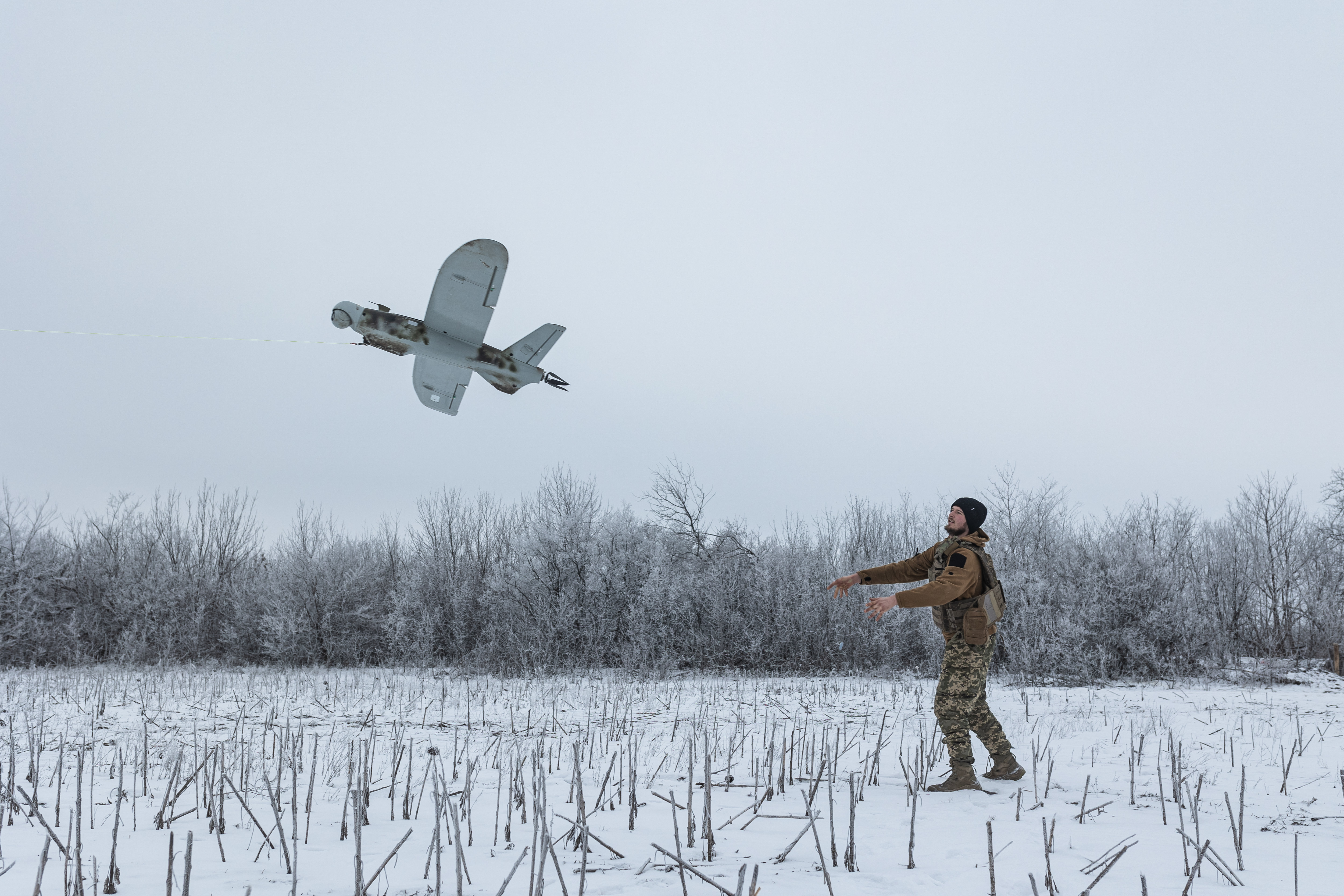
KYIV, Ukraine — A new pocket-sized receiver can co-opt video from Russian unmanned systems, allowing Ukrainian drone operators to intercept enemy live feeds in real time, the device’s makers said this month, while adding only a little extra weight to operators’ kits.
Kyiv communications-equipment maker CODE380 developed the D·Vision SDR, which uses a software-defined radio (SDR) to sweep frequencies from 500 megahertz to 8.7 gigahertz for drone signals and convert them into video, reducing common visibility problems and allowing easy software updates for new drone specs.
The D-Vision SDR scans its frequency range without “blind spots” and offers greater sensitivity than competing detectors, the developers told the Ukrainian tech outlet DOU on Oct. 17.
The receiver joins a growing set of cheap, passive Ukrainian drone sensors that listen for threats without emitting a signal that could give away a unit’s position, working alongside radar, acoustic sensors and interceptors rather than replacing them.
CODE380’s device can display analog video from drones up to 6 miles (10 kilometers) away on frequencies between 540 megahertz and 6 gigahertz, and from 2 to 3 miles (3.5 to 5 kilometers) away on higher frequencies, according to manufacturer figures reported by Militarnyi.
Analog drones broadcast their camera feed unencrypted, so a receiver tuned to the right frequency can show a unit where an attack is heading and what the pilot is aiming at before impact.
The receiver’s sweep covers the 4.1 to 4.5 gigahertz band where Russia’s Molniya strike drones began sending video in June, according to Serhii “Flash” Beskrestnov, presidential adviser and radio specialist.
“Most detectors don’t see these frequencies, or see them poorly,” he wrote in June. “I’m warning you so that trust in a detector doesn’t cost you your life.”
The D-Vision SDR is not the first Ukrainian receiver to tap drone video, but its receiver weighs less than half as much as its main domestic rivals at roughly 10 ounces (290 grams).
Babai’s roughly 2-pound (0.9-kilogram) Vydun 7.5 intercepts analog video up to 7.5 gigahertz, while Contra-drone’s 21-ounce (600-gram) SENSE-4 reaches 8.2 gigahertz and BlueBird Tech’s Chuyka 3.0, which weighs up to 23 ounces (650 grams), can now be upgraded to 8.8 gigahertz, according to manufacturers.
Many receivers struggle to decode digital video, detect Mavic-compatible signals beyond a few miles, and pick up fiber-optic drones guided by cables.
Drone variants are already being designed with harder-to-hack video feeds, Beskrestnov said, pointing out Russia’s Molniyas as an example.
“We need to be ready for digital video to one day fully replace analog,” he wrote, warning that portable detectors and fixed analog receiving stations would then become ineffective.
Ukrainian operators are using the D·Vision SDR to intercept real-time video feeds from Russian drones, enhancing their situational awareness. Developed by CODE380, this compact receiver operates across a wide frequency range and weighs significantly less than competing devices. It allows operators to monitor enemy drone activities without revealing their positions, contributing to Ukraine's defensive capabilities.
- Ukrainian receiver intercepts Russian drone video feeds in real time.
- The D·Vision SDR can detect signals from 500 MHz to 8.7 GHz.
- The device weighs approximately 10 ounces (290 grams).
- It can display video from drones up to 6 miles away.
- The receiver is part of a growing set of passive Ukrainian drone sensors.