
Tit-for-tat attacks, yet diplomatic doors remain open, Iranian President: US and Iran are in "total war"
[Global Times Special Correspondent Ren Zhong] On the evening of the 19th local time, the U.S. military launched a new round of airstrikes against Iran, marking the ninth consecutive night of military operations against Iran. Since the outbreak of hostilities between the U.S. and Iran, the U.S. military has focused its airstrikes on Iran's civilian infrastructure, including bridges, railways, airports, and desalination plants. In retaliation, Iran has targeted "similar" sites in Gulf countries where U.S. military bases are located. The international community is concerned that the U.S.-Iran conflict is further escalating. Iranian President Ebrahim Raisi stated on the 20th that Iran is in a state of "total war" with the United States.
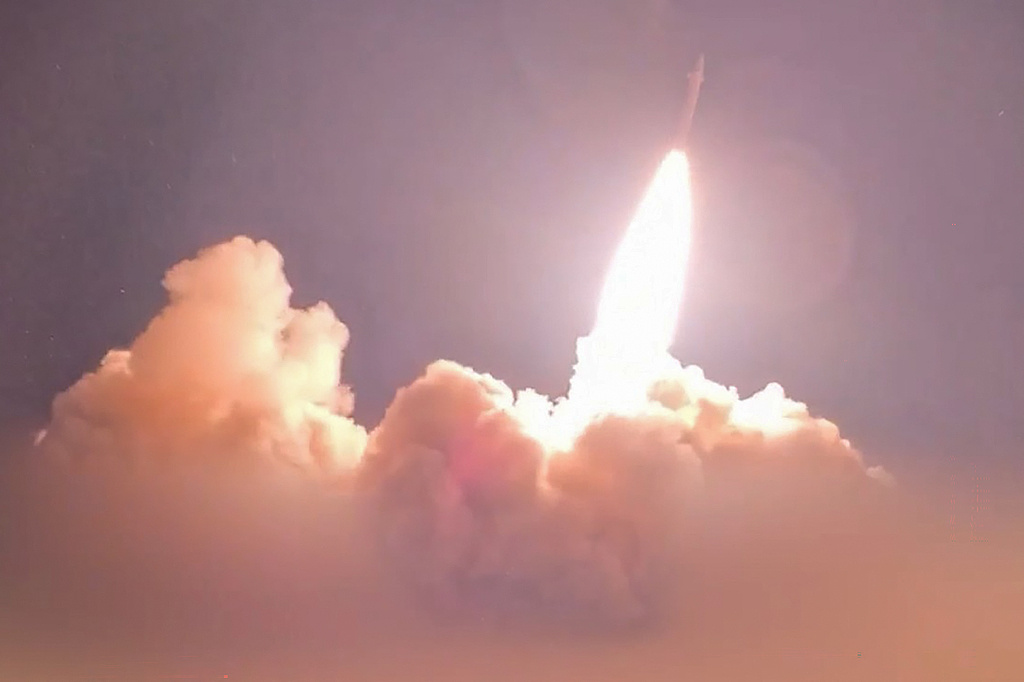
The U.S. Central Command issued a statement saying that the U.S. military completed a new round of strikes against Iran at 10 PM Eastern Time on the 19th, aimed at "continuously weakening Iran's military capability to attack commercial ships and civilian mariners passing through the Strait of Hormuz." According to the Associated Press, Trump stated in an interview on the 19th that the new round of airstrikes was to commemorate the three U.S. soldiers who lost their lives in the previous day's attacks on U.S. military bases in Jordan and Iraq.
The latest casualty report from U.S. Central Command shows that since the outbreak of hostilities on February 28, the number of U.S. military deaths has reached 17. The website of Fortune magazine reported that U.S. military casualties are Trump's bottom line. Before the U.S. and Iran signed a memorandum of understanding, Trump had stated that if Iran killed U.S. soldiers, he would consider ending the previous ceasefire agreement and resuming hostilities.
Iran has also targeted U.S. military bases in the Middle East. The Iranian Islamic Revolutionary Guard Corps announced on the 20th that Iranian armed forces had carried out targeted retaliatory strikes in the Persian Gulf waters, as well as against U.S. military bases and command centers in Kuwait, Jordan, and Syria. Among these, the Revolutionary Guard announced precise strikes that destroyed 20 U.S. military hideouts in the Azraq region of Jordan, resulting in the deaths of "dozens" of U.S. personnel. The announcement also thanked the Jordanian people for their "sincere cooperation" in this operation.
The Associated Press reported on the 20th that the recent attacks further indicate that the U.S. and Iran are gradually moving towards a full-scale war. Both sides are targeting civilian infrastructure that people rely on for survival. The U.S. military has attacked bridges, railways, airports, and desalination plants within Iran, attempting to force Tehran to relax its control over the Strait of Hormuz. Tehran, in turn, has launched attacks on U.S. allies in the Middle East. Kuwait reported on the 19th that a power plant and a desalination plant in the country were attacked for the second consecutive day, causing fires. Additionally, the Israeli military stated that Iran had launched missiles at the Jordanian port city of Aqaba, which could lead to the first spread of hostilities to Israeli territory in weeks. Israel Defense Forces Chief of Staff Herzi Halevi stated, "We are prepared to resume combat immediately."
The New York Times reported on the 20th that in recent days, the strikes exchanged between Tehran and Washington have quickly transcended military targets, gradually raising the stakes for the resumption of hostilities. The report cited anonymous senior officials as saying that the U.S. is deploying F-35 stealth fighters from the UK to the Middle East, reallocating F-16 fighters from Germany, and additionally sending aerial refueling aircraft, which "indicates that strikes against Iran may soon escalate further."
Currently, the focus of the U.S.-Iran conflict remains on the control of the Strait of Hormuz. The U.S. Central Command stated in a statement on the 19th that the U.S. military continues to "strengthen its maritime blockade against Iran." The Iranian Fars News Agency quoted a naval officer from the Iranian Islamic Revolutionary Guard Corps as saying that the shipping volume in the Strait of Hormuz has dropped to zero. The officer emphasized that navigation through the Strait of Hormuz has completely stopped, and as long as U.S. hostile actions continue, this waterway will remain closed, with no passage permits being issued.
According to Reuters, due to the complete closure of the Strait of Hormuz, Brent crude oil prices surpassed $90 per barrel on the 20th, reaching the highest level since June. As the U.S.-Iran conflict continues to escalate, the international community is increasingly concerned that oil transportation through the Strait of Hormuz will continue to be disrupted.
According to a statement from the Iranian presidential office on the 20th, Raisi stated at a meeting that "today's Iran is in a state of total war," and "we must face reality and accept the inevitable consequences of this resistance."
According to the U.S. State Department, when asked whether the U.S. and Iran are "returning to a state of total war," Secretary of State Rubio stated on the 19th that if Iran violates the terms of the memorandum of understanding, it will no longer be effective. However, he stated that the U.S. remains open to diplomatic solutions, "but it must be sincere."
According to a report from the Iranian Tasnim News Agency on the 20th, Iranian Foreign Ministry spokesman Baghaei stated at a press conference that Iran has received proposals from the mediators of U.S.-Iran negotiations to ease the situation. The Iranian Interior Minister will visit Pakistan that day to discuss relevant matters between the two countries. Baghaei also stated that both negotiation and war are means to achieve goals, and that "defense and diplomacy cannot coexist" is incorrect.
On September 19, 2023, U.S. military forces conducted airstrikes against Iranian infrastructure for the ninth consecutive night, targeting bridges, railways, and airports. In retaliation, Iranian forces attacked U.S. bases in the Gulf region, claiming significant casualties among U.S. personnel. Iranian President declared a state of 'total war' with the U.S., while tensions escalated over control of the Strait of Hormuz, leading to a spike in oil prices.
- U.S. conducted airstrikes on Iranian civilian infrastructure for the ninth consecutive night.
- Iranian President stated that Iran is in a state of 'total war' with the U.S.
- U.S. Central Command reported 17 U.S. military personnel have died since the conflict began on February 28, 2023.
- Iranian forces targeted U.S. military bases in Kuwait, Jordan, and Syria, claiming to have killed 'dozens' of U.S. personnel.
- Oil prices surged due to the closure of the Strait of Hormuz, impacting global oil supply.