
Tokyo warns China and Russia are coordinating militarily
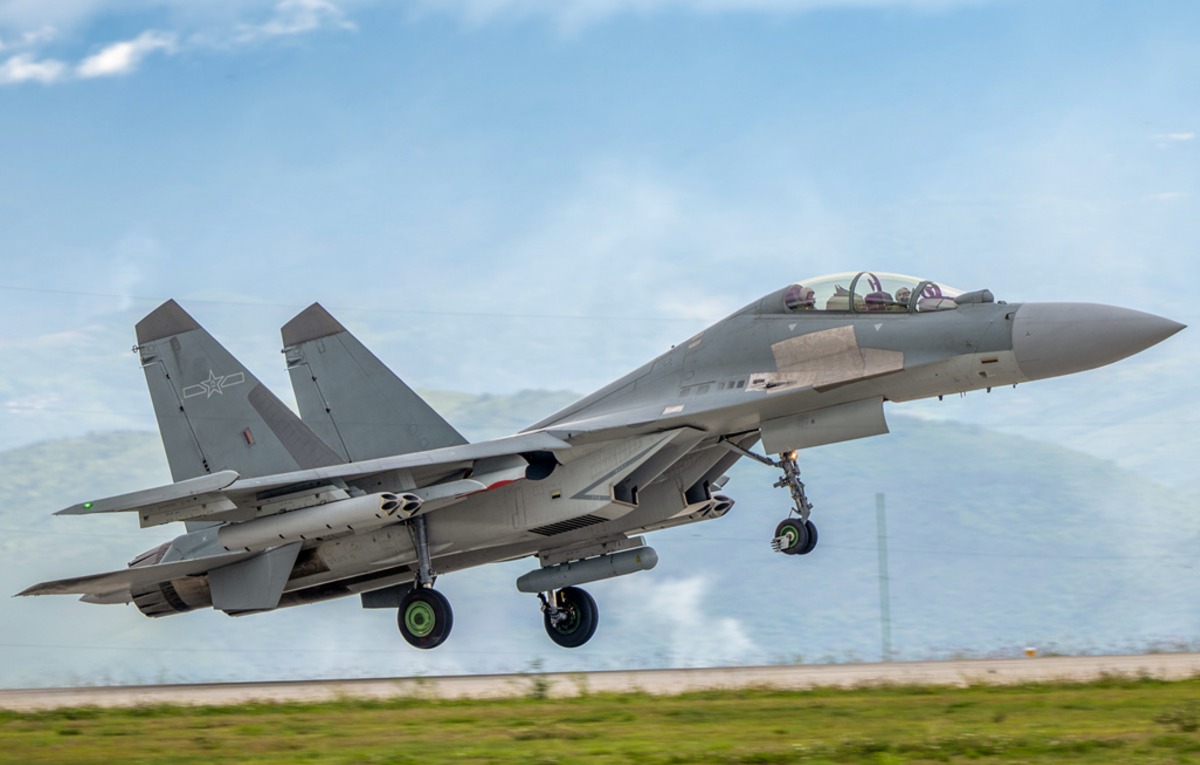 J-16 fighter jet
Japan’s government has used its most authoritative annual security document to declare that China and Russia are no longer just cooperating occasionally near its shores, they are actively strengthening coordinated military activity, Nikkei reported.
Japan’s Ministry of Defense published its 2026 Defense White Paper on Aug. 4, expressing new alarm over deepening military cooperation between China and Russia around Japan, pointing specifically to cases where bombers and warships from both countries have operated together and concluding that the two nations are strengthening what the report calls strategic coordination. The white paper, an annual publication the ministry has produced for decades to lay out Japan’s official assessment of its defense policy and the broader global military situation, arrives ahead of a planned revision to Japan’s three core security strategy documents scheduled for the end of 2026, and this year’s edition sounds a notably sharper alarm about the security environment surrounding the country than in previous years.
The document, formally titled Defense of Japan 2026, again labeled China an unprecedented and the greatest strategic challenge to Japan’s peace and security, repeating language the government first adopted in its revised National Security Strategy back in 2022, but this year’s report pushed further by upgrading how it characterizes the China-Russia relationship itself, shifting from describing the ties as a serious concern to calling them a deepening strategic partnership. For the first time, the Ministry of Defense’s public digest included a dedicated section specifically tracking the evolution of China-Russia military cooperation, documenting joint naval exercises, long-range bomber patrols, coordinated naval operations, and each country’s growing participation in the other’s military drills, with the ministry noting that the scale, frequency, and geographic reach of these joint activities have continued expanding.
Russian Tu-95 and Chinese H-6 bombers entered the territorial airspace of southeastern Japan for the first time in late 2025 and did so again in June 2026, while the two countries also conducted joint naval exercises involving submarines and live-fire drills inside Japan’s exclusive economic zone, the waters extending 200 nautical miles (370 kilometers) from Japan’s coastline where the country holds special rights to marine resources, for the first time as well. A separate December 2025 patrol saw Chinese and Russian bombers fly in the direction of Tokyo after passing over Japan’s southern islands, the first time such a patrol had pointed toward the Japanese capital, though the aircraft ultimately turned around before entering Japanese airspace. On North Korea, the white paper stated that Pyongyang has continued supplying Russia with ballistic missiles, artillery ammunition, and other military equipment, a relationship Tokyo has watched closely given its own proximity to North Korean missile launches.
The white paper’s warnings extended beyond joint China-Russia activity to China’s independent military expansion across the wider Pacific. This year’s report placed particular emphasis on China steadily expanding its reach beyond what strategists call the First Island Chain, the string of islands running from Japan’s southwest through Taiwan and the Philippines that has long served as a geographic marker for containing Chinese naval power, with Tokyo arguing Beijing has built a growing ability to project military force deeper into open Pacific waters. The document pointed to the simultaneous deployment of two Chinese aircraft carriers in the Pacific in June 2025, the first time China had done so, as evidence of that expanding reach, alongside a December 2025 incident in which a Chinese military aircraft used its radar to lock onto a Japan Air Self-Defense Force aircraft, an action that can precede a weapons launch and is generally treated as a serious escalation between military aircraft.
Japan’s Ministry of Defense has raised similar alarms in previous editions of the white paper, and The Defence Blog reported that the 2025 version already warned of the most severe security environment in Japan’s postwar era while highlighting Moscow’s stepped-up military activity near Japan alongside joint exercises with China. This year’s document goes further by treating the Taiwan Strait as directly tied to Japan’s economic survival, arguing that any blockade or conflict over Taiwan would disrupt the energy and semiconductor supply chains that keep Japan, the world’s fourth-largest economy, running, a connection the report draws explicitly because Japan’s southwesternmost islands sit in close geographic proximity to Taiwan itself.
Defense Minister Shinjiro Koizumi submitted the 2026 white paper to Japan’s Cabinet for formal adoption on Aug. 4, and the document frames Japan’s accelerating military buildup as more than a defensive necessity, positioning it as a potential source of economic growth as well. The report ties Japan’s record defense budget of 9.8 trillion yen (approximately $65 billion) to both military requirements and a broader push to harness advanced technology, support defense-focused startups, and incorporate more commercial components into weapons production, an approach the ministry frames as a way to offset Japan’s shrinking working-age population by making defense spending double as an economic stimulus. The document also identifies drones and artificial intelligence as central to what it calls new ways of warfare, concepts the ministry says it drew directly from lessons learned in Russia’s ongoing invasion of Ukraine, including the mass use of unmanned systems and the need to prepare for prolonged conflicts rather than short, decisive engagements.
Content preview only. Full article available at source. View Full Article
Japan's government issued a warning regarding the escalating military cooperation between China and Russia, as detailed in its 2026 Defense White Paper. The report highlights joint military exercises and operations occurring near Japan, marking a significant shift in the security landscape. Japan identifies China as the greatest strategic challenge, emphasizing the implications for its defense policy and regional stability.
- Japan's 2026 Defense White Paper warns of increased military cooperation between China and Russia.
- Joint naval exercises and bomber patrols have occurred near Japan.
- China's military expansion is noted as a significant threat to Japan's security.
- Japan's defense budget is linked to military needs and economic growth.
- North Korea continues to supply Russia with military equipment.