
Tracker reveals details of Russia’s secretive satellite launch
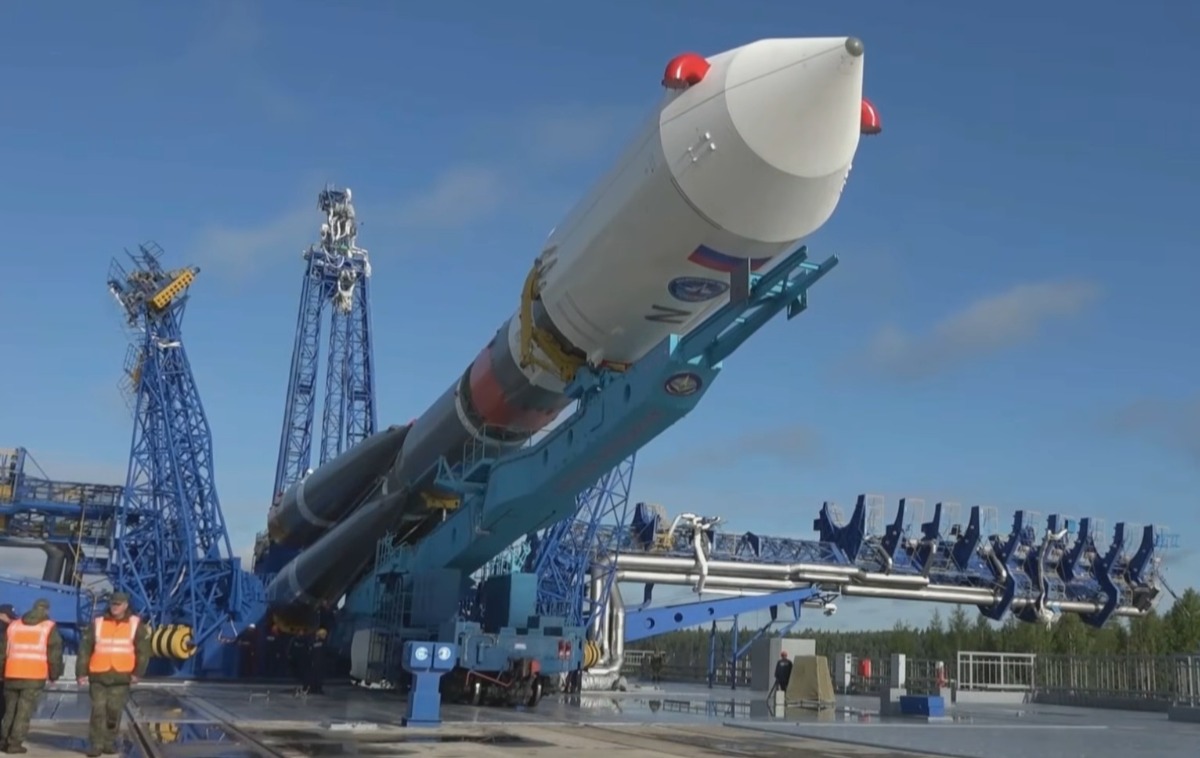
The classified satellite Russia launched from Plesetsk Cosmodrome on August 24 has reached an orbit consistent with a GLONASS navigation satellite, astronomer and satellite tracker Jonathan McDowell reported.
The U.S. Space Force cataloged two objects from the launch in an orbit measuring 19,045 by 19,150 kilometers with an inclination of 64.8 degrees, McDowell said.
“Space Force has cataloged two objects from yesterday’s Soyuz launch, in a 19045 x 19150 km x 64.8 deg orbit, consistent with analyst’s expectations that this was a GLONASS navigation satellite mission,” McDowell wrote on X.
The launch took place at 2:40 a.m. UTC on August 24 using a Soyuz-2.1b rocket with a Fregat upper stage, lifting off from Site 43/3 at Plesetsk in northern Russia. Russia’s Ministry of Defense confirmed only that the flight carried a defense ministry satellite into orbit, without naming the payload. McDowell said the satellite is likely to carry the designation Kosmos-2619.
Russia has stopped publicly announcing designations for its military satellites in recent years, leaving outside trackers to identify payloads based on orbital parameters and launch patterns. The orbit McDowell described matches the medium Earth orbit used by GLONASS satellites, Russia’s satellite navigation system comparable to the U.S. GPS and European Galileo constellations.
Some tracking sites had listed the mission in advance as the likely launch of a Glonass-K1 satellite, the 19th in that series, based on notice-to-airmen filings pointing to a possible August launch window. Glonass-K1 satellites weigh about 935 kilograms (2,062 pounds), operate unpressurized, and are designed for a 10-year service life, improving on earlier GLONASS generations in accuracy and power consumption.
Confirmation of the payload’s identity is based on orbital analysis rather than official Russian disclosure. RussianSpaceWeb, which tracks Russian space launches, noted that Russia’s pattern of navigation warnings and debris impact zone closures in the weeks before the launch was consistent with prior GLONASS missions from Plesetsk, though the outlet stopped short of confirming the payload without direct orbital data.
Russia has continued modernizing its GLONASS constellation with Glonass-K and Glonass-K2 satellites, the newest generations in the system. Russian space officials have said they plan to begin launching a separate cluster of high-orbital GLONASS-V satellites in 2026 and 2027, intended to improve navigation accuracy over Russian territory by as much as a factor of four once the cluster becomes fully operational around 2030.
The payload’s exact identity remains based on orbital analysis by independent trackers rather than official Russian disclosure.
Russia’s satellite launches from Plesetsk this year have had mixed results. Two satellites from the second Rassvet batch, a 16-spacecraft cluster of Bureau 1440 broadband satellites launched July 19 from the same cosmodrome, are heading toward reentry after never performing orbit-raising maneuvers
Content preview only. Full article available at source. View Full Article
Russia launched a GLONASS navigation satellite from Plesetsk Cosmodrome on August 24, 2023, at 2:40 a.m. UTC using a Soyuz-2.1b rocket with a Fregat upper stage. The satellite reached an orbit consistent with GLONASS parameters, and its designation is likely Kosmos-2619. The U.S. Space Force confirmed the launch and cataloged two objects from it.
- Russia launched a satellite from Plesetsk Cosmodrome on August 24, 2023.
- The satellite is likely a GLONASS navigation satellite, designated Kosmos-2619.
- The launch used a Soyuz-2.1b rocket with a Fregat upper stage.
- The satellite reached an orbit of 19,045 by 19,150 kilometers with an inclination of 64.8 degrees.
- Russia has stopped publicly announcing designations for its military satellites.