
Trump announces "Economic D-Day" on Iran after 21 nights without airstrikes, placing the Gulf between the hammer of sanctions and the anvil of missiles.
 Ahmed Al-Rashid
Trump Announces "Economic D-Day" on Iran After 21 Nights Without Strikes, Placing the Gulf Between the Hammer of Sanctions and the Anvil of Missiles
On August 19, as coalition aircraft ceased bombing Iranian territory for the twenty-first consecutive night, U.S. President Donald Trump announced what he called "Economic D-Day" against Iran, vowing to implement "the harshest economic operation in history" against any country that provides Tehran with a lifeline. The following day, Treasury Secretary Scott Pisent clarified the target with a rarely stated goal: "the harshest sanctions in history," aimed at "overthrowing" the Iranian government, while warning of "huge" consequences for any country maintaining economic ties with Tehran.
This shift from bombing to economic blockade is not a mere procedural detail. It is an implicit acknowledgment that the military campaign, despite its magnitude, has reached its limit in effectiveness. After the coalition struck more than six thousand targets inside Iran and destroyed or disabled over ninety Iranian naval vessels, and after U.S. Central Command estimated a roughly ninety percent degradation of Iranian air defenses, Washington found itself facing an adversary that cannot be defeated by airstrikes alone.
The Shift from Missiles to Sanctions
Practically, what has actually changed? The bombing of Iranian territory has stopped for twenty-one consecutive nights, while the rate of Iranian ballistic missile launches has decreased by eighty-six percent since the first day of the war, and drone launches have dropped by eighty-three percent. The war, which began on February 28, has entered its seventy-fourth day in a state of armed stalemate: no decisive military victory for either side, nor an Iranian collapse.
Here, "Economic D-Day" appears as an attempt to break this stalemate with a different tool. However, the U.S. bet on money conceals a painful acknowledgment for Washington itself: that an adversary that has lost ninety percent of its air defenses and most of its fleet is still capable of waging a war of attrition, and that sanctions alone have not toppled the Iranian regime during the forty-five years of intermittent imposition.
What "D-Day" Means for the Gulf Practically
The real problem with this shift is not in Tehran, but in the Gulf capitals that sit on the geographic front line between U.S. decisions and Iranian responses. While Washington announces sanctions targeting "any country maintaining economic ties with Tehran," Iraq has officially requested from Iran a "special status" for its oil exports through the Strait of Hormuz, indicating that the network of economic interests in the neighborhood cannot be severed by a single presidential decision.
Moreover, the Gulf itself is in the line of fire. The Houthis announced that they have attacked eight Saudi oil tankers since July 20, following weeks of targeting the Jazan facility and striking the UAE's Fujairah port with missiles on May 4. At the moment when Washington is trying to shift the war to a financial one away from U.S. territory, it is the Gulf states and their ships and ports that are paying the actual price for Tehran's escalation.
Iran's Resilience Is Not Just a Matter of Missiles
Here, I recall what any military officer who has served in the region understands: sanctions are a slow weapon, and besieged governments do not surrender quickly; they seek alternative deals. An official in the Revolutionary Guard stated that Tehran may resort to "completely different" warheads if the war resumes, sending a clear message that the economic blockade does not strip Iran of its military options, but may push it to escalate if it feels cornered with no exit.
In my view, the mistake lies in assuming that "D-Day" will achieve what three hundred airstrikes could not: the overthrow of the regime. Economic power alone does not resolve conflicts unless coupled with field pressure that changes the leadership's calculations, and what we see now is a halt in the field and a shift of pressure to financial paper, a combination that has previously been tried with North Korea, Cuba, and Venezuela without toppling armed regimes with a resistance doctrine.
The Triad Capability and Why Money Alone Cannot Decide
I often write about the "triad capability" — equipment, then training, then institution — and that Gulf states have focused on the first while neglecting the latter two. However, what "Economic D-Day" does is place Washington itself in the same trap: it bets on a single tool (money) against an adversary whose capability is measured by a complete triangle that includes missiles, drones, and a network of proxies extending from Yemen to Lebanon.
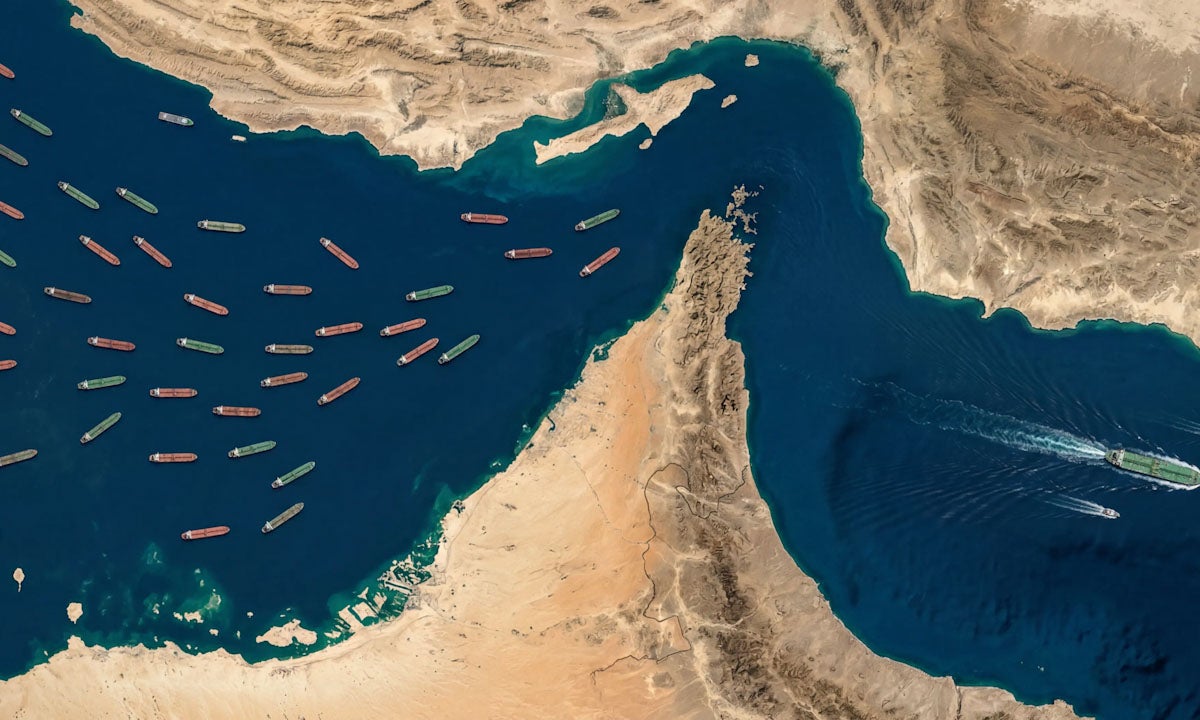
There is a structural contradiction that cannot be ignored. While Washington asks its Gulf allies to exert economic pressure on Iran, it simultaneously requests that they keep the Strait of Hormuz open for oil flow, a task that relies on the same strait that Trump himself threatened would become "American territory." The Gulf is being asked to both pressure and endure at the same time: to cut Iran's financial lifelines while its own tankers remain the easiest targets for Tehran's missiles and drones.
Where Is This Heading?
The most likely outcome is neither a rapid Iranian collapse nor a decisive American victory, but an economic war of attrition parallel to the military war, slowing the Iranian economy but not breaking it, and imposing the cost of retaliatory response on the Gulf. The open question that no one has an answer to remains: how can Washington ask its allies to wage an economic war on their neighbor, while they are the ones who will pay the price in missiles on their ports and tankers?
This is the structural contradiction that neither "D-Day" nor anything else will resolve: relying on American protection against an armed neighbor, while seeking a self-security that the Gulf does not yet possess. Between the hammer and the anvil, the countries of the region will continue to write the check for the bill — in blood and money together.
On August 19, U.S. President Donald Trump announced an economic day against Iran, marking a shift from military strikes to economic sanctions after 21 nights without airstrikes. The U.S. aims to impose severe sanctions targeting any country maintaining economic ties with Iran, while Iran's missile launches have significantly decreased. The Gulf region faces increased risks as it navigates U.S. demands and Iranian threats.
- Trump announced an economic day against Iran on August 19.
- U.S. military operations have ceased for 21 consecutive nights.
- Iran's ballistic missile launches decreased by 86% since the war began.
- The U.S. aims to impose the toughest sanctions in history against Iran.
- The Gulf states are caught between U.S. sanctions and Iranian retaliation.