
Trump announces his intention to annex the Strait of Hormuz as an American territory, and the blockade reduces crossings to 8 ships daily.
 Ahmed Al-Rashid
Trump Announces His Intention to Annex the Strait of Hormuz as an American Territory, and the Blockade Reduces Transit to 8 Ships Daily
U.S. President Donald Trump stated on Friday evening in New York that he will "very soon" announce the Strait of Hormuz as a "territory" of the United States, after describing the war against Iran as nearly over. The statement, made at a rally to support Republican candidates in the midterm elections, was not just an election speech; it crowns a series of American claims of "complete" control over the waterway that used to transport about one-fifth of global oil supplies before the war.
Trump's Statement and Tehran's Response: A War of Words Before a War of Ships
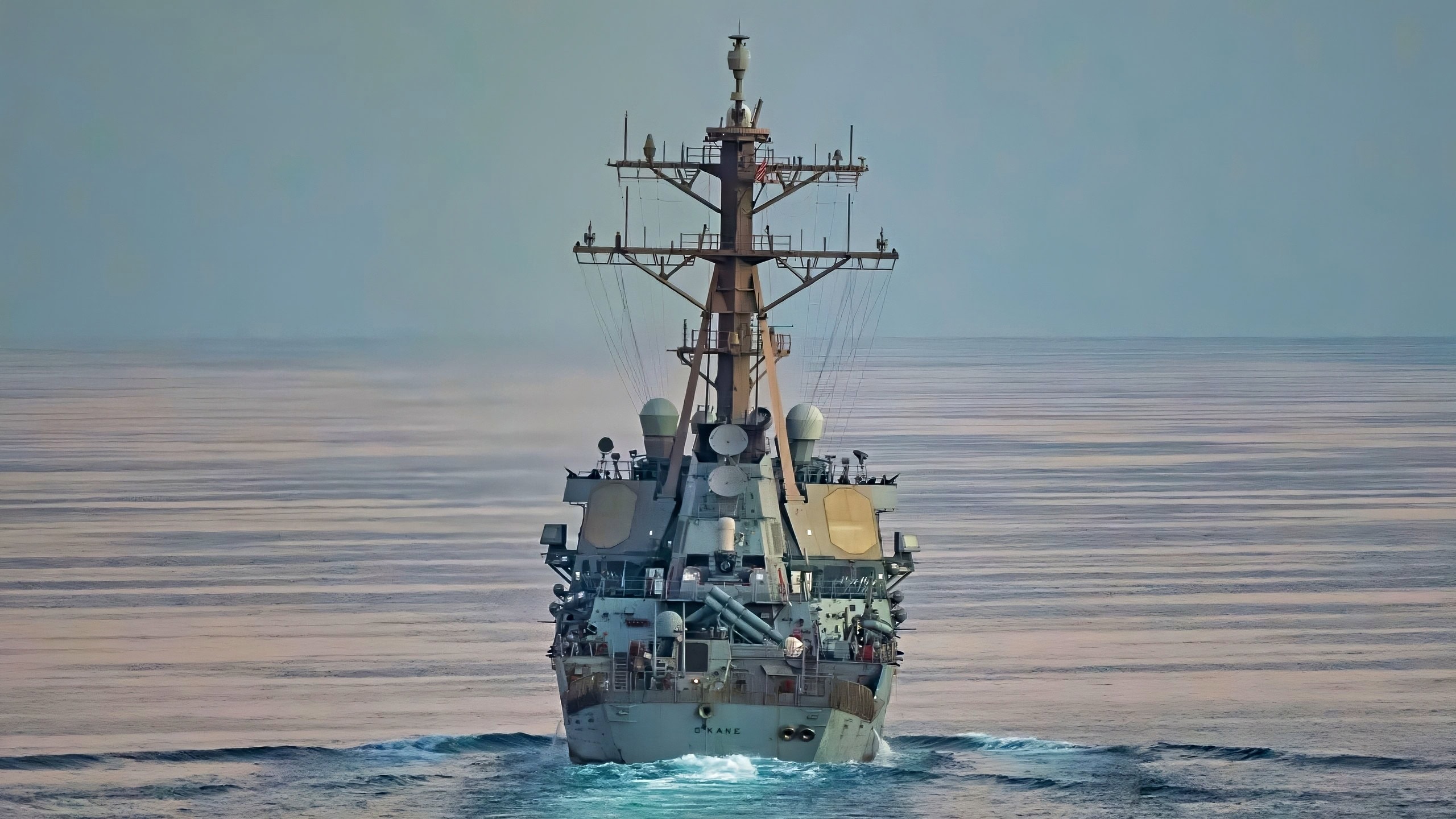
"After we finish defeating Iran, which is being defeated very badly, I will soon announce the Strait of Hormuz as a territory of the United States," Trump said with a laugh, in a speech where he described the American blockade as a "steel wall" that cannot be stopped, and that what Washington is doing is a "great service to the world."
However, Iranian Deputy Foreign Minister for Legal Affairs Kazem Gharib Abadi responded with a scathing tweet: "The Strait of Hormuz cannot be seized by a tweet, nor by an aircraft carrier, nor by a decree, nor by an election speech." This response reflects Tehran's confidence that the card of the strait is still in its hands, having effectively closed the passage since March following the outbreak of war on February 28 between the United States and Israel on one side and Iran on the other.
The War of Numbers: Who Really Controls the Water?
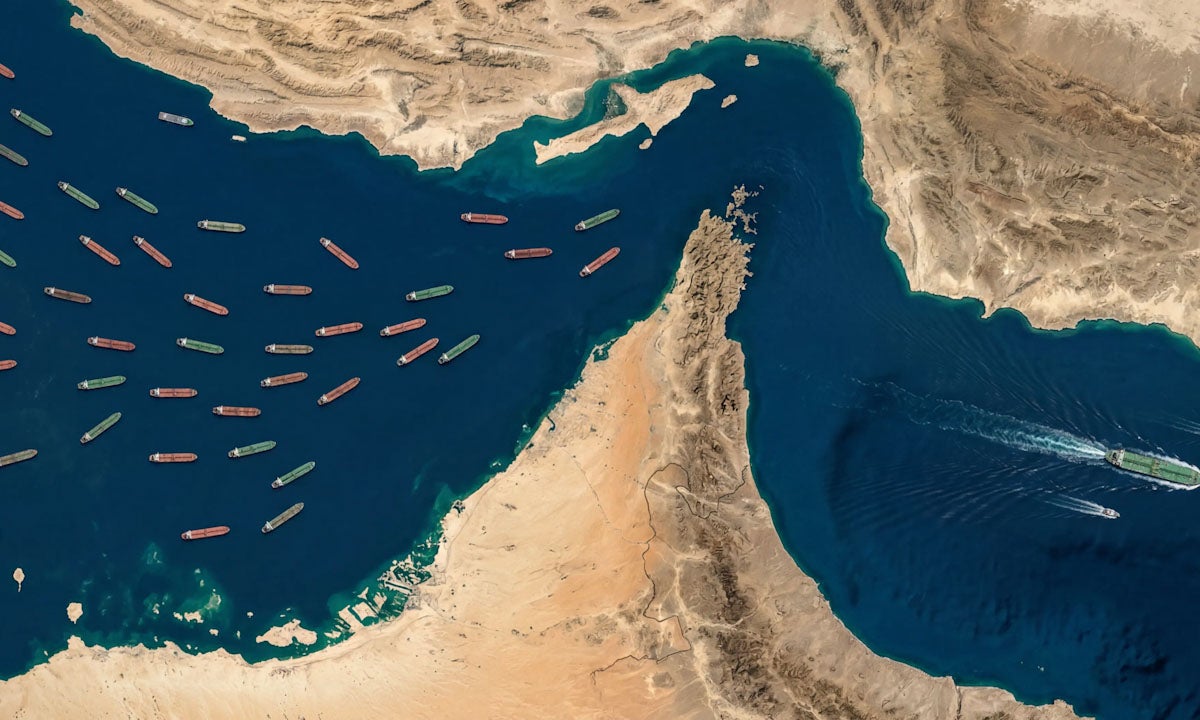
The data does not support the American narrative. Reuters reported from Kepler data that only 8 ships crossed the strait last Tuesday, compared to 130 to 140 ships daily before the war, which is less than the average of the previous ten days of 12 ships. Even the Iranian Strait Authority stated on X that "the strait is still closed and will not be opened until Iranian conditions are accepted."
In contrast, U.S. Energy Secretary Chris Wright claimed that the average oil exports through the strait amount to about 9 million barrels per day, a figure that analysts publicly questioned, with analyst Brett Erickson from Obsidian Risk stating that "there is no evidence" for that. Any military personnel who has served in the region knows that control over a waterway is not measured by statements, but by who actually stops the ship and who ensures its passage unconditionally.
The Strained Aircraft Carrier: The Cost of the Blockade on the U.S. Navy
At the heart of the blockade stands the aircraft carrier "USS Abraham Lincoln," which has spent nearly seven months at sea without a break, marking the longest deployment of an American carrier without visiting a port in history. Reports from Navy Times and Stars and Stripes quoted sailors' families discussing deteriorating mental health and suicidal thoughts, amid shortages of basic supplies, water contamination, and mail disruptions.
Democratic Senator Richard Blumenthal wrote to Defense Secretary Pete Hegseth warning that the pace of operations "exceeds the fleet's capacity to endure," while Minority Leader Chuck Schumer called for Hegseth's dismissal. U.S. Central Command denied that any personnel had been killed, asserting that the carrier "is holding strong after more than 260 days at sea," but any sailor knows that a ship that does not enter port loses its readiness, even if its crew remains steadfast, as confirmed by retired naval expert Harlan Ullman, who stated that complex maintenance does not occur at sea.
What Does "American Territory" Mean Legally and Practically?
Legally, a presidential statement cannot change the status of a strait that is subject to the Law of the Sea Convention and passes through the territorial waters of Iran and Oman. Even Trump's previous proposal to impose a "20% transit fee" on goods passing through in exchange for Washington becoming the "protector" of the strait was described by legal experts as contrary to international law, which guarantees freedom of commercial passage.
However, practically, these statements reveal an American intention to turn the military blockade into a permanent reality and redefine the world's most important waterway as an open area of American influence. The difference is that Iran is still capable of harming navigation, as stated by Israeli National Security Studies Institute researcher Denis Citrinovich: "The United States does not control the Strait of Hormuz, and Iran retains sufficient capabilities to disrupt navigation in it."
The Gulf Between the Hammer of the Blockade and the Anvil of Extortion
Big questions are being raised in Riyadh, Abu Dhabi, Doha, and Kuwait. Georgetown University professor in Qatar Mehran Kamrava stated that Iran is trying to exert economic pressure on its neighbors "so that they in turn pressure Washington to negotiate," by targeting energy facilities and infrastructure. The blockade puts Gulf countries in front of two bitter choices: support the American blockade and bear its economic and political costs, or push for an understanding that grants Tehran gains at the expense of American deterrence.
The maritime coalition of 15 countries led by Saudi Arabia, which was announced to be activated last week after attacks on ADNOC ships, remains a real test of the Gulf's ability to build its own security. Practically, actual deterrence still lies in the hands of the U.S. fleet, while Gulf powers pay the price without having the decision to open or close the strait. You buy security but do not create it, and you bet on protection for which you do not hold the keys, and this is the very gap that is fueled by the rush to spend on equipment without building the institution capable of using it.
"The Strait of Hormuz cannot be seized by a tweet, nor by an aircraft carrier, nor by a decree, nor by an election speech" — Kazem Gharib Abadi, Iranian Deputy Foreign Minister
Conclusion: A Structural Contradiction Not Resolved by a Tweet
What is happening in Hormuz is not a battle of ships as much as it is a double war of attrition: America is exhausting Iran's economy with the blockade, and Iran is exhausting the American fleet by waiting. Each side insists that it "controls" the strait, while the truth is that navigation in it is nearly halted and everyone is losing, from shipping companies to energy importers in Asia and Europe.
Trump's statement about "annexing" the strait places Gulf countries before their deeper structural contradiction: they need the American presence to protect their interests, but this very presence turns their territorial waters into a battleground in which they have no decision-making power. Between an "American territory" according to the president and "Iranian control" according to the deputy minister, the ships remain the victims, and the lingering question remains: when will Gulf countries pay the price for security they do not control, and who guarantees that the American "steel wall" will not turn into a wall that also besieges them?
U.S. President Donald Trump announced plans to declare the Strait of Hormuz a U.S. territory, claiming control over the vital waterway. This comes as Iranian officials assert their dominance in the region, with only 8 ships crossing daily compared to pre-conflict levels. The USS Abraham Lincoln remains deployed in the area, highlighting ongoing military tensions between the U.S. and Iran.
- Trump plans to declare the Strait of Hormuz a U.S. territory.
- Only 8 ships are currently crossing the strait daily, down from 130-140 before the conflict.
- Iran asserts it still controls the strait despite U.S. claims.
- USS Abraham Lincoln has been deployed for an extended period without port visits.
- Iran is pressuring Gulf states economically to influence U.S. negotiations.