
Trump's 2026 Taiwan Arms Freeze Undercuts US Indo-Pacific Deterrence
 Marcus Chen
Trump's 2026 Taiwan Arms Freeze Undercuts US Indo-Pacific Deterrence
Twenty-five Indo-Pacific armies met in Auckland in late September to discuss interoperability and deterrence. At the same time, Washington was sending Taipei a very different signal: major US arms sales to Taiwan remained frozen while President Donald Trump welcomed Chinese President Xi Jinping in Washington and, according to US Ambassador David Perdue, floated the idea of selling weapons to Beijing.
That contradiction matters more than the ceremony surrounding the meeting. Deterrence is not built by communiqués. It is built by a partner's confidence that ammunition, spare parts, targeting data, and political support will arrive before the first runway is cratered. Taiwan's problem is not that it lacks a defense relationship with the United States. It is that the relationship now looks conditional at exactly the moment Beijing is learning how to exploit delay.
The Signal From Taipei Is Measurable
Defense News reported on October 2 that the Trump administration was withholding large arms packages for Taiwan. Rupert Hammond-Chambers of the US-Taiwan Business Council warned in a September 22 open letter that the freeze was damaging confidence in Washington's commitment. His argument is operational, not rhetorical: Taiwan cannot convert appropriated money into combat power if approvals are treated as a bargaining chip in a wider relationship with Beijing.
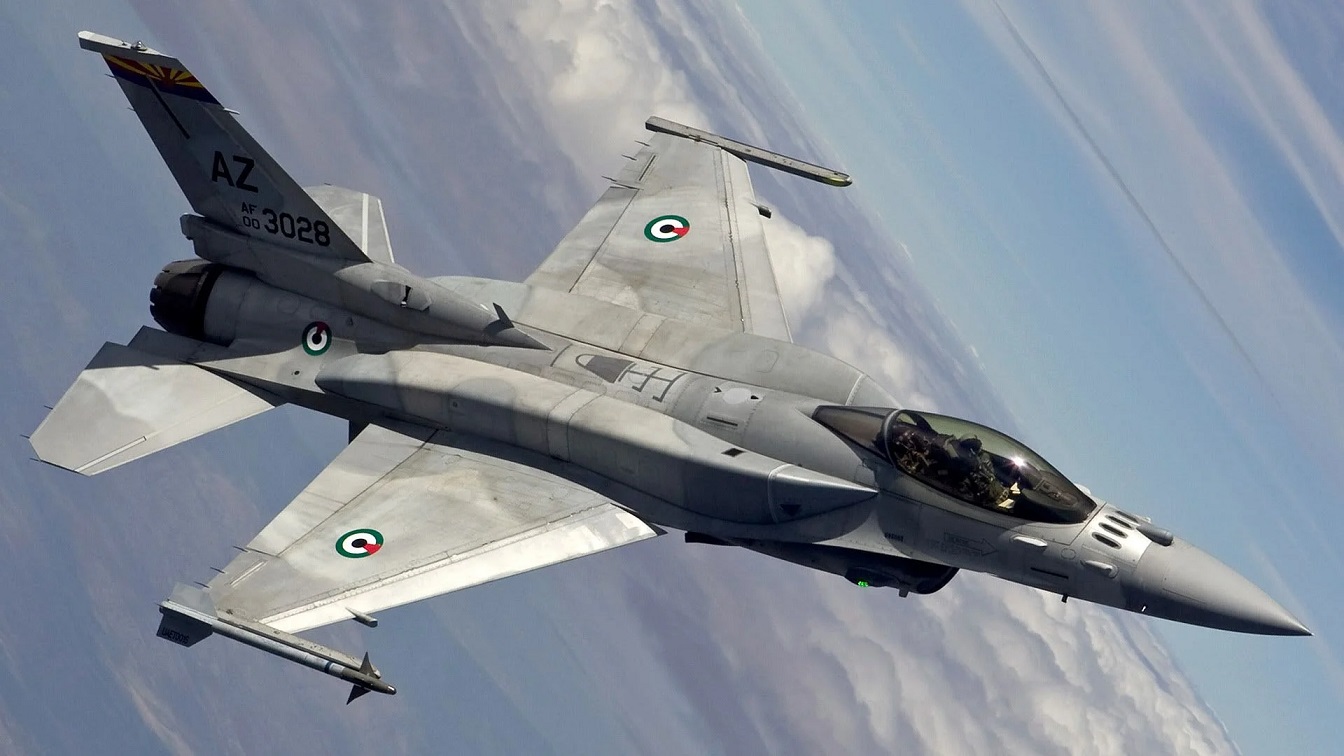
The timing is particularly poor. Taiwan's air force has to keep a limited number of high-value aircraft, air-defense systems, and command nodes operating under persistent pressure. A fighter sale announced today does not create a squadron tomorrow. Training, weapons integration, hardened shelters, maintenance stocks, and crews take years. Delaying the political decision therefore consumes part of the preparation window that no later announcement can recover.
The arithmetic is straightforward. If a package is held for six months, the loss is not six months of paperwork. It is six months less for acceptance, training, dispersal, and exercises before a crisis. If Beijing is measuring readiness, the calendar is itself a military signal.
Washington Is Creating Two Different Audiences
The Auckland seminar offered the correct military prescription. The 50th Indo-Pacific Armies Management Seminar emphasized practical cooperation, interoperability, and regional partnerships. Lieutenant General Joel Vowell of US Army Pacific described land forces as the connective tissue of deterrence. Those 25 participating militaries were being asked to trust the United States enough to plan together.
Then came the political counter-signal. Perdue's account of an offer to sell weapons to China was later followed by statements that no such plan exists. Ryan Hass of the Brookings Institution called the reported offer a break with longstanding policy. Whether the remark becomes policy is almost beside the point. Allies and partners do not only study signed agreements; they study what senior officials appear willing to trade away in public.
For Beijing, ambiguity can be useful. China does not need Washington to abandon Taiwan formally. It needs to make Taipei question whether a request will be approved, whether Congress will be consulted, and whether an American president will prioritize a short-term political arrangement with Beijing over a pre-crisis defense commitment. Every unanswered question adds friction to Taiwan's planning cycle.
Why the Freeze Has Military Consequences
Aircraft are the visible part of the equation, but the decisive items are often less photogenic: air-to-air missiles, mobile air defenses, counter-drone systems, secure communications, repair capacity, and the software that connects sensors to shooters. These systems work as a network. Removing one link does not simply subtract one capability; it increases the number of targets Taiwan must protect with everything else.
A US arms freeze also complicates allied planning. Japan is building the ability to support operations around its southwestern islands. The Philippines is expanding access for US forces. Australia is investing in long-range strike and submarine capacity. All three need to know whether Taiwan will receive enough equipment to remain an active military problem for the People's Liberation Army rather than a rapidly collapsing position.
This is where the Auckland message and the Taiwan message collide. Interoperability requires repeated exercises, common procedures, and confidence that national forces will still be supplied when the exercise becomes a war. Partners can compensate for some American uncertainty by buying more, dispersing more, and planning for longer resistance. They cannot eliminate it.
The Political Argument Does Not Survive Contact With Logistics
Supporters of the freeze may argue that restraint creates room for a bargain with Beijing. But arms sales are not the same as an irreversible deployment of US troops. Defensive equipment can strengthen Taiwan's ability to deny an assault while preserving diplomatic space. Holding it back does the opposite: it reduces denial capacity without producing a verifiable Chinese concession.
Thompson, quoted by Defense News, argued that Trump's off-the-cuff comments would not change the long-term trajectory of US security commitments. That may prove correct. But deterrence cannot rely on analysts correctly discounting presidential statements. It must survive the perceptions of Taiwan's leadership, China's military planners, and regional governments making procurement decisions now.
Deterrence is not the promise that Washington will eventually help. It is the evidence that Taiwan can still fight when help is delayed.
The Gap Washington Must Close
The United States does not need another regional slogan. It needs a clear process for approving Taiwan's pending defense requirements, a delivery schedule that allies can plan around, and an explanation of how any engagement with Beijing is compatible with helping Taiwan harden its defenses. The 25 armies meeting in Auckland can improve interoperability, but no seminar can substitute for stocked magazines and functioning aircraft.
Trump's mixed signals may be temporary. The military effects of delay are not. If Washington wants partners to believe that the Indo-Pacific is defended by a network rather than by one presidential decision, it must stop making Taiwan's readiness the variable in every diplomatic experiment. The credibility gap is now measurable in months, aircraft, and missile inventories. That is the gap Beijing will test.
U.S. arms sales to Taiwan were frozen as 25 Indo-Pacific armies met in Auckland to discuss military interoperability. This freeze has raised concerns about Taiwan's defense readiness amid mixed signals from the U.S. regarding arms sales to China. The situation complicates regional military planning and undermines confidence in U.S. commitments to Taiwan's defense.
- U.S. arms sales to Taiwan are currently frozen.
- 25 Indo-Pacific armies met in Auckland to discuss military cooperation.
- Political signals from the U.S. suggest a potential arms sale to China.
- Taiwan's defense capabilities are being impacted by the arms freeze.
- The U.S. needs to clarify its commitment to Taiwan's defense.