
Trump's 5,000 Poland Troops Make NATO Planning Worse
 Alexandra Reeves
Trump's 5,000 Poland Troops Make NATO Planning Worse
Five thousand American soldiers should be a good-news story for NATO's eastern flank. Poland gets more U.S. boots on the ground, Russia gets another reminder that an attack on Polish territory would not stay local, and Washington can tell the Ankara summit in July that it is still present in Europe. That is the clean version. It is also not the version allies watched unfold this week.
On May 21, President Donald Trump announced that the United States would send an additional 5,000 troops to Poland, tying the move to his relationship with Polish President Karol Nawrocki. The announcement landed in the middle of a NATO foreign ministers' meeting in Helsingborg, Sweden, where allies were supposed to be preparing a disciplined message for the July 7-8 Ankara summit: more European defence spending, more industrial production, and more predictable support for Ukraine. Instead, they got another lesson in how personal U.S. politics can scramble military planning.
The Number Is Less Important Than the Process
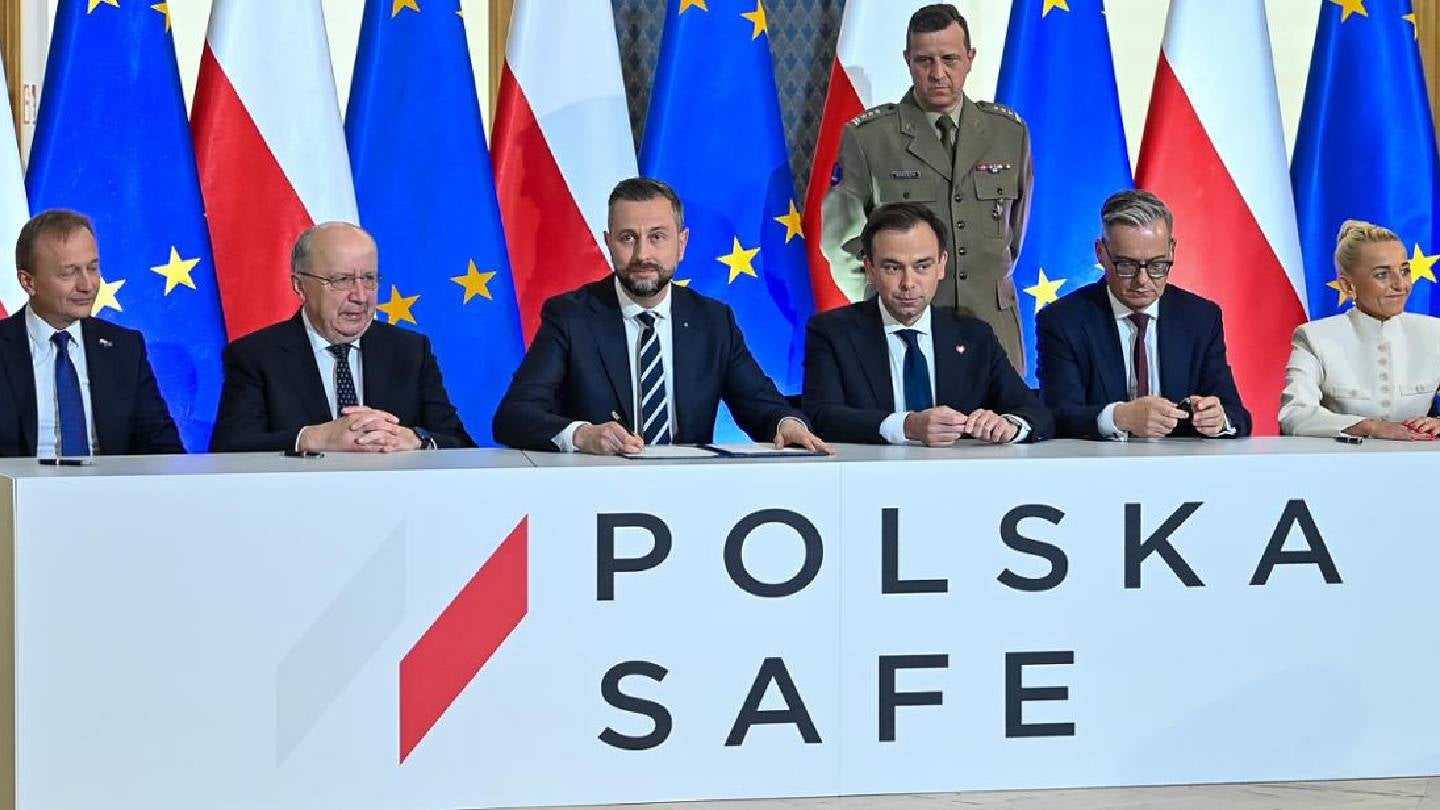
The raw deployment figure matters, but the sequencing matters more. According to the Guardian and wire-service reporting carried by several U.S. outlets, Trump's pledge came only days after the Pentagon halted a planned deployment of roughly 4,000 troops to Poland. Breaking Defense had also reported earlier in May that Defense Secretary Pete Hegseth ordered about 5,000 U.S. troops withdrawn from Germany over the next year.
That makes the Polish announcement hard to classify. Is it a genuine net increase on NATO's eastern flank? Is it the restoration of a cancelled rotational brigade? Is it a political rebuke to Berlin disguised as a deterrence measure? Even Polish officials seemed to suggest that the practical meaning would have to be worked through with U.S. European Command.
Military planners can handle change. They cannot build credible deterrence around improvisation. A brigade-sized rotational movement is not a social media line item. It requires transport, equipment sets, training ranges, host-nation support, air defence coverage, ammunition storage, medical evacuation plans, and integration into NATO regional defence plans. If commanders learn the intent after the public announcement, the signal to Moscow is not strength. It is volatility.
Poland Gains Presence but Not Certainty
Poland is the obvious place for additional U.S. troops if Washington wants a visible eastern-flank signal. It is NATO's logistics hinge for support to Ukraine, a frontline state bordering Belarus and Russia's Kaliningrad exclave, and one of the few European allies already spending at levels that make Washington's burden-sharing complaints look less convincing.
That is why Warsaw welcomed the announcement. It would be strange if it did not. For Poland, American troops are not symbolic decoration. They are tripwires, logistics enablers, intelligence connectors, and political insurance. The Polish armed forces are expanding, buying Abrams tanks, HIMARS, air defence systems, and South Korean equipment at a pace much of Western Europe still treats as exotic. U.S. presence plugs that national build-up into NATO's larger command architecture.
But here is the problem: deterrence depends on predictability as much as mass. If the same administration can delay a deployment, pull troops from Germany, and then announce a Poland increase in the span of weeks, Warsaw gets presence without certainty. That is better than absence. It is not the same as a stable force posture.
Helsingborg Was Supposed to Be About Delivery
NATO's own readout of the Helsingborg meeting stressed a very different theme. Secretary General Mark Rutte said foreign ministers discussed a credible path toward the 5 percent GDP defence investment commitment by 2035, stronger defence industrial production, and sustained support for Ukraine. Two days earlier, NATO quoted him saying the issue was no longer whether allies needed to do more, but how quickly they could turn commitments into capabilities.
That is the right question. It is also a brutal one. Europe has finally accepted that defence spending is not a press-release category. NATO says allies are now focused on industrial output, warfighting capability, and a stronger European pillar inside the alliance. Rutte has framed this as a transformation toward a stronger Europe in a stronger NATO. The phrase is tidy. The politics are not.
The United States still provides capabilities Europe cannot quickly replace: strategic lift, long-range fires, intelligence architecture, missile defence depth, and high-end command-and-control. Moving 5,000 troops from one part of Europe to another does not solve that gap. It can even obscure it, because troop numbers are easier to count than enabling capabilities. A battalion on the map looks reassuring. A missing logistics node matters more on day ten of a war.
Ukraine Is Watching the Same Movie
The Ukraine angle is not secondary. At Helsingborg, Ukrainian Foreign Minister Andrii Sybiha joined allied ministers for talks on keeping support substantial, sustainable, and tied to Kyiv's urgent requirements. Rutte also admitted, according to the Kyiv Independent, that only six or seven European allies are doing the heavy lifting on purchasing U.S. weapons for Ukraine through the Prioritised Ukraine Requirements List mechanism.
That should bother Europeans more than Trump's posting habits. If Ukraine's access to crucial U.S. equipment depends on a narrow group of European governments writing cheques, then NATO's Ukraine policy is less institutional than it sounds. It is a coalition inside an alliance, held together by political will in a handful of capitals.
Russia does not need NATO to collapse to exploit that. It only needs enough hesitation, enough confusion, and enough uneven burden-sharing to slow the flow of interceptors, artillery ammunition, drones, and spare parts. The Kremlin understands the value of friction. The alliance keeps producing it for free.
The Ankara Test Is Now Harder
The Ankara summit was already going to be uncomfortable. Allies need to prove that the 5 percent pledge is more than budget theatre, that European industry can scale faster, and that Ukraine support will not be held hostage by the next U.S. political dispute. The Poland announcement adds a sharper test: can NATO separate useful American military presence from unreliable American political process?
My answer is: not yet. The alliance can absorb a chaotic U.S. announcement when the outcome is more troops in Poland. It will have a much harder time absorbing the same style of decision-making in a crisis with Russia, when ambiguity over deployment orders, command relationships, or rules of engagement could invite miscalculation.
The key finding is simple. More U.S. troops in Poland may strengthen NATO's eastern flank in the narrow military sense, but the way the decision emerged weakens allied confidence in the planning system behind it. Watch the follow-through: whether EUCOM publishes a clear deployment structure, whether Germany's drawdown proceeds, whether Poland receives a net increase, and whether more European allies join the Ukraine procurement effort. Until then, this is not a deterrence win. It is a warning with a troop number attached.
President Trump announced the deployment of 5,000 U.S. troops to Poland on May 21, 2023, amid NATO discussions. This move is intended to strengthen NATO's eastern flank but raises concerns about the unpredictability of U.S. military planning. The announcement follows the halting of a previous deployment of 4,000 troops and reflects the complexities of U.S.-European defense relations.
- President Trump announced the deployment of 5,000 troops to Poland on May 21, 2023.
- This deployment is tied to U.S.-Poland relations and NATO planning.
- The announcement came after a planned deployment of 4,000 troops was halted.
- Poland is seen as a critical logistics hub for NATO support to Ukraine.
- The deployment raises concerns about the predictability of U.S. military presence in Europe.