
Trump's Patriot Hesitation 2026 Reveals Europe's Dangerous Air Defense Gap
 Dr. Klaus Weber
Trump's Patriot Hesitation 2026 Reveals Europe's Dangerous Air Defense Gap
On July 31, Donald Trump stated that he was unsure whether Ukraine should be allowed to build Patriot missiles itself. This one sentence carries more weight than many European summit declarations. For it is not about a technical licensing issue between Kyiv, Raytheon, and Lockheed Martin, but about the hard core of European security policy: Europe can finance, coordinate, and politically promise air defense. But when it comes to the most important Western interceptor against ballistic missiles, it remains dependent on American licensing law.
The Licensing Issue is a Capability Issue
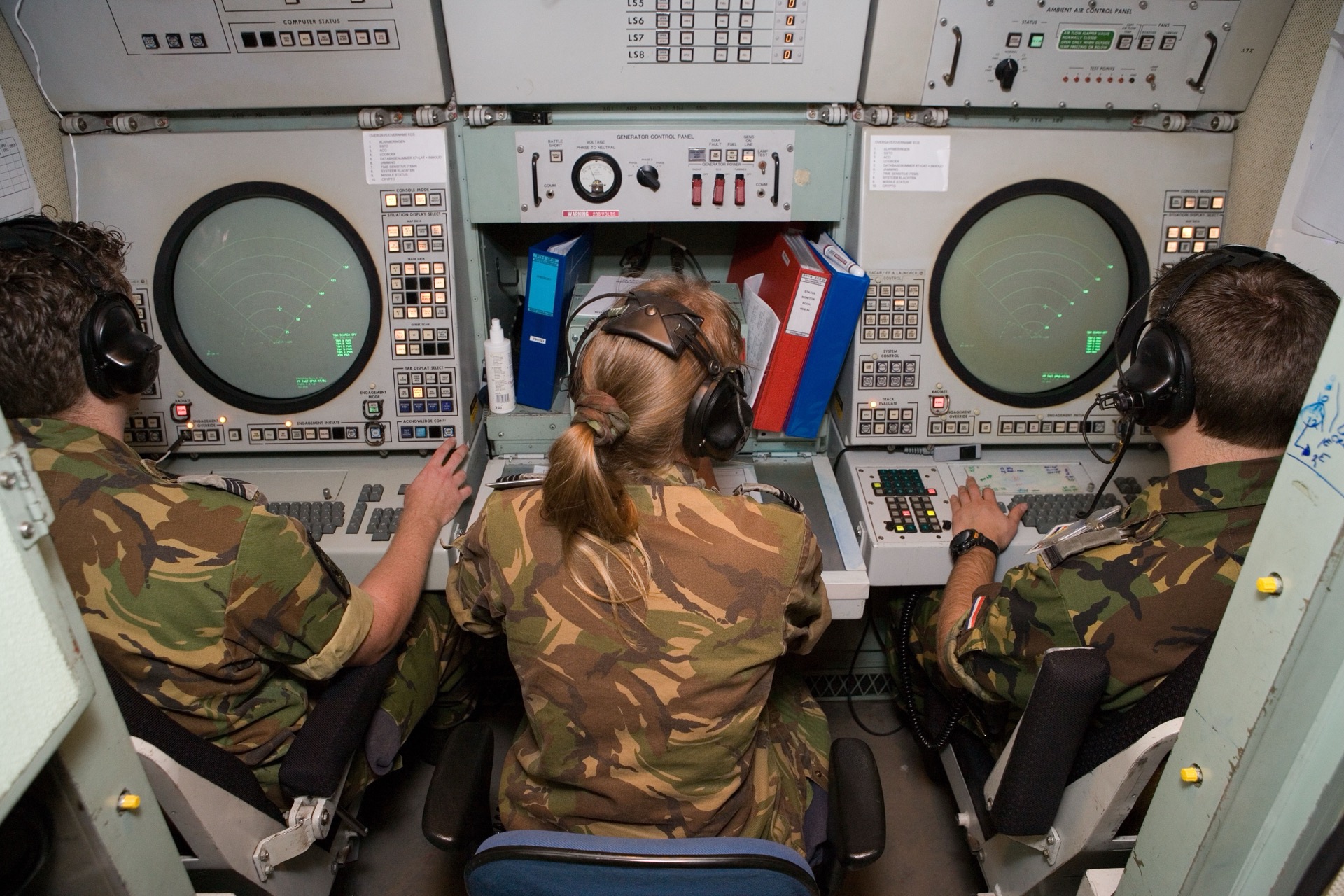
According to the Guardian, Volodymyr Zelensky discussed licensing agreements at the White House to allow Ukraine to produce its own interceptors for Patriot systems. Representatives from Raytheon have already been in Ukraine; Lockheed Martin, the manufacturer of the PAC-3 interceptors, is also preparing technical discussions. Trump articulated American reluctance with the statement that Patriot is a “very extraordinary weapon” and that care must be taken regarding whom licenses are granted to.
This sounds plausible when considering export control alone. It sounds less plausible when looking at the European situation. Russian missile and drone attacks force Ukraine into a consumption rate that does not align with normal procurement schedules. At the same time, Patriot batteries and PAC-3 MSE interceptors are not interchangeable munitions. Patriot covers exactly that upper tier of air defense where European systems like IRIS-T SLM or NASAMS are important but not equivalent.
Poland's KH-101 Warning Makes the Problem European
The same Guardian report referred to a Russian KH-101, whose debris, according to Polish analysis, struck about 50 miles from the Ukrainian-Polish border. Donald Tusk stated that the Polish armed forces would have been ready to shoot down the target had it threatened a populated area. NATO Supreme Commander Alexus Grynkewich declared that the alliance would take all necessary measures to protect NATO territory.
This is where institutional discomfort begins. The threat is no longer just Ukrainian, but the European response remains nationally fragmented. Poland is massively procuring from the USA and South Korea. Germany relies on the European Sky Shield and Arrow 3, while also operating Patriot and IRIS-T. France and Italy defend SAMP/T as a European alternative. The Netherlands, Romania, Spain, and other Patriot users depend on American supply chains. The result is not a European air defense shield, but a politically held-together inventory.
NATO Cooperation Does Not Replace Industrial Control
NATO explicitly describes multinational capability cooperation as a way to jointly develop or procure expensive high-value systems. This is rational. No European middle power can finance a complete air and missile defense ecosystem alone. The NATO Support and Procurement Agency can bundle procurements, the Conference of National Armaments Directors can coordinate projects, and High Visibility Projects can translate political commitments into memoranda of understanding.
But a memorandum is not a production line. An NSPA tender is not a license. A European declaration of intent does not create PAC-3 seekers, solid rocket motors, qualified suppliers, or American export approvals. This is precisely why Trump's statement is so analytically valuable: it separates procurement autonomy from technology autonomy. Europe may buy, but it does not decide whether the most urgent interceptor can be built in Europe or Ukraine.
SAFE and EDIP Solve Financial Problems, Not the ITAR Problem
The EU has attempted to formulate an industrial response from the experience of the Ukrainian war with SAFE, EDIP, and the defense industry strategy. This is necessary. Nevertheless, the central weakness remains. European programs can provide credit lines, aggregate demand, and define minimum shares of European value creation. However, they cannot replace American licensing decisions.
The Kiel Institute rightly points out that support for Ukraine only becomes comparable when financial and material transfers are cleanly quantified. However, for air defense, this accounting is not sufficient. What matters is not just which state pledges how many billions. What matters is whether these pledges can be converted into interceptors, radars, fire control software, spare parts, and trained crews. In the case of Patriot, the bottleneck is not primarily in the European budget, but in American technological sovereignty.
The Factory Floor Will Be More Important Than the Communiqué
An article in Defence Industry Europe made a simple but correct point on August 3: The future of European defense will be decided on the factory floor. Software, AI, and autonomous systems are changing warfare, but without adaptable hardware, scalable manufacturing, and resilient supply chains, modernization remains rhetorical. This is even more true for air defense. An interceptor is not a digital update. It must be built, tested, certified, stored, and replaced in quantities in case of war.
Europe certainly has industrial strengths. Germany can deliver IRIS-T, France and Italy can further develop SAMP/T, MBDA can scale Aster families, and Poland is building a regional defense base with high urgency. But these strengths are not integrated into a European missile defense system. Worse still: The politically most attractive immediate solution often remains American procurement. This reduces risk in the short term but increases dependence in the long term.
What Europe Must Decide Now with Clear Eyes
The obvious answer would be to bring Patriot production entirely to Europe. This is politically unlikely and technically not feasible in the short term. The more realistic answer consists of three steps. First, Europe must identify those components that can be scaled without a US license: launchers, radar integration, spare parts, training infrastructure, C2 interfaces, and medium-range interceptor systems. Second, the EU must distinguish between purchase contracts and production capacity when it comes to SAFE and EDIP funds. Third, Europe needs an honest division of labor between Patriot as a necessary transition system and European alternatives as a strategic goal.
But is that enough? Only if political leadership accepts that air defense is not a symbolic project. It is not enough to say “European Sky Shield” at summits and then let national procurement paths run parallel. A shield is only a shield if sensors, effectors, command structures, and munitions supply work together.
The Real Judgment on the Turning Point
The turning point will not be measured by whether Germany or Europe spends more money. It will be measured by whether Europe can produce the munitions it politically promises in a crisis. Trump's uncertainty about Patriot licenses is therefore not a marginal note from Washington. It is a stress test for the European illusion that strategic autonomy can be created through joint shopping lists.
The paradox is bitter. Without American Patriot systems, Ukrainian and Eastern European air defense would be weaker today. With them, Europe's dependence remains visible. More money does not automatically solve this problem. But without money, without factories, and without institutional honesty, Europe will not even be able to ask the right question: Do we want to own air defense, or do we just want access to it as long as Washington agrees?
Sources: The Guardian, July 31, 2026; NATO, Delivering capabilities through multinational cooperation; Kiel Institute Ukraine Support Tracker; Defence Industry Europe, August 3, 2026.
Donald Trump expressed uncertainty about Ukraine's ability to produce Patriot missile systems on July 31, 2026, highlighting the reliance of European air defense on U.S. licensing. The report indicates that while Europe can finance and coordinate air defense, it lacks autonomy in missile production, which is critical given the ongoing threats from Russian missile and drone attacks. NATO's response remains fragmented, with various member states pursuing different procurement strategies, complicating collective defense efforts.
- Donald Trump expressed uncertainty about Ukraine's ability to produce Patriot missiles.
- European air defense is heavily reliant on U.S. licensing for key missile systems.
- Poland analyzed debris from a Russian KH-101 missile that landed near its border with Ukraine.
- NATO's response to threats is fragmented among member states, affecting collective defense efforts.
- European defense initiatives are hindered by reliance on American technology and licensing.