
Turkish Drones Redefine the G5 Sahel in 2026 — Mali, Niger, and Burkina Faso Seek Security Autonomy
 S.W
S.WTurkish drones reshape the Sahel Alliance (AES) in 2026 — Mali, Niger, and Burkina Faso seek security autonomy
In New York, on September 22, 2026, representatives from Mali, Niger, and Burkina Faso aimed to speak with one voice on behalf of the Sahel Alliance (AES). However, thousands of kilometers away, their armies continue to seek very concrete means to secure a road, a garrison, or a supply corridor. The diplomacy of the AES is advancing faster than its military apparatus. It is precisely in this space that Turkey positions its drones, contracts, and influence.
A diplomatic offensive backed by a need for ground presence
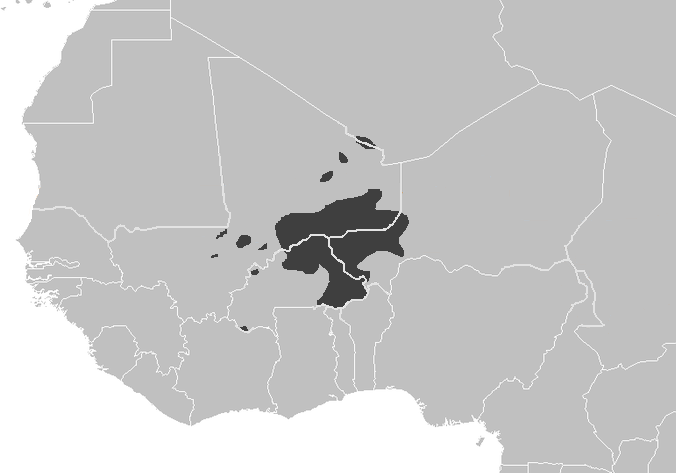
The information published this week by Bamada and APAnews describes a campaign aimed at "correcting the narratives" about the confederal space. Bamako, Niamey, and Ouagadougou want to present their withdrawal from ECOWAS and their military cooperation as a sovereign choice, not as isolation. The message is political. The constraint, however, is operational: groups affiliated with the Support Group for Islam and Muslims (JNIM) and the Islamic State in the Sahel continue to exploit borders, secondary tracks, and areas where the state is only present through a weekly patrol.
An alliance can harmonize its statements in a few hours. It does not automatically create an intelligence network, mechanics, secure radio links, and crews capable of flying a drone in the dust of Liptako-Gourma. This is where the difference between proclaimed autonomy and combat autonomy is measured.
Ankara fills the void left by Paris and Moscow
An analysis published on September 22 by the Research and Information Group on Peace and Security (GRIP) examines the role of Turkish drones in Turkey's security strategy with the AES. Ankara's choice is not philanthropic. Bayraktar drones provide the juntas with a visible capability — surveillance, targeted strikes, pressure on columns — without the political cost of a massive Western deployment.
After the French departure, Russia sold the promise of direct and brutal support. But the limits of this formula have become apparent on the ground: a delivered device is only as good as its parts, its operators, its exploitable images, and the ability to protect ground teams. Turkey offers a different, more commercial, and progressive relationship. It sells equipment, training, and a narrative of technological power that appeals to governments eager to show they no longer depend on Paris.
However, this relationship remains asymmetrical. Drones can spot a pickup truck on a track, but they do not hold a market, reopen a school, or sustainably secure the routes between Gao, Ménaka, or Tillabéri. Used without human intelligence, they risk hitting the visible silhouette rather than the network that feeds it.
The problem is not the border but the corridor
On the ground, JNIM does not think like a staff that would protect a border line. It thinks in corridors: cattle routes, markets, water points, river crossings, and tracks connecting rural areas to regional capitals. The AES map may be politically unified, but every supply disruption creates a pocket of insurgent control.
A successful drone strike can disrupt a group for a few days. It does not replace the ground presence that allows for identifying a relay, securing a convoy, and returning the next day. From experience, a road is not "secured" because a device has flown over it once. It is secured when drivers start using it again after nightfall.
The decisive question for the AES will therefore be integration. Will the three armies share their images and alerts, or will they maintain parallel chains of command? A Nigerien drone observing activity at the Malian border is only valuable if the neighboring Malian unit receives the information in time, understands the terrain, and can maneuver.
A narrative victory for the juntas, not yet a military victory
The diplomatic summit in New York and the Turkish rapprochement serve the same objective: to demonstrate that the regimes of the AES have alternatives. RFI reminds us this week that the African question is returning to the center of UN debates, while Africa Defense Forum emphasizes that diplomatic divisions weaken Sahel security. These two observations do not contradict each other. Africa demands more political weight, but Sahelian governments are still judged on their ability to protect populations.
The risk is to confuse industrial sovereignty with strategic sovereignty. Buying drones from Ankara may reduce dependence on France or Russia. It does not guarantee a common doctrine, a functional local justice system, or a logistics chain capable of supporting a six-month operation. JNIM knows how to exploit this gap. It does not need to defeat a drone: it just needs to disperse its fighters, blend into villages, and return when the sensors are gone.
The next test will be logistical
The available data does not yet allow for measuring the real effect of the new Turkish systems on losses or territorial control. Military assessments are often claimed, rarely verified, and information circulates through partisan channels. This uncertainty must remain visible in any serious analysis.
The test in the coming months will be less spectacular than a grand speech at the UN. It will take place on secondary routes between northern Burkina Faso, western Niger, and central Mali: availability of devices, sharing of images, escorting teams, and the ability to maintain a presence after the strike. If the AES does not transform its drones into an integrated intelligence and maneuver system, Ankara will have sold a technological showcase. The jihadist groups, on the other hand, will retain control of the paths that official maps do not show.
Sources
- Research and Information Group on Peace and Security (GRIP), analysis published on September 22, 2026, on Turkish drones with the AES.
- Africa Defense Forum, "Diplomatic divisions threaten Sahel security," September 22, 2026.
- RFI, coverage of the UN General Assembly and African issues, September 23, 2026.
- APAnews and Bamada.net, reports on the AES's desire to speak with one voice at the UN, September 22, 2026.
Representatives from Mali, Niger, and Burkina Faso unified their military efforts under the Sahel Alliance (AES) on September 22, 2026. Turkey is supplying Bayraktar drones to enhance AES's military capabilities, aiming to provide a visible military presence without the political costs of Western deployments. However, the effectiveness of these drones is contingent on integrated intelligence and ground operations to counter groups like JNIM and ISIS.
- Representatives from Mali, Niger, and Burkina Faso are seeking to unify their military efforts under the Sahel Alliance (AES).
- Turkey is supplying Bayraktar drones to enhance the military capabilities of the AES.
- The AES is attempting to present its military cooperation as a sovereign choice rather than isolation from ECOWAS.
- The JNIM and ISIS in the Sahel continue to exploit weak state presence in border areas.
- The effectiveness of Turkish drones depends on integrated intelligence and ground presence.