
Turkish firm wins deal for 100,000 kamikaze drones with undisclosed country
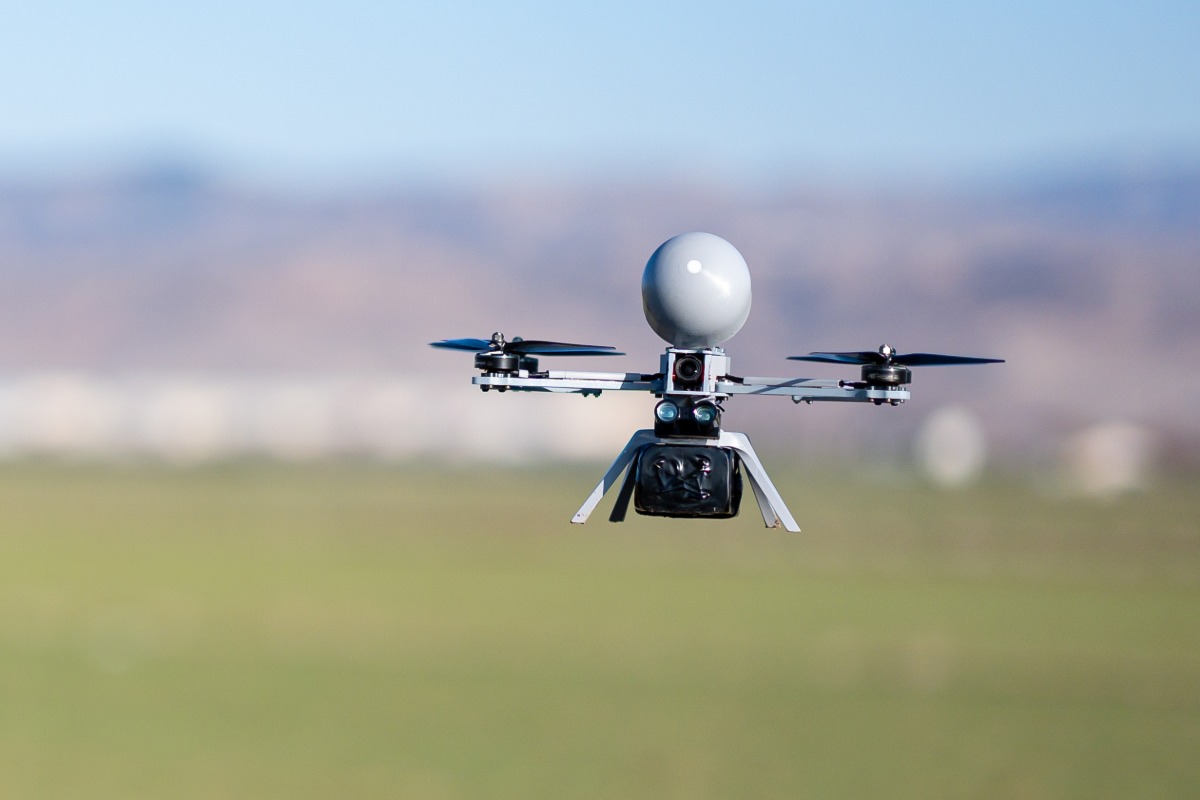
Turkey’s Pasifik Technology has signed a framework contract with an undisclosed country for a package of 101,035 unmanned systems, headlined by 100,000 FPV kamikaze drones, in what represents one of the largest single drone export agreements publicly announced by a Turkish defense company.
The contract covers five distinct unmanned platforms across air and ground domains. The centerpiece is 100,000 units of the MERKUT FPV kamikaze drone system, complemented by 10 unmanned helicopters ALPIN, 25 mini unmanned helicopters DUMRUL developed by Titra Technology, 500 DELİ tactical kamikaze drones, and 500 KORGAN autonomous ground support and surveillance units. Neither the identity of the purchasing country nor the contract value has been disclosed, according to the announcement.
The MERKUT FPV kamikaze drone sits at the core of the deal by volume, and its specifications reflect the lessons the global drone warfare community has absorbed from watching FPV strikes in Ukraine reshape the economics of battlefield attrition. The system offers 20 to 30 minutes of flight endurance and an operational range of up to 8 kilometers. It is equipped with a thermal camera enabling day and night engagements regardless of weather conditions, a high-security fuse system, and an automatic detonation feature with proximity sensors that triggers the warhead without requiring the operator to make a manual detonation decision at the moment of impact. That last feature reduces operator workload and removes a potential failure point in the engagement sequence. Ordering 100,000 of a system with those specifications signals that the purchasing country intends to field FPV drones not as a supplementary capability but as a mass attrition weapon in the same way Ukrainian and Russian forces have been using them since 2023.
The ALPIN unmanned helicopter rounds out the package with a fundamentally different capability profile. Designed to execute assigned missions in fully automatic mode, it carries a payload of up to 200 kilograms including fuel and is equipped with thermal and night vision cameras for around-the-clock surveillance and a range of other operations. A 200-kilogram payload capacity in an unmanned helicopter gives the operator meaningful options for logistics resupply, casualty evacuation, or weapons carriage alongside the surveillance mission, and the fully automatic operation mode means it can complete assigned tasks without continuous operator input.
The DUMRUL armed mini unmanned helicopter, developed by Titra Technology, occupies a different tier of the rotary-wing spectrum. It is an electrically powered, low-acoustic-signature platform designed for short-range reconnaissance, surveillance, and precision attack missions. Its approximately 120 minutes of endurance supports sustained reconnaissance and target tracking over an operational area, and a service ceiling of 4,000 meters allows it to operate effectively in mid-altitude mission profiles across varied geographic and climatic conditions. The low acoustic signature is a design choice with direct tactical value — a small rotary-wing platform that is difficult to hear before it is seen gives opposing forces less warning time to take cover or engage it.
The KORGAN autonomous ground support and surveillance units complete the package as the terrestrial component of what is otherwise an air-domain-focused acquisition. Ground autonomous systems for support and surveillance have been gaining traction in military procurement as operators look to reduce the human footprint in dangerous forward positions, and pairing 500 ground units with tens of thousands of aerial systems suggests the purchasing country is thinking about unmanned operations across multiple domains simultaneously rather than buying drones in isolation.
Turkey’s defense export sector has expanded rapidly over the past decade, driven initially by the international visibility of the Bayraktar TB2 and subsequently by a broadening portfolio of companies offering systems across the price and capability spectrum. Pasifik Technology sits in the volume tier of that market, offering FPV and tactical drone systems at the quantities and price points that make mass drone warfare strategies viable for customers who cannot afford the unit costs of larger, more sophisticated platforms. The MERKUT’s combination of thermal imaging, proximity-fused detonation, and 8-kilometer range at a scale of 100,000 units describes a weapon purchase oriented toward generating sustained attrition pressure rather than precision strike against high-value targets.
Content preview only. Full article available at source. View Full Article
Turkey's Pasifik Technology signed a contract for 101,035 unmanned systems, including 100,000 MERKUT FPV kamikaze drones, with an undisclosed country. This deal marks one of the largest drone export agreements by a Turkish defense firm, indicating the purchasing country's intent to utilize these drones for mass attrition in military operations. The contract encompasses various unmanned platforms, enhancing the buyer's operational capabilities across air and ground domains.
- Turkey's Pasifik Technology signed a contract for 101,035 unmanned systems with an undisclosed country.
- The deal includes 100,000 MERKUT FPV kamikaze drones and various other unmanned platforms.
- The specifications of the MERKUT drone reflect lessons learned from drone warfare in Ukraine.
- The purchasing country aims to use FPV drones as mass attrition weapons.
- The contract represents one of the largest drone export agreements by a Turkish defense company.